The cognitive approach
The Cognitive approach and learning and cognition
We have received questions from teachers about the differences between the cognitive approach and the learning and cognition context. You have also wanted to check how questions may be framed, and what counts as a theory or a model. See below for some clarification, and if you have any further questions, please add them below this post.
Cognitive approach ≠ learning and cognition
The cognitive approach is part of the course content, along with the biological approach and the sociocultural approach and research methodology. The compulsory knowledge and understanding students need of cognitive theories and ideas can be found in Table 3.2 of the IB Diploma Psychology guide.
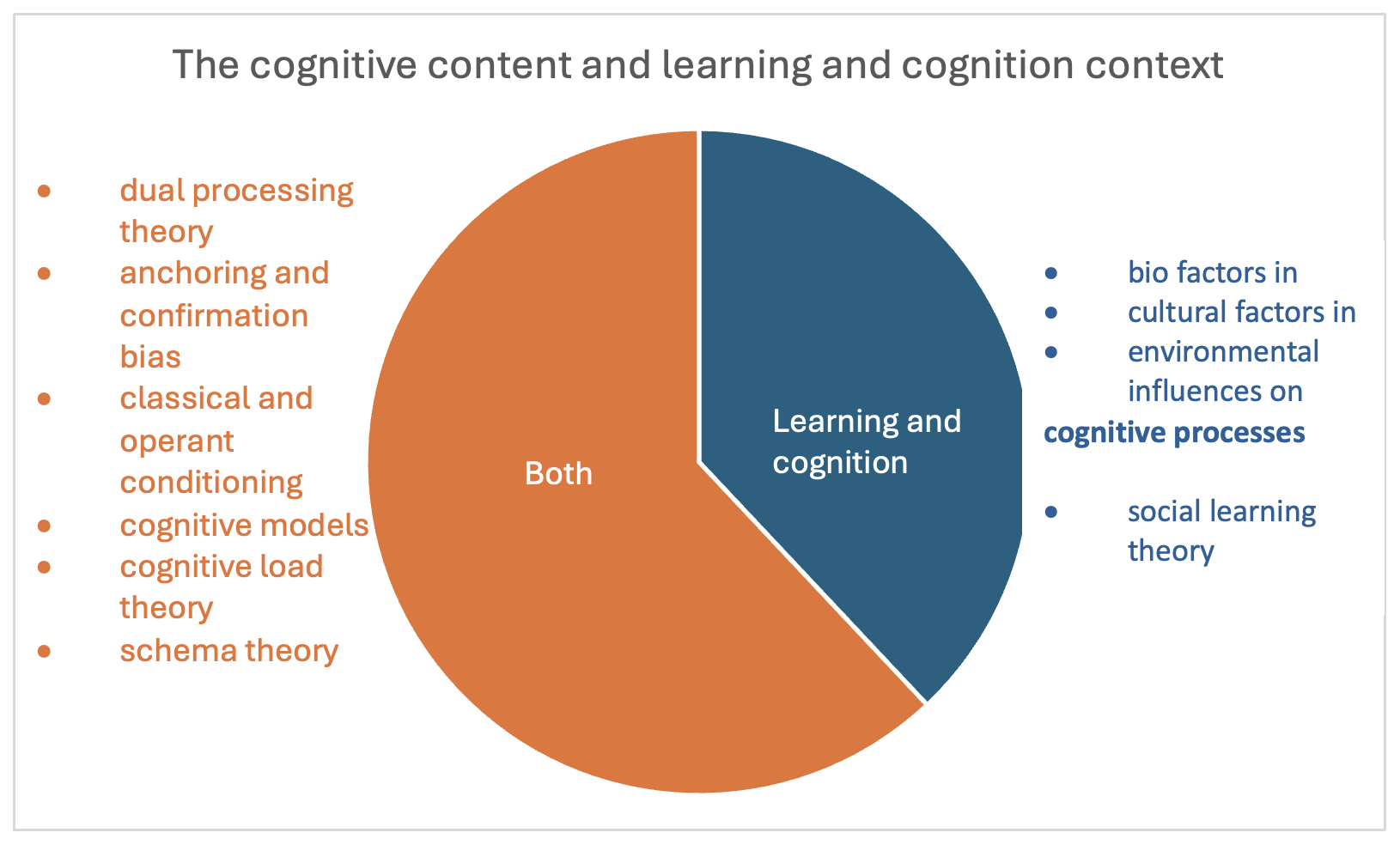
However, students also need to be able to apply these theories and ideas, and this takes place mainly in the learning and cognition context, under the sub-headings of “thinking and learning” and “cognitive processes.” The other contexts also have at least one area of study that refers either to a cognitive model or a cognitive explanation, which allows for reinforcement of the application of the cognitive approach to other behaviours. Similarly, the learning and cognition context includes material from the biological and sociocultural approaches. See this page for further help.
How the questions could be framed
This is most relevant for Paper 1. Q1A will be designed to assess basic knowledge and understanding of the content of the approach. There will be nothing asked directly from any context. One of the two compulsory short-answer (4-mark) questions may be on the cognitive approach, and will ask students to *describe or explain the role of a cognitive theory, model or idea in one behaviour or example of cognition. While an illustrative example will be needed from everyday life, or from research, nothing from any context is required.
[*One question will use “describe” and one will use “explain”.]
Q1B is written to assess the ability of a student to apply knowledge from the approach to a new situation. The title of a context will be used above each of the two questions to show the general area of relevance. However, specific material from a context is not needed to answer either of them. Again, the question will rely on knowledge of the cognitive approach content. The questions will both have command terms from the AO2 level (suggest, explain, analyse, comment).
Students may be asked to explain the results of a study using a cognitive explanation, suggest a particular theory that is relevant to the study, or comment on how the study illustrates a certain cognitive idea.
Q1C is where the areas of study and/or learning outcomes of learning and cognition are used. The question will ask the student to focus on one of the six concepts, in relation to the area of study and/or learning outcome of a particular context. The question within the learning and cognition context will refer to one concept in relation to one area of study and/or learning outcome from learning and cognition.
For example, a student could be asked about measurement in relation to research investigating the role of one or more cognitive biases in decision-making. Knowledge of anchoring and/or confirmation bias from the cognitive approach will be necessary, but the heart of the question lies in the application of the concept to how researchers investigate cognitive bias.
Theory or model?
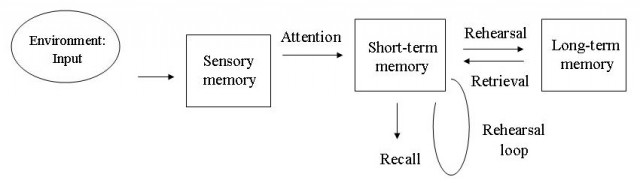
The best way to think of this is to consider that models (which can often be drawn as well as easily described verbally) illustrate cognitive theories, which explain how and why certain cognitive processes influence behaviour. The theory comes before the model, which then demonstrates in simplified terms how it applies.
The easiest examples are those of the multi-store and working memory models that we have all seen drawn in textbooks. They both illustrate different theories on how memory works, with one being a refinement of the role of short-term memory in recall.
[Note that dual-processing theory and schema theory are not accepted as cognitive models in this curriculum.]