P1B: Social Learning Theory
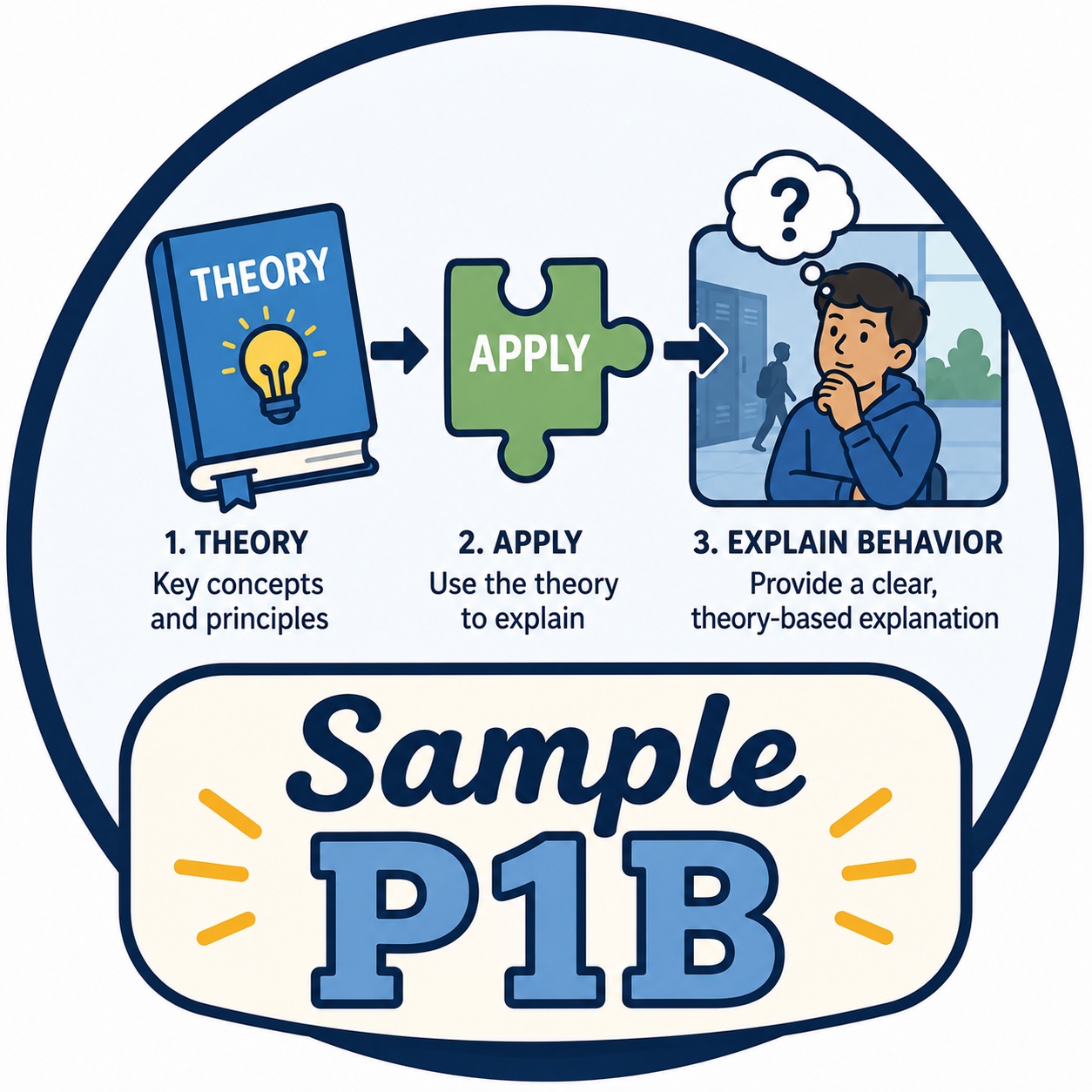
The following sample focuses on the learning objective: The application of social learning theory to explain and change behaviour.
You will need to show knowledge and understanding of social learning theory and apply this specifically to the scenario.
This activity could be used as an assessment. To do so, please download the file below.
 Student copy
The question
The local kindergarten has 25 children aged 3-4 years old. They are happy, lively children, and Rubina, their teacher, likes them to play outside as much as possible. However, when they return to class and are supposed to sit quietly and listen to a final story of the day, she finds it very challenging to calm them down enough to do so. Some children are getting distressed by the noise in the room, and she sees them covering their ears and shouting at others to be quiet, which only raises the noise level. She wants to shout at them to quiet down, but knows it would only make things worse.
Question: Explain how their teacher could use social learning theory to change the children’s behaviour.
Sample response
Social learning theory has cognitive components that must be present to change behavior. Children must pay attention to the role model (the teacher) and remember the behavior she models. They should also be able to imitate this and be motivated to do so. For behavior to be imitated, it needs to be consistent, and imitation should be encouraged through direct reward or vicarious reinforcement (seeing others rewarded for the desired behavior, or both).
Based on these requirements, Rubina should model the behavior she wants before the children enter the class by standing quietly outside the door each day with her finger on her lips, after explaining that this means they should come in quietly. They can remember and do this. However, she would need to motivate the children to imitate the behavior. The best way to do this is to be consistent and repeat the modeling each day. Rubina should also use vicarious reinforcement, such as praising the first children who fall silent and come to the door, and maybe allowing them to choose their favorite story to tell. This should motivate the other children to follow their example.
Why does this earn top marks?
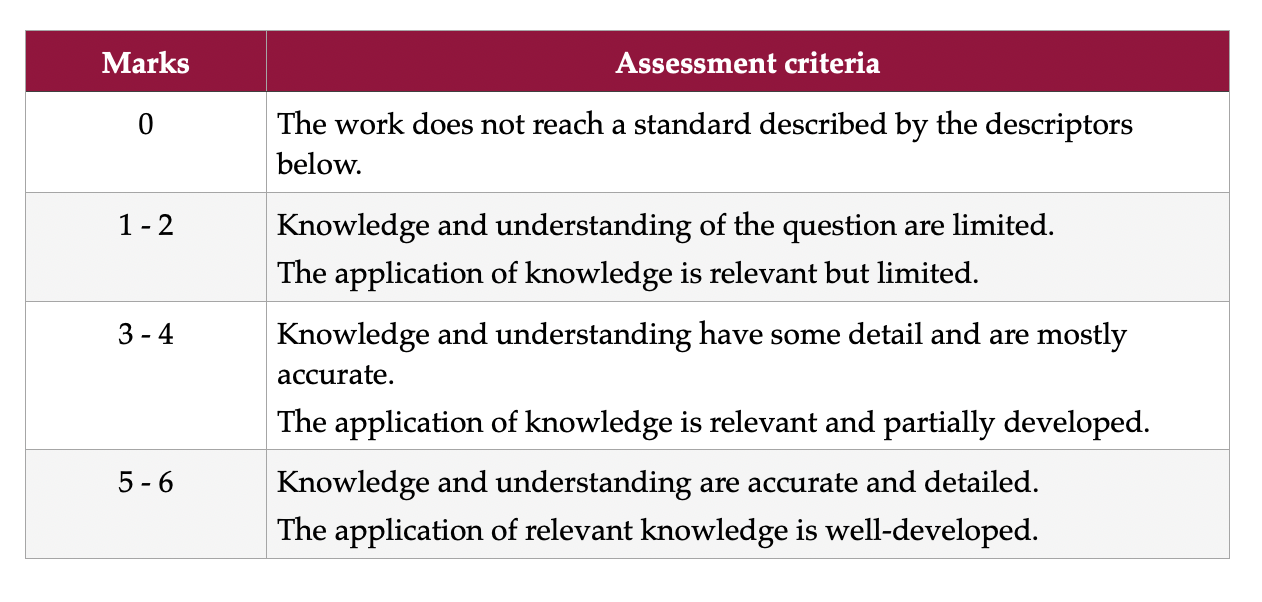
This response earns 5–6 marks because it meets both parts of the top-band descriptor: accurate, detailed knowledge and understanding, and well-developed application to the scenario.
Knowledge and understanding: The response demonstrates accurate and detailed knowledge of the processes involved in social learning theory: attention, retention, imitation, and motivation. It also explains how consistency and vicarious reinforcement support motivation.
Application: The application is well-developed. The student explains the steps required to change the children’s behavior: gaining their attention by standing outside the door each day with her finger to her lips, a signal they already know means they should come to her quietly. She increases their motivation by praising the first child to do so (vicarious reinforcement) and perhaps letting them choose the story. This should be successful in changing the noisy behaviour.