P2B Byelikova (Survey)
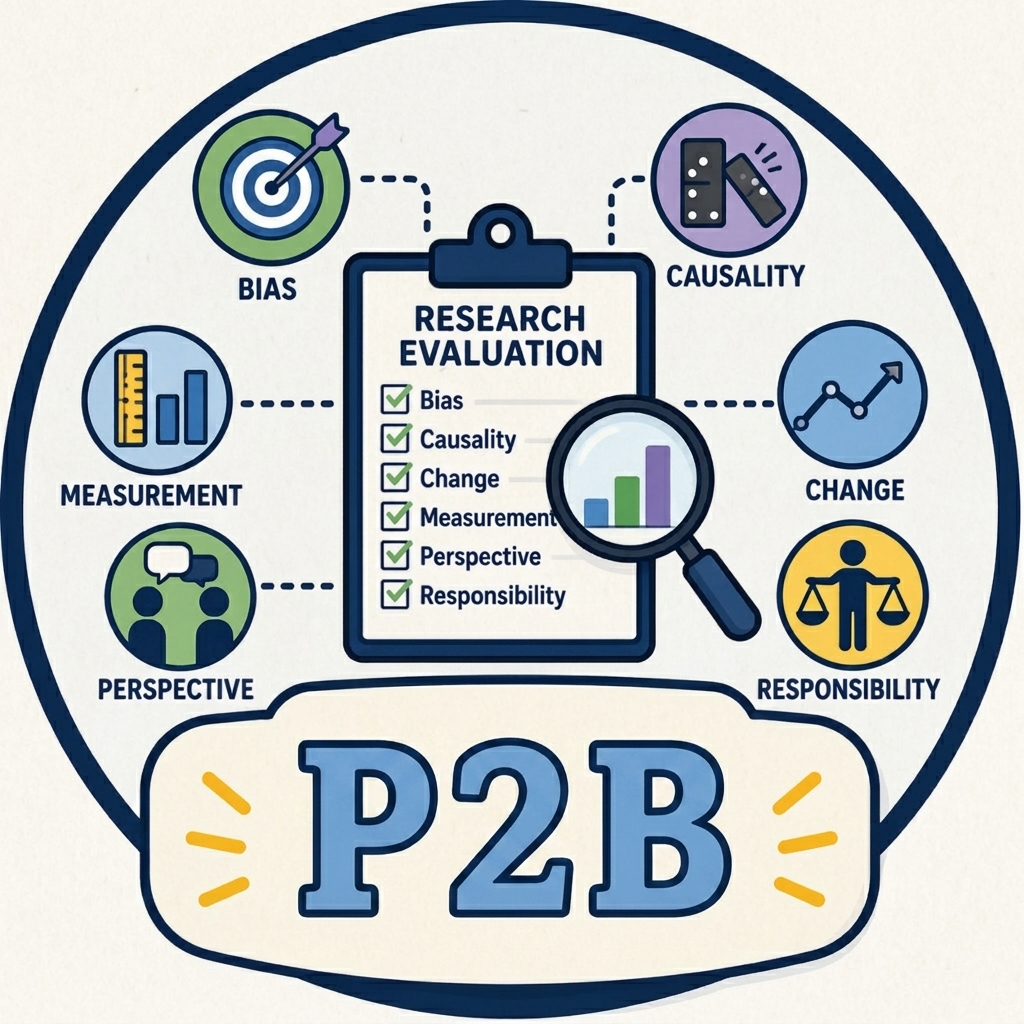
Below you will see a sample response to a question on Paper 2, Section B. This question will always ask you to discuss a study using two or more of four to six concepts.
It is best if you attempt to mark the question yourself before reading the “Examiner's notes” at the bottom of the page.
 Student copy
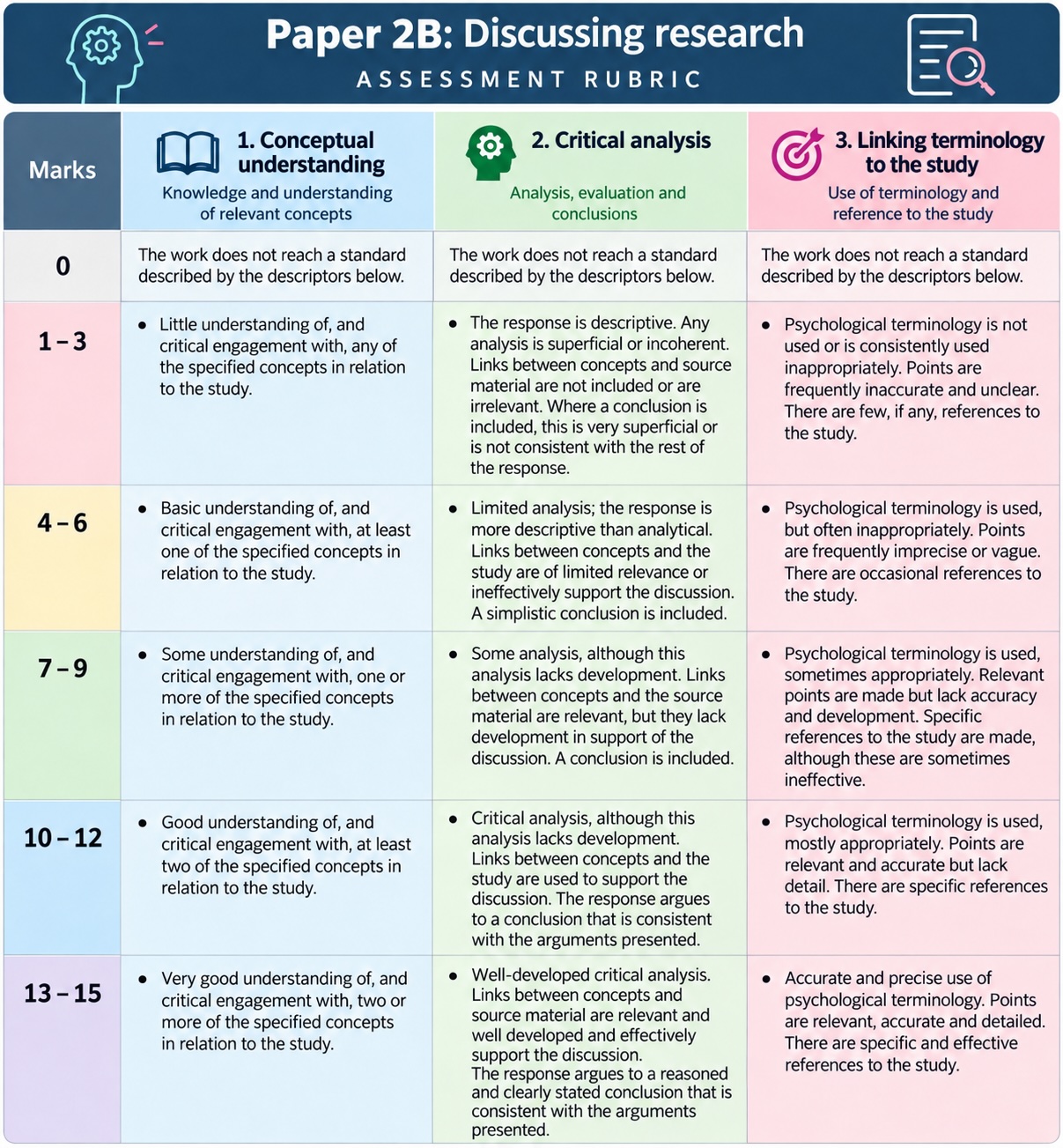
 Byelikova (2022) markscheme
Byelikova (2022)
Byelikova surveyed 423 Ukrainian refugees in Germany. She shared a Ukrainian-language questionnaire through refugee groups on Telegram and Facebook and disclosed in the invitation that she was herself a refugee. Participation was voluntary and anonymous, and the survey collected no identifying information.
The sample was made up of 371 women. Most respondents were aged 26- 45. Restrictions on men leaving Ukraine meant that many women had left partners and other relatives behind. This makes them unlike other refugee groups such as those from Syria or Afghanistan, where the majority is male.
The questionnaire included seven closed questions on national identity and demographic characteristics and two open questions about life in Germany. The results of these two questions were analysed to identify themes. The two questions were:
- What was the most difficult thing for you personally after moving abroad?
- What problems are relevant for you now?
In response to “What was the most difficult thing for you personally after moving abroad?”, five main challenges emerged.
- Practical barriers. Respondents reported difficulties with language, housing, education, employment, bureaucracy, and childcare.
- Uncertainty about the future. Respondents struggled to navigate unfamiliar systems and did not know how long they would stay in Germany.
- Separation from family and friends. Women often described missing their partners.
- Limited social connections. Respondents described having few friends in Germany and living in an unfamiliar environment.
- Emotional distress. Women reported grief and stress. They also described fear, loneliness, pain, anxiety, shame, and guilt.
In response to “What problems are relevant for you now?”, many of the same challenges persisted. Byelikova identified stronger expressions of survivor guilt. Some women also described limited opportunities to pursue personal goals and develop their abilities.
Byelikova interpreted some women’s accounts as evidence of a shift toward greater autonomy. Living apart from partners and relatives and adapting to life in Germany meant that some women took on more responsibility for decisions and family finances.
Question: Discuss this study with reference to two or more of the following concepts: bias, causality, change, measurement, perspective, and/or responsibility. (15 points)
Student response
This study may be discussed with reference to change, measurement and responsibility. The theme running throughout the research is the huge cultural change that the Ukrainian refugees have undergone, and the acculturative stress that they are under. This is especially true of the women, who form the large majority of the respondents (87.7%) and are having to take on responsibility for family finances, as well as finding childcare and dealing with other practical problems. This is a large change from their previous lives in Ukraine, where they may have relied more on their husbands and other family members.
In response to this cultural change, some women gradually undergo a behavior change and become more autonomous, relying on their own resilience. This changes their role in the family, as they become more responsible for making decisions and managing finances. However, this change is not necessarily positive for all women. Some reported that they had limited opportunities to pursue their personal goals and develop their abilities. Therefore, although some women may have become more independent, others may have struggled with the additional responsibilities.
The researcher measured the experiences of the refugees through two open questions, identifying five main challenges, including practical barriers, uncertainty about the future, separation from family and friends, limited social connections and emotional distress. Women reported feelings of grief, stress, fear, loneliness and guilt. The researcher also identified stronger expressions of survivor guilt when respondents described their current problems. This might be because the women had left husbands and other relatives behind in Ukraine and felt guilty about being safe in Germany. However, the questionnaire does not allow the researcher to fully understand the reasons for these emotions. A semi-structured individual interview would be a better method of exploring these feelings, as the researcher could ask follow-up questions to understand their experiences in more depth.
Many of the problems identified by the refugees were still present when respondents were asked about their current difficulties. However, the study does not really measure how much these problems have changed over time. The two questions ask about different time periods, but the respondents are recalling their earlier experiences. Their memories may not be accurate, especially given the stress they have experienced. A longitudinal study would be a better way of measuring how their experiences and emotional wellbeing change over time.
The researcher used two open questions to measure the challenges faced by the refugees. This allowed respondents to explain their experiences in their own words, rather than being limited to a set of possible answers. This is useful when measuring complex experiences such as loneliness, guilt and uncertainty about the future. However, the researcher then analysed the responses to identify common themes, and this involves some subjective interpretation. For example, feelings of fear, loneliness and guilt were grouped under emotional distress, but these are quite different emotions. Another researcher might have identified different themes or interpreted the responses differently. This could reduce the reliability of the findings. Using follow-up interviews would allow the researcher to explore these emotions in more depth and improve the validity of the findings.
The questionnaire was written in Ukrainian and this will have improved the validity of the answers, as the refugees may not have understood questions in German. The questions are being used to identify emotions, needs and adaptations and therefore need to be easily understood. However, the two open questions are quite broad and respondents may have interpreted them differently. This makes it difficult to compare their experiences accurately.
Responsibility is important in this study, as these are people who are suffering from the trauma of a forced move to a completely different culture and facing an uncertain future. Therefore, the promise of anonymity and the fact that no identifying personal information was collected is vital, else people may not have felt free to participate. However, the researcher shares the fact that she is also a refugee, and this may have put some pressure on the participants to respond to the survey, even though it is stated to be voluntary. On the other hand, this may have helped participants trust the researcher and feel that she understood their experiences.
While participation was voluntary, there is no specific mention of how informed consent was obtained. This should have been gained either before or at the same time as sending out the questionnaire. The right to withdraw before submitting their answers and also to omit any questions they did not want to answer should have been stated, in order to protect the refugees from additional stress. The research should also have explained how the questionnaire data would be stored and eventually destroyed.
This study is an interesting one, especially as the Ukrainian refugees' experience is somewhat different from that of other mainly male refugee groups. However, as the researcher herself stated, there is a need for further research using interviews to explore women's experiences in more depth, including the problems of finding employment and childcare. Although the study suggests that some women have become more autonomous, it is difficult to know how widespread this change is or whether it will continue in the future. The findings therefore provide a useful understanding of the challenges faced by Ukrainian refugee women, but further research is needed to understand how their experiences change over time.
Examiner feedback
Click here to see “examiner” feedback.
Conceptual understanding: The response demonstrates very good understanding of the concepts of change, measurement and responsibility, with clear and relevant connections to the study. The discussion of change demonstrates an understanding of both cultural adaptation and changes in behaviour and family responsibilities resulting from forced migration.
There is particularly good understanding of measurement, including the distinction between collecting qualitative accounts of experiences and measuring changes over time. The discussion demonstrates an understanding of how the choice of research method influences the type of information that can be collected. Responsibility is also understood in relation to the ethical obligations of researchers working with vulnerable populations (13 - 15).
Critical analysis: The response demonstrates good critical analysis, with relevant links between the concepts of change, measurement and responsibility and specific features of the study. The strongest analysis concerns measurement, particularly the limitations of asking participants to recall earlier experiences when investigating change over time. There is also effective evaluation of the use of open questions and thematic analysis.
However, some of the critical analysis lacks development. For example, the discussion of responsibility focuses mainly on ethical procedures, without sufficiently considering how the researcher's responsibility extends to interpreting and reporting the experiences of a vulnerable population.
The conclusion is relevant and acknowledges limitations in what can be concluded about changes in women's autonomy. However, it could more effectively draw together the arguments about change, measurement and responsibility to reach a reasoned overall judgment about the strengths and limitations of the research. (10 - 12).
Psychological terminology: The response demonstrates accurate and generally precise use of psychological terminology. These terms are used appropriately and are closely connected to the research rather than simply included as definitions.
The essay also makes frequent, specific, and effective references to the study. These references are generally accurate and help demonstrate the relevance of the psychological terminology to the particular research being discussed (13 - 15).
Total: 13 marks
Reference
This sample is based on the following study:
Byelikova, Y. (2024) Challenges of Ukrainian refugees in Germany: resources for women’s empowerment. Migration and Diversity, 3(1), 51-69.
The original study was simplified to make it more accessible for students under exam conditions.