Choosing IA questions

I have just started the internal assessment with my students, and contrary to my worry about having them choose workable questions, they were highly engaged and came up with some very interesting areas of investigation.
The following blog focuses on my process with my students. We dedicated an 80-minute block to understanding the IA goals and choosing topics. The rest of the process is described below.
Introducing the Internal Assessment
I have bored students too many times over the years by explaining a major project in too much detail at the start of the process. I wanted to make this introduction less intimidating and more engaging.
We started by brainstorming problems to solve. I divided my 24 students into four tables, each with an area of interest: environment, technology, health, and public safety. Each table was given a piece of poster paper and asked to create a visual guide to the types of problems that psychologists might address.
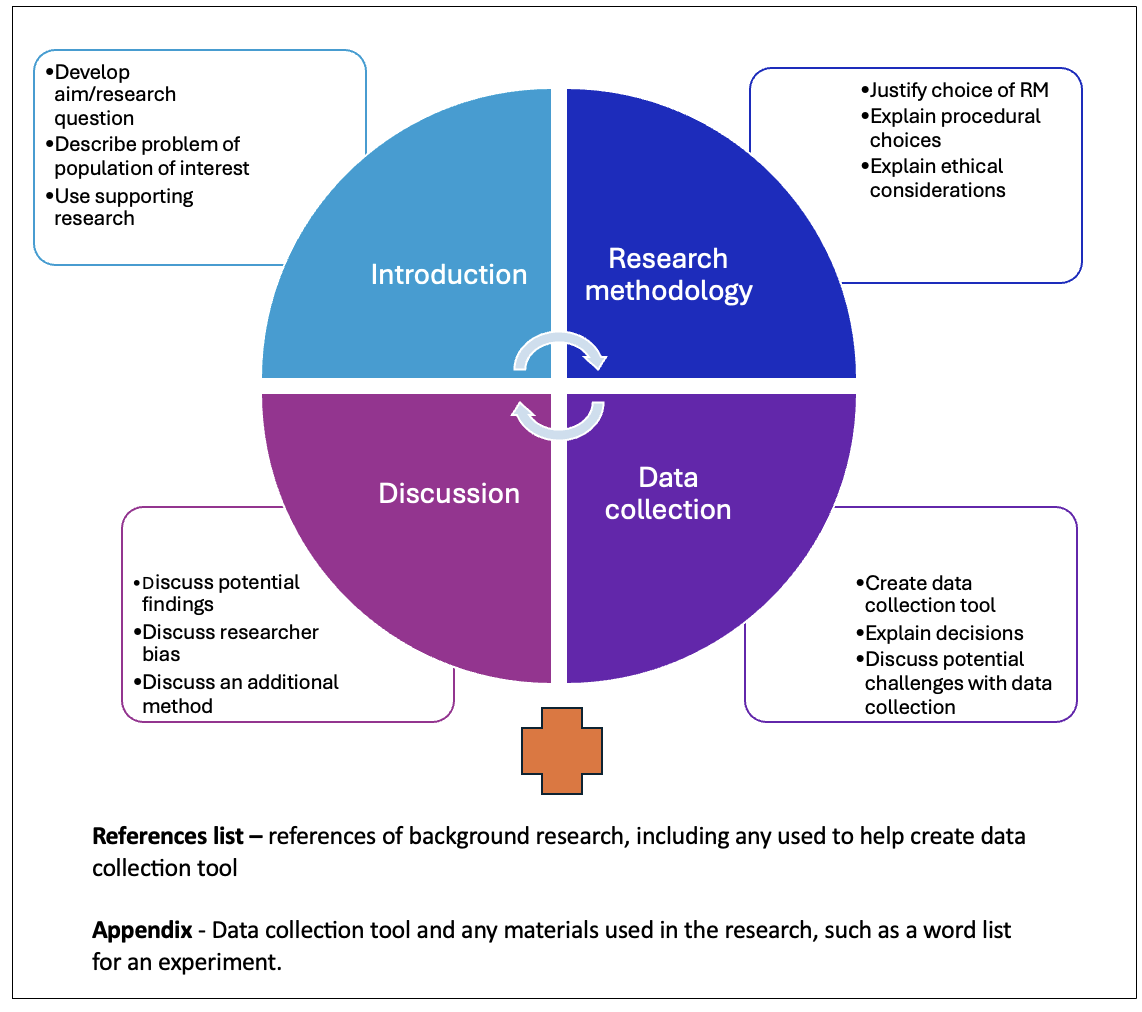
After completing this, I shared this slide.
After quickly looking at the four components of the IA, we went over the expectations for the introduction. Then it was time to start choosing topics and coming up with questions.
Guidance for creating questions
To get students thinking more about questions, I had them go around to the different tables and read the problems the different groups identified.
I then framed the task this way: You have to develop a proposal for how we can either change or improve a human behavior. I also encouraged them not to think about school.
To be approved, they had to identify a topic of interest, a population of interest, and a potential change in policy or practice.
We ended up with a rich list of areas of study.
For example:
- The role of an empathetic nurse in healing post-surgery > Empathy training for all hospital staff with follow-up support for the nurses.
- The role of self-esteem on recovery from injury in sports > Providing more therapy for athletes recovering from injury
- Burnout among caregivers of people living with Alzheimer's disease > Provide more support for home caregivers
- The role of the temporary visa process on the mental health of refugees > Proposing changes to Australia's asylum processes
- Do running clubs help to promote exercise > Encouraging community running clubs
- Misunderstanding of consent in dating relationships > Education of young adults on consent and communication skills
The other advice they received was to keep the question simple - and avoid the use of the word “and.”
I also suggested that they try to avoid school topics, like stress in the IB. Of the 24 students, only two chose a school-related topic.
Next steps
 Students are now writing their introductions and considering how they will study their question. Although there were some initial discussions, it is now time for them to choose their research and make a pitch for their proposal. These pitches will receive student feedback. More on that after I have done it - in about two weeks!