Cross-concepts activity
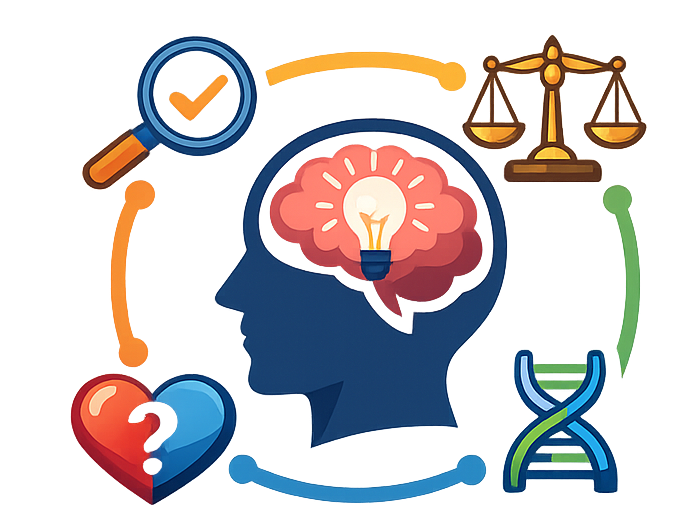
Thinking about the six concepts in isolation is not the goal of concept-based teaching and learning. Although it has been removed from our assessment rubric, the goal of concept-based learning is to recognize the connections and overlaps of the concepts. Bias influences measurement. Responsibility affects our ability to draw causal conclusions. One's perspective may affect what is measured - and how. The goal of this activity is to help students see this overlap so they better understand how to answer Paper 1 C questions.
Why does overlap matter?
The importance of understanding the overlap of the concepts is that it helps students to reduce what they need to remember for the exam. Knowing that ethical considerations may affect measurement means that they may use this information to answer a question about either concept.
There are six concepts that need to be linked with 43 learning objectives (10 for each context, except for health and well-being, which has 13). That is a total of 258 potential questions. Overlap helps to make the preparation for Paper 1 C less daunting.
When I did the following activity with my students, there were several “aha” moments!
The task
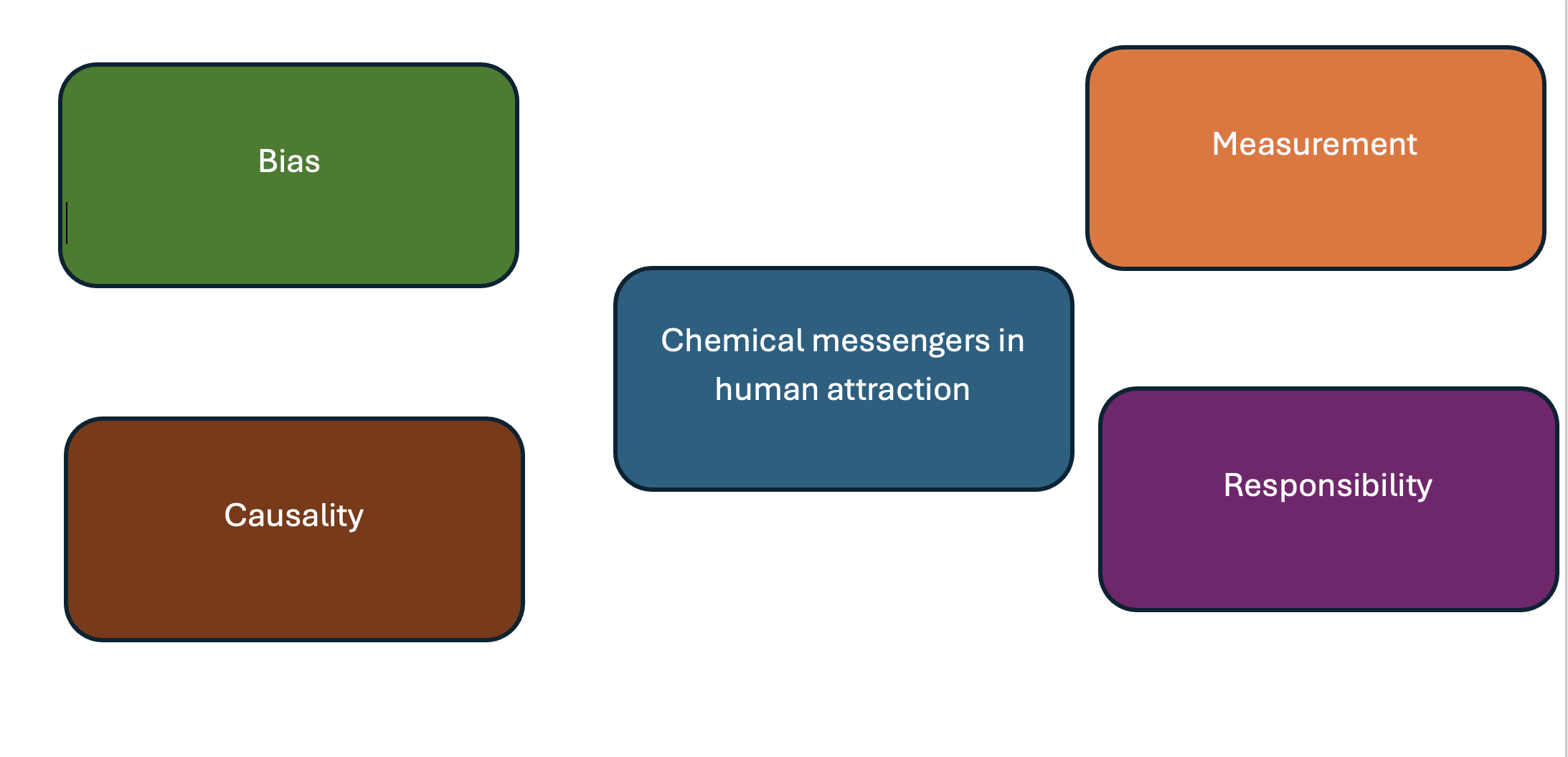
I started by having students sit in four groups. Each group was assigned one of the concepts in the mindmap above. They were asked to brainstorm ways to link the concept to the study of the role of chemical messengers in human relationships. After giving them enough time to finish brainstorming, I recreated the groups so that each group had students who represented each concept.
They were then asked to find ways to link the concepts with regard to the question. In other words, where did they have similar answers for the different concepts? Here is what they came up with:
- Animal research is often used because it can establish causality through experimental research which cannot be done in humans; question the ethics of this choice; is the measurement (e.g., attachment in relationships) the same in humans and animals; the danger of anthropomorphizing the behavior of animals (bias).
- There is often a WEIRD bias in attraction research. This affects measurement, since attraction scales or self-report questionnaires may reflect culturally specific ideas about romance, intimacy, or desirability
- Studies often measure attraction using self-report questionnaires, ratings of attractiveness, or interviews. These methods create measurement issues because attraction is subjective and difficult to quantify. They may also introduce bias, such as social desirability bias, where participants answer in ways they think are acceptable or expected
- Research into oxytocin raises questions of responsibility because findings could potentially be used in marketing, manipulation, or “love drug” applications. Since the actual effects are difficult to isolate and reliably measure, there is concern about exaggerating scientific claims for commercial purposes
- fMRI studies examining dopamine reward pathways during attraction attempt to establish biological mechanisms and sometimes imply causality. However, there are important measurement limitations because brain activity is only an indirect measure of emotional experience. Researchers also have a responsibility not to overinterpret colorful brain scans as definitive proof of love or attraction.
- When participants believe they have been exposed to oxytocin chemicals, expectancy effects may influence behavior. This introduces bias into the results and complicates causality, since observed attraction may result from participant beliefs rather than the chemical messenger itself.