Supporting your students
The May 2026 psychology exams are just over a week away, scheduled for the afternoon of May 6 and the morning of May 7. I hope your students have already got in a lot of handwriting practice, because the unfortunate ones who study HL Psychology and HL English Language or Language and Literature have 5 hours 15 minutes of exams to write.
Hopefully, when the exams are online, this will be slightly easier for young people, who are not used to hours of handwriting, but for Psychology, that’s a few years away.
A few tips
Meanwhile, your class has finished—so what next? The suggestions below are designed to help keep both you and your students as calm as possible during this period.
Of course, you will still be teaching other classes. It may therefore be helpful to coordinate with a colleague, ensuring that you are available to support each other’s students if needed.
In the coming week
- Maintain an open-door policy with clear, accessible ways for students to contact you. Since many will still be coming into school for other exams, try to be available when you can, offering a friendly check-in or brief conversation. Students who want to talk about how their other exams went, whether positively or negatively, are often seeking reassurance about their upcoming Psychology exams
- Stay attentive to signs of genuine distress during the exam period. While most students will cope well, some may struggle more quietly. A student lingering alone by the lockers, or leaving the school abruptly during or after an exam, could need support. A discreet check-in, or a quiet referral to the school counsellor, can make a meaningful difference.
- Finally, remind students of key exam dates and times, and be present to ensure they arrive as expected. In some schools, coordinators or exam officers will manage this effectively, but in others, your support may be essential.
On the exam days
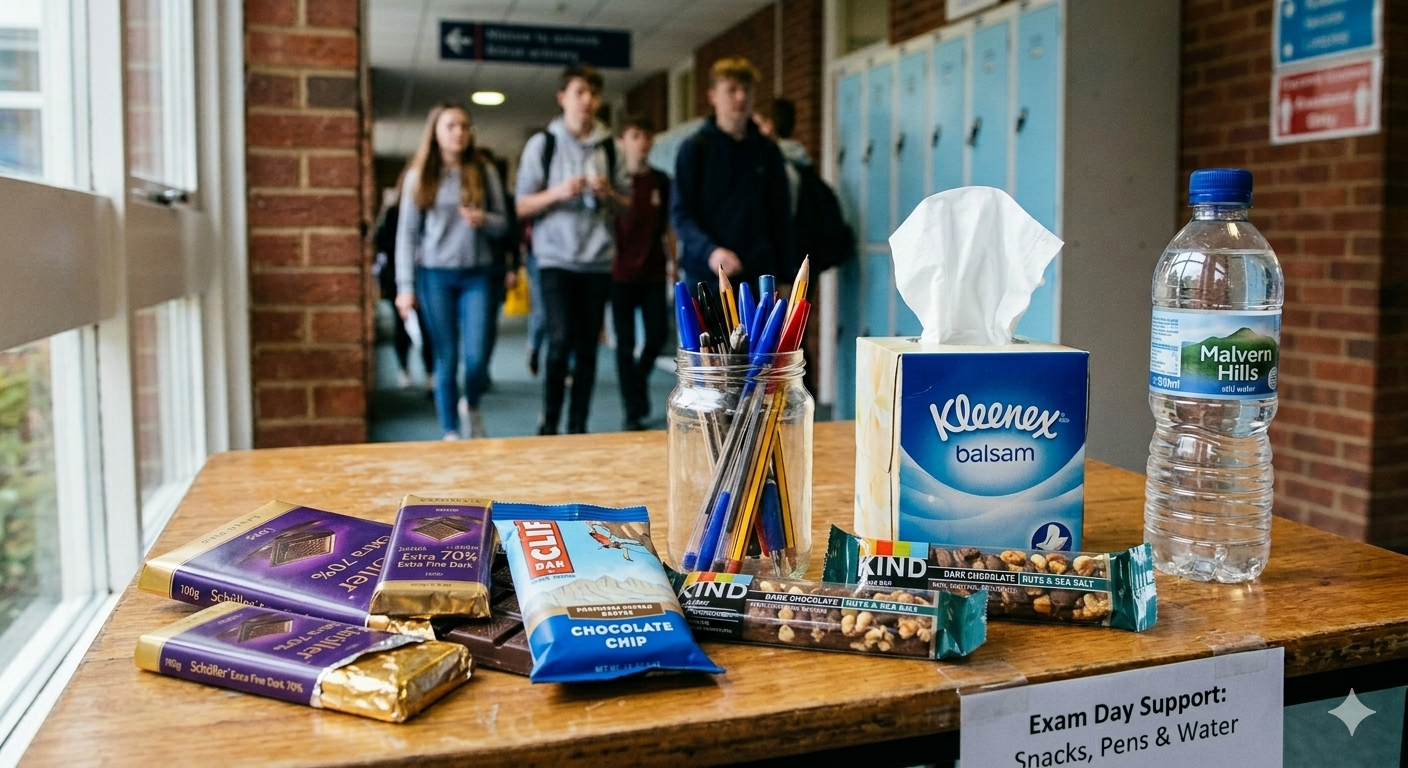
Be mindful that some students may arrive having skipped breakfast or lunch. If possible, consider setting up a small supply area near the exam hall with snacks and drinks (such as water, tea, or coffee) specifically for those sitting exams.
It is also helpful to provide a few practical essentials. A pot of spare pens can save students who arrive unprepared, and a box of tissues is always worth having on hand. These small gestures can make a meaningful difference in helping students feel supported and ready.
After the Psychology exams
- Encourage students to head home soon after their exam, or, if they have another exam later that day, to spend time in a quiet space such as the library after they have eaten. Lingering for hours and worrying about possible mistakes is unlikely to help. In some schools, parent groups provide snacks and a welcoming presence as students leave exams, which can be a thoughtful and supportive touch.
- That said, some students will still seek reassurance by asking you to check their answers. Even if their response may not have been ideal, this is not the moment for blunt honesty. It is better to offer measured reassurance, such as: “That’s not the most common answer, but it could still be accepted,” or “There’s flexibility in how that question can be approached.”
- If a student tells you they couldn’t finish or they missed out a question, then the correct response isn’t “Aargh!” Instead, reassure them that this often happens when students spend extra time developing strong answers elsewhere. You might say: “It’s only one question. Overall, it’s unlikely to have a major impact.”
Your own approach

The calmer you are, the calmer the students will be. While exam results matter, they are not the only path forward. Students may have opportunities for resits, accept places at their second-choice universities, or rethink their plans if needed. At 17 or 18, many are still developing resilience, and this does not have to define their future. You will have done your best and so will they.
Good luck to all of you!