FT online - SIT and sports fans.

To use the psychology article cited in this blog, visit FT online and sign up your students and yourself for free access to FT articles. My article for you to use in your psychology class relates the original article How sport unites us to Social Identity Theory (SIT). The questions and suggested discussion encourage students to consider the concepts of bias and perspective.
Sports as a uniting force
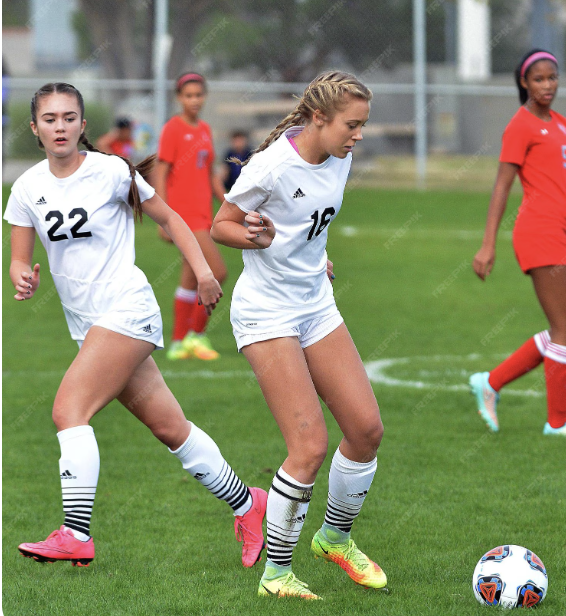
Once your students have read the original article, take them to the psychology class article and the questions. You may like to put them into small groups, as some of them will provoke discussion. Suggested answers to the student questions are below, but it is interesting to note that, while this article has close links to SIT, it is not talking about derogation of the outgroup, but rather it stresses a favoring of the in-group that illustrates male bonding. This is why bias and perspective are good concepts when analyzing the writing.
Suggested responses
Q1. This article is interesting, because at first the author is anxious about his twin sons’ sports obsession. What reasons does he give for later changing his mind and being happy that his sons are team sports fans? Which one of these is based in the sociocultural approach to group behaviour?
The author provides the following reasons for changing his mind about sports fandom:
It helps young people develop a more positive view of their bodies. It keeps them off social media and video games. And it gives males, in particular, a social connection to others that the author feels is rare. This last is more firmly based in the sociocultural approach to group behaviour. (You should accept other answers if students give a strong rationale.)
2. What did the recent survey quoted in the article find about US soccer fans?
3. How does this challenge the common stereotype of fans?
The common stereotype of fans is based on the media's description of many as “football hooligans,” who are perceived as rude, aggressive, and enjoy fighting, especially attacking other fans. This article gives a different vision and states that the most rival supporters do is “tease each other about results,” and this, too, is a form of bonding.
4. What evidence is cited from other countries that being a fan strengthens social identity, but does not produce polarisation (extreme positions taken on politics and social issues).
5. In the article, the soccer stadium and soccer matches are described as a “pre-digital communal experience.” What is meant by that?
Many communal experiences occur through social media and online gaming platforms. A pre-digital communal experience is a social interaction that occurs between people who are physically present rather than virtually.
6. Describe at least two ways that having a social identity as a fan of team sports has a protective effect against social isolation.
It provides an alternative to social outlets that have declined, such as belonging to a church group, or eating out together as a family, or going to a youth club. The local football match is somewhere to go where you will be in a group.
World Cup or European Championship matches are watched by many, and they pull the socially isolated into conversation, providing a topic to discuss and a sense of belonging.
7. Using the concept of bias, discuss the argument put forward in the article.
The argument is that being a fan of team sports, in this case football (soccer), is wholly positive, and the only violence between groups of fans is down to a minority right-wing “fringe group.” This shows researcher bias, as the evidence presented that two former football hooligans are now leaders of far-right political groups needs further empirical support to be applied more widely.
The author is a father, and his personal bias towards football as a means of bringing young males together is based on his own experience and his sons’ experiences. It also shows sample bias in that it is an argument that is only being applied to males, and not females. This does not lessen the validity of the argument, but the author’s point that this is acceptable because it is the demographic group that suffers most from isolation lacks empirical evidence to support it. Finally, there is selection bias, as all the evidence he states is carefully selected to support his argument.
8. Can you think of any other “social superpower” communal activities that are not reliant on social media and protect against social isolation?
Another perspective

If you wanted students to look at alternative perspectives, Drury et al’s (2009) study had a majority of female participants, but produced results that seem to support the FT article. However, Levine’s research (2005) took a different perspective and demonstrated that in-group favoritism is at the expense of the perceived out-group.
Reference
Kuper, Simon (30th October 2025). How sport unites us: in a divided world, fandom is a social superpower. Financial Times online, Accessed 1st November 2025 at https://www.ft.com/content/f41ca310-a4d8-4ebd-a03b-10040ad97993