Getting off to a good start

This blog explores how to engage your students right from the very beginning of the course. The new psychology course may seem challenging for us, as well as for our students, so there will be suggestions shared on how to introduce the material in a simple, interesting, and relevant way.
Get to know your students
Take at least one lesson to get to know your students and why they are studying psychology.
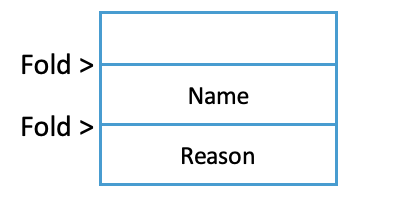
If you don’t already know their names, or if they don’t know each other, then learn names as fast as you can. There are some tips here and here.
Ask them to make a “name tent” for their desk. Fold a piece of paper into three. In the middle section, they should write their first name or preferred nickname, and in one of the other sections, their reason for studying psychology. This could be organised in groups of three or four, and they could swap within the group and introduce each other, rather than themselves. Collect in the name tents at the end of one lesson and try to give them to the correct students in the next lesson. In that way, you are practicing their names, and you can note why they’re doing the class.Relate learning to life outside the classroom
There is a short film called “The Present” on this InThinking page that challenges our assumptions. There are questions on the page afterwards to encourage students to “think psychologically.”
Alternatively, this short animation also provokes a lot of thought in students (It is about addiction, so you may want to check it is suitable for your teaching context.)
Questions for this film could be:
· What did you initially think the film was about?
· When did your reaction to the film begin to change?
· How might learning psychology stop us from making common-sense assumptions about behaviour?
· Are simple films like this helpful in introducing complex topics? Give a reason for your answer.
Don’t try to do everything “up front.”

Many teachers will begin their courses with research methods and concepts as two separate units, each lasting one or two weeks. You can take a combined approach and ensure that, as you refer to a particular research method, you also refer to concepts. Use these concept posters or make your own, and then have one on each of six tables, or pin them all on the wall. Split students into four groups, after you have done some initial explanation of each of the four main research methods that they will learn (experiment, observation, interview and survey/questionnaire). Each group then goes around the concept posters and writes at the bottom of each how this concept is relevant to “their” method. If you are trying to save paper, then Padlet is also a valuable tool for this, and it does not take long to become proficient.
The idea is to introduce research methods and concepts, and then reinforce them throughout the two years. For example, whenever you are discussing sampling or self-report methods, bias is relevant, as is the perspective of the researcher when designing the questions. With experiments, causality, change and measurement can be examined, and, of course, ethics and responsibility go together. If you try to teach everything at the beginning and outside of the relevant contexts, you and your students will feel overloaded.
Active learning
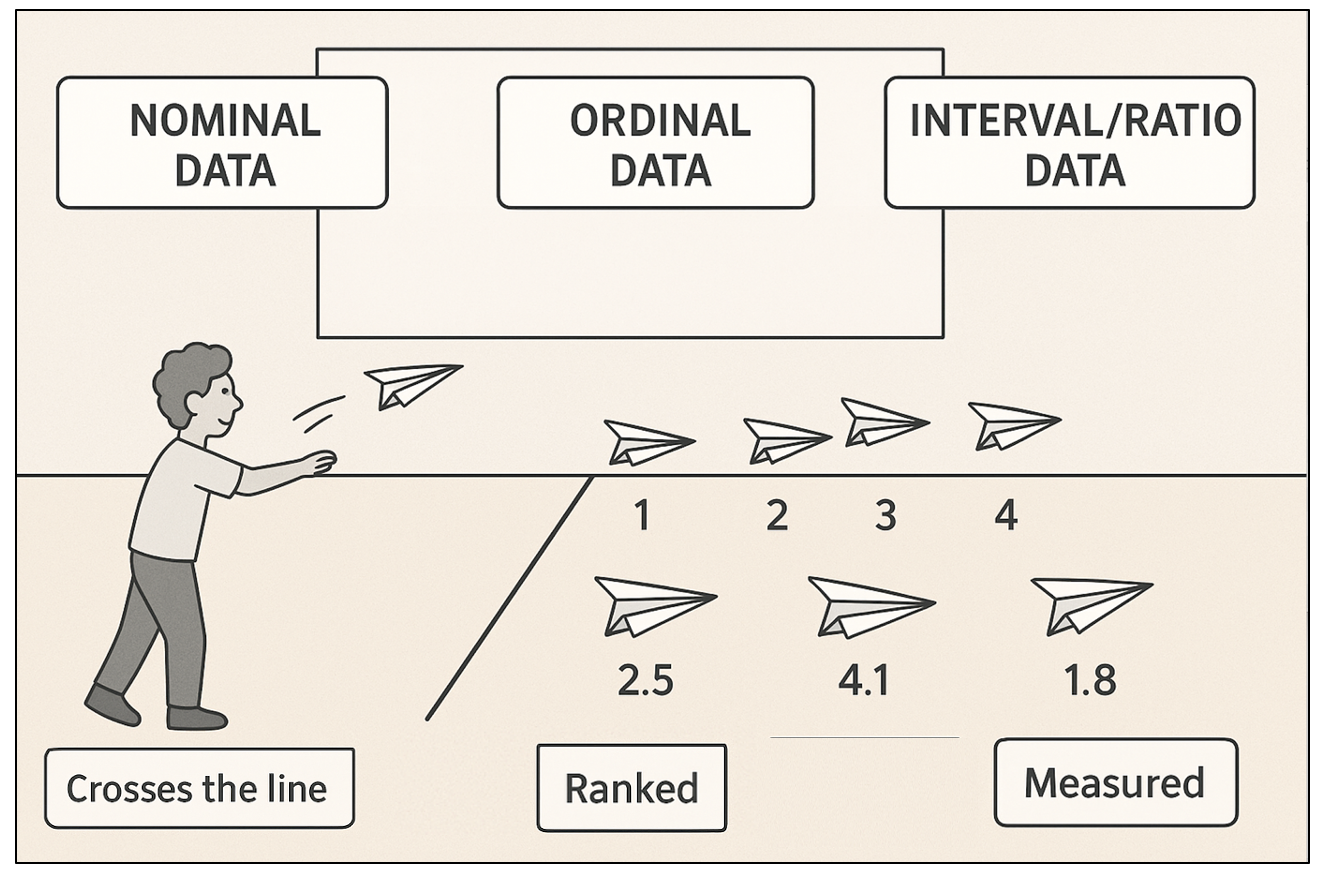
Getting students out of their seats is another way of engaging them. Ms. Alex Ferguson of St. Christopher’s school in Bahrain teaches about levels of data in an interesting way. She has her students make paper aeroplanes and fly them. To learn about nominal, ordinal and interval/ratio data, each student makes a paper aeroplane and throws it from the back wall of the classroom! The first throw is over a line on the floor > nominal data > crosses the line or doesn't. The second throw is ranked with the aeroplane that goes the furthest being the 1st, and the next being the 2nd and so on, for ordinal data. Their third throw is measured and interval/ratio data is obtained. This is helpful for HL students who may want to refer to data levels in their Paper 3 analysis.
Upcoming post: Using the FT in your classroom

Most of us are familiar with the Financial Times newspaper as a light pink broadsheet full of information that may be useful for exonomics students. However, over the past few years, the FT has expanded its offering for students, including free access for schools, and articles that are relevant for many subjects. Next week's blog will give a link to a free FT article and how to use it in your classes to increase understanding of applying psychological theory and concepts to current events.