Why do people resist change?
 Change is about people, not just processes
We often focus on the plans, systems and structures needed to bring about change, but pay less attention to how people experience it – the uncertainty, anxiety and sense of loss it can create.
I really enjoyed reading this article on the importance of affective containment by Di Dale and Chris James. It helped me better understand the emotional complexity of bringing about change and the importance of helping people work through their feelings if change is to lead to meaningful and lasting improvement.
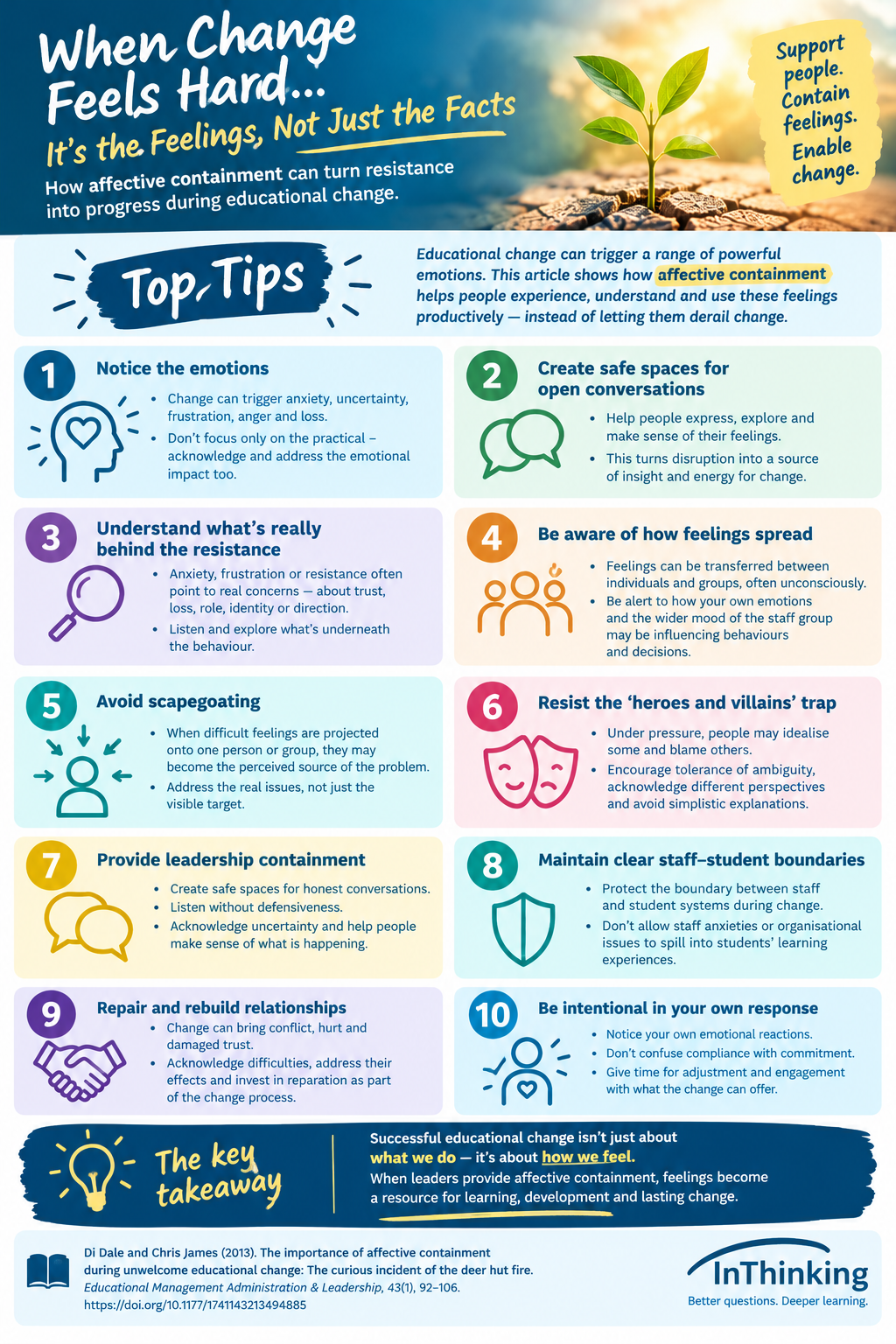
Reflect: The human side of change
Step 1: Think of a change
Recall a change you have led, experienced or observed in a school. It might involve a new policy, curriculum, leadership structure, evaluation process or approach to teaching and learning.
Step 2: Reflect on the human experience
Consider these three questions:
- Feelings: What emotions did the change generate for those involved? What might have been causing them?
- Leadership: How did leaders respond to these feelings? Were people given opportunities to express concerns and make sense of the change?
- Impact: How might attending more carefully to people's emotional experiences have influenced the outcome?
Step 3: Connect to a change management model
Review the change management models HERE.
Choose one model.
- What does the model help you understand about planning and implementing change?
- What, if anything, does it help you understand about the emotional experience of change?
- What would you do differently next time to attend to both the process and the people?
Key takeaway: Change management models can help us plan the journey, but effective leadership also requires us to understand how people experience it.