Inclusive tools for the classroom
 Creating an inclusive and supportive learning environment requires tools and activities that help students explore identity, privilege, and empathy.
This page provides practical resources for teachers to facilitate meaningful discussions on equity, diversity, and inclusion in the classroom. From visual tools like the Wheel of Privilege and Power and the Identity Iceberg, which help students understand the complexities of identity, to experiential exercises such as the Privilege Walk and Empathy Mapping, each activity encourages reflection and dialogue.
These exercises foster awareness of social dynamics, challenge assumptions, and promote a more inclusive mindset among students. Whether used in social studies, literature, or personal development lessons, these activities provide engaging ways to support equity and diversity education in schools.
(Image source: Download Inclusion, Include, Integration. Royalty-Free Vector Graphic - Pixabay)
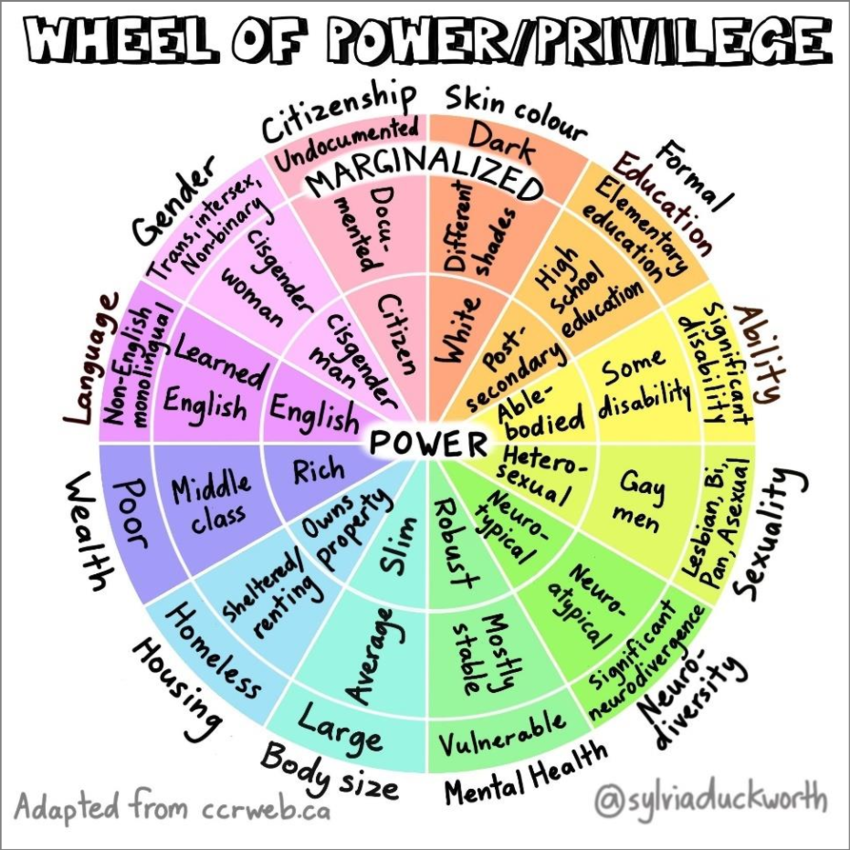 The Wheel of Privilege and Power is a visual tool used to illustrate how different aspects of a person's identity can intersect to create unique experiences of power and marginalization.The closer you are to the centre, the more privilege you have. It was popularized by Sylvia Duckworth and is often used in discussions about equity, diversity, and inclusion. Each spoke represents a different aspect of identity, and the position on the wheel indicates the level of privilege or marginalization a person might experience in that area. For example, being in the centre of the wheel might indicate having more privilege, while being on the outer edge might indicate experiencing more marginalization. It's a powerful tool for fostering self-awareness and empathy, helping individuals understand how their own identities intersect and how they might experience the world differently from others.
There are several videos which help explain this wheel, for example HERE.
A helpful explanation of how to use it can be found HERE.
Image source: available via license: Creative Commons Attribution 4.0 International.
 This visual metaphor helps students understand the visible and hidden aspects of identity. It highlights how much of our identity is "below the surface" and not immediately visible to others.
- The Identity Iceberg can serve as a starting point for discussions about diversity, equity, and inclusion. It provides a visual and relatable way to talk about these important topics and encourages open dialogue.
- The iceberg shows that while some aspects of our identity are visible (such as race, gender, and age), many others are hidden (such as beliefs, values, experiences, and socio-economic status). This encourages students to look beyond surface-level characteristics and appreciate the deeper layers of identity.
- By acknowledging the hidden aspects of identity, the Identity Iceberg fosters empathy and understanding. It reminds us that everyone has a unique story and experiences that shape who they are, even if we can't see them.
- The metaphor helps reduce assumptions and stereotypes. It encourages students to recognize that they might not fully understand someone's background or experiences based solely on visible traits.
- When students understand that identity is multifaceted and complex, they are more likely to create an inclusive environment. They learn to value and respect the diverse identities of their peers, leading to a more supportive and accepting classroom.
A helpful introduction can be found HERE.
A walk-through lesson can be found HERE.
(Image generated by deepai.org)
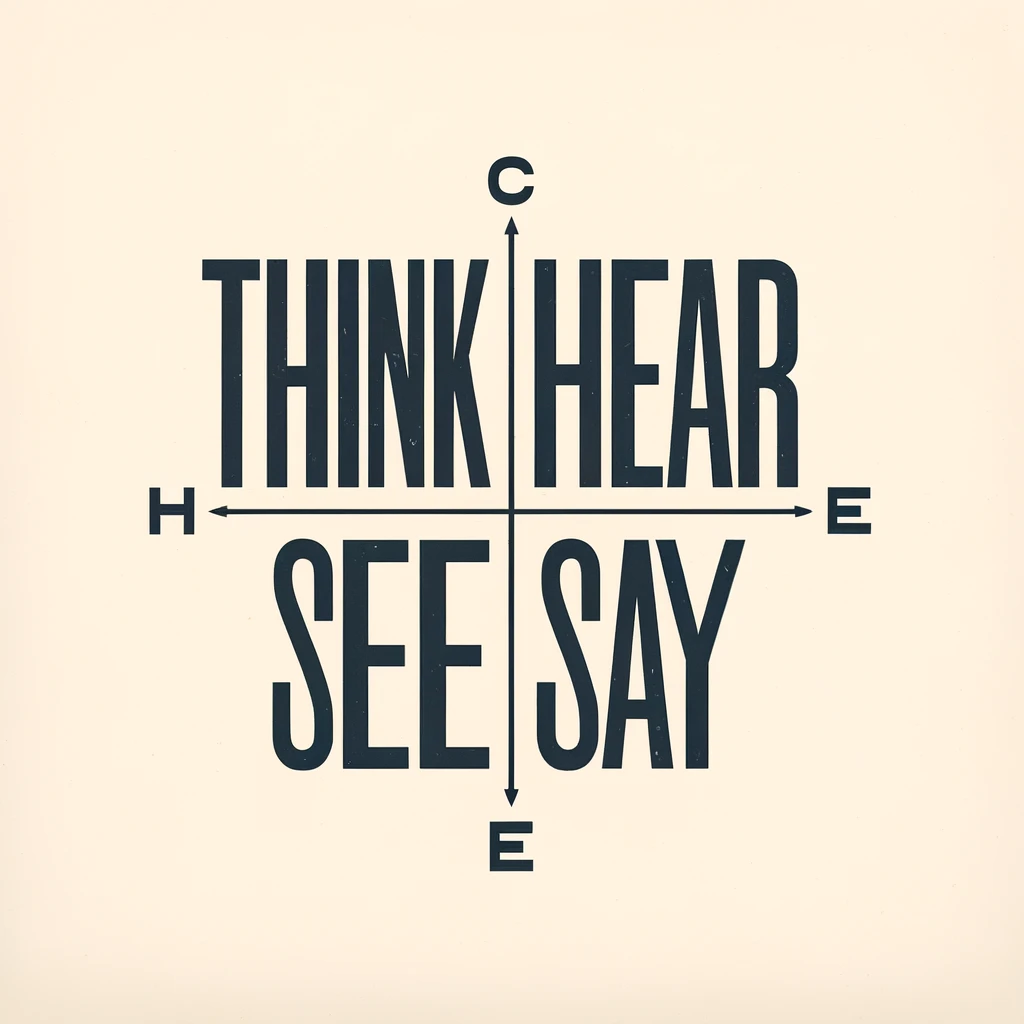 A tool that helps students develop empathy by mapping out the thoughts, feelings, and experiences of others. It’s a powerful way to build understanding and connection.
This visual tool originally developed by the design and marketing fields to better understand and anticipate the needs and perspectives of users or customers. The core idea is to place oneself in someone else's shoes to see the world from their perspective, which is fundamental to human-centred design.
An empathy map typically includes sections that cover:
- What the person sees: Their environment, friends, media, and influences.
- What the person hears: Influences from friends, family, colleagues, and others.
- What the person thinks and feels: Their fears, frustrations, aspirations, and needs.
- What the person says and does: Their attitude, behaviour, and interactions.
- Pain points: The challenges and obstacles they face.
- Gains: The benefits they seek or receive.
Empathy mapping can be a powerful tool in the classroom to foster inclusive practices. Here’s how you can use it:
- Have students create empathy maps for characters in literature, historical figures, or even peers. This helps them to understand different perspectives and experiences, promoting empathy and inclusivity.
- Use empathy maps to better understand your students' needs, challenges, and strengths. This can help you tailor your teaching methods to be more inclusive and supportive.
- When planning lessons and activities, use empathy mapping to consider how different students might experience the content. This helps in designing a curriculum that is accessible and engaging for all students.
- Create empathy maps as a class activity to foster a sense of community. Students can work in pairs or small groups to map out each other's experiences, building stronger connections and understanding.
- Use empathy mapping to help students recognize and address their own biases. By understanding the experiences and perspectives of others, students can become more aware of their assumptions and stereotypes.
 An experiential activity that helps students understand privilege and marginalization by having them step forward or backward based on different statements about their life experiences.
Participants are assigned fictional identities to maintain anonymity and comfort. They stand in a line and respond to a series of statements by stepping forward or backward, depending on whether the statement applies to their assigned identity. For example, a statement might be, "If one or both of your parents graduated from college, take one step forward." By the end of the exercise, participants visually observe the disparities in privilege among the group.
The Privilege Walk serves as a powerful tool to highlight the often unseen advantages and barriers present in society, encouraging participants to reflect on their own positions and the experiences of others. This tool can be integrated into subjects in many ways, for example:
- Social studies/history: Show historical inequalities, civil rights, and immigration challenges through a privilege walk.
- English/literature: Analyze character experiences, explore themes of privilege, and inspire creative writing.
- Science: Discuss access to healthcare, STEM education, and environmental justice disparities.
- Math/economics: Use data from the activity for statistical analysis and discussions on economic privilege.
- Personal development/ethics: Build empathy, encourage debate, and explore fairness in society.
A helpful introduction can be found on this University of Warwick site.
(Image source: Download Footprints, Footprint, Feet. Royalty-Free Vector Graphic - Pixabay)
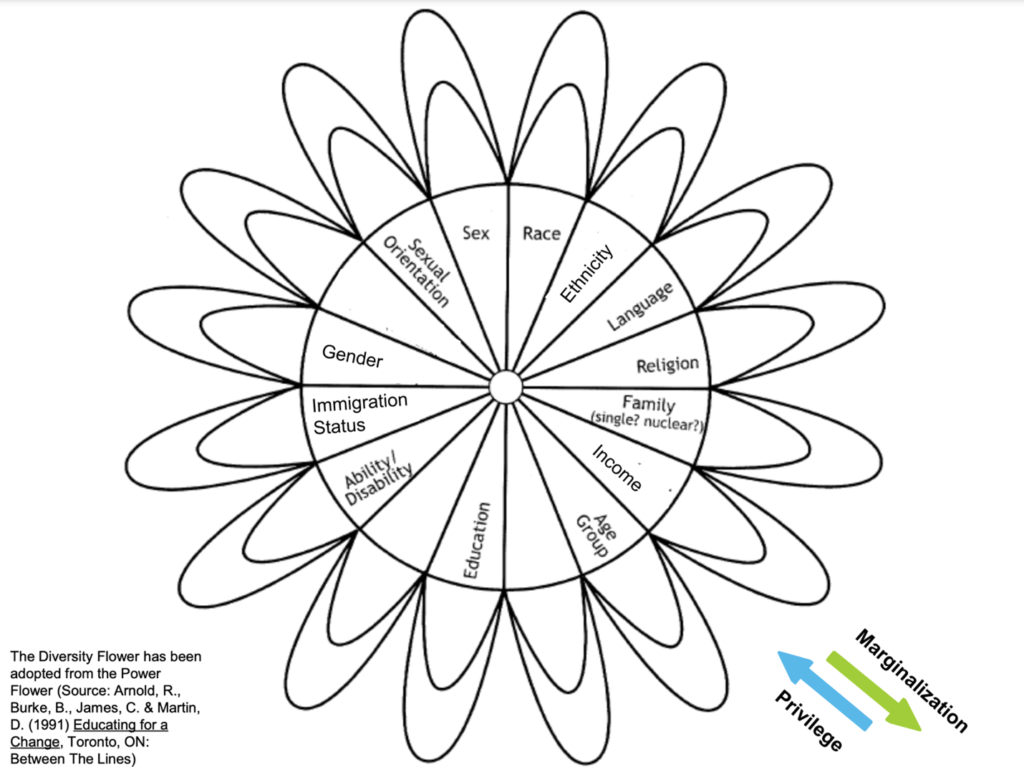 A visual tool that helps students examine their social identities and the power dynamics associated with them. Each petal of the flower represents a different aspect of identity, such as race, gender, or sexuality. By mapping personal characteristics onto a flower diagram, participants can visualize the dynamic nature of power and identity, fostering deeper self-awareness and empathy.
This activity fosters self-awareness and empathy, encouraging students to appreciate diverse perspectives within the classroom
An explanation of this activity is provided by the University of Central Florida HERE.
A detailed explanation can be found HERE.
(Image source: The Power Flower: An Inclusion and Diversity Activity - TOPR (ucf.edu) )
The following ideas have been curated from participants in the IB Educational Belonging workshop, showcasing initiatives from their respective schools.
Diversity
- Valuing of differences, learning enhanced by diversity
- Multilingual signage around the building
- Diverse student representation on walls
- Focus on gender identity, race, cultural background, economic class, cognitive abilities
Equity
- Safe spaces throughout the building
- Unisex bathrooms
- Translated communication
- ASL interpreters at celebrations
- Food provided to students in need
- Equity committee to address needs and growth
- EBL (Emerging Bilingual Learners) support
- Anti-Oppressive Education PD
- Implementing sound field systems in classrooms for students with hearing loss.
- Offering alternative playtime arrangements, quiet rooms, and breakout spaces for students who find certain environments overwhelming.
- Appointing a DEI lead to drive initiatives, such as supplying menstruation products in upper-year bathrooms and ensuring safe, equitable changing arrangements.
Inclusion
- District offers IB continuum, DP programme for all students
- Individual learning plans for students
- IB classes focused on native language, culture, history
- Intercultural development inventory for staff PD
- Learning support team for diverse learners
- Learning strategists support IEPs and teacher growth through PD
- Incorporating student voices in Individualized Education Programs (IEPs) and inviting parental collaboration
- Celebrating Neurodiversity Week - this inspired several students to give presentations to their classmates about their strengths and stretches and what it’s like for them as a learner
Tags: inclusion