Step #2: Build buy-in

How do you help people want the change, not just accept it?
Why do some initiatives gain momentum while others quietly fade? Bridges’ transition model reminds us that successful change depends on people making an emotional shift towards new practices, not just following a plan. Buy-in forms when people feel informed, valued, and involved.
On this page we introduce a stakeholder-mapping strategy designed to help you engage staff groups thoughtfully and build genuine ownership of the change.
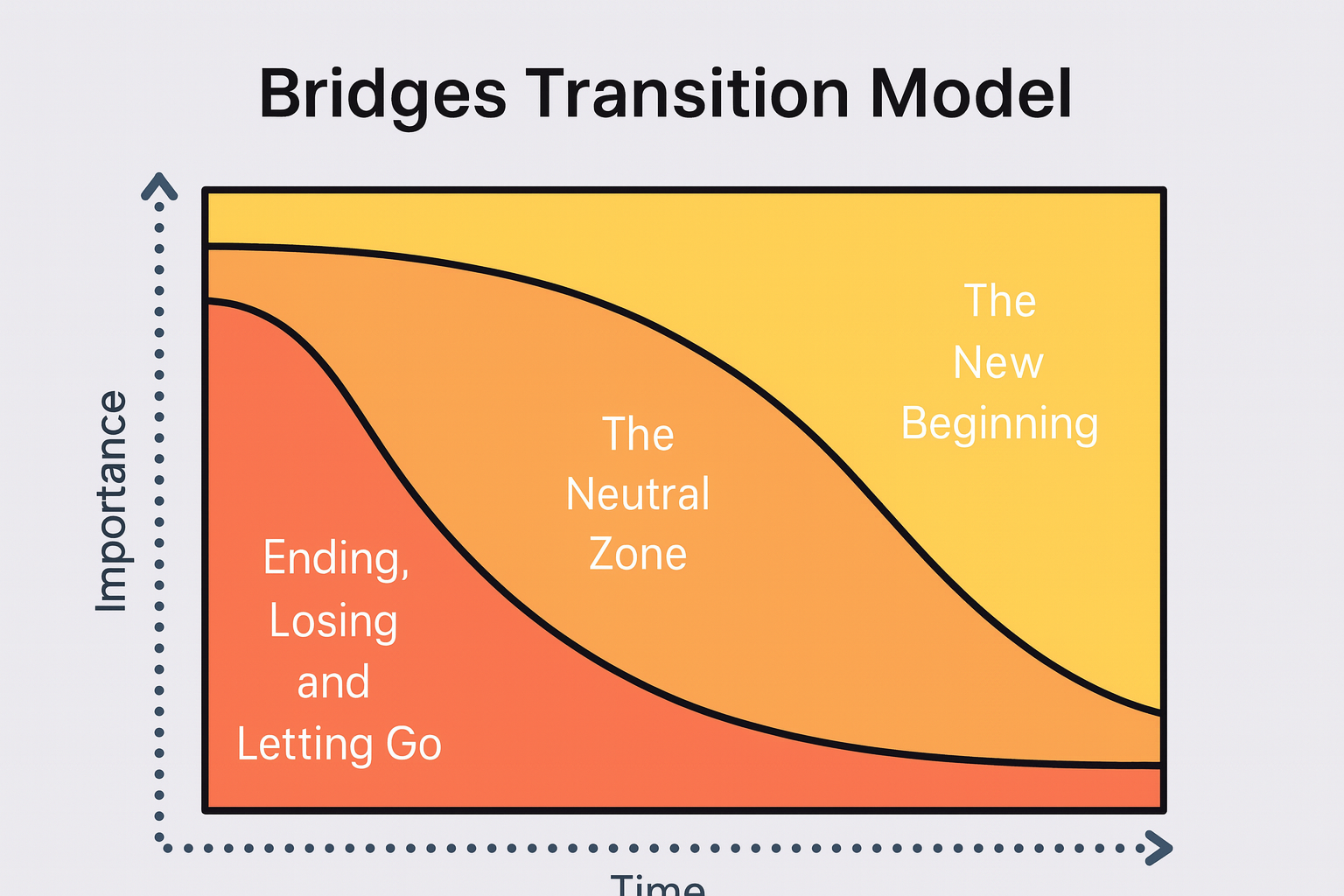
Change is rarely the real problem; it is being changed that people resist. William Bridges’ transition model reminds us that organisational change succeeds only when people make the psychological shift from the old to the new. While change is an external event, transition is the internal process individuals move through as they let go of familiar practices and adopt new ways of working.
Bridges explained that people move through three stages on the journey from the present to the future: ending, the neutral zone, and the new beginning. Each stage reflects the internal process of letting go, living in uncertainty, and stepping into new ways of working. People don’t move through these phases at the same pace, and many move back and forth as they process emotions and expectations. The ending stage requires empathy and space to acknowledge loss; the neutral zone benefits from clarity, short-term goals, and frequent support; and the new beginning emerges only when people feel ready, confident, and connected to the purpose.
For school leaders, building buy-in means recognising that staff need clarity, reassurance, and involvement, not just instructions. When leaders create space for people to understand the purpose and shape the journey, commitment grows and ownership replaces compliance.
On this page we introduce a practical protocol for building meaningful buy-in by supporting staff through the three phases of transition: ending, neutral zone, and new beginning.
Reflection questions
Who’s affected?
What do they value?
What worries them?
- list all affected groups (teachers, pupils, parents, support staff, governors).
- note their likely hopes and concerns.
- identify what each group needs to feel informed and included.
- plan tailored involvement (surveys, workshops, pilots, co-planning).
- share early wins and maintain clear communication.
Choose one change you are leading. Use the prompts below to think through how different stakeholder groups may experience each stage of transition, and what support they may need from you.
Ending, losing, letting go
- Which groups will be most affected (teachers, pupils, parents, support staff, governors)?
- For each group, what might they feel they are losing – routines, autonomy, identity, or familiar practices?
- What emotions might arise as they face this shift?
- How can you acknowledge these concerns, respect what has worked well, and make clear what will continue or be valued?
The neutral zone
- What uncertainty, extra workload, or confusion might each group face once the change begins?
- What would help them stay steady – clarity, small wins, regular check-ins, or involvement in shaping next steps?
- Where could you build in opportunities for questions, feedback, and trialling new approaches?
- How can you tailor communication so each group feels informed and supported during this unsettled phase?
The new beginning
- What early signs of progress might different groups notice?
- How will you help them see the purpose behind the new practices and the benefits emerging?
- What stories or examples could you highlight to build confidence?
- How will you continue supporting those who need more time, while still recognising and celebrating progress?
The Bridges Transition Model, developed by William Bridges in 1991, helps organizations and individuals navigate the emotional and psychological aspects of change.
MindTools.com. Bridges’ Transition Model: Guiding People Through Change