IB Approaches to teaching and learning

Are we teaching subjects...or teaching students how to learn?
Every IB teacher teaches content. Great IB teachers also teach students how to think, inquire, communicate, collaborate and become independent learners. The IB's Approaches to Learning (ATL) provide the framework for doing just that.
This page explores what the IB means by ATL, why it matters, and how it can transform classroom practice. It also includes practical workshop activities and links to key IB resources that you can use individually or with colleagues.
Perhaps the greatest misconception about ATLs is that they are another initiative or an additional programme. They are neither. They describe what effective teaching and effective learning look like in every IB classroom.
“Many pedagogical experts argue that schools should switch to teaching ‘the four Cs’ – critical thinking, communication, collaboration and creativity.’ More broadly, should downplay technical skills and emphasize general-purpose life skills. Most important of all will be the ability to deal with change, to learn new things, and to preserve your mental balance in unfamiliar situations. In order to keep up with the world of 2050, you will need not merely to invent new ideas and products – you will above all need to reinvent yourself again and again.” (Yuval Noah Harari, 21 lessons for the 21st century, 2018)
Professional inquiry
- Do students in your school know how to learn, or simply what to learn?
- What makes teaching in an IB classroom distinctive?
- How explicitly are ATL skills taught across your curriculum?
- If you observed lessons across your school, would you recognise a common IB approach to teaching and learning?
Why does the IB place such importance on ATL?
Read the following aims of approaches to teaching and learning. Which is/are the most powerful? Which challenge you the most?
- empower teachers as teachers of learners as well as teachers of content
- empower teachers to create clearer strategies for facilitating learning experiences in which students are more meaningfully engaged in structured inquiry and greater critical and creative thinking
- promote both the aims of individual subjects (making them more than course aspirations) and linking previously isolated knowledge (concurrency of learning)
- encouraged students to develop an explicit variety of skills that will equip them to continue to be actively engaged in learning after they leave school, to help them not only obtain university admission through better grades but also prepare them for success during tertiary education and beyond
- enhance further the coherence and relevance of the students' Diploma Programme experience
- allow schools to identify the distinctive nature of an IB Diploma Programme education, with its blend of idealism and practicality.
(Quoted in Extended Essay Guide 2017, IB, p19)
What are IB approaches to teaching and learning?
“ATL can often provide the common ground between national programmes, IB and a range of qualifications.” (Sara Woodcock, IBEN workshop leader)
“An IB education places particular emphasis on “learning how to learn” and on developing attitudes towards learning which students will retain throughout their lives. The opportunity for “learning by doing” rather than “learning by receiving” is an integral element. This begins in the Primary Years Programme where students are actively involved in inquiry and continues through to the Diploma Programme where, for example, students practise the arts rather than learn about them, where mathematical investigation is a key part of this subject and where during philosophy classes, students practice philosophical reasoning.” (Seefried, M., The IB, educating hearts and minds to meet the challenges of today’s world, IBO, 2008)
"What is of paramount importance in the pre-university stage is not what is learned but learning how to learn.... What matters is not the absorption and regurgitation either of fact or pre-digested interpretations of facts, but the development of powers of the mind or ways of thinking which can be applied to new situations and new presentations of facts as they arise." (Alec Peterson; Peterson, A. 1972. The International Baccalaureate: An experiment in International Education. London. George Harrap
The Approaches to Teaching and Learning Guide describes what the IB believes is effective teaching and learning. I think it is a really clear guide and an excellent pedagogical think piece that provides a clearly articulated rationale for its approach to both teaching and learning. It is not intended as a box ticking exercise. Instead in the hands of teachers it could be a very helpful stimulus for discussion about the art of teaching and learning.
If you look at the Diploma Programme model Approaches to Teaching and Learning are drawn right around the Learner Profile. This illustrates the IB belief that if you teach explicitly through approaches to teaching and learning you can help students develop the attributes of the Learner Profile.These approaches also inform the new subject guides.
Approaches to teaching focus on the pedagogical principles that underpin the Diploma Programme (as well as all other IB programmes) and provides strategies for use in the classroom.

Approaches to learning are all about the skills that students should develop. These skills provide a solid foundation for effective learning.They help students take responsibility for their own learning. Consider the time that is spent explicitly teaching the skills and students intentionally practicing and reflecting on them. There are five approaches to learning.


Resources
The IB have designed a good range of resources to support teachers. They can be found on the Programme Resource Centre in MyIB.
- Case Studies
- Interviews with leading thinkers on approaches to teaching and learning
- Videos from classrooms around the world
- Unit planners The IB have provided a number of templates which you could consider using. It is important to note that these are not compulsory. Schools already have excellent practice. Whilst it is useful to reflect on these unit planners they are not intended to replace already existing excellent practice.However, they do provide some helpful guidance on what you may like to include:
Approaches to Teaching: inquiry, key concepts (essential understandings), learning processes (including collaboration), differentiation, assessment (formative/summative)
Approaches to Learning: thinking, social, communication, self-management and research skills
TOK connections: personal and shared knowledge, ways of knowing, areas of knowledge, the knowledge framework
CAS connections
Professional reflection - Workshops: a range of workshops including a Category 3 workshop which allows participants to focus on implementation of the ATL in their own school context and/or provide opportunities to focus in depth on any one of the approaches.
- Resource Materials:
ATT in the IB Diploma: A literature review of teaching practices for effective teaching, King, L. (2013)
The introduction (pages 1-5) makes the case for the importance of directly teaching learning skills: it leads to effective learning, a higher level of engagement in learning as well as developing skills students will need when they leave school (multiple studies are quoted within the educational and business spheres). The document then (pages 5-9) provides clear definitions of metacognitive, cognitive and effective skills: metacognitive skills focus on the executive function of thinking, namely the self-management of learning - planning, implementing and monitoring learning efforts; cognitive learning interventions focus on the development of specific skills necessary to facilitate the acquisition of knowledge or skill; affective skills are those connected with motivation, self-concept, emotional management and resilience. The remainder of the document takes each of the five IB DP approaches to learning skills, breaks each of these down into their composite skill set and provides strategies for their development within the curriculum. This is a really useful document to use alongside the official IB ATL Guide. See also this site.
Approaches to Learning: Literature Review, Na Li, IB research paper. IB Matters have published a series of eight podcasts to give you a coherent, sustainable, values aligned strategy to implement IB Approaches to Learning Skills in your school.
In schools where not all students follow an IB programme, aligning the IB approaches to learning (ATLs) with broader educational goals can present challenges. One effective strategy some schools have adopted is to use ATLs as a bridge, linking them with frameworks already familiar in non-IB contexts. For instance, one school reported success by mapping ATLs to executive functioning skills.
Dawson and Richard Guare’s work, in Executive Skills in Children and Adolescents, identifies essential executive functions such as working memory, task initiation, emotional control, and time management, which align closely with ATL categories like self-management and thinking skills. Resources such as the Executive Skills Questionnaire and Executive Function Skills in the Classroom provide educators with tools and strategies to assess and support these skills.

In ‘Global Competence: building learner capacity’ Mark Treadwell defines competency as “a collection of enabling dispositions that collectively enables a learner to take increasing agency over their own personal behaviours and learning.” His excellent resource identifies six key competencies, many of which overlap with the IB Approaches to Learning.
The six competencies are:
- Identity (Who; Me?)
- Thinking and Questioning (Wondering)
- Managing Self (Being Organised)
- Collaboration (Learning Together)
- Cultural Awareness (Celebrating Difference)
- Communication (Being Human)
Each competency consists of a collection of enabling capabilities and dispositions that collectively allow learners to take increasing ownership, agency and efficacy, over their learning and their interactions with each other. These capabilities and dispositions then serve as a set of capabilities that enable us to successfully navigate our increasingly complex lives. The competencies are a life-long ‘work in progress’ that we modify and develop depth in, over our lifetimes. Developing competence ensures that learners have the required capabilities to take increasing agency over their learning and that they also have the appropriate capabilities for the societies that they will engage with.
The competencies need to be taught explicitly and never assumed. The competencies must be encouraged every day until they become part of each learner’s culture and capability set.
You may find this document really helpful to ...
- provide you with language taxonomies that provide a rich vocabulary for discussing each of the six competencies (pages 45-50).
- give you a multitude of practical applications. I especially like the thinking and questioning prompts that build on Bloom’s taxonomy (pages 111-113).
- develop rich conceptual frameworks for each of the competencies.
- provide great links for extra resources – e.g. University of Kansas online course to develop cultural understanding.
Selected Pages
-

IB Approaches to teaching and learning
How to engage staff with approaches to learning? Free
Whilst the IB approaches to teaching and learning are central to IB pedagogy they may not be foremost in the minds of colleagues
-

IB Approaches to teaching and learning
Parent workshop: Approaches to Learning Free
How to introduce approaches to learning to teachers and parents This page is written as a presentation to introduce the
-
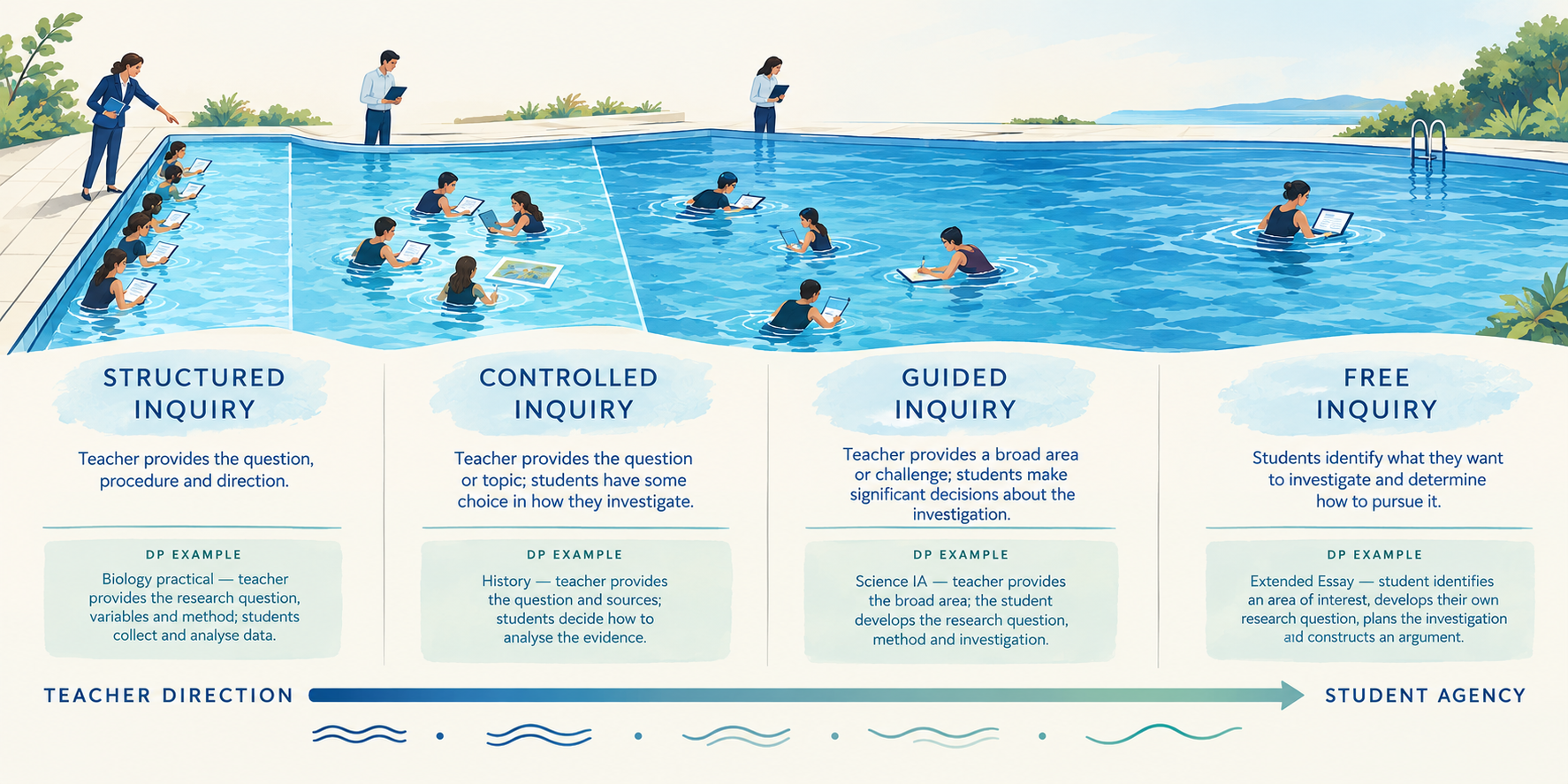
IB Approaches to teaching and learning
Models of inquiry based learning
Inquiry can range from highly structured, teacher-directed learning to increasingly open, student-led inquiry. The four
-

IB Approaches to teaching and learning
Designing an IB lesson: 6 questions to ask
An IB lesson is not simply about what you teach — it is about how you design the learning. The IB Approaches to Teaching
-
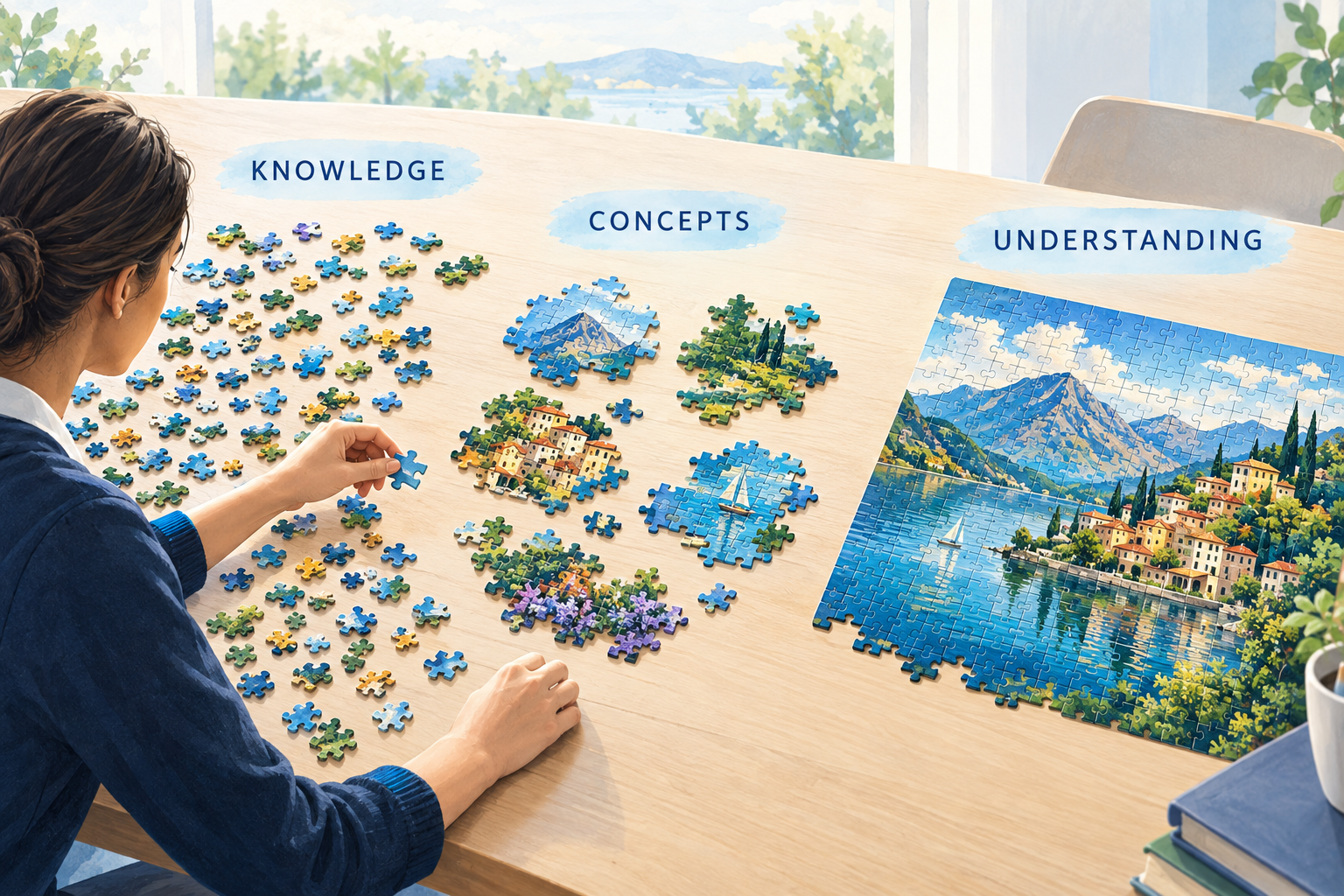
IB Approaches to teaching and learning
Teaching is focused on conceptual understanding
Students need more than knowledge. They need to understand how ideas connect, what they mean and how they can use what they
-

IB Approaches to teaching and learning
IB ATL: Self-Management
How do we help students move beyond simply managing the demands of school and develop the skills to take ownership of their