Do your students and staff feel they 'belong'?

“Belonging is more than just a word. It's the bridge that connects students to their potential.” (Kohlbecker 2022).
“Students need to feel accepted, valued and have a positive sense of belonging to sustain their attention and focus within the learning environment, and to then process and retain new knowledge effectively. The sense of belonging that students experience within their learning environment can have a positive impact on psychological safety, motivation and effort. Through demonstrating respectful communication and behaviour, teachers can nurture positive relationships and a sense of belonging for students.” (How students learn best: An overview of the learning process and the most effective teaching practices, AERO, September 2023)
The Massachusetts Institute of Technology (MIT) defines educational belonging as “the extent to which individuals feel like a valued, accepted, and legitimate member in their academic domain,” highlighting its importance for physical and psychological well-being. Yet, OECD’s 2017 and 2019 reports reveal a global decline in school belonging, with nearly one in three students feeling disconnected from their school. These findings also show notable gaps in belonging based on socio-economic background, gender, and immigrant status.
Fostering a sense of belonging in the classroom is crucial for advancing diversity, equity, and inclusion. When students feel they belong, they’re more engaged, motivated, and prepared to succeed. Educators can promote this environment by adopting culturally responsive teaching and prioritizing inclusive practices, creating spaces where all students feel valued and empowered.
Stanford Professor Geoffrey Cohen’s research underscores the consequences of when people feel threats to their sense of belonging - this can lead to them becoming disengaged (from learning), and can cause damage to both their mental and physical health. He notes that when individuals feel they don’t belong, their “horizon of possibility shrinks,” making them doubt their capabilities and place in the setting. Student belonging isn’t just a “nice extra.” As Cohen makes clear, it’s essential for learning to happen in the first place.
IB Standards and Practices refer to five IB mandated policies. They are: Admissions Policy, Language Policy, Inclusion Policy, Assessment Policy and Academic Integrity Policy. These policies are important to both the authorization and five year evaluation processes since they are central to the implementation of the IB programmes.
These five policies go to the heart of ‘belonging’ in an IB World School:
- Admission Policy is all about who we accept into the programme.
- Inclusion Policy is all about how we include them - appreciate and meet their needs.
- Language Policy has at its heart how we cherish their identity.
- Assessment Policy is all about how students grow and develop.
- Academic Integrity Policy is about the character of the student.
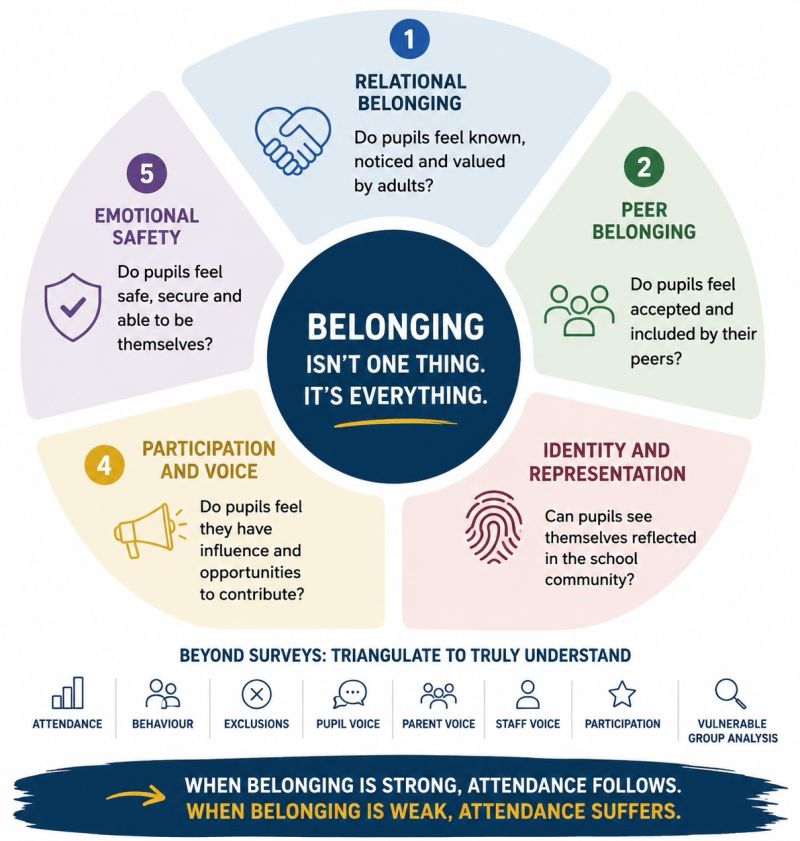
I am grateful to Colin Cattanach who posted this image on LinkedIn - it helped me to understand belonging from a systemic point of view.
Design for Belonging is a framework to support you to build greater belonging and reduce ‘othering’ in your community.
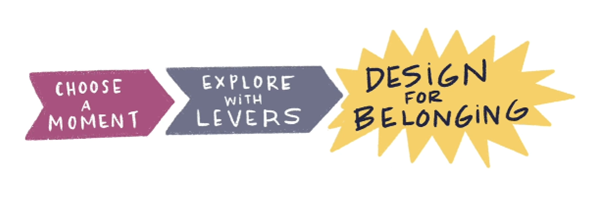
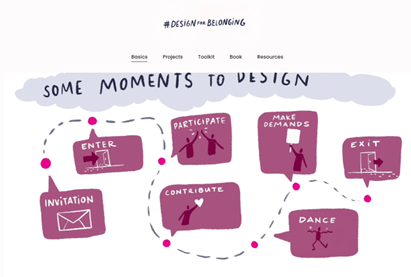
Design moments of belonging
Belonging is a feeling.
- How are you invited in?
- What does it look like to join in something?
- What is full participation in this community?
- What does knowing how to contribute look like?
- What does the moment of flow (the dance) feel like when you feel you belong?
- Making demands is a powerful moment when you feel you can raise a concern?
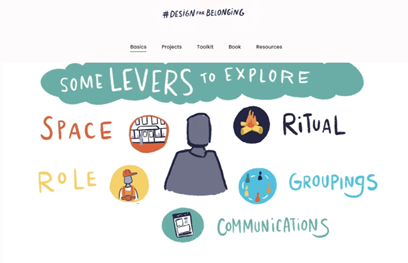
What are the design levers we can use?
When we design an environment to nurture belonging we should consider the following elements:
- Space: The physical setup of the classroom—how desks are arranged, what’s displayed on walls, and how welcoming the environment feels—can strongly influence students’ sense of belonging. An inclusive space might feature accessible seating, student-created work on display, and flexible arrangements that promote interaction and collaboration, signaling that each student is valued.
- Roles: Offering students meaningful roles in the classroom helps them feel they contribute to and have a place within the community. Rotating roles, such as discussion leaders, helpers, or project organizers, allow students to experience responsibility and involvement, encouraging them to see themselves as integral members of the group.
- Ritual: Establishing classroom rituals—like a welcoming routine, shared celebrations, or even consistent greetings—builds predictability and a shared identity. Rituals help create a comforting environment where students know what to expect and feel included in daily practices that reinforce community.
- Groupings: Thoughtful grouping strategies ensure all students get opportunities to work and connect with different peers. Changing groups frequently or using mixed-ability pairings helps students appreciate diverse perspectives and strengthens connections within the class, making everyone feel part of the group.
- Communications: Inclusive communication—through respectful language, active listening, and open dialogue—helps students feel seen and heard. Regular feedback, opportunities for students to express themselves, and positive reinforcement reinforce the idea that everyone’s voice matters, building trust and fostering a sense of belonging.
This Design for belonging toolkit provides some very helpful activities for teachers to reflect on.
Case Study: Southeast/East Asian Secondary School
(This case study arose out of an IB workshop I facilitated on Educational Belonging in November 2025. I have anonymized the case study, but felt the points raised were so significant that it would be useful for us to share. I am very grateful for the IB educators who discussed this during the workshop.)

A teacher at a secondary school in Southeast/East Asia notices that many students experience belonging uncertainty—a sense of not fully fitting in with what they perceive as the “typical” student. During an informal class discussion, students identify several factors that make some peers feel out of place. These include:
- Not aligning with dominant expectations around gender identity or sexual orientation
- Coming from a less affluent background
- Struggling academically in a highly competitive school culture
- Belonging to a minority ethnic group or not speaking the majority language fluently
- Not matching prevailing beauty standards, especially regarding slim body types
- Being introverted or socially awkward
- Joining the school later than others and finding established social groups difficult to access
The teacher recognises that many of these pressures are reinforced by broader cultural norms across the region. For example, comments about weight or appearance are often seen by students as “motivational,” and high academic achievement is widely expected. Similar patterns are reported by teachers in nearby countries, including concerns about body image emerging at very young ages.
Although such norms feel normalised to the students, they clearly shape how accepted and confident young people feel in the school environment.
Here are some strategies we discussed:
What you’ve both described fits very closely with the research on belonging uncertainty: when students interpret everyday cues—comments about weight, language expectations, norms around popularity, sexual orientation, or academic achievement—as signals about “people like me” not fully belonging in this environment. What stands out in your context is how normalized these cues feel within the broader cultural frame of Hong Kong, East Asian schooling practices, and community values. That makes the issue harder to see, and harder for students to challenge, even when they privately recognise the strain it causes.
The fact that your students could articulate these pressure points—body image, linguistic/cultural identity, class background, entry point into the school, etc.—is actually very significant. Research on socio-cultural identity shows that naming the norm (e.g., “cisgender, heterosexual, wealthy, academically strong, ethnically Chinese, slim”) is the first step in making the invisible visible. When norms stay invisible, students often blame themselves for not fitting in. When norms become visible, students can locate the issue in the environment rather than their own deficits.
In settings where cultural norms are seen as fixed (“this is just Hong Kong culture” / “this is for your own good”), belonging uncertainty can easily calcify into self-silencing and chronic self-monitoring. Addressing it—even lightly—can:
- improve well being: Students who feel they belong show lower anxiety, healthier peer relationships, and better coping strategies.
- support academic engagement: Belonging affects willingness to take risks, ask questions, and persist through difficulty.
- model critical cultural literacy: You’re not opposing local culture, but inviting students to reflect on it—an important skill in increasingly diverse and global educational spaces.
- create micro climates of safety within a broader conservative institutional culture.
Practical steps you could consider
These can be culturally sensitive and low-risk while still impactful:
1. Collective reflection activities
Since your students responded thoughtfully, you could build on that awareness with structured, low-stakes exploration:
- Anonymous “What helps me feel like I belong here / what makes it harder?” surveys
- Small-group discussions about how they define “the average student”—what’s true, what’s assumed?
- Media prompts (ads, social media posts, short videos) that spark conversation without directly critiquing the school
2. Normalize heterogeneity without confronting cultural norms head-on
You don’t need to say “your culture is wrong.” Instead, frame diversity as:
- A reality of the world they are already part of
- A strength in teamwork, friendships, and future workplaces
- Something that exists even within Hong Kong, not just outside of it
Students often respond better when the discussion isn’t framed as Western liberal values vs. local culture.
3. Micro-messages of inclusion in your classroom
These can subtly counter belonging uncertainty even if the whole school isn’t on board:
- Showcase multilingual identities in materials or examples
- Use a wider range of body types in visual resources
- Model non-judgmental language about appearance or academic ability
- Celebrate small academic improvements, not only high achievement
Over time, these cues accumulate and shift your classroom climate.
4. Peer-led initiatives
Students in East Asian contexts often respond strongly to peers.
For example:
- Student panels sharing experiences (anonymous or written)
- Peer support groups centred on transition, academic challenges, or wellbeing
- Student-created posters or messages about respectful communication
5. Leaning on well being research to “legitimise” the conversation
If the school is conservative, you can sometimes bypass cultural defensiveness by grounding conversations in:
- Mental health research
- Learning psychology
- Evidence on academic persistence
This re frames belonging not as a cultural critique but as a learning support.
A final thought
The fact that students surprised you by how aware they already are is key. Young people in Hong Kong and Korea often hold more nuanced views than adults assume—they just rarely get the chance to express them. If you create spaces where their awareness can surface safely and without judgment, you may find they’re more ready for these conversations than the institution is.
Scenario: When beliefs collide
In an online workshop on Education Belonging one participant raise the following scenario.
“I find it quite challenging to find the balance between acknowledging, accepting and celebrating different cultures and background while still "living" the IB principles. We have for example many students from different religious groups, who have very specific believes. Some of those believes go directly against the IB values of acceptance and respect towards everyone regardless or gender, sexual orientation...etc
In my school we have basically dealt with it by letting students know that are entitled to believe whatever they want to believe; but that within the school building and community; some of those views that are disrespectful towards another member of the community are not acceptable. What is a better way to deal with this?”
Strategies
. Many educators face tension between honouring diverse cultural or religious beliefs and upholding IB principles such as open-mindedness, respect, and inclusivity. The IB perspective emphasises that schools do not need students to change their personal beliefs; instead, they need students to engage in behaviours that ensure dignity and safety for others. Framing classrooms as communities of practice, using the Learner Profile as common ground, and teaching students to hold multiple perspectives (which goes to the heart of the IB mission) can support this balance.
A key challenge is helping students feel that they belong even when their personal values may differ from aspects of the IB ethos. The goal of the IB is not full ideological alignment, but creating environments where students feel respected, understood and able to participate meaningfully.
Here are five concise, reflective strategies schools might consider:
- Co-create community agreements so students help define respectful behaviours within a diverse learning environment.
- Use the IB Learner Profile as shared language to anchor expectations and guide conversations about conduct, identity, and difference.
- Implement structured protocols for sensitive discussions to make dialogue predictable, safe, and reflective rather than confrontational.
- Provide multiple avenues for cultural and personal identity expression so all students feel seen and valued within the community.
- Develop relational practices that build belonging—prioritising trust, empathy, and connection over ideological alignment.

Creating a culture where staff feel they belong is essential for fostering long-term commitment and engagement. While it’s impossible to ensure 100% retention, building an environment where employees feel valued and appreciated can make them less likely to leave. A positive culture not only attracts individuals but encourages them to recommend the workplace to others as an ideal place to be. When people feel like they truly belong, they are more likely to stay, even when external factors—such as salary—aren’t perfect. Moreover, if they do leave, they are more likely to return when the right conditions arise, driven by the strong connection they feel with the organisation.
A healthy, supportive culture is far more important than perks or paychecks. While financial incentives may help retain employees temporarily, a toxic environment will quickly drive even the most talented individuals away. Creating a workplace where staff feel appreciated, respected, and part of something meaningful fosters long-term loyalty and motivates individuals to bring their best selves to work. Ultimately, people stay where they feel they matter, and when they feel emotionally invested in the organisation, it drives their performance, well-being, and overall satisfaction.
A great resource
The Climate Connection Toolkit provides practical, no- and low-cost strategies to help schools examine and improve their social and physical environments—their school climate. School climate reflects shared values, norms, and relationships among teachers, students, and the wider community. Adapted from California’s Safe and Supportive Schools (S3) initiative, the Toolkit offers self-contained activities that foster stronger connections between adults and students. It emphasizes that a school’s climate—like the unseen part of an iceberg—shapes the success of all programs and initiatives. By intentionally addressing underlying norms and relationships, schools can improve safety, inclusivity, and collaboration. The Toolkit includes 13 ready-to-use activities that fit easily into busy schedules and can stand alone or form part of wider improvement efforts. It is intended for all school staff, particularly those seeking to strengthen relationships and build shared responsibility for a positive, supportive learning environment.
Summary of research
Australian Education Research Organisation. (2023).Encouraging a sense of belonging and connectedness in secondary schools: A practice guide.
A strong sense of belonging, or school connectedness, is essential for students’ wellbeing, engagement, and learning. When students feel valued, accepted, and safe, they are more motivated, show better behaviour, enjoy school, and achieve improved academic outcomes. Belonging supports students’ ability to “be themselves” and affirms their cultural identity and individual needs.
Positive relationships are the key drivers of belonging. Teacher–student relationships have the greatest impact, strengthened by fairness, support, respect, encouragement, and genuine interest in students’ lives. Peer relationships also matter; trust, acceptance, and social support enhance connectedness. Classroom strategies such as active learning, guided group work, varied seating, clear routines, and inclusive practices foster engagement and participation.
Whole-school approaches are equally important. A positive culture, high expectations, anti-bullying policies, pastoral support, and leadership commitment create a safe, nurturing environment. Extracurricular activities, camps, and peer mentoring promote friendships and a sense of identity, while strong family–school communication strengthens the support network.
Teachers and school leaders should integrate these practices into everyday routines, reflect collaboratively on current approaches, and adapt strategies to meet the needs of all students. A whole-of-school approach ensures that learning and wellbeing reinforce each other, leading to lasting positive outcomes.

Reflect
Sometimes we seem to fit into a workplace yet still feel we don’t truly belong. Fitting in is about adapting to be accepted; belonging is being valued as our authentic selves. True belonging comes when people can bring their whole selves to work. Our goal should be to create spaces where no one has to fit in to be accepted.