Reflecting on reflection!
 Why is professional reflection so important?
“Without reflection, we go blindly on our way, creating more unintended consequences, and failing to achieve anything useful” ~Margaret Wheatley
What does it mean to reflect and use this skill to improve ourselves?
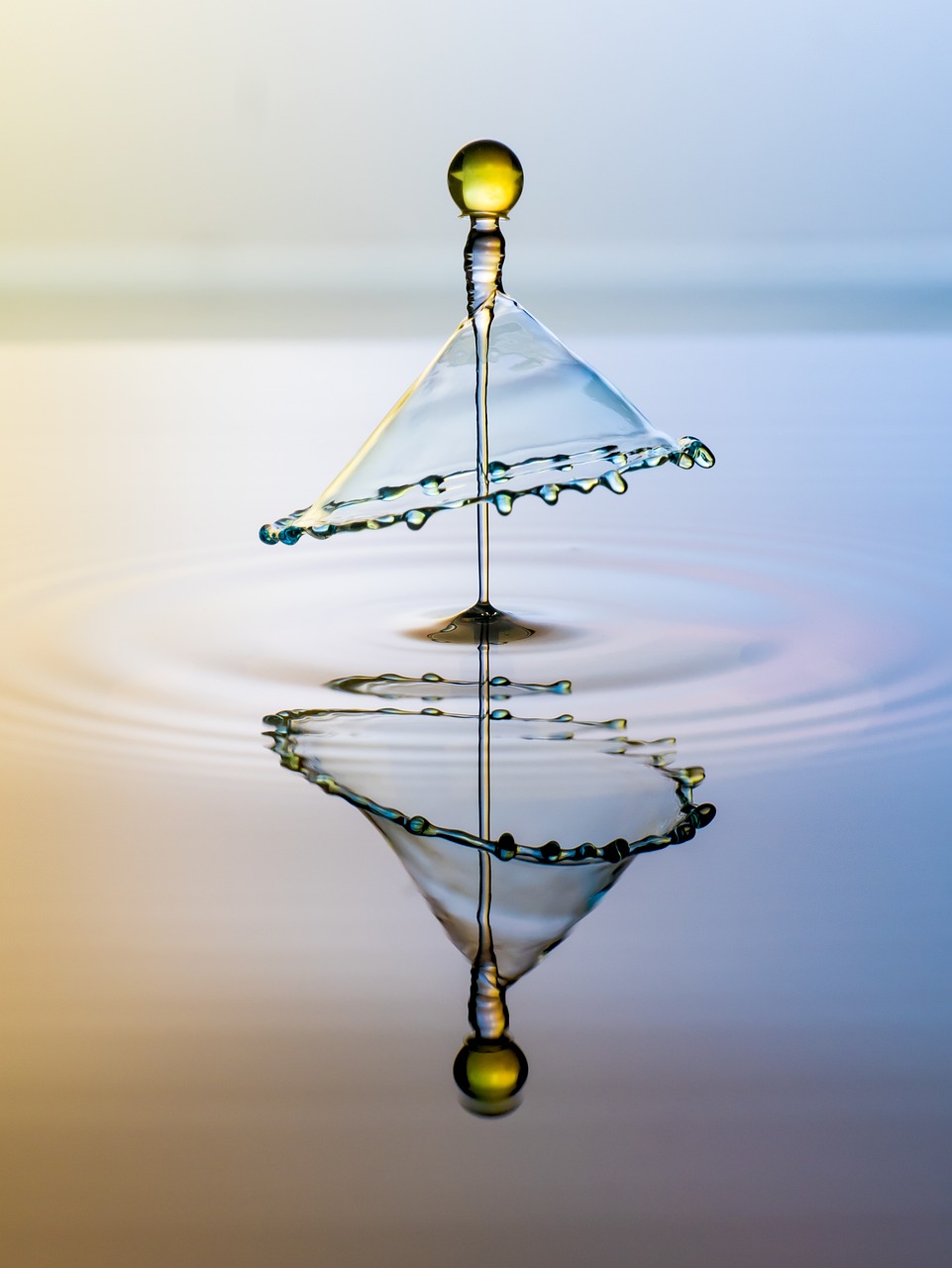
(Image source: Drop Splash Impact - Free photo on Pixabay)
What does it mean to reflect?
When you reflect you think about what you do: what happened, how you felt and what you thought, in order to consider what you would do differently next time. All human beings reflect on the experiences they have. However, when we develop the skill of being reflective we consciously consider what has happened in order to learn insights from our experiences.Reflective practice is a skill that can be learned and improved upon.
How do we reflect?
 Neil Thompson, in his book People Skills, suggests that there are six steps:
- Read - around the topics you are learning about or want to learn about and develop.
- Ask - others about the way they do things and why.
- Watch - what is going on around you.
- Feel - pay attention to your emotions, what prompts them, and how you deal with negative ones.
- Talk - share your views and experiences with others in your organisation.
- Think - learn to value time spent thinking about your work
One of the most often used models to encourage reflective practice is that of Gibbs (1988). The diagram above explains the different stages of reflection.
Reflection
It would be fairly understandable if the last thing that we would want to do after a failure was to chew it over, inspect and analyse it and then objectively and unforgivingly apportion all due blame to ourselves. Yet the great thing about us as a species and what religions and philosophers throughout the ages have hailed as the main reason for our rise above all the other species is exactly this trait. We are self-conscious. Not in the sense of being shy but in our incredible capacity for self-analysis. Many of our evolutionary cousins have opposable thumbs and can walk on their hind legs quite proficiently but they didn’t invent fire or the wheel or build Dubai.
The ability to reflect, learn and use our subconscious to influence how we react distinguishes us from others on the planet. Only humans have such an advance ability to learn from mistakes and apply the learning to the next, or even a new, situation.
And this ability is still as central to our success as ever, perhaps, as our work and private lives seem to require ever greater capacities for emotional intelligence and interpersonal skill, more so than ever...
The trouble is we don’t practice it. And so we often have to endure the shame of making the same mistake several times before we finally recognise a similar situation coming into view and are able to make the necessary adjustments to what we say, or how we say it, or what we do and how we do it, in order to avoid further disaster.
 But how does one practice reflection?
- Do yourself a favour and someday soon write a letter to your younger self advising yourself how to live your life better second time around. Post-date it by two weeks or a month and promise yourself you will re-read it when that time has elapsed
- Try to stop making excuses for your mistakes or deflecting blame. Go beyond what went wrong to why it went wrong
- Try to constantly praise others...in return you will receive praise of your own. Accept it graciously; it will build your self-confidence and ability to be resilient when tempted to fall back into a negative old behaviours and repeating mistakes
- Don’t be self-satisfied with successes that you have always found easy to achieve but be generous to yourself when you achieve something that has hitherto been rare or difficult for you
- Listen to yourself coaching others and ponder whether the advice might not be good for you too
- Emotion is the enemy of reflection. Keep calm, put your ego away and be proud of yourself when you turned the other cheek
- See your interactions with others as a way to develop them rather than opportunities to score points
Finally, have a look again at a selection of quotes from Einstein. You will tend to find that he is remarkably modest and humble when it comes to his many achievements but at the same time not shy about celebrating the qualities that he showed in reaching them, especially resilience and perseverance. We could do worse than to follow his example.
“By three methods we may learn wisdom: first, by reflection which is noblest; second, by imitation which is easiest; and third by experience, which is bitterest” - Confucius