Let students tell your school's story
From mission statements to lived stories
Every school has a mission, but can your students show how it comes alive every day—in their own voices and through their own lens?
Schools are tasked with delivering academic rigor, nurturing global citizens, and showing meaningful impact to parents and communities. Too often, though, these goals live in separate silos: curriculum planning in one room, service learning in another, communications down the hall in marketing.
But imagine a single approach that unites them all—deepening learning, amplifying student voice, and authentically showcasing what your school truly stands for.
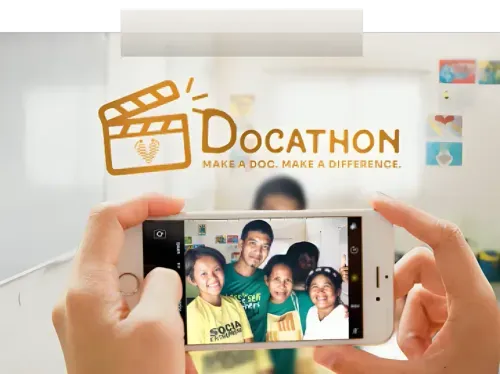
This page has been contributed by Tom Graham, co-founder of Make a difference(MAD) courses. One of their programmes is Docathon which trains and inspires students to create educational films on local issues, connecting them with change makers and demonstrating your school's values. Tom describes three challenges he has seen schools face—and how student storytelling has helped address them.
Make a documentary - make a difference
Case study #1: American International School of Johannesburg
When students see the why
Many schools work hard to deliver meaningful, inquiry-based units—but students still ask: “Why does this matter?” Learning that’s siloed by subject or assessed only through essays often fails to translate into lived understanding.
At the American International School of Johannesburg, educators designed an interdisciplinary Docathon unit that merged English, service learning, and creative media. Grade 11 and 12 students were tasked with interviewing local change makers in the Johannesburg community, then crafting short films that brought those stories to life.
“Docathon added real purpose to a film study unit,” said English teacher Dr. Sou Leong-Ellerker, a long-time MYP practitioner, who designed an interdisciplinary Docathon unit that brought together film studies, service learning, and creative media for our high school students . “It was a great way to use creative communication to support and engage in service learning. Being part of a broader Docathon community, and knowing their films would have an authentic audience, was a major motivator for students to produce high-quality work.”
Students learned how to listen deeply, plan interview questions, structure narrative arcs, and reflect critically on the issues raised. They were not simply learning about storytelling—they were using it.
Through this project, they developed multiple Approaches to Learning: collaboration, communication, research, and self-management. More importantly, the work meant something. When their films were screened as part of a community-facing service conference, the learning lived on—in the audience, in the community, and in the students themselves.
Case study #2: British School Manila
Beyond posters - real global citizenship
Most schools have embraced the Sustainable Development Goals and talk about student agency. But how do we move from symbolic action—like posters or fundraisers—towards experiences that genuinely shape character?
At British School Manila, Docathon became a creative vehicle for shifting the school’s service learning approach from “project-based” to “relationship-based.” During Service and Sustainability Week, students from Grades 7 to 9 spent time with local communities, listening to stories that weren’t always easy to hear—and using film to make those voices visible.
“The documentary process ensures students listen deeply… it puts community voices front and centre,” said Michael Guinness, BSM’s Service and Sustainability Lead. “Our community partners felt recognised, heard, and seen.”
The result? Over 70 student films were produced. Themes ranged from access to healthcare and education to Indigenous rights. One student reflected: “The moment we heard this woman’s story, it became far more than ‘just’ a school project.”
By taking the time to listen before creating, students began to understand what it means to serve with humility—and to advocate through the stories that they are telling.
Case study #3: AISB Budapest
School leaders are often asked to demonstrate how their mission is lived out in practice. Yet conventional marketing approaches—brochures, open days, or mission statements on walls—can feel disconnected from the day-to-day student experience.
At AISB Budapest, storytelling became the centre piece of the school’s Changemakers Conference. Students from over a dozen international schools came together in person, with others joining online from around the world. They shared short films tackling equity, identity, and sustainability—sparking conversations across generations and cultures.
“Storytelling is one of our greatest community assets. Although it is often unsung and under-developed, Docathon counters both of these, elevating the stories of local communities to the global stage. “ - Dom Verwey, Grade 6-12 Service Learning Coordinator and DP Core Educator at AIBS.
Watch some highlights here.
These weren’t polished PR pieces. They were honest, student-driven explorations of issues that matter—supported by educators and responded to by professionals, parents, and peers alike.
The event showed that when schools create space for student storytelling, they don’t just communicate values—they embody them.
How might your students’ stories be shared beyond the classroom? Could they feature in assemblies, parent newsletters, or even your admissions strategy? Because nothing says “this is who we are” like the voice of a student telling a story they care about.
When students are invited to create meaningful stories about their world, they are learning more than media or writing skills. They’re learning empathy. They’re applying knowledge. They’re becoming advocates. And along the way, they’re helping schools become more cohesive, values-driven communities.
- What stories are your students already living that deserve to be told?
- How might your next interdisciplinary or service unit become a platform for student voice?
- Could student-created films offer new ways to reflect your school’s values to the world?
If you wish to make your own film fee free to contact Tom email him at [email protected] or connect with him on Linkedin HERE.