Is your school a learning organisation — and how do you know?
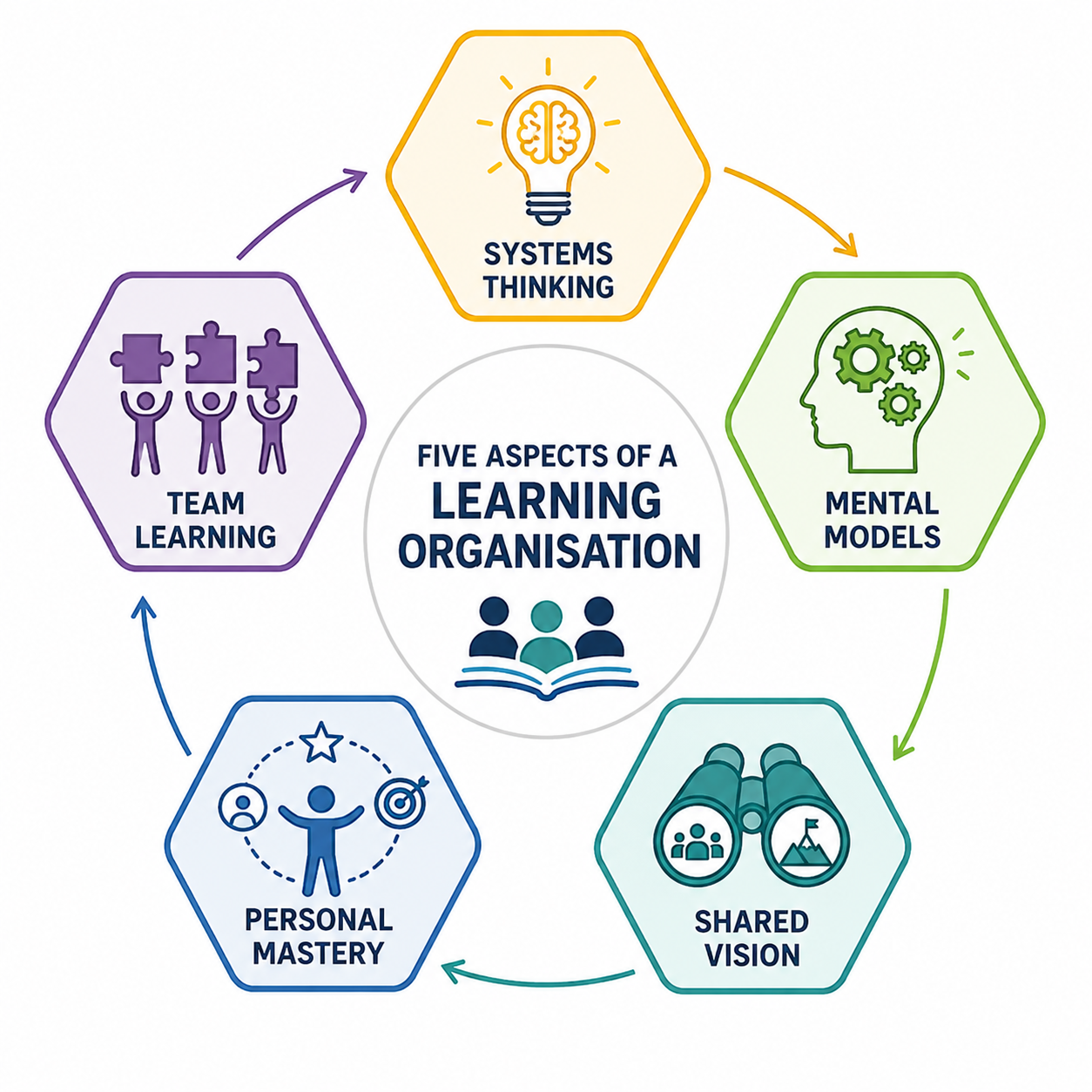
When the IB reframed its Programme Standards and Practices and introduced a new evaluation schedule, the concept of schools as learning organisations became an important influence. But what does it mean in practice, and how can it help leaders bring about sustained school improvement?
I have returned to this again because I am currently facilitating the IB Category 3 workshop on Leading an IB Learning Organisation and having great conversations with colleagues from a rich diversity of countries, including Canada, South Korean, Japan, Dubai, Switzerland and Bahrain.
Peter Senge identified five disciplines that characterise a learning organisation. Each provides a valuable lens through which to understand your school and identify opportunities for development.
1. Systems thinking: seeing the whole: Schools are ecosystems of interconnected parts. Change in one area affects others. Leaders need to understand these relationships, anticipate unintended consequences and look beyond symptoms to underlying causes. Improvement requires us to see the whole, not simply fix individual problems.
2. Mental models: challenging how we think: Our beliefs, assumptions and attitudes shape how we interpret events and make decisions. Leaders need to understand the different perspectives within their community, encourage open inquiry and challenge established ways of thinking. They become the school’s chief storytellers, helping develop a coherent understanding of its purpose and direction.
3. Shared vision: creating a future together: A vision cannot simply be imposed from above. It needs to be developed and owned collectively, inspiring commitment, experimentation and innovation. The question is not whether your school has a vision, but whether its community genuinely shares it.
4. Personal mastery: committing to lifelong learning: Schools improve when everyone, including leaders, remains committed to personal and professional growth. Leaders must model curiosity, reflection and a willingness to learn, creating a culture in which development is part of everyday practice.
5. Team learning: thinking together: Individual learning is important, but collaborative learning enables teams to develop shared understanding, generate new ideas and improve practice. Dialogue, professional inquiry and purposeful collaboration help turn individual insights into organisational learning.