August Blog (Part 2): Back to School

Back to School
We hope that those of you returning to school in August after the long vacation have had a restful time!
If you are teaching first year IB History students, don't forget that we have an introductory section for students who are new to the IB programme (Getting started: Students). This gives them an overview of the kinds of skills they will need for the IB History course and advice on how to develop key study (and revision) skills.
(You can get full access on this site for your students as part of your subscription - see this page for how to do this).
Suggestions for activities that you might consider doing with new classes to introduce them to this subject can be found here:
3. Starting the DP History course
At the start of the IB course it can be a good idea to do various exercises with students to equip them with some basic historical vocabulary that they will need and/or to give a broad historical sweep...
Several of the themes under our TOK pages, along with past Blog pages, would also work well as an introduction to the study of history. These pages reflect on how current issues are linked to historical themes and questions.
Anniversaries: 80th Anniversary of VJ Day
Another possible starting point to the DP History course is to consider key anniversaries for this month and use these as a jumping off point for discussion re the significance of these events, as well as their relevance in contemporary politics.
Our last blog looked at conversations around the 50th Anniversary of the Helsinki Accords - reflections on the diplomatic success of this agreement and how this contrasts with the threats to security and cooperation that Europe now faces; also the extent to which the principles that were established at Helsinki can be maintained, or even renewed.
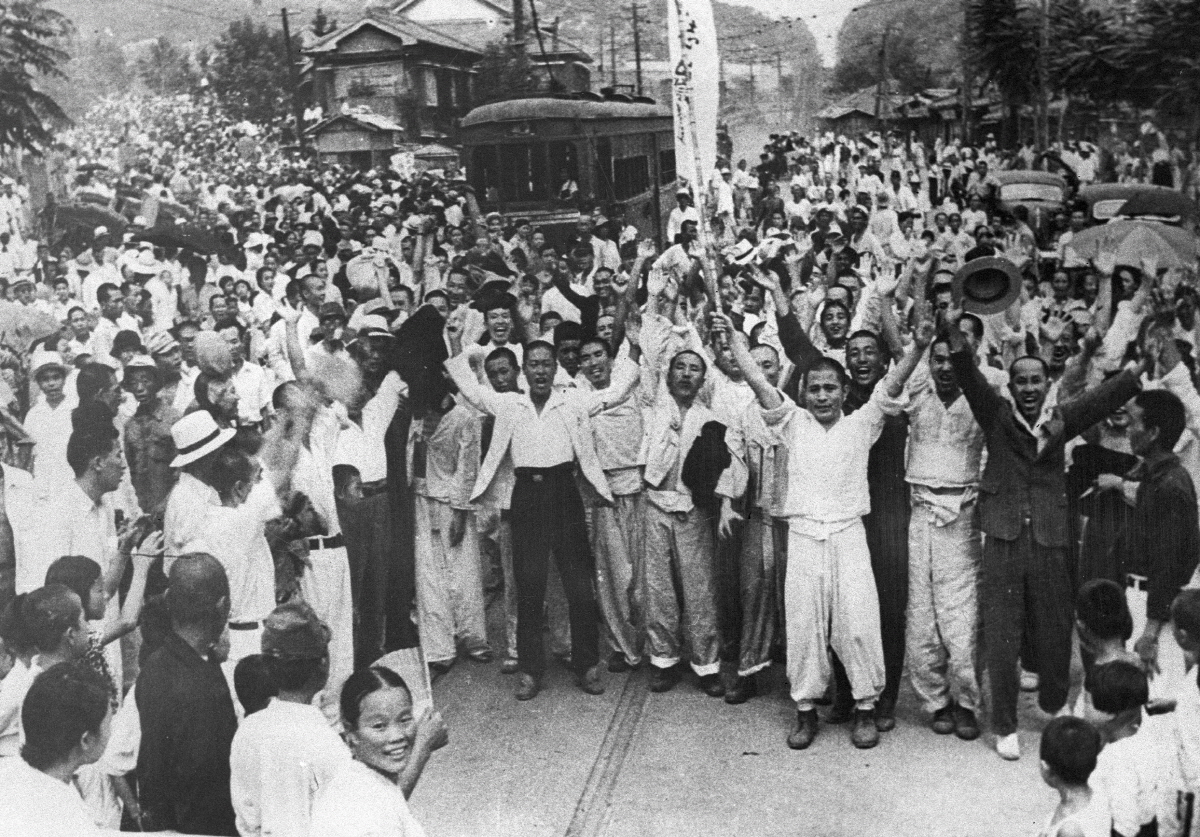
This month also sees the 80th Anniversary of VJ Day. The context and significance of this day is explained on this page from the Imperial War Museum in London
However the varying ways this anniversary is commemorated in different countries raises interesting issues as to how the Second World War in Asia is remembered by different nationalities. China has designated September 3 as "the Anniversary of the Victory of the Chinese People's War of Resistance Against Japanese Aggression and the World Anti-Fascist War." In Japan, the 15 August is a mourning occasion known as the "Memorial Day for the End of the War". And in the US, commemorations take place on 2nd September and largely focus on Pearl Harbor and the U.S. victory over Japan.
As this interesting article below from Asia Pacific Journal explains: Within Asia, war memories and commemorations are not only different from those in the U.S. but also divided and contested'. And it goes on to look in more detail at the way in which the war is remembered in each country and why.
The article concludes that this situation is a dangerous one: ‘In an era dominated by strongmen who weaponize nationalism and manipulate historical memory for political gain, the distortion of the past has become a common tool of division and confrontation. It is imperative that U.S. and Asian leaders, rather than continuing to commemorate their fractured memories, can come together to mark the end of the Asia-Pacific war jointly, as has been done in Europe. Only then can they present a credible, collective vision for the peace and prosperity of this important region grounded in the hard-earned lessons from the unfortunate past.’
These differences in perception regarding the war in Asia would be an interesting discussion point for IBDP students - particularly relevant to those students studying The Move to Global War for Paper One, the Second World War for Topic 11, Paper Two and Topics 11 and 12 for Paper 3, Asia region.
This short clip from the BBC also raises questions about the nature of Japan's remembrance of the Second World War in Asia:
How does Japan remember the end of WW2? (BBC News)
In Japan, 15 August is a mourning occasion known as "Memorial Day for the End of the War"
Another anniversary for this month that students could explore is the 60th Anniversary of the Voting Rights Act in the US. The anniversary of this landmark legislation has sparked discussions on the threats that voting rights currently face today in America:
The Voting Rights Act turns 60 — but its promise is still under threat (The 19th)
As voting rights lose ground, the 19th spoke with four of the advocates working to preserve the path to the ballot for the most marginalized voters.
This is particularly relevant for students studying Paper 1, PS 4 and Paper 3, Americas, Topic 17.
Site update: Essay for current students and new Extended Essay guidelines
We have just uploaded another high scoring Extended Essay. We hope that this will be useful for your current second year students.
However, please note that the IB has released a new Extended Essay guide, for first teaching in 2025 and first examinations in 2027.
The new guide can be found on MyIB.
In addition, we have uploaded the following page to help you navigate the changes and to understand the key differences between the current EE requirements and the new guidelines which start this year with first examination in 2027:
Curriculum Review Update
A reminder that the 3rd Curriculum Review can also be found on MyIB along with a Final Curriculum Review Report published in April this year.
To help you manage the transition to the new curriculum please note that we will have our site ready with new materials and guidance in good time to begin teaching in August 2026