Choosing 'pathways'

There are many ways of approaching the History DP syllabus, with choices to be made not just on the main topics for each Paper, but also the examples for Paper 2. For the latter there are many to choose from! This makes the course one that is exciting and also flexible to plan. It also means that careful thought is needed to create a course that meets the interests and needs of your students/school/county, and also covers the IB requirements for the examinations.
Here are some factors that you should consider in planning, and some possible pathways.
First ensure that you are familiar with the requirements of the syllabus and how many topics/examples for each paper you need to cover:
Paper 1
• Select a Focused Study – one from five choices
• Both examples must be taught
Paper 2
• Select a Thematic Study – one study from a choice of four
• Choose a range of examples from two or more regions
• Check examples align with the inquiry questions and lines of inquiry
Note: The minimum requirement is that each line of inquiry is explored using two historical examples, each from a different region. ‘However, teachers are recommended to consider how teaching a variety of examples can benefit students’
Paper 3
• Select one region from a choice of four
• Choose two in-depth studies from a choice of 12
Note: Students cannot answer two questions from the same study.
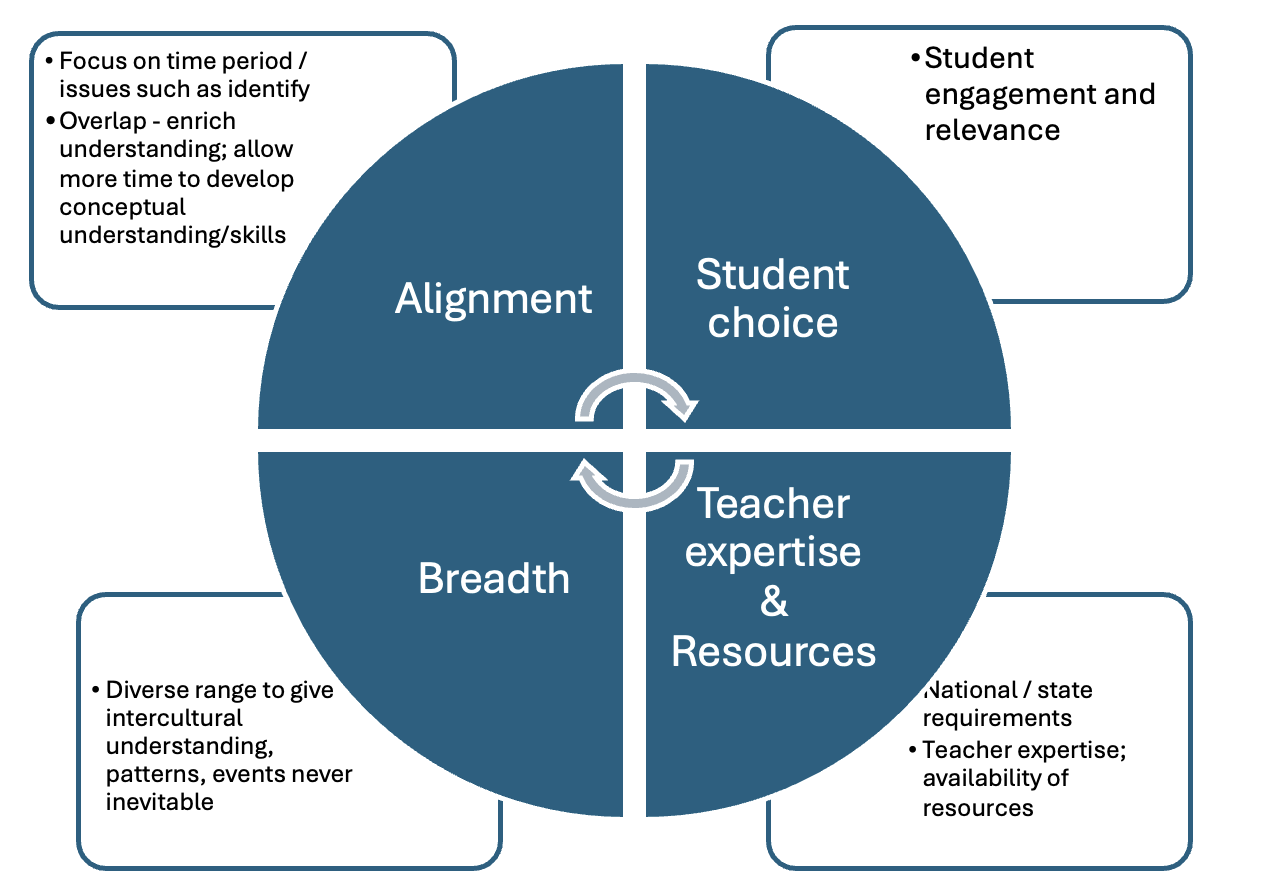
The following Pathway suggestions use cross regional examples which also provide overlap between the Papers in order to provide more time for skills development.
Example 1
Paper 1: Focused Study: Conflict & Displacement (Second World War and Indochina)
Paper 2: Thematic Study: Conflict c750
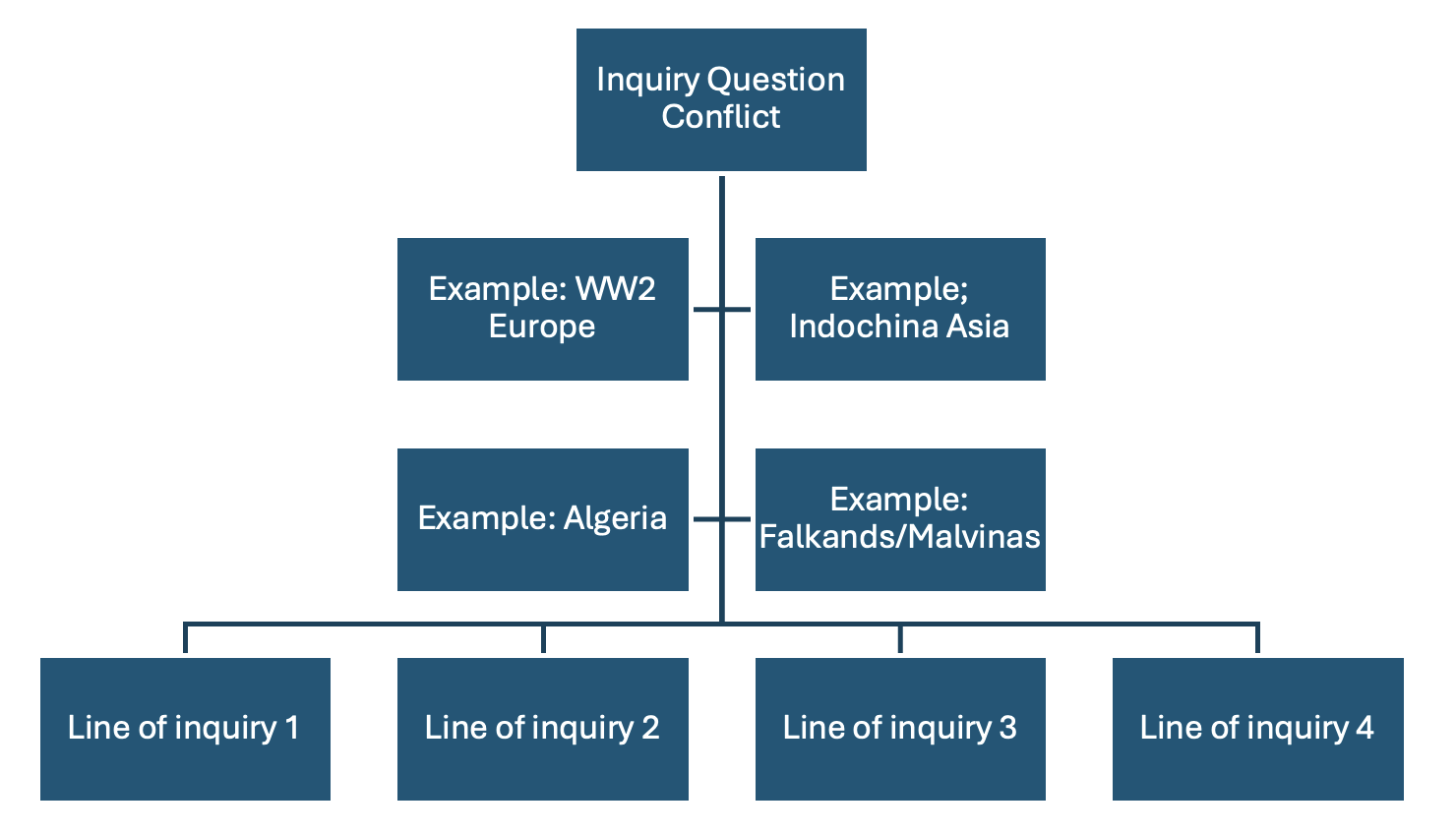
Rationale: Overlap between Paper 1 and Paper 2 with Second World war in Europe and Vietnam War
Paper 3: Europe
Regional Study 4: The French Revolution (1774-1815) student choice
Regional Study 12: Europe during and after the Cold War (1945–2020) teacher expertise
0r
Regional study 9: Europe and the Second World War (1918–1949) (again this provides content overlap with Papers 1 and 2)
Example 2:
Paper 1: Focused Study: Political and economic transitions (Meiji Japan and Russia)
Paper 2: Thematic Study: Innovation and Transformation
· Britain
· Meiji Japan (links to Paper 1)
· Abbasid Caliphate ‘Golden Age of Islam’
· Liberation theology
Paper 3 Asia
Regional study 3: Challenges to imperial rule in China (1736–1911)
Regional study 9: Politics and economy in Japan (1912–2020) (links to Papers 1 and Paper 2)
Paper 3 Europe
Regional study 3: Enlightenment and Absolutism (1600–1800)
Regional study 11: The USSR and post-Soviet Russia (1945–2020) (overlap with Paper 1)
Example 3:
Paper 1: Focused Study: Protest and Change (Feminism in the US, Revolution in Tunisia)
Paper 2: Thematic Study: Popular Movements from 1750
• Civil Rights US
• Anti-Apartheid
• Indian Independence Movement
• Suffrage movement in Britain (contextual links to US 2nd wave feminism)
Paper 3 Americas
Regional study 3: Independence movements in the Americas (1763–1860)
Regional study 11: Social movements in the Americas (1945–2020) Overlap with Papers 1 and 2
Or
Paper 3 Asia
Regional study 6: Independence of India (1857–1964) Overlap with Paper 2
Regional study 7: The emergence of independent states in Southeast Asia (1900–1990)
Example 4:
Paper 1: Focused Study: Climate and innovation (Norse Exploration and the Aztec Empire)
Paper 2: Thematic Study: Innovation and transformation
· Golden Age of Islam
· Enlightenment
· Meiji Japan
· Harlem Renaissance
Paper 3 Europe
Regional study 1: Medieval kingdoms and empires (circa 750–1400)
Regional study 2: Regional study 3: Enlightenment and Absolutism (1600–1800) (Overlap with Paper 2)
Example 5:
Paper 1: Focused Study: Independence and identity (Haitian Revolution, Kenyan Independence)
Paper 2: Thematic Study: Popular movements
- Haitian Revolution overlap with Paper 1
- French Revolution links with Paper 1
- Kenyan independence overlap with Paper 1
- Second World War in Asia
Paper 3 Africa and Middle East
Regional study 10: Independence movements in Algeria, Angola, Ghana, Guinea, Namibia and Tanganyika (circa 1900–2000)
Regional study 11: Revolution, reform and foreign relations in the Middle East (circa 1945–2020)
This is different way of approaching examples for Paper 2. It has varied examples for each of the Lines of Inquiry in Paper 2 to ensure that all inquiry questions - such as environmental causes - are covered.
Paper 1 Focused Study Conflict & Displacement
Paper 2 Thematic Study: Conflict
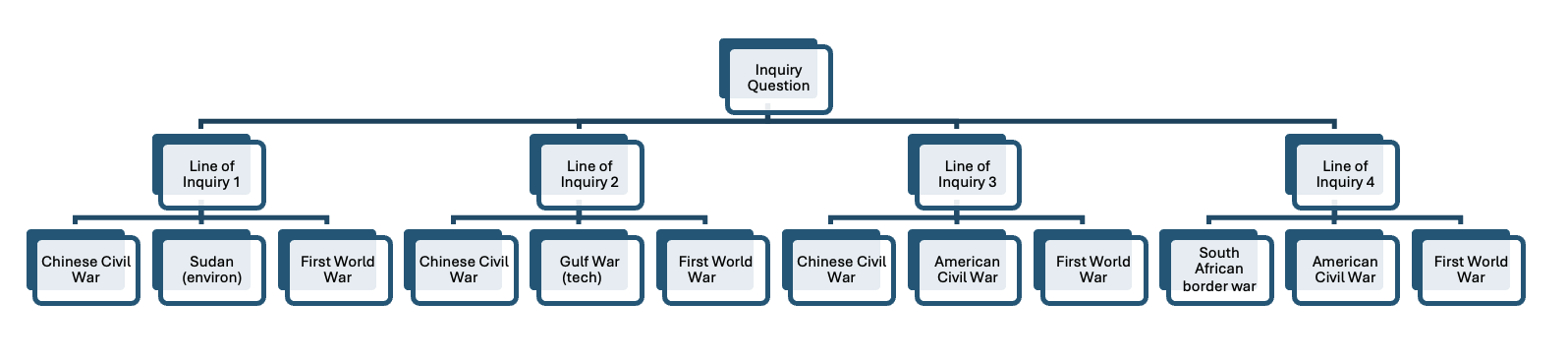
Rationale: Students get to cover a range of wars/all Lines of Inquiry e.g. on environment and technology which can be covered with appropriate examples
Paper 3 Asia
Regional study 8: Emergence of Modern China (1910–1949) teacher expertise
Regional study 5: Korea (1840–1945) student choice
Or
Paper 3 Africa and Middle East
Regional study 3: The African slave trade (1500–1900) student choice
Regional study 9: Conflict and instability in the Middle East (1896–2020) teacher expertise
You can organise your pathway through the content in a number of ways:
• Through concept/skills i.e. leading with the concepts and skills and using the content to develop and support these
• Chronologically – organising your examples for the different papers into a chronological framework so that students can get an understanding of a broader chronological and thematic progression; the concepts and skills would then be connected where appropriate
• Context-based – guided by the context of your school, student choice, national requirements etc.
This is an Example of a unit flow you might have for Example 4 above following a chronological approach:
o Unit 1 Paper 1 Norse Exploration
o Unit 2 Paper 2 Golden Age of Islam
o Unit 3 Paper 3 Medieval kingdoms and empires (circa 750–1400)
o Unit 4 Paper 1 Aztec Empire
o Unit 5 Paper 3 Enlightenment and Absolutism (1600–1800)
o Unit 6 Paper 2 Enlightenment (ensuring all BP covered for Paper 2 and doing comparative work with Golden Age of Islam)
o Unit 7 IA
o Unit 8 Paper 2 Meiji Japan
o Unit 9 Paper 2 Harlem Renaissance