May Blog: Is the biggest march in English history a myth?
Congratulations to all students who have just finished their IBDP exams!
Site update: Curriculum 2028
We are continuing to add more Paper 2 and Paper 3 examples to the Curriculum 2028 section of this site.
Thank you for your positive feedback on the materials added so far - and all of your suggestions for content. We will do our utmost to meet each of your requests over the next few months!
In the last month we have completed:
Paper 3: Europe, 8. European totalitarianism (1918 - 1941)
Paper 3: Africa and the Middle East. 9: Conflict and instability in the Middle East (1896–2020)
Paper 2: Innovation and transformation, Meiji Japan
The list for the next couple of months includes
First World War for Paper 2, 'Conflict' and Paper 3, Europe
Second World War for Paper 3, Europe
Social movements for Paper 3, Americas
The Cold War for Paper 3 Americas and Paper 3 Europe
Many more topics are planned; we will keep you updated on this monthly blog!
Anniversaries
May Coup, Poland 1926
This month sees the 100th anniversary of the May Coup (Przewrót majowy) carried out in Poland by Marshal Józef Piłsudski from 12 to 14 May 1926.
This is an anniversary that students studying paper 3, Europe region Topic 14: Inter-war domestic developments in European states (1918–1939), with a focus on Poland as the case-study, will be interested in.
It was under Marshal Józef Piłsudski's leadership that, post World War One, the young Polish state solidified its independence in a series of border wars that re-defined the country's borders. The most important of these conflicts, the Polish-Soviet war of 1919, gave Poland an eastern border well beyond what the peacemakers in Paris had envisioned.
Following political instability in the early 1920s, Marshal Józef Piłsudski's then intervened to seize power in the May coup.
The EBSCO website concludes that the "sanacja regime," established by Pitsudski following the coup '..would dominate Polish politics until the onset of World War II, impacting the military structure and exacerbating political divisions within the country. Piłsudski's legacy, characterized by both military acumen and controversial governance, continues to influence perspectives on Polish history and leadership.'
This article also discusses the significance of this anniversary:
Chernobyl
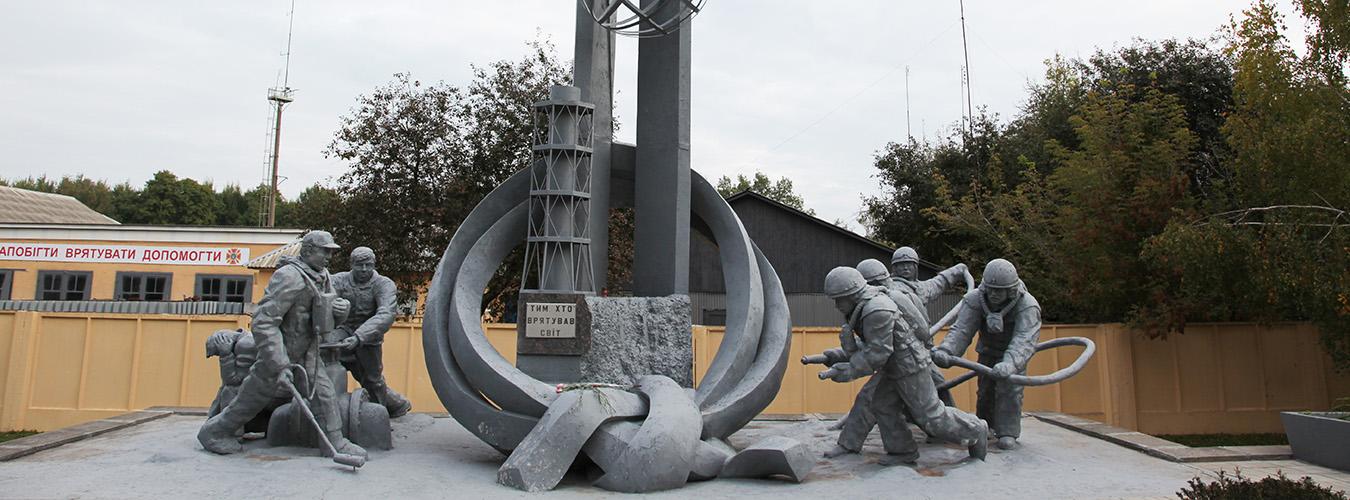
Last month saw the 40th Anniversary of the explosion at the Chernobyl Nuclear Power Plant in 1986.
This catastrophe led to a radioactive cloud spreading over large parts of the Soviet Union, (now the territories of Belarus, Ukraine and the Russian Federation) and exposing nearly 8.4 million people to the radiation. The human and environmental impacts were thus profound.
It also had a dramatic political impact as it accelerated the process of ‘glasnost’ under Gorbachev as he reflected in his memoirs:
‘The Chernobyl disaster, more than anything else, opened the possibility of much greater freedom of expression, to the point that the system as we knew it could no longer continue. It made absolutely clear how important it was to continue the policy of glasnost and I must say that I started to think about time in terms of pre-Chernobyl and post-Chernobyl.’
This anniversary is thus relevant for students studying Paper 3, Europe, Topic 16 and more discussion on the impact of Chernoble can be found on this page 5. Gorbachev (1985 - 1991)
This BBC article summarises the key events and the significance of the explosion:
History: always changing?
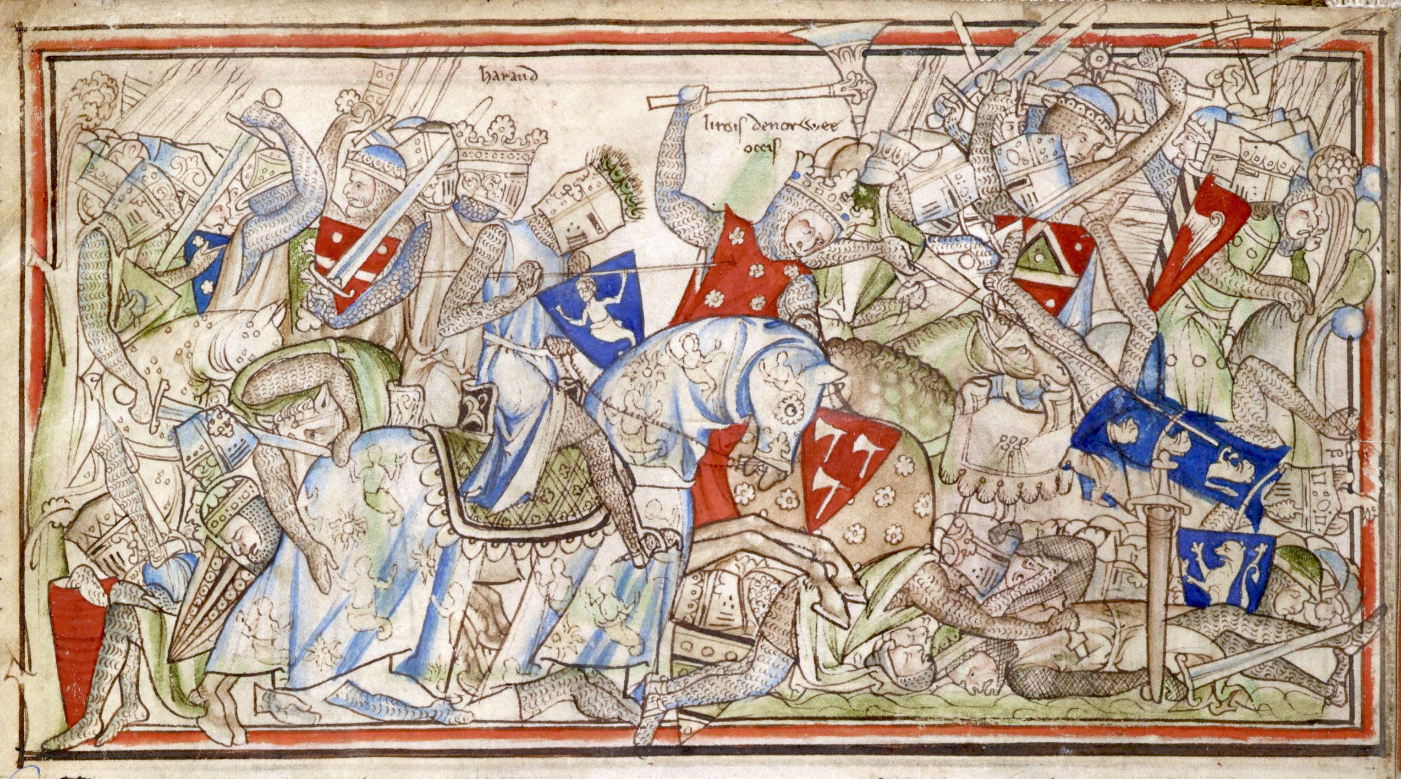
There is now new evidence that the events leading up to the Battle of Hastings in England in 1066 were not as we have always thought them to be. It is a story which as this Guardian article writes is one that ‘has been taught to generations of British schoolchildren about one of the most famous and pivotal events in the country’s history.’
In the article and video below, University of East Anglia's Professor Tom Licence, Professor of Medieval History and Literature, explains how he came to the conclusion that King Harold did not in fact march his army 200 miles North to defeat the Viking King Harald Hadrada at the Battle of Stamford Bridge before marching 200 miles back again to face William of Normandy.
This new narrative, based on a reinterpretation of key phrases in the Anglo-Saxon Chronicle, impacts not only our understanding of what Harold did, but also assessments of his skills and character. Historians have previously considered Harold's actions ‘reckless and impulsive’ (Allen Brown). However, now Professor Licence concludes that:
‘No longer that desperate, land-locked defender as traditionally depicted, assaulted on all sides from the sea, this research shows that Harold was a seaborne commander equal to his foreign foes – and no less sophisticated in combining warfare on sea and land in England’s defence.’
This story is great for some TOK discussion on how historians work and how a re-interpretation of primary sources can change our understanding of history.
Is the biggest march in English history a myth?
Once I had spotted a 200-year-old error, I was able to join the dots.