December Blog: Rosa Parks
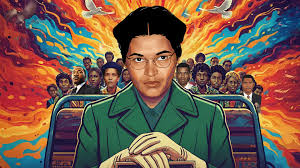
“The most important part of Rosa Parks’ legacy is her long life of activism—not just the one act we all know about. She made a decision that ignited one of the most important acts of civil disobedience in U.S. history—and then she kept fighting for justice for five decades more.”
Historian Ashleigh Lawrence-Sanders
This week saw the 70th anniversary of Rosa Parks’ historical refusal to give up a seat on a bus in Montgomery. This action started the Montgomery Bus Boycott when, on Dec. 5, 1955, about 40,000 Black bus riders — representing the majority of the city’s bus commuters —boycotted the city transit system.
It lasted for 381 days and resulted, finally on June 5, 1956, in a Montgomery federal court ruling that any law requiring racially segregated seating on buses violated the 14th Amendment to the Constitution, which guarantees all citizens—regardless of race—equal rights under state and federal laws. The city authorities appealed that ruling, but on Dec. 20, 1956, the Supreme Court upheld the lower court’s ruling.
The campaign was also significant for bringing Martin Luther King to prominence and deepening his commitment to non-violent protest - and for setting the stage for future non-violent actions across the US.
This important anniversary has been marked in Montgomery with a unity walk and the tolling of bells across the city:
The Montgomery Bus Boycott is relevant for students covering Paper 1, PS4, and also for students studying Civil rights in Topic 17 for Paper 3, Americas. This anniversary gives an opportunity for students to look a bit deeper into this ‘turning point’ in the civil rights movement.
The following article is very useful for students for explaining how Rosa Parks' action was not a spur of the moment event but rather a carefully planned and co-ordinated action by the NAACP who were looking for a test case to initiate a city-wide boycott to push for integration of the bus system. It also gives the wider US and international context of the events in Montgomery, as well as highlighting the important fact that Rosa Parks remained a civil rights activist all of her life.
Rosa Parks: 70 years beyond the bus seat—a lifetime of activism (Colorado Arts and Sciences Magazine)
CU Boulder historian Ashleigh Lawrence-Sanders delineates misperceptions surrounding the mother of the Civil Rights Movement and the Montgomery...
Franco's legacy
Half a century on, the deeds and legacy of the man whose military coup against the Republican government ushered in a four-decade dictatorship built around the authoritarian ideology of National Catholicism, continue to haunt, divide and confuse 21st-century Spain
https://www.theguardian.com/world/2025/nov/19/franco-continues-to-haunt-and-divide-spain
Last month saw the 50th anniversary of the death of Franco which also gives the opportunity to revisit Franco and his legacy with students who are studying Spain as part of their DP History course.
This anniversary has received a lot of attention in Spain - providing an opportunity for the current socialist government to highlight the importance of Spain's democratic development since Franco as well as the dangers of Fascism. It has also led to discussion, however, on the fact that the young have little knowledge of Franco and so are unaware therefore of what really happened during the dictatorship. ‘A 2025 survey reported that 20% of young Spaniards aged 18-24 believed that the Franco years were “good” or “very good".’ This makes them more susceptible to the growing strength of the right wing parties, such as Vox, who are happy to whitewash the actions of Franco.
The following TIME article is useful for discussing what happened in Spain after Franco, specifically the negative impact of the Pact of Forgetting on Spanish Society. It explains how the current government has aimed to reverse this culture of forgetting and to bring attention to the atrocities of the Franco regime - also allowing reparations to his victims.
50 Years After Franco’s Death, Spain Confronts Its Dark Past (TIME)
Prime Minister Pedro Sanchez wants the country to pay tribute to the victims of the fascist dictatorship, and learn from its past.
Other anniversaries this month include the following. Any of these - all of which link to the DP History course - could form the focus of a display/assembly/research by students.
100 years December 1, 1925 - The Locarno Treaties were signed by France, Belgium and Germany. Aimed to secure peace after WW1 between France, Belgium and Germany.
75 years December 10, 1950 - Dr. Ralph Bunche first African American man awarded the Nobel Peace Prize, for mediation between Israel and Arab states
50 years December 7 - The Indonesian occupation of East Timor
New Curriculum published soon!
In February the IB will publish the full and final curriculum guide for the new DP History course.
First teaching will start in August 2026, in time for the May examinations in 2028.
The 3rd Curriculum Review can be found on MyIB along with a Final Curriculum Review Report which was published in April.
To help you manage the transition to the new curriculum, please note that we will have our site ready with new materials and guidance in good time to begin teaching in August 2026:
- Early next year, we will start releasing materials to help you start planning your courses
- We will also be offering Think-Ins for the new curriculum.
More details to follow!
History podcast
We mentioned Philippe Sands last month in connection with his book East-West Street which focuses on the development of international criminal law at Nuremberg. His most recent book, 35 Londres Street, is about the arrest and the trial of Pinochet - alongside the story Pinochet's relationship with Walther Rauff, a Nazi SS officer responsible for the use of gas vans. This is also a fascinating read that we would recommend.
In addition, there is a new BBC podcast by Philippe Sands on the arrest of Pinochet which students, studying Chile, may be interested in:
The History Podcast - The Arrest - 1. The Lawyer - BBC Sounds (BBC)
The frantic final days of a long legal battle to apprehend a notorious dictator.