International mindedness: more than being an international school
 Are we internationally minded?
I was working with a school today as they prepare for their IB Diploma Programme evaluation. One of the challenges of working with the IB is the language it uses. However experienced we are as educators, some of this language does not necessarily come naturally to us. A good example today was the idea of international mindedness. The school has a very international student body, and they asked an interesting question: is international mindedness something that happens through osmosis, simply because we work with an international community, or is it something that we intentionally develop? The answer matters. Just because we work in an international school does not, in itself, make us internationally minded. International mindedness is a disposition – something about how we think, engage with others and respond to the world.
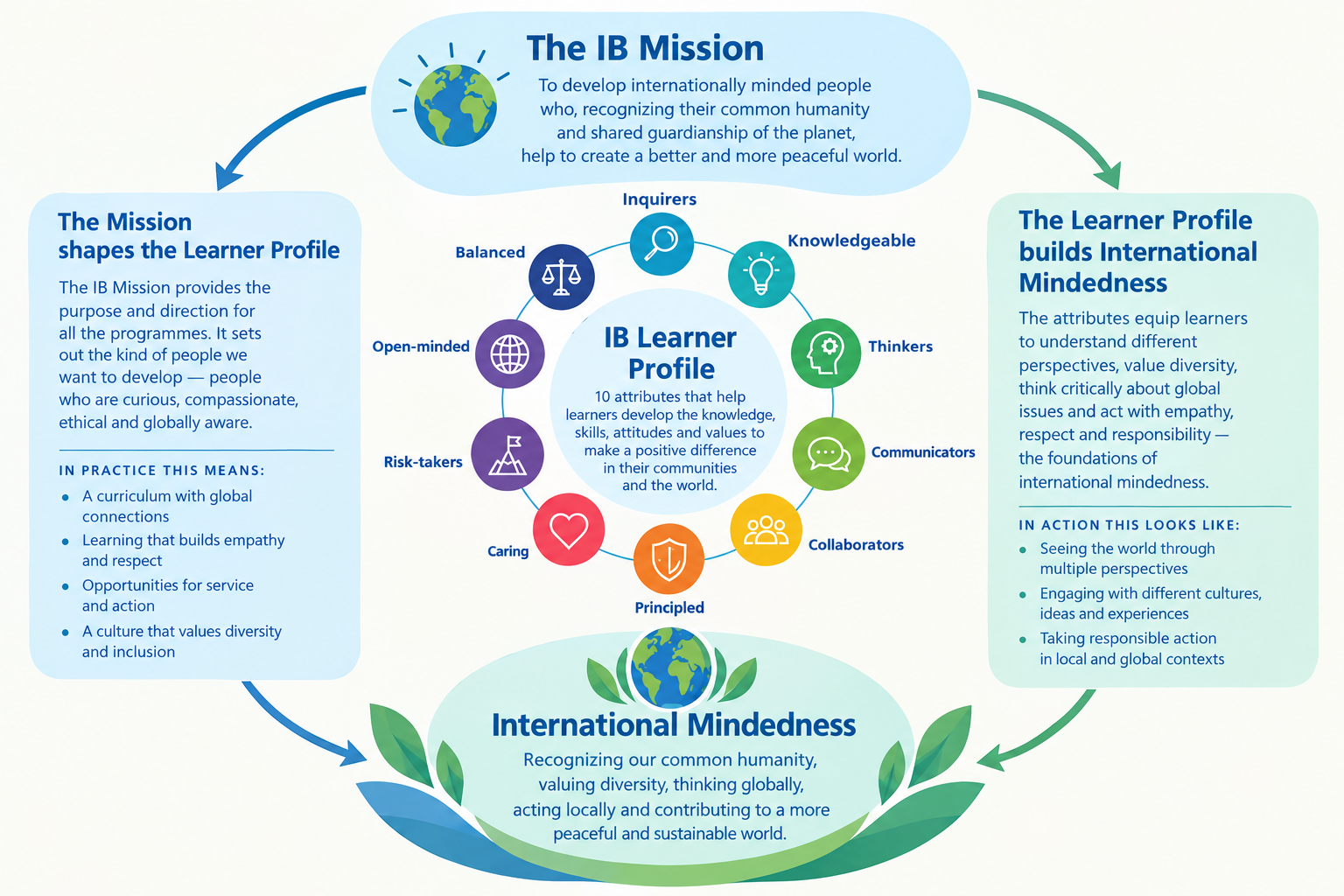
The roots of international mindedness lie in the IB Mission. The IB is not simply a curriculum; its programmes are propelled by a mission to develop young people who are equipped to contribute to creating a better and more peaceful world. So what does the IB mean by being internationally minded? The IB points us towards the attributes of the IB Learner Profile. But it is important not to stop at the words themselves – knowledgeable, open-minded, caring, principled and so on. The descriptors beneath each attribute are much more revealing. They describe the qualities, dispositions and behaviours that give meaning to the words. They also remind us that international mindedness starts with recognising that we see the world through our own experiences and perspectives, and being willing to engage with perspectives that may challenge them. For schools preparing for evaluation, this is an important distinction: international mindedness is not something we can assume will emerge simply from having an international community. We need to understand what it looks like, consider how intentionally we develop it through our curriculum and wider school experience, and, most importantly, explore what it actually looks like in the lives of our students.