How do international schools assess new admissions?
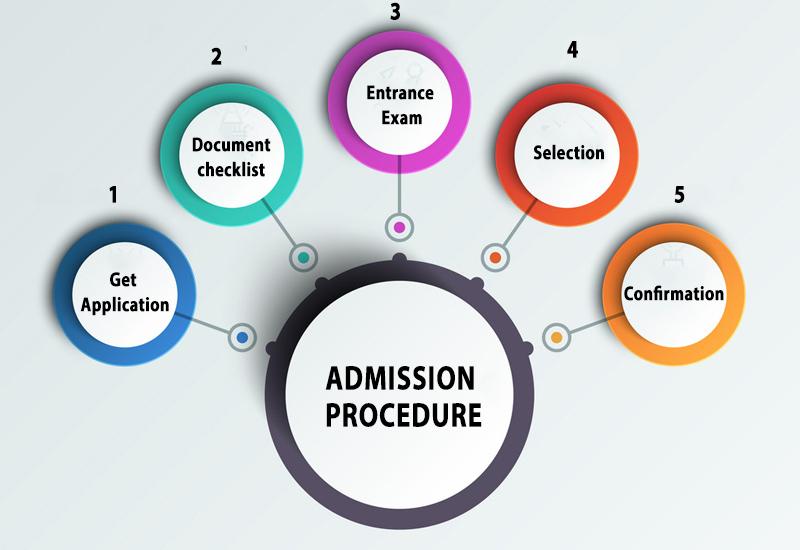 Who should we admit?
It is the beginning of our new academic year and we have been reviewing how we assess new students for our admissions.
When a student applies to an international school, the school is usually trying to answer a fairly simple question: is this student likely to succeed here?
Working out the answer is less straightforward. Students may arrive from very different countries, curricula and educational systems. They may have learned in English, in another language, or in several languages. A test that works well for one student may not necessarily give another student a fair opportunity to demonstrate what they know.
What are you actually trying to find out?
A school may want to know whether a student is working at the expected level in reading and mathematics. It may also need to assess English proficiency, identify possible learning needs or establish whether the student is likely to cope with the school's curriculum.
Many schools therefore combine previous school reports with some form of assessment, an interview or conversation and, particularly for younger children, observation.
The problem with using your own test
There is an obvious attraction in creating an admissions test yourself. You can decide exactly what you want to assess and change the test whenever you wish.
There are drawbacks, though. The school has to administer and mark the assessment consistently. As the number of applicants increases, this can take considerable staff time. There is also the question of whether the questions are genuinely suitable for students from different cultural and educational backgrounds.
A reading comprehension passage illustrates the problem. A text based on Sir Arthur Conan Doyle, for example, may be straightforward for a student familiar with British literature and rather less accessible to a student who has never encountered that cultural or literary context. The resulting score may therefore tell us something about prior experience as well as reading ability.
Could a standardised assessment help?
A number of established assessment systems are used by international schools. These include CAT4, MAP Growth, ACER's International Schools' Assessment (ISA) and PAIS (Progressive Achievement for International Schools).
They are not interchangeable. Some are designed primarily to measure attainment, some provide diagnostic information and some can be used to establish a baseline and track progress. Schools need to look carefully at what each assessment actually measures before deciding how it might be used for admissions.
Example: PAIS: designed for the international-school context
PAIS is particularly interesting because it was developed by the Australian Council for Educational Research (ACER) specifically for international schools.
It is not tied to one national curriculum. Instead, it draws on a range of international curricula and focuses on skills and concepts that can be assessed across different educational settings. ACER has also placed considerable emphasis on culturally diverse assessment content. ACER – PAIS
PAIS Adaptive currently provides Reading and Mathematics assessments for approximately Grades 3–10, as well as fixed-level English and Mathematics assessments.
The test changes according to the student. The interesting feature of PAIS is the adaptive assessment.
Students do not all work through exactly the same questions. The assessment adjusts the level of difficulty according to how the student is performing. This means that the system can build a picture of where the student is on the assessment scale without requiring every student to work through a long series of questions that may be much too easy or too difficult.
The Reading assessment takes about 45 minutes and Mathematics about 40 minutes. The Reading assessment looks at areas including retrieving information, interpreting explicit and implicit information, and reflecting on what has been read. How PAIS Adaptive works
PAIS does not simply produce a percentage mark. It uses scale scores and achievement bands, together with information about different strands of the assessment. This makes it possible to see where a student is performing and, when students are assessed again, to look at progress over time. For admissions, schools can also establish their own performance distribution by assessing existing students. This provides a useful internal reference point when considering new applicants.
PAIS can be purchased using individual assessment credits, with the current published price for a PAIS Adaptive assessment being around AUD $9.50 per student per assessment. There is also a 12-month school licence, based on school enrolment, which provides unlimited use during the licence period. For schools with a significant number of applicants, this may be a more attractive option than purchasing individual assessments. ACER also provides a free trial.
But … don't let the test make the decision
A standardised assessment should support an admissions decision, not make it on its own.
A sensible admissions process is likely to bring together several pieces of evidence: previous school records, assessment results, English-language information where appropriate, an interview or conversation, and professional judgement about whether the school can meet the student's needs. For younger children, observation and interaction may tell you considerably more than a formal test.
For international schools in particular, three questions are worth asking:
- Does the assessment give students from different backgrounds a fair opportunity to demonstrate what they know?
- Does it actually measure the skills we are interested in?
- Can we administer and interpret it consistently without placing an unnecessary burden on staff?