FT Schools - Games Workshop
Introduction
Games Workshop transforms Warhammer into a global entertainment powerhouse through vertical integration, strong branding, loyal communities, and expanding multimedia partnerships like Amazon.
This case study connects directly to several IB Business Management syllabus units, illustrating key themes of operations management, human resources, strategy, and ethics.
The article and exam questions can be found on the FT Schools website here.
IB syllabus links
| Syllabus unit | Key ideas for discussion |
|---|---|
| 1.2 Types of organizations | · Explore Games Workshop’s status as a publicly held company. · Discuss advantages/disadvantages of being a publicly held company |
| 1.4 Stakeholders | · Shareholders expecting growth · Customers wanting affordability · Employees (retail staff in 560 stores across the world) · Third-party developers (video game licensors) |
| 1.5 Growth and evolution | · Internal and external growth |
| 2.2 Organizational structure | GW’s integrated structure and international operations allow discussion of: · Span of control · Chains of command · Functional departments |
| 3.1 Sources of finance | Discussions about how GW funds its growth and expansion: · Retained profits from high margins · Equity finance as a PLC · Licensing agreements (video games collaboration with Amazon) |
| 4.2 Marketing planning | · Segmentation, targeting, and positioning · High-engagement with niche hobbyists (including tournaments) |
| 4.5 The marketing mix | · Premium pricing strategy (inelastic demand) · Social media communities · Limited traditional ATL advertising |
| 5.2 Production methods | · GW’s miniature production (mass customization) |
Case Study - Warhammer
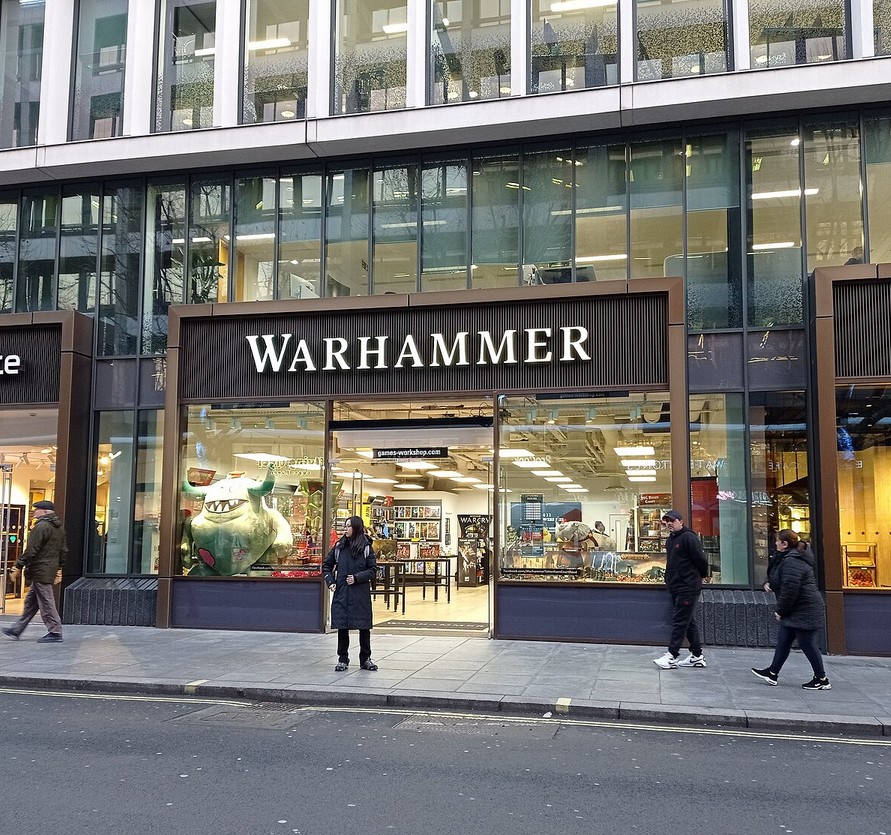
Warhammer, Tottenham Court Road in London, UK
Warhammer, created by UK company Games Workshop (GW), has grown from a niche tabletop game into a global entertainment brand valued at £5.25bn ($6.96bn). Its best-known games, Warhammer 40,000 and Age of Sigmar, combine collecting and painting miniature figurines, following exciting stories, and playing strategic tabletop games.
GW’s success is closely linked to its vertically integrated business model. The publicly held company designs and manufactures its own miniature figurines and starter sets, controlling distribution and retail through more than 560 stores worldwide. This allows GW to maintain tight quality control, build a consistent customer experience, and protect its intellectual property. Around 70% of GW’s sales now come from outside the UK, with strong growth in North America and Europe.
Warhammer is known for being an expensive but highly engaging hobby. Players spend money not only on miniatures but also on paints, brushes, scenery, and accessories (modelling tools). Many fans commit significant time to painting and collecting, while others focus on gameplay, tournaments and competitive events. This deepens customer engagement and creates a strong community culture, leading customers to see Warhammer as a lifestyle, not just a product.
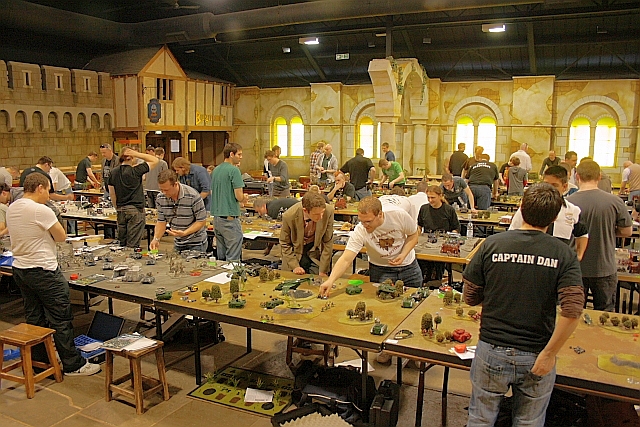
Warhammer Games Contestants taking part in a tournament
A key feature of GW’s strategy is encouraging repeat purchases. The company regularly releases new miniatures, updates rulebooks, and publishes new expansions, motivating players to keep buying. Warhammer has also expanded far beyond tabletop gaming, now spanning novels, magazines, video games, and upcoming film and TV adaptations through a partnership with Amazon Studios.
GW recognises the importance of customer loyalty through brand-owned stores, painting workshops, as well as hosting competitions and global events. Warhammer’s passionate fan base, multimedia presence, and unique hobby experience have made it one of the UK’s most successful creative exports. It also showcases strong brand development, helping the company grow and compete with global gaming giants like Nintendo and Electronic Arts.
Quizlet

Students can deepen their understanding of the ideas in this FT article and connect them to key terms from the IB Business Management syllabus by completing the accompanying Quizlet activity.
Use the drop-down menu to choose the format that best supports your learning, such as Flashcards, Match, Learn, Test, or Spell.
Exam Practice Question 1
| (a) | State two ways Games Workshop differentiates its products. | [2 marks] |
| (b) | Define the term brand development. | [2 marks] |
| (c) | Explain one benefit of market segmentation for Games Workshop. | [2 marks] |
| (d) | Explain two ways how Games Workshop uses product strategy to increase sales revenue. | [4 marks] |
Answers
(a) State two ways Games Workshop differentiates its products. [2]
- Miniature collecting – highly detailed, unique models for customer engagement.
- Model painting – allows creative customization of figurines.
- Immersive storylines – complex narratives for games like Warhammer 40,000.
- Strategy-based gameplay – rules and tactics create a unique gaming experience, including tournaments and competitions.
Mark as a 1 + 1
(b) Define the term brand development. [2]
Brand development is the process of enhancing and extending a brand to increase recognition, customer loyalty, and market share. It may involve introducing new products, entering new markets, or improving brand value.
Award [1] for a definition that shows limited understanding.
Award [1] for a definition that shows clear and accurate understanding, similar to the example above.
(c) Explain one benefit of market segmentation for Games Workshop. [2]
- Targeted marketing – GW can use different marketing strategies focused on different customer groups, e.g., hobby painters versus competitive gamers.
- Improved product development – Understanding specific market segments allows GW to design products (such as miniatures, paints, or figurines) suited to each group.
- Customer loyalty – Tailored product and promotional offerings increase customer engagement, encouraging repeat purchases and long-term loyalty.
Award [1] for identifying a relevant benefit and [1] for explaining this in the context of Games Workshop.
(d) Explain two ways how Games Workshop uses product strategy to increase sales revenue. [4]
- New product releases – Regularly launching new miniature models encourages repeat purchases from collectors and gamers.
- Rule book updates and expansions – Updates and product expansions keep GW’s games engaging, prompting players to buy new products.
- Diversification into media – Expanding GW’s products into books, video games, and TV/film collaborations increases brand reach and sales (thereby improving brand awareness, development, loyalty, and value).
- Integrated retail experience – Controlling in-store presentation and events enhances customer experience, driving higher sales of GW’s products.
Mark as a 2 + 2.
Exam Practice Question 2
| (a) | State two revenue streams for Games Workshop. | [2 marks] |
| (b) | Explain two challenges Games Workshop may face expanding overseas in markets such as North America and Europe. |
|
| (c) | Explain two benefits for Games Workshop of expanding internationally. | [4 marks] |
Answers
(a) State two revenue streams for Games Workshop. [2]
- Sales of miniature figurines and starter sets – GW’s core tabletop gaming products.
- Painting supplies and accessories – Paints, brushes, scenery, and modelling tools.
- Rule books, expansions, and magazines – Official guides and updates for the games.
- Media and licensing – Video games, books, and upcoming TV/film projects.
Mark as a 1 + 1.
(b) Explain two challenges Games Workshop may face expanding overseas in markets such as North America and Europe. [4]
- Cultural differences – Consumer preferences for gaming, hobbies, and leisure may vary between gamers in the UK, USA, and Europe (or elsewhere in the world).
- High operational costs – Opening new stores across Europe and the US can be highly expensive, including the need for staffing and logistics.
- Competition – Local or global gaming companies, such as Nintendo and Electronic Arts, may reduce market share.
- Regulatory barriers – Import duties (tariffs), tax laws, or product regulations may differ by country or geographic region.
Mark as a 2 + 2.
Award [1] for identifying a relevant challenge and [1] for explaining this in the context of Games Workshop, up to the maximum of [4].
(c) Explain two benefits for Games Workshop of expanding internationally. [4]
- Increased sales revenue – Access to new customers in North America and Europe boosts overall revenue (around 70% of GW’s sales come from outside the UK).
- Economies of scale – Larger production and distribution volumes across multiple regions reduce average costs for GW’s products.
- Brand recognition – International presence strengthens brand awareness and brand development. This builds consumer trust and retention in the brand.
- Diversification of risk – Operating in multiple markets reduces GW’s reliance on the UK market.
Mark as a 2 + 2.
Award [1] for identifying a relevant benefit and [1] for explaining this in the context of Games Workshop, up to the maximum of [4].

- Read our first collaborative piece with FT Schools, which focuses on Tony’s Chocolonely's, here
- Check out the second collaborative piece with FT Schools about how Barrafina and other high-end restaurants went global here.
All our collaborations with FT Schools include exam practice questions and full mark schemes for teachers.
Paul Hoang
FT Schools teacher advisor for IB Business Management
