InThinking and Financial Times collaboration

Dear InThinking Business Management subscribers,
At InThinking, we are delighted to announce our collaboration with the Financial Times “FT Schools” initiative.
FT Schools provides secondary school students with free access to high-quality financial journalism and resources from the Financial Times. Through the collaboration, we will be providing teachers and students access to educational materials and engaging content to enhance financial literacy, deepen understanding of contemporary issues in the business world, and foster critical thinking about global issues and their impact on individuals and societies.
Wider reading helps our students:
- Build critical thinking by analysing complex business issues with a balanced and objective approach.
- Contextualise learning by connecting theory covered in the classroom to real-world applications.
- Improve communication skills by engaging with diverse viewpoints, thereby improving their ability to articulate their thoughts clearly and persuasively.
- Make informed decisions by accessing a variety of sources to develop a well-rounded perspective, based on comprehensive analysis rather than limited information.
- Engage with the subject by having exposure to contemporary issues in the business world to help foster curiosity and enthusiasm, motivating them to explore topics further and participate actively in class discussions.
You can read more about the FT Schools service by clicking on the icon below.
FT Schools is the Financial Times’ education initiative aimed at students and teachers.
What it is
- A free resource hub from the Financial Times for schools worldwide.
- Provides students and teachers with access to FT articles, teaching resources, and classroom activities.
Purpose
- To help teachers bring real-world news and analysis into the classroom.
- To encourage students to engage with global issues in business management and current affairs.
Content
- Curated FT articles made accessible to IBDP and IBCP students.
- Topical issues with background notes, exam-style questions (with answers for teachers), and classroom activities.
- Covers topics that relate directly to the IB Business Management syllabus.
Audience
- Designed for school students (aged 16–19 years old) and their teachers in IB World Schools
- Suitable for anyone interested in Business Management, including students following alternative curricula such as GCE A Levels and BTEC Business courses.
Benefits
- Free registration for teachers, students, and schools.
- Helps students connect classroom theory to real-world case studies and events.
- Supports preparation for IB exams.
- Articles are simplified and contextualised to aid student understanding.

In the first of many resources that we will develop with the Financial Times, this inaugural resource offers strategies and materials for integrating the Financial Times article "Tony’s Chocolonely boss says investing in farmers is good for business" into your IB Business Management classroom.
Tony's Chocolonely, or Tony's for short, is a Dutch multinational social enterprise. It is renowned for its commitment to ethical chocolate production. The case study offers a contemporary context for exploring key syllabus content and concepts, effectively preparing students for assessments.
Connections to the IB Business Management syllabus
The Tony's Chocolonely article is an excellent resource for inquiry-based and contextualized teaching, as recommended by the IB. It allows for a deep exploration of the four prescribed concepts (Creativity, Ethics, Sustainability, and Change) that underpin the course.
Here are some examples of direct links between the FT article and content in the IB syllabus:
Unit 1: Introduction to Business Management
- Unit 1.3 Business objectives - The article highlights Tony's ethical objectives and corporate social responsibility (CSR). Douglas Lamont, the CEO, advocates for prioritizing supply chain resilience and better pay for farmers over “short-term profit maximisation”. This creates a useful discussion point about conflicting business objectives.
- Unit 1.4 Stakeholders - There is a clear conflict between stakeholder interests. Lamont's business strategy prioritizes higher prices for farmers in Ghana and Côte d'Ivoire (suppliers), potentially at the expense of consumers (who may desire lower prices) and shareholders (whose short-term profits might be dented).
- Unit 1.6 Multinational companies (MNCs): - The article mentions Tony's "rapid" expansion in the US, making it their biggest market. This can be used to discuss the growth and evolution of a business with a strong ethical mission into new international markets. It can also be linked to Ansoff's growth matrix as part of the Business Management Toolkit (BMT).
Unit 3: Finance and Accounts
- Unit 3.3 Costs and revenues - The surge in cocoa prices has a direct impact on the costs for chocolate producers like Tony's Chocolonely. Lamont discusses how companies can use the "extra (profit) margin” if prices fall, linking directly to revenue and effective cost control.
Unit 4: Marketing
- Unit 4.1 Introduction to marketing - Tony's ethical stance and "fun" branding are key elements of its market orientation and have fuelled its growth (for example, in the USA), despite a drop in global chocolate consumption.
- Unit 4.5 The 7 Ps of the marketing mix - Some examples include:
- Product - The Tony's Chocolonely brand is built on its ethical sourcing principles, making ethics a core part of the product itself.
- Price - Lamont's argument that "chocolate should not be cheap" is a direct link to pricing methods. Tony's Chocolonely uses its ethical sourcing to justify a higher or premium price.
- Promotion - The company's authenticity and values ("we wear our heart on our sleeve") are key promotional messages that resonate with a growing number of customers, as highlighted by a feature on HBO's Last Week Tonight with John Oliver.
Unit 5: Operations Management
- Unit 5.1 Introduction to operations management - The article explores supply chain management challenges, particularly the need for resilience in today's social, political, and economic environments.
- Tony's Chocolonely's investment in its partner farms led to smaller declines in yields compared to the industry average, demonstrating the benefits of a sustainable operations management strategy.
Classroom activities and discussion points
1. Have a debate and discussion about these questions:
- “To what extent should businesses prioritize ethical sourcing over shareholder profit maximization?” Use the perspectives of Lamont, consumers, and shareholders to frame the debate.
- How can a business's commitment to sustainability (as seen with Tony's Chocolonely) create sustainable competitive advantages?
2. Get students to create a stakeholder map:
- Identify the key stakeholders mentioned or implied in the article (farmers, consumers, shareholders, the company/Tony's CEO, competitors, governments).
- In small groups, ask students to analyse the potential conflicts between these stakeholders if cocoa prices were to fall. Should Tony's cut its prices for consumers, pay farmers more, or increase dividends for shareholders? Why This task connects directly to the assessment objective of evaluating stakeholder interests.
3. STEEPLE analysis:
- Use the article to conduct a short STEEPLE analysis. Focus on:
- Economic factors, e.g., fluctuating cocoa commodity prices.
- Social/Ethical factors, e.g., growing consumer awareness of issues like child labour in the cocoa farming industry and fair pay for farmers.
- Environmental factors, e.g., the impact of poor harvests, disease, and adverse weather on supply.
Quizlet
Students can deepen their understanding of the ideas presented in this article and connect them to key terms from the IB Business Management syllabus by completing the accompanying Quizlet activity.
Use the drop-down menu to choose the format that best supports your learning, such as Flashcards, Match, Learn, Test, or Spell.
Exam Practice Questions

| (a) | Define the term ethical objectives. | [2 marks] |
| (b) | Define the term stakeholders. | [2 marks] |
| (c) | With reference to Tony's Chocolonely, explain two benefits of having a unique selling point/proposition (USP). |
|
| (d) | Explain one advantage and one disadvantage for Tony's Chocolonely of its ethical sourcing strategy. |
|
Answers
(a) Define the term ethical objectives. [2 marks]
Ethical objectives are the specific goals an organization sets for itself based on an established code of moral conduct, which guide its decision-making and operations beyond that required by the law.
Award [1 mark] for a partial or vague definition that shows some understanding of ethical objectives.
Award [2 marks] for a clear and accurate definition of ethical objectives, similar to the example above.
(b) Define the term stakeholders. [2 marks]
Stakeholders are individuals, groups, or organizations that have an interest (stake) in a business and can either affect or be affected by its operations and decisions.
Award [1 mark] for a partial or vague definition that shows some understanding of stakeholders.
Award [2 marks] for a clear and accurate definition of stakeholders, similar to the example above.
(c) With reference to Tony's Chocolonely, explain two benefits of having a unique selling point (USP). [4 marks]
Possible benefits include an explanation of any two of the following:
- Differentiation from competitors - A strong USP helps a business stand out in a crowded market. For Tony's Chocolonely, its commitment to ethical sourcing and playful branding has driven "rapid" growth in the US, even as global chocolate consumption declined. This demonstrates how the USP successfully attracted customers away from competitors.
- Justification for premium pricing - A compelling USP enables a business to charge higher prices and enjoy higher profit margins. Tony's dedication to use ethical sourcing, including fair compensation for farmers, allows it to assert that "chocolate should not be cheap." This resonates with customers who are motivated by ethical considerations and who are therefore willing to pay more.
- Positive brand image (corporate image) - Having a unique and socially responsible USP enhances the brand's image. Tony's Chocolonely is perceived not just as a chocolate brand, but as a social enterprise that strives for sustainability and fairness, attracting customers who value corporate social responsibility.
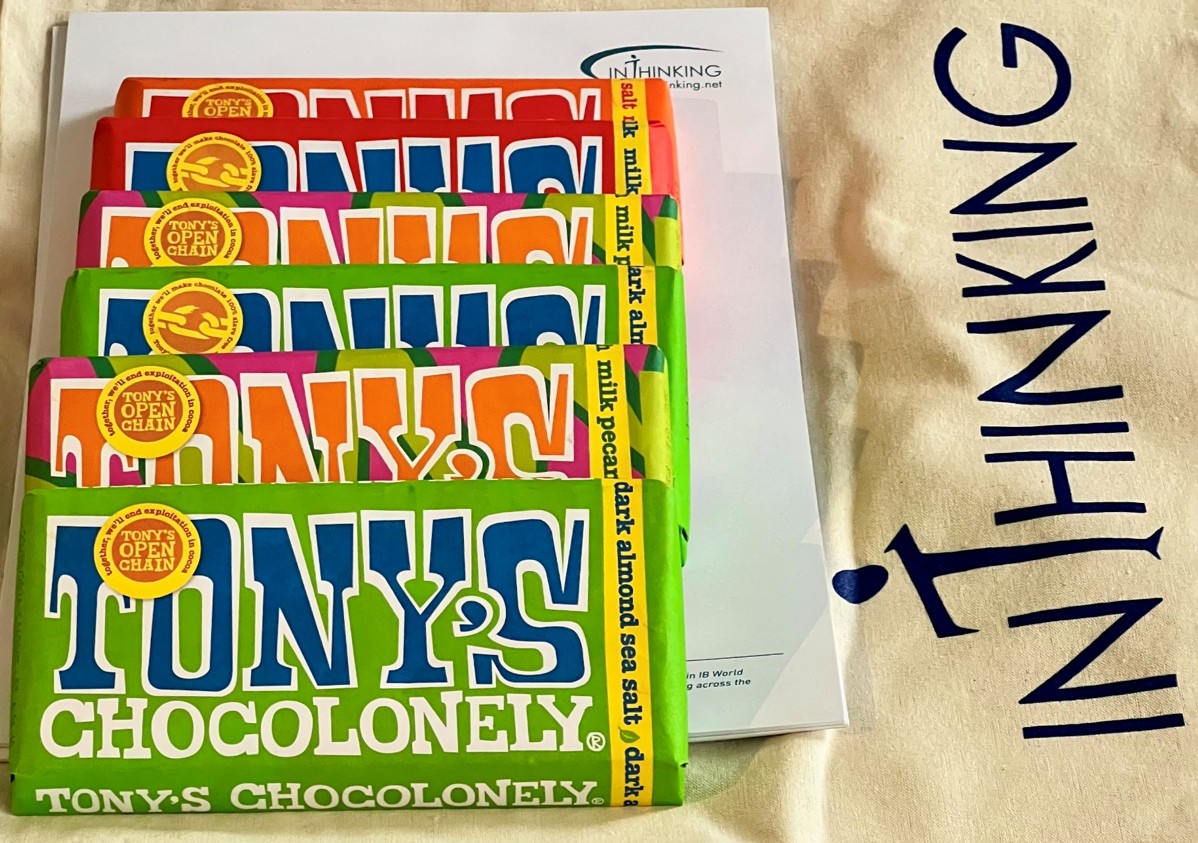
- Enhanced brand loyalty - A clear USP cultivates strong brand loyalty. Customers who align with Tony's ethical mission are more likely to become repeat buyers, fostering a dedicated customer base that supports long-term growth (trust me, I have been purchasing Tony's for every face-to-face IB Workshop that I have led since 2020!)
Mark as 2 + 2.
For each benefit, award [1 mark] for identifying a relevant benefit of a USP and [1 mark] for explaining this benefit in the context of Tony's Chocolonely, up to the overall maximum of [4 marks]
(d) Explain one advantage and one disadvantage for Tony's of its ethical sourcing strategy. [4 marks]
Advantages include an explanation of any one of the following:
- Stronger relationships with farmers - By prioritising ethical sourcing, Tony's fosters stronger relationships with cocoa farmers in Ghana and Côte d'Ivoire. This collaboration not only improves farmers' livelihoods but also cultivates supplier loyalty and commitment, ensuring a more consistent and quality supply of cocoa.
- Positive brand image - An ethical sourcing strategy enhances Tony's brand image, such as an industry that is free from child labour. Consumers increasingly prioritise sustainability and ethical business practices, and by aligning its operations with these values, Tony's attracts a dedicated customer base that supports its mission.
- Supply chain resilience - An ethical sourcing strategy enhances supply chain resilience. Tony's investment in its partner farms resulted in yield declines of only 11%, compared to 25-30% for the broader industry during poor harvests. This supply chain stability secures a reliable cocoa supply and mitigates risks associated with fluctuating market conditions.
Disadvantages include an explanation of any one of the following:
- Higher costs - Implementing an ethical sourcing strategy leads to increased costs. Paying farmers a premium to ensure a living income (and the absence of child labour in the industry) raises direct expenses for Tony's, which may reduce its profit margins or necessitate passing these costs onto consumers, potentially alienating price-sensitive customers.
- Limited supplier options - Ethical sourcing of its cocoa can limit Tony's supplier options, i.e., by prioritising specific ethical standards, Tony's may face challenges in sourcing cocoa from a wider range of suppliers, potentially affecting affordability and flexibility.
- Market vulnerability - While ethical sourcing can foster loyalty, it may also create market vulnerability. If consumers prioritise price over ethics, especially during challenging economic times, Tony's could lose market share to competitors that offer cheaper, non-ethically sourced alternatives.
Mark as 2 + 2.
Award [1 mark] for identifying a relevant (dis)advantage and [1 mark] for explaining this in the context of Tony's Chocolonely, up to the overall maximum of [4 marks]
The published article in FT Schools can be accessed here.
Existing InThinking subscribers can also access our Paper 3 resources for Tony's Chocolonely here.
Paul Hoang
FT Schools teacher advisor for IB Business Management
