Cross pollination & seed disperal activity
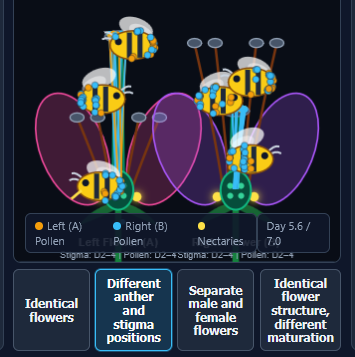
Plants have many adaptations for cross-pollination. A simple interactive animation of pollination allows the modification of plant structure to evaluate how structures and timing of maturation can promote cross-pollination. Seeds are a crucial part of plant reproduction and there are many methods used by plants for seed dispersal. Activity two covers both seed structure and dispersal including a set of slides to illustrate this process. There is a short quiz to complete the set.
Lesson description

Starting questions
What happens inside a flower during pollination?
Activity 1 - Cross pollination
This simulation shows the effectiveness of two flowers at being self-pollinated or cross-pollinated.
Self-pollination leads to inbreeding, which decreases genetic diversity and vigour.
Genetic mechanisms in many plant species ensure male and female gametes fusing during fertilization are from different plants.
Flower structure and pollination can also promote cross-pollination.
- Use the simulation to test the different flower structures.
- Run the four preset simulations to illustrate these methods.
Note: you can also manually change flower structure and maturation times. Perhaps leading to an IA or an EE.
Use the animation above to explore the following key points
Methods of promoting cross-pollination.
- Click the preset button “Identical flowers”
- Bees are an animal pollinator, by feeding on nectar, in several flowers they transfer pollen between plants.
- Animal pollinators, like bees, or the wind are essential for cross pollination, otherwise only self pollination will happen.
- Click the preset button, “different anther and stigma positions”
- The position of the anther an stigma in a flower can promote cross-pollination but self-pollination still occurs.
- Click the preset button, “Identical flower structure, different maturation times”
- Flowers or plants promote cross-pollination by having different maturation times for their pollen and stigma. They don't make pollen when the stigma is receptive to pollen.
- Click the preset button, “separate male and female flowers”
- Plants sometimes have separate male and female flowers,
- Some species can have separate male and female plants,
Both methods prevent self-pollination and allows cross-pollination..
Question
Outline three factors which promote the cross-pollination of flowers. (3 marks)
…………………………………………………………………………………………
…………………………………………………………………………………………
…………………………………………………………………………………………
…………………………………………………………………………………………
Click the eye icon to display a model answer.
Model answer
Outline three factors which promote the cross-pollination of flowers. (3 marks)
The presence of pollinators, or wind is essential for cross pollination because pollen has to be moved from flower to flower for cross-pollination to happen.
If the stigma of a flower is mature at a different time to the anthers releasing their pollen there will be less self-pollination. Insects visiting the flower will bring pollen from other flowers which will attach to the stigma.
If some of the flowers of a plant only contain male parts making pollen, and other flowers are female only containing stigma, style and ovary this will prevent self-pollination, and promote cross-pollination.
Activity 2 - Seed dispersal
The following images show a variety of seed dispersal methods.
Look at the images and complete the worksheet below.


This is the worksheet to complete.
 Seed dispersal student sheet
Activity 3 - Quiz on Germination of seeds, seed dispersal and pollination
In the quiz questions below, distinguish seed dispersal from pollination.and understand that germination involves growth and development of the embryo and the mobilization of food reserves.
Which of the following options best describes pollination?
The movement of pollen from the anther to the stigma is pollination, this can be self pollination within a flower or cross pollination between flowers.
The diagram below shows a process in the reproduction of plants.
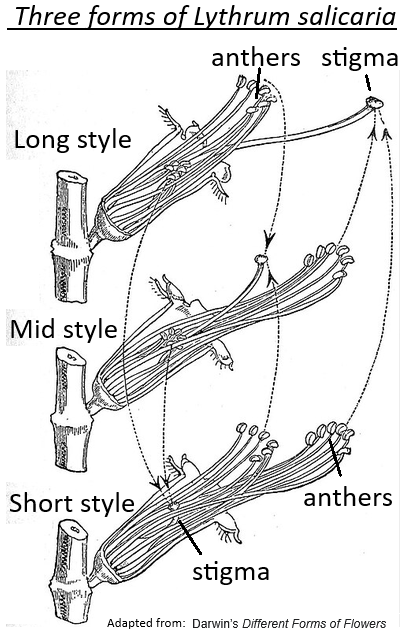
What is the best description of this process?
The transfer of pollen is from anther to stigma. Different forms of flower can promote cross-pollination.
The diagram below shows a drawing of two flowers, one from a tree and the other from a grass.
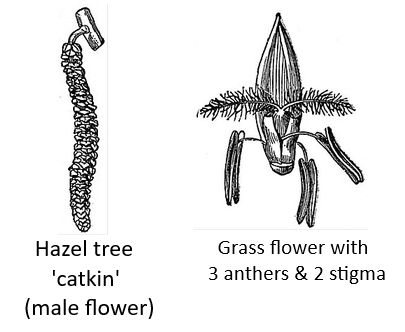
Which is the best explanation of the method of pollination of these flowers?
Wind pollinated flowers don't have petals, and have the anthers and stigma exposed to the air, outside the flower.
One of the flowers below is from a plant which has a strong adaptation for cross-pollination.
Which explanation below is the most accurate?
The Hazel tree makes separate male flowers and and female flowers. They are separate on the tree, helping reduce the self pollination.
 The image shows a seed from a dandelion plant.
What is the function of the circle of feathery spikes
This is a seed that floats in the wind to be dispersed.
What are the two processes which will happen during germination of a seed.
Germination begins with the entry of water into the seed, this begins the mobilization of food reserves, often amylase enzymes begin to break down starch stored in the seed. The embryo cells will begin to divide and specialise leading to growth and development.
.
Teacher's notes
The starting questions are intended to begin student's thinking in preparation for the activities.
Activity 1 - this simple animation allows student to explore for themselves how different structures of flowers promote cross pollination or not. The four preset buttons on the animation show the main points.
There is a short question here to summarize the findings.
Activity 2 - this set of images illustrates the different ways that seeds can be distributed by wind or animals.
The worksheet can be used to give students notes about these examples. The theory is simple, and the examples may be useful.
Activity three very quickly covers the last point in the plant reproduction section, which is recognising the difference between seed dispersal and pollination, together with two details about the germination of seeds..