IA Marking activity - Research design
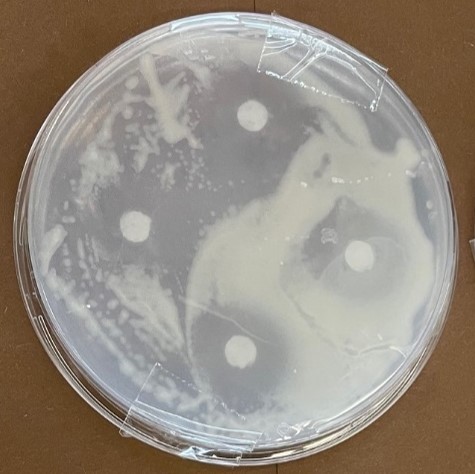
The best way to understand the marking criteria is to apply them to genuine student work. This activity provides an opportunity to a look at the three aspects of the Research Design criterion, and to apply it to an IA. There are explanations of each assessment strand which appear once the assessment has been checked.
- Read first section of the student IA
- Read the marking notes for assessment of this section
- Then assess the first section by dragging the best assessment criterion into the box on the left.
- Repeat the process for the second and third aspects of Research Design
- Use the strand marks to decide an overall mark for Research Design.
There are ten aspects to assess in an IA, this page covers the first three.
RD1 - Research question and the introduction
RD2 - Methodological considerations
RD3 - Practical methodology
DA1 – Data analysis
DA2 – Uncertainties are considered
DA3 – Effectiveness of the processing
CON1 – Conclusion is supported by the data
CON2 – Conclusion is linked to science / references
EV1 – Evaluation explains weaknesses in the methodology
EV2 – Evaluation suggests improvements
This is the Data analysis section of the Student IA on Garlic and E.coli.
- Read the whole of the data analysis
- Decide which descriptor fits best for each strand of Data analysis.
What is the effect of garlic extracts in different concentrations on the growth of Escherichia coli, as measured by the zone of inhibition in agar plates?
Word count: 2643
Research Design
Research Question: What is the effect of the concentration of garlic extract (Allium sativum) on the growth of Escherichia coli, as measured by the diameter of the inhibition zone in agar plates?
Background Information:
Garlic (Allium sativum) has been used through history for its antibacterial properties. One of its main active ingredients is allicin, a sulfur compound that is released when raw garlic is crushed or chopped creating a chemical reaction. Allicin is known for many of garlic's antimicrobial activities, which makes it a natural alternative to conventional antibiotics.
According to research from Ankri and Mirelman (1999) on Microbes and Infection, the main antimicrobial effect of allicin is due to its chemical reaction with thiol groups. The reaction blocks the functioning of important enzymes which interferes with important processes such as those controlled by cysteine proteinase. This affects the metabolism of the microorganism and prevents it from surviving or reproducing. It interrupts essential processes including protein synthesis and DNA replication, ultimately causing cell death.
Escherichia coli is a common bacterium that lives in our intestines. It is the most studied bacterial species due to its rapid growth, low pathogenicity, and its ease of cultivation in laboratory conditions. These characteristics make it safe to work with in laboratory environments makes it perfect for this experiment.
For the experiment, the concentration of garlic extract was used as the independent variable (IV). To make the solutions, crushed garlic was first mixed with a small volume of distilled water to obtain a stock solution labeled 100%. This stock solution was further diluted with more distilled water to obtain 75%, 50% and 25% concentrations. A control solution made only with distilled water was the concentration of 0%. These chosen values come from the scientific articles by Abidullah et al. (2021), which found that increasing concentrations of garlic resulted in larger zones of inhibition using the same concentrations of garlic extract as I did. In addition, a pilot trial was conducted to adjust the values to observe the incremental antibacterial effect more clearly. The dependent variable (DV) is the zone of inhibition in millimeters around the garlic extract on agar plates, as it indicates antibacterial effectiveness.
Allicin is generally expected to increase inhibition of E. coli as its concentration increases, locking more enzymes and pathways and making a larger clear zone around the garlic extract. Measuring these zones will then quantify the antimicrobial effectiveness of the garlic.
Allicin is expected to increase the inhibition of E. coli as its concentration rises, by disrupting more enzymes and key metabolic pathways. This antimicrobial effect either kills the bacteria or stops its growth. As a result, a clear zone forms around the garlic extract. This zone, known as the “zone of inhibition,” represents the area where bacteria cannot grow. Allicin diffuses through the agar, and its concentration decreases with distance from the source, which explains why the size of the clear zone is used to quantify the antimicrobial effectiveness of garlic.
Checklist for teachers assessing RD1 - Research design - Aspect 1
Research Question and Background info.
| 0 if this is missing | 1 - 2 marks | 3 - 4 marks | 5 - 6 marks |
|---|---|---|---|
| RD1 | States a research question. (with little background info ) | Outlines a research question, providing broad context. (many of the points in reminders) | Describes a research question, providing specific & appropriate context. (all of the points in reminders) |
Check the RQ:
- both the IV and DV are mentioned.
- scientific species name is given,
- the range of IV values is detailed,
- how the DV will be measured is included.
Check background information has:
- focussed description of the system,
- explanation of derived variables,
- relevant theory linking the DV and IV.
Final confirmation
If most of the introduction is more of an outline of details then consider 3/4
If the introduction includes detailed descriptions, and explanations this is evidence for 5/6
To Do: Make a judgement, considering the checks above, which band fits best.
Slide the descriptor that best describes the IA work into the box on the left.at best fits the IA
| The best fit descriptor is: | 5 - 6 marks: Describes a research question, providing specific & appropriate context. (all of the points in reminders) |
| 3 - 4 marks: Outlines a research question, providing broad context. (many of the points in reminders) | |
| 1 - 2 marks: States a research question. (with little background info ) |
Explanation of the mark awarded:
The Research Question is well written, it contains independent variable (IV) and dependent variable (DV) and a scientific species name;
Relevant background information links the IV and the DV,
This information includes description of the methods.
Overall the details are more of an outline (3-4 marks), than a specific detailed consideration of all the details.
This is the the next part of the Research design of this Student IA on Garlic and E.coli.
- Read this section
- Decide which descriptor fits best for RD2.
Methodological Considerations
· table of concentrations of garlic:
| Condition | Garlic Extract (%) (Independent Variable) | Distilled Water (%) (Control Substance) | Garlic Concentration (%) | Purpose |
| High concentration (no water) | 100 | 0 | 100% | To observe maximum potential antibacterial effect |
| Intermediate-high concentration | 75 | 25 | 75% | To observe antibacterial effect at a high but diluted level |
| Intermediate concentration | 50 | 50 | 50% | To observe effect at moderate concentration |
| Intermediate-low concentration | 25 | 75 | 25% | To observe minimal garlic effect |
| Control (no garlic) | 0 | 100 | 0% | Negative control to compare growth without garlic |
· Repeats: 8 repeats in total: Two agar plates per concentration were used, each with 4 test zones, making 8 replicates in total across the different concentrations of garlic extract.
· Dependent variable - Growth Inhibition of Escherichia coli:
o Measurement method: The diameter of the zone of inhibition (zone without bacterial growth) with be measured by measuring the diameter of the widest (Diameter of clear area #1 in the table) and narrowest (Diameter of clear area #2 in the table) parts of the shape, to calculate an average.
o Equipment used: A ruler in will be used to measure the zone of inhibition in millimetres. Precision is approximately ±0.5 mm.
o Derived variables: The average diameter across 8 replicates will be calculated for each concentration to allow clear comparison.
o Assumptions:
- Escherichia coli is evenly distributed across the plate.
- Size of inhibition directly reflects the effectiveness of the antibacterial of the garlic extract.
Controlled variable:
The controlled variables are conditions that remain the same in all trials to guarantee a fair experiment. This distinguishes it from a control experiment, which consists of conducting tests without the active ingredient (in this case, using distilled water instead of garlic extract). This ensures that any inhibition observed is caused by the garlic, and not by the garlic paper disc or other influences.
| Controlled variable | Why does it need to stay the same in each experiment? | How will it be controlled? | |
Volume solution of garlic | Having different volumes could make the quantity of the active compound vary and not actively diffuse, affecting the size of inhibition and making the results not reliable. | By measuring the quantity with a Accumax microvolume pipette and adding the corresponding concentration into each beaker to later soak 4 pieces of paper in each different dilution per concentration. | |
Incubation cabins | The temperature needs to stay constant, at 25°C because the humidity levels in different incubators could affect bacterial growth rate or enzyme activity, leading to inconsistent results. | I will place all Petri dishes in the same incubator at 25°C for 24 hours, and space them evenly to ensure uniform conditions. This is included in the incubation step of the method. | |
| Distribution method for E. coli bacteria |
| I will apply several drops in each Petri dish with a pipette and distribute the bacteria evenly with a bacteriological spreader. After with the help of a light source, we will make sure that the product is evenly distributed. | |
Garlic preparation | If garlic is processed differently each time (e.g., different crushing or filtration methods), the concentration of active compounds will differ, which will affect the results. | I will prepare garlic extract for all plates at once. 10 g of fresh garlic with 10 mL of distilled water and filtering it through filter paper. The same process will be used for all tests as written in the preparation step. | |
Incubation time | If some plates are incubated for longer than others, the bacteria will grow more and the zones of inhibition can appear to be larger, making the results inaccurate. | I will incubate all plates for exactly 24 hours, annotating the time as soon as the last plate is placed into the incubator, so it’s not left longer than it needs and so that the bacteria does not completely take over the plaque. This will be clearly stated in the final step of the method. |
Checklist for teachers assessing RD2 - Research design - Aspect 2 - Design of the method
| 0 if this is missing | 1 - 2 marks | 3 - 4 marks | 5 - 6 marks |
|---|---|---|---|
| RD2 | States methodological considerations associated with collection of relevant data, but there are omissions. | Describes methodological considerations associated with collection of data (few omissions) and data is relevant and sufficient. | Explains the reasoning behind selection of methodological considerations associated with collection of relevant and sufficient data. |
Check the methodology section includes the following;
- DV & IV and method of collecting data - relevant to RQ.
- the range of the IV, number of values & the number of repeats.
- the controlled variables (check for any obvious omissions, e.g. temperature).
- equipment details are included, uncertainty of the measuring apparatus, calibration if required.
- the data being collected is sufficient for 2-4 hours lab work & will be enough for the analysis.
Check the quality of the details, are written points mostly:
- statements = 1/2 mark band,
- descriptions =3/4 mark band,
- explanations =5/6.mark banc.
To Do: Make a judgement, considering the checks above, which band fits best.
Slide the descriptor that best describes the IA work into the box on the left.at best fits the IA
The best fit descriptor is: | 3 - 4 marks: Describes methodological considerations associated with collection of data (few omissions) and data is relevant and sufficient. |
| 5 - 6 marks: Explains the reasoning behind selection of methodological considerations associated with collection of relevant and sufficient data. | |
| 1 - 2 marks: States methodological considerations associated with collection of relevant data, but there are omissions. |
Explanation of the mark awarded
This work contains relevant methodological considerations, although a bit more precision in the diameter measurements could be possible. Mostly descriptive, which fits the 3/4 band.
This is the the next part of the Research design of this Student IA on Garlic and E.coli.
- Read this section
- Decide which descriptor fits best for RD3.
Methods
About the pilot experiment: A pilot experiment was made to make sure that the experiment worked. This consisted of two trials: The first with 100% garlic extract and the second with 100% distilled water, with one plate for each giving us 8 zones of inhibition. In doing so we realized that it was not so accurate to do it with only two concentrations. Using only the two extremes (total concentration and no concentration), we were not able to observe how the antibacterial effect gradually changes, so on the final experiment we decided to use 5 types of concentrations. We also realized that it was very important to evenly distribute the bacteria and to be careful with the water droplets created by the condensation so that it would not affect the results of our inhibition zone. These initial results showed a high concentration of bacterial cultures, leading to either small or unclear zones of inhibition after the incubation. The plates had been incubated for 48 hours, which allowed bacterial overgrowth and reduced the accuracy of the observations. After this, we decided to change the inhibition time to 24h in the final experiment, so the bacterial colonies don’t spread too much to allow clearer measurement of the inhibition zones.
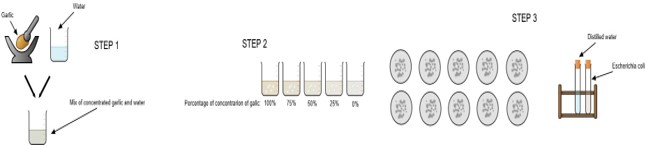
Labelled diagram of the setup:
Step by step method
· Equipment:
- o Petri dishes with nutrient agar
- o Accumax microvolume pipette (+/- 0.01 ml)
- o Sterile pipette tips
- o Distilled water
- o Fresh Garlic
- o Garlic mortar
- o Bunsen burner (for maintaining sterile conditions)
- o Bacteriological spreader
- o Sterilized beakers
- o Filter paper
- o Sterilized round pieces of paper.
- o Escherichia coli liquid culture
- o Ruler (for measuring inhibition zones) (±0.5 mm)
- o Gloves, lab coat, and safety goggles
1. Garlic Extract Preparation
- a. Peel and crush a garlic with a sterile mortar and pestle (use a blender if necessary).
- b. Add 10 ml of water to the paste and mix homogeneously.
- c. Filter the mixture through sterile filter paper into a sterilized beaker.
- d. Transfer the extract to different beakers and prepare the dilutions by applying a radius between the water and the garlic extract (It is important to be precise with the mixture and to add the corresponding quantities of each solution.): 100% (undiluted), 75%, 50%, 25%, 0% (control, distilled water only).
2. Preparation of Agar Plates
- a. Label 5 Petri dishes with the concentration to be tested.
- b. Flame the Bunsen burner and work in a sterile zone.
- c. Using a sterilized pipette, we transferred Escherichia coli liquid culture and with the help of a Bacteriological spreader we spread evenly across each agar plate.
3. Application of Disks
- a. Using sterile forceps, soak 4 pieces of paper in each different dilution.
- b. Then, place the soaked paper disks evenly onto each inoculated plate.
- c. Ensure the disks are labelled or tracked.
4. Incubation
- a. Tape the lid of the plates [DF1] to avoid contamination. (Leaving space for air to enter, so that the conditions didn’t become anaerobic.)
- b. Incubate all plates upside-down at 25 °C overnight.
5. Measurement
- a. Measure the longest and shortest diameters (in mm) of the zone of inhibition around each disc with a ruler after 24 hours of incubation, and then calculate the mean.
- b. Record all data in a table.
Safety and environmental (disposal) considerations (risk assessment).
During my experiment my main hazard was the possible contamination from the bacterial cultures. Escherichia coli is spread through contaminated food or water so to prevent contamination we took the following measures: disinfecting hands previously and after the experiment, and the work surface, the use of a Bunsen burner for sterile technique, to quickly disinfect all the equipment I was using. Also properly sealed the Petri dishes to prevent accidental opening. And after the experiment I sterilized the agar plates without opening them in a pressure cooker, and then disposed of them in the hazardous waste from the lab, by the lab technician.
Checklist for teachers assessing RD2 - Research design - Aspect 3
Communication of the method
| 0 if this is missing | 1 - 2 marks | 3 - 4 marks | 5 - 6 marks |
|---|---|---|---|
| RD3 | Describes a methodology for collecting and selecting data that lacks detail to allow for precise replication. | Describes a methodology for collecting and selecting data that allows for replication with some errors and/or omissions. | Describes a methodology for collecting and selecting data that allows for replication with utmost precision. |
Check for;
- Is there clarity about how IV values are set, is the range appropriate,
- Are there clear details about measurement of the DV,
- Does it have details of volumes, concentrations, +/- values,
- Evidence that controlled variables have been controlled in the method steps.
- Is the method written in a logical sequence / no unnecessary repetition,
- Are safety, ethics, disposal, microbe source included if relevant.
- Does the work include citations for a standard method (if used), other sources.
Note the general level of detail and precision to confirm the mark band:
- Lacking detail = 1/2,
- A few errors / omissions = 3/4,
- Detailed and precise = 5/6"
To Do: Make a judgement, considering the checks above, which band fits best.
Slide the descriptor that best describes the IA work into the box on the left.at best fits the IA
The best fit descriptor is: | 3 - 4 marks: Describes a methodology for collecting and selecting data that allows for replication with some errors and/or omissions. |
| 5 - 6 marks: Describes a methodology for collecting and selecting data that allows for replication with utmost precision. | |
| 1 - 2 marks: Describes a methodology for collecting and selecting data that lacks detail to allow for precise replication. |
Explanation of the mark awarded
The step by step methods are detailed and would be possible to follow precisely.
This is a strong 3/4 and perhaps worthy of 5
Look back at the three aspects of Research design which have been graded.
Decide what the most appropriate overall mark will be for this strand.
RD1 is clearly in the 3 - 4 mark band
RD2 is in the 3 - 4 mark band
RD3 is a strong 3 - 4 mark band (possibly 5 marks)
Overall there is definitely enough evidence to support grade 3
The high mark in RD3 suggests that 4 marks would be better than 3 overall.