Start-of-year professional learning
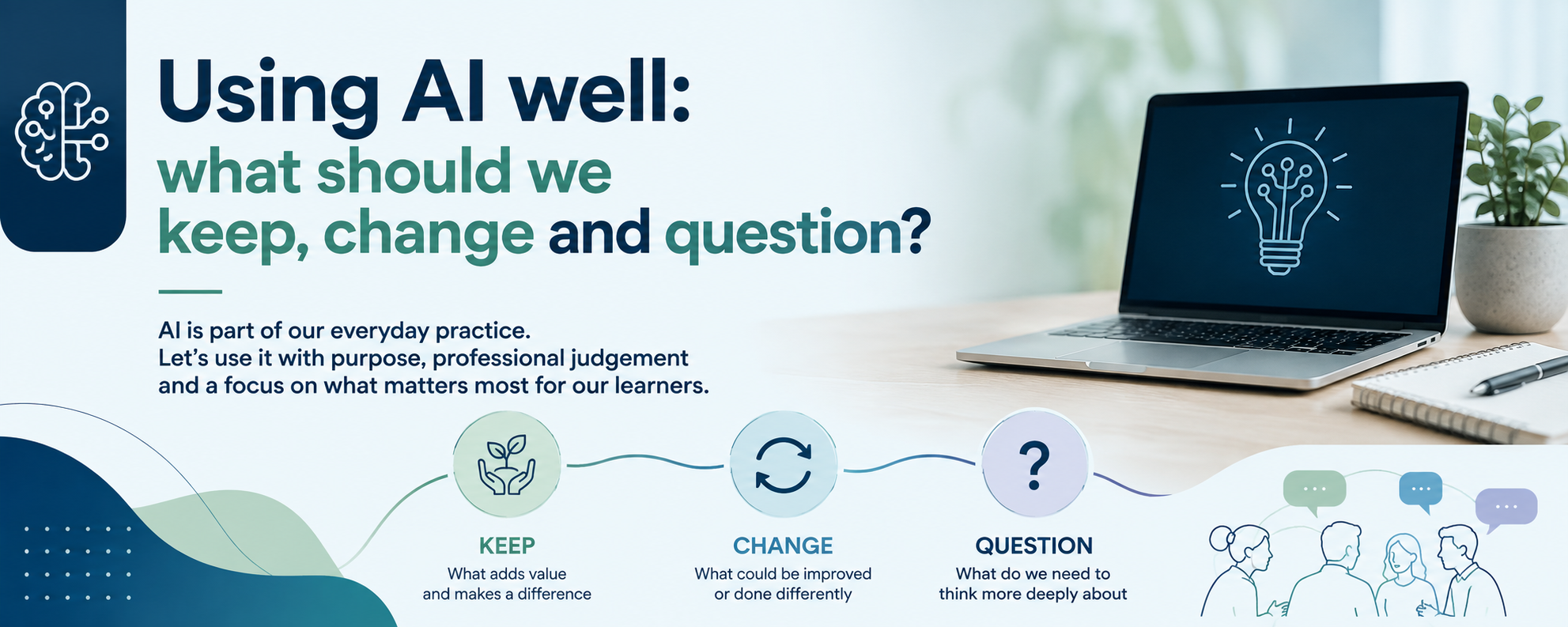
A new school year. We are in the middle of staff orientation week and one of the issues we have returned to is our use of AI.
A new UK report, AI in Education 2026: Working It Out provides a useful snapshot of how AI is now being used in schools. The report suggests that teachers are becoming more pragmatic about AI. Eight in ten now use it for teaching-related tasks, particularly creating lesson resources and dealing with written communication.
Discuss
Where could AI genuinely improve learning in my classroom?
What am I already using AI for, and does it actually improve planning, teaching, feedback or students' learning? Are there situations where using AI might add little or even get in the way?
How do I use AI without giving away my professional judgement?
When AI suggests an idea, resource, explanation or interpretation of student work, how do I decide whether it is useful and appropriate for my particular students?
How can I help students become responsible users of AI?
How do I help students understand when AI can support their learning, when they need to do the thinking themselves, and how to question, check and acknowledge what AI produces?
How might AI change the way I assess learning?
If students can use AI to produce increasingly sophisticated work, how can I make sure my assessment still reveals what they understand, what they can do independently and how their thinking is developing?
A useful question to finish the discussion might be:
If AI gives us back time, what do we want to do with that time that will make the greatest difference to our students?
Top Tips
I have put together the following Top Tips drawing on the report's findings and, in particular, its emphasis on purpose, professional judgement, responsible use and the need to focus on learning rather than simply efficiency.

Start with the purpose. Before using AI, be clear about what you are trying to achieve and whether AI is actually the best way to achieve it.
- Use AI to create capacity, not simply to produce things more quickly. Think about how saved time can be redirected towards relationships, feedback, creativity and responding to individual learners.
- Keep teachers thinking. Some of the effort involved in analysing pupils' work, identifying misconceptions and deciding what to do next is precisely how professional expertise develops.
- Make responsible use clear. Teachers and students need shared expectations around privacy, data, bias, academic integrity and appropriate use.
- Rethink assessment rather than relying solely on detection. If AI changes what can be produced outside the classroom, consider what assessment needs to look like as a result.
- Teach students how to use AI well. The aim should not simply be to tell students what they cannot do, but to develop their ability to question, evaluate and use AI responsibly.
- Look beyond workload. Saving an hour is useful, but the more important question is whether AI has improved the quality of teaching and learning.
- Don't confuse use with impact. AI is becoming commonplace, but we still need to ask carefully what actually makes a difference to student learning.