I do, we do, you do: Deep learning by design
Bringing cognitive science and inquiry together in IB schools
I have been privileged to spend the past week working with GEMS Education in Dubai, one of the world's largest private K–12 education providers, serving more than 200,000 students across a global network of schools. While the majority of GEMS schools in Dubai offer British, American, Indian and other national curricula, six schools offer International Baccalaureate (IB) programmes.
My role was to collaborate with school leaders and IB coordinators from these schools to explore how their instructional framework, Teach Like a GEM, aligns with IB pedagogy and the Approaches to Teaching and Learning. What emerged from our discussions was not a contrast between two educational philosophies, but a powerful convergence around a shared understanding of how learning happens.
Why have an instructional framework?
“At GEMS Education, world-class teaching requires all staff to understand the mechanisms of the mind – how we think, learn, and remember.”
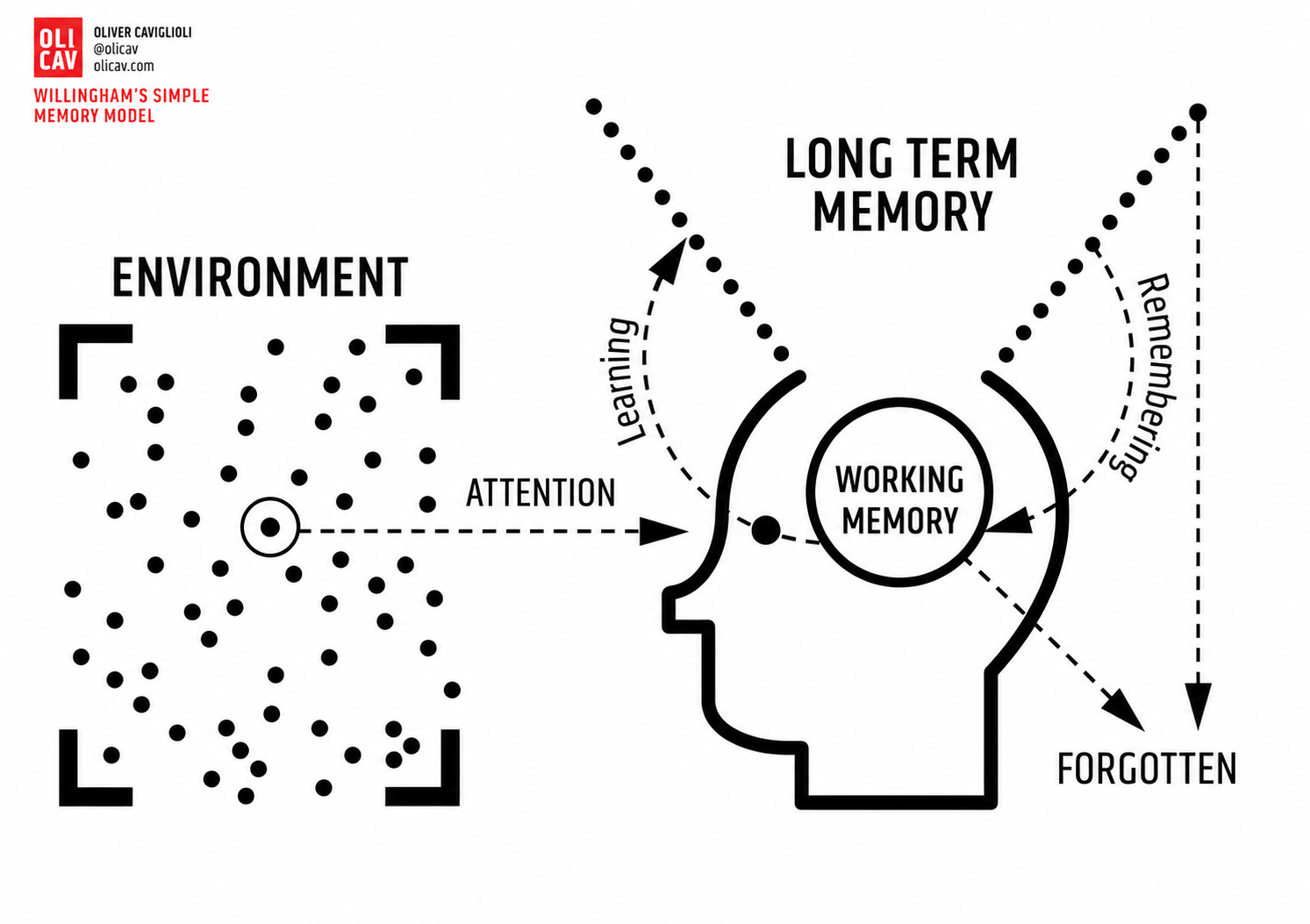
 At GEMS Education, world-class teaching requires staff to understand how students think, learn and remember. The Teach Like a GEM framework draws on the work of Daniel Willingham, Barak Rosenshine and Doug Lemov, providing teachers with a common instructional language and a shared repertoire of evidence-informed practices.
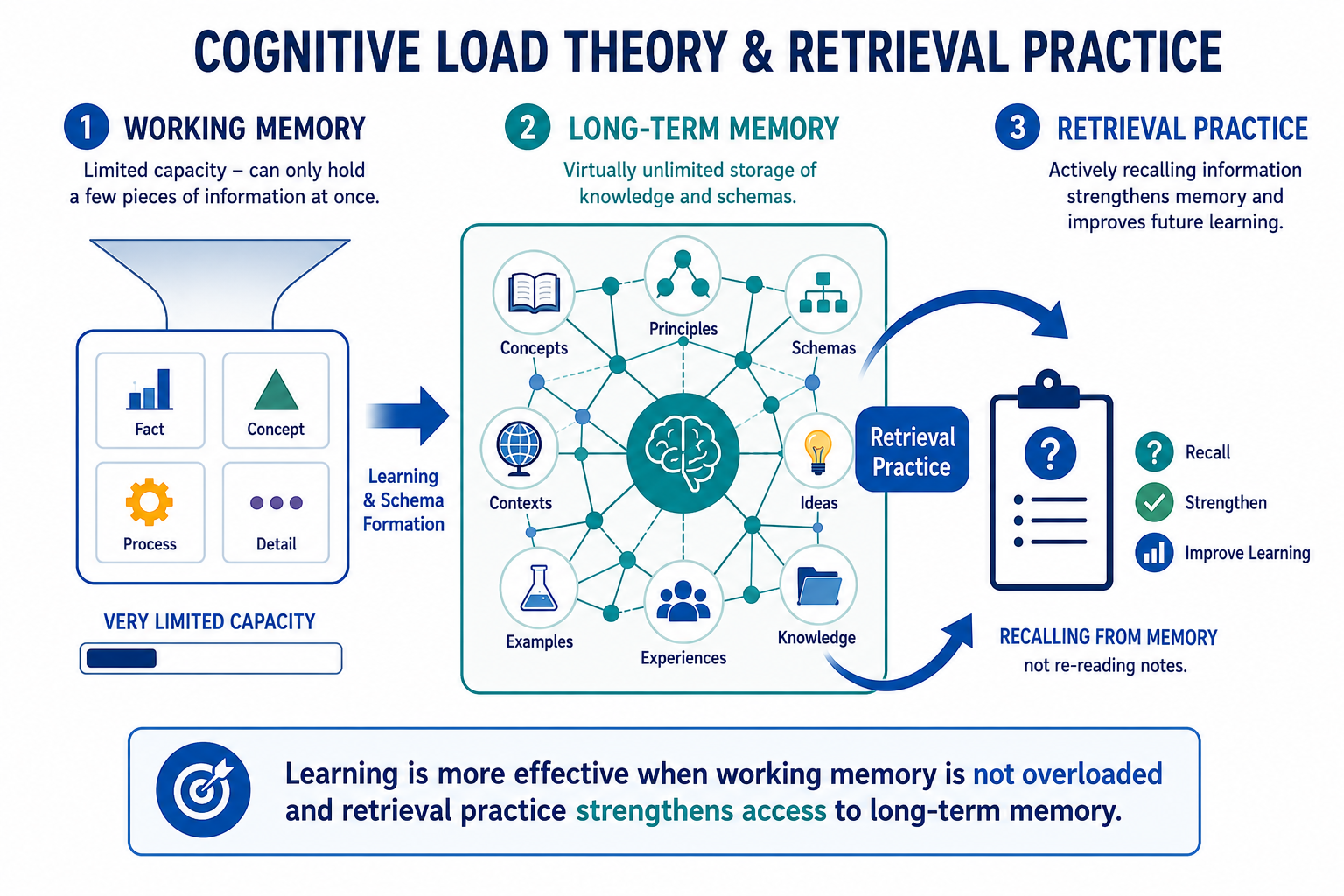
Drawing on cognitive science, the framework recognises that learning begins with attention, moves through the limited capacity of working memory, and becomes durable only when knowledge is encoded into long-term memory and strengthened through retrieval. These principles are embedded throughout the Teach Like a GEM Playbook, ensuring every technique supports learning that sticks.
An instructional framework provides more than a collection of strategies. It creates consistency across classrooms, ensuring that the conditions for effective learning are reliably established. This consistency is not about compliance; rather, it allows teachers to focus on the more complex and creative aspects of curriculum design, conceptual understanding and student learning.
Cognitive science and inquiry: partners, not rivals

One of the most important insights from the week was that the IB is often misunderstood as being solely inquiry-driven. In reality, the IB presents a more sophisticated model of learning that brings together cognitive science, social constructivism and inquiry.
Inquiry is a powerful tool, but it sits alongside explicit teaching, modelling, discussion, feedback and deliberate practice. The IB recognises that students require a strong foundation of knowledge before they can think critically, make connections, transfer understanding and engage in authentic inquiry.
This aligns closely with Teach Like a GEM's emphasis on securing attention, building knowledge, checking understanding and consolidating learning before expecting students to engage in higher-order thinking.
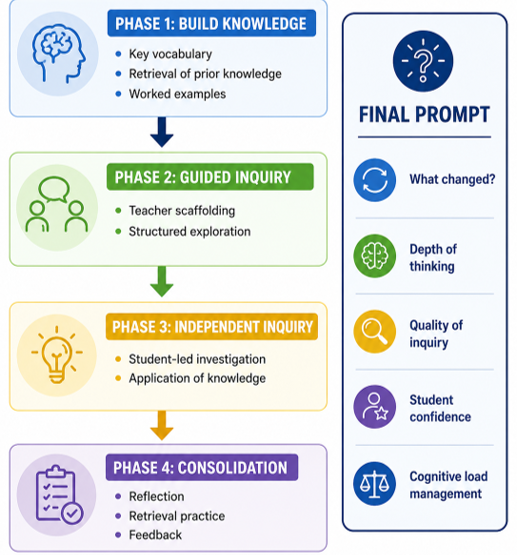
Perhaps the strongest connection between the two approaches is their shared commitment to deep learning. Knowledge provides the foundation, collaborative dialogue develops understanding, inquiry enables application, and retrieval strengthens learning over time. Deep learning occurs when all of these elements work together.
Seen through this lens, Teach Like a GEM and the IB Approaches to Teaching are not competing frameworks but complementary ones. Teach Like a GEM explains how learning happens; the IB Approaches to Teaching explain why learning matters and what kind of learner we are trying to develop.
My takeaways
- Strength in collaboration: Six Heads of School and more than 40 IB coordinators working together across all four IB programmes created a powerful example of ‘team learning’ (see Learning Organisations - Team Learning). Professional learning communities’ matter because we all benefit from learning with and from one another. As educators, we are all magpies looking for good ideas.
Question: Who are the educators and schools that most influence your thinking, and how deliberately do you learn from them? - The importance of instructional clarity: Effective schools provide teachers with a shared repertoire of evidence-informed instructional strategies, such as retrieval practice, guided practice and checking for understanding. Consistency in these practices creates the conditions in which deeper learning can flourish.
Question: If a student moved between ten classrooms in your school, how much consistency would they experience in the way learning is designed and taught? - Helping teachers understand the 'why': The IB Approaches to Teaching explain why learning matters and what kind of learner the school is trying to develop: one who can make meaning, connect ideas, apply learning in local and global contexts, and appreciate multiple perspectives – going to the heart of what it means to be internationally minded. Teach Like a GEM complement this by providing the practical strategies that explain how learning happens. Together, they provide both purpose and practice.
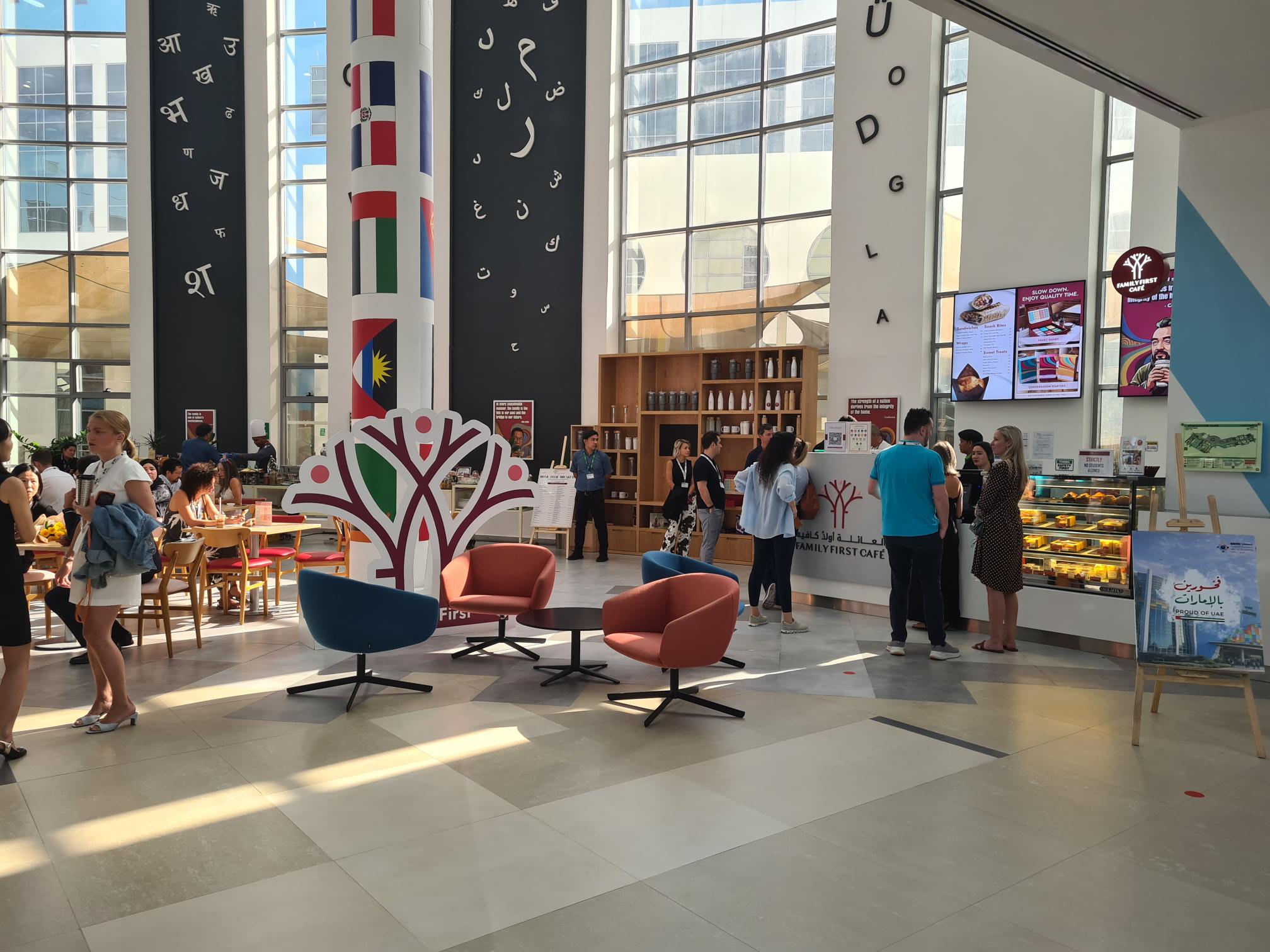
Question: How often do conversations about teaching focus on purpose as well as practice? - The power of the learning environment: I visit a great many schools, but I was genuinely blown away by the learning environments in the four GEMS schools I visited. Each entrance featured a café used throughout the day by parents, while corridors were carefully designed as a 'third teacher', filled with displays, student work and messages that reinforced a culture of learning. The physical environment communicated high expectations, belonging and a commitment to excellence.
Question: What messages do your learning spaces communicate about what is valued in your school?
My biggest takeaway from the week was that schools do not need to choose between cognitive science and inquiry, or between instructional frameworks and IB philosophy. Deep learning emerges when these elements work together. Instructional frameworks help teachers understand how learning happens; the IB Approaches to Teaching help them understand why learning matters. The most effective schools are those that are intentional about both.
Here is a simple lesson structure showing the integration of instructional strategies to build knowledge and inquiry led teaching and learning to nurture agency.