How can an IB programme stay sustainable with low student numbers?
Visiting schools always gives perspective.
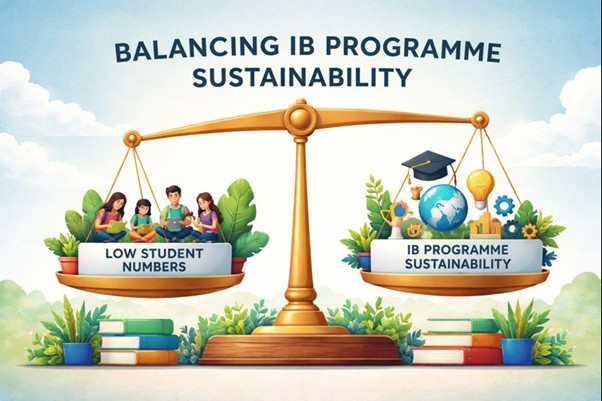
It’s always a privilege to visit another school for an IB evaluation. Each school has its own story, its own context, and its own challenges — and each visit is a chance to reflect on your own practice too. This week, I visited a school facing a very real question: how do you grow programme strength when the sustainability of a programme is under threat because of low student numbers? In every IB evaluation, three concepts guide our lens: fidelity, integrity, and sustainability. On this visit, it was the third — sustainability — that came sharply into focus.
The school runs two programmes: the MYP and the DP. The DP, while small, is viable. The MYP, however, has very few students, raising questions about its long-term sustainability. The school is exploring with the IB the possibility of suspending the MYP for two years, creating space to plan, reflect, and align with the national curriculum. The situation raises broader strategic questions: how can the DP remain strong and growing if the MYP — the natural feeder — is paused? How can the school build on the expertise of its national programme to maintain pedagogical quality and alignment with IB principles?
Several strategies stand out:
- Why small classes make a difference: Each student is known. Small class sizes transform the learning experience. They foster strong, trusting relationships between students and teachers, creating an environment where learners feel confident asking questions and seeking individual support—both in and beyond the classroom. With fewer students, collaboration becomes more meaningful. Learners engage more deeply with one another, benefiting from shared ideas, peer feedback, and collective problem-solving. Teachers, in turn, get to know each student well, allowing them to quickly identify learning barriers and tailor support to overcome them. The result? Stronger mentoring, more effective pastoral care, and significantly higher levels of participation and engagement in lessons.
- How schools can position value of DP: Schools can strengthen the appeal of the IB Diploma Programme (DP) by positioning it as a rigorous, high-support pathway to competitive universities—one that clearly distinguishes IB from many national education systems. Emphasising the DP’s academic challenge, research focus, and development of critical thinking signals strong preparation for selective higher education. However, the DP is not only about university readiness. Schools can also highlight how the programme develops future-ready skills aligned with global frameworks such as the World Economic Forum— including problem-solving, adaptability, collaboration, creativity, and resilience. This positions the DP as preparation not just for higher education, but for an evolving world of work and lifelong learning.
- Why School Counsellors are key: Personalised guidance is a major value driver for families. When students and parents know they will receive individualised support for subject choices, university applications, and future planning, confidence and trust increase. By combining academic planning, career guidance, and wellbeing support, counsellors ensure students leave school prepared, focused, and equipped for the next stage of life.
- Integrate national and international pathways: rather than seeing national and international programmes as competing systems, schools should look for strategic integration. Drawing on the strengths of both can strengthen pedagogy, improve alignment, and attract national students into IB pathways. Admissions and guidance messaging should be transparent, coherent, and aligned so families clearly understand progression routes.
- Location, location, location: Schools should maximise the value of location in recruitment by clearly communicating lifestyle benefits — safety, accessibility, cultural opportunities, community links, and local partnerships that matter to families and students.
- Be clear about your identity: Clarity of identity matters in competitive markets. Schools must articulate a compelling value proposition that goes beyond curriculum alone. Strategic partnerships with universities, industry, cultural institutions, and community organisations can extend learning beyond the classroom, strengthen real‑world relevance, and differentiate the school brand. Strong community integration builds credibility, visibility, and trust.
- Why alumni are your most powerful school ambassadors: Alumni—former students and parents—are your school’s most credible advocates. They are living proof of your impact, offering authentic stories and real outcomes that no marketing campaign can match. Their voices build trust, influence enrolment decisions, and strengthen your reputation. The most effective schools don’t treat alumni as supporters, but as strategic partners:
- Build alumni communities across countries and regions to reflect your school’s global footprint.
- Engage alumni students and parents as focus groups to refine your key marketing messages. Their insights ensure your messaging reflects reality, not just aspiration.
- Capture real stories and testimonials that showcase outcomes, career pathways, and life beyond graduation—evidence that today’s families value more than facilities alone .
- Protect staff contracts and programme stability: Teachers are central to programme quality. Small cohorts can create insecurity around contracts and part‑time roles, which threatens programme continuity and sustainability. Protecting staff stability is not only an employment issue — it is a strategic sustainability issue.