New York City Languages
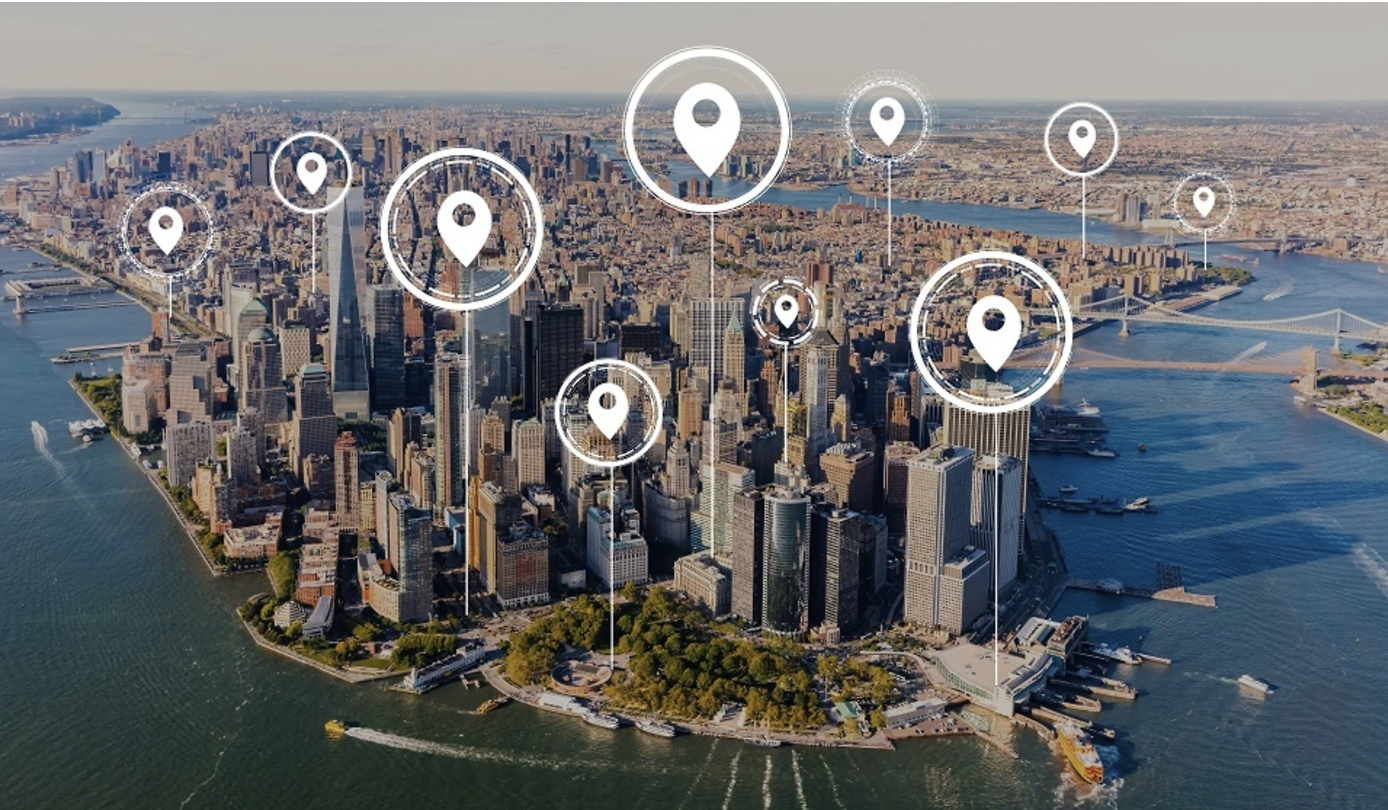
According to the Endangered Language Alliance, New York City has speakers from over 700 languages: "With speakers of approximately 10 percent of the world’s 6000-7000 languages, the New York metropolitan area is the most linguistically diverse urban center in the world, probably in the history of the world." This page connects to the theme of Identities and the topic of Language and Identities.
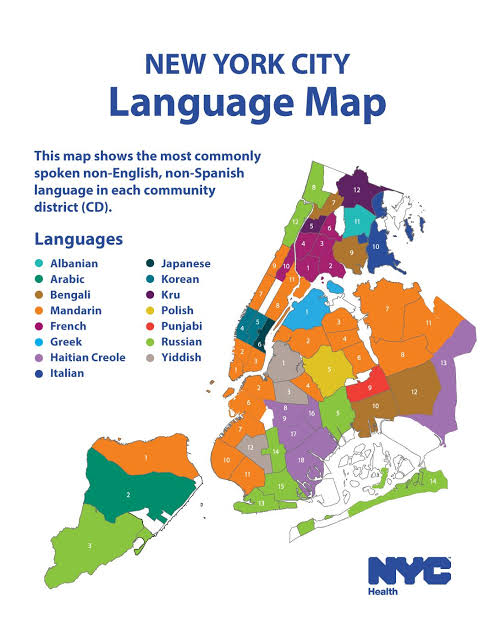
Because New York City has historically been a center of immigration in one of America's oldest cities, it is linguistically diverse. To read more about the over 700 languages in New York City, you can play with the interactive map from the Endangered Language Alliance or ELA by clicking here.
Some of the languages included may be unfamiliar to you such as Lenape - the indigenous people who originally inhabited the land of New York City. Also, you can read about the growth of Asian languages such as Seke from Nepal and Wakhi from Tajikista. Other indigenous languages are also growing such as Nahuatl K'iche from Mexico and Guatemala.
After reading and listening to the texts you can activate you reflective and critical thinking skills by inquiring:
- Why are the people that speak these languages coming to New York City and leaving their home countries?
- Which language are growing and why?
- What is gained or lost when we preserve a language?
- Why are the speakers of a language clustered in certain areas?
- Is my language represented on the map?
- How can we preserve endangered languages?
Before you read and listen, you can also review some challenging vocabulary words you will encounter by studying the flashcards below:
The text that you will read is an article published in National Geographic Magazine. It is one of the few magazines still published in print and digitally that was founded in 1888 with the goal of publishing articles about geography, history, nature, culture, and global conservation.
You can read the original article here or read the PDF below that is adapted for the English B Paper 2 format.
As you read the Article notice the text type features and conventions that you will need to produce in a Paper 1:
• relevant headline/title
• introduction intended to catch the readers’ attention.
• techniques that engage and interest readers, e.g. direct address
Part 1: Short-answer questions (Lines 1–32)
Answer the following questions using no more than three words.
What type of communities in Brooklyn may help ensure the survival of Seke?
From whom did Rasmina Gurung acquire her knowledge of Seke?
What proportion of the world's languages are represented in New York City?
What might disappear before linguists have the opportunity to document it?
Besides preserving languages, what process are linguists encouraging to ensure their continued use?
Part 2: Finding words in the text (Lines 33–64)
Find the word or phrase in lines 33–64 which means the following.
An innovative development that introduces new ideas or methods.
The process of bringing something back into use or existence.
A place where something has survived despite difficulties.
A strong sense of unity within a community.
Existing or occurring at the same time as the present.
Paper 2 Reading:
Please note that this is a challenging text and may be more suitable for HL students or to SL students with some scaffolding.
Answers:
| Question | Answer |
|---|---|
| 1 | Vertical villages |
| 2 | Her grandmother |
| 3 | Over 10 percent |
| 4 | Linguistic convergence |
| 5 | Maintenance and revitalization |
| 6 | Pioneering |
| 7 | Rebirth |
| 8 | Stronghold |
| 9 | Cohesion |
| 10 | Contemporary |
Teacher note: Questions 1–5 draw on lines 1–32. Questions 6–10 follow the IB-style vocabulary identification format, with answers appearing in lines 33–64. All answers contain one to three words and are taken directly from the text.
Paper 2 Listening:
The entire text is 15 minutes, but the questions are for the first 4 minutes and 45 seconds, similar to a Text C for Paper 2 listening HL. You can click here to listen to the full text from WNYC, or you can click on the eye icon below to read the full transcript.
Multiple Choice Answers:
- Its endangered languages.
- Its shared residence.
- Preserve minority languages.
- It remains incomplete.
- Developing cultural resources.
Choose the five true answers:
- Hasidic communities help preserve Yiddish.
- Wakhi originates from a region bordering four countries.
- N'Ko is promoted in West African communities in New York.
- Nahuatl has influenced English vocabulary.
- The last native Lenape speaker mentioned lives in Canada.
Transcript
Brian Lehrer: Brian Lehrer on WNYC. New York City stands out as one of the most linguistically diverse places on Earth. A deep linguistic diversity not only shapes the city's unique identity but also influences its politics and culture. Among the myriad languages here are more endangered languages than have ever existed anywhere else. Yiddish is one example. Another is Seke, I think that's how you say it, a language spoken by 700 people only from five ancestral villages in Nepal, and a hundred of them live in a single Brooklyn Apartment Building. Well, a new book takes us on a tour of six of these endangered languages, their particularities and histories.
It also offers a portrait of New Yorkers keeping them alive. We will sample that tour and learn about some of the threats to these languages, gentrification and English among them, and invite your calls on this last segment if you are connected to any language that you think is endangered. The book is Language City: The Fight to Preserve Endangered Mother Tongues in New York. It's author, who joins me now, is Ross Perlin, linguist and co-director of the nonprofit Endangered Language Alliance. Ross, thanks for coming on. Congratulations on the book. Welcome back to WNYC.
Ross Perlin: Thank you so much for having me, Brian.
Brian Lehrer: By way of introduction, do you want to tell our listeners about the work of the Endangered Language Alliance?
Ross Perlin: The Endangered Language Alliance has been around since 2010. The only organization in the world focused on urban linguistic diversity and where better to do it than here, New York, the most linguistically diverse city in the history of the world, as far as we've documented. There certainly are extraordinary things going on as well in London, Los Angeles, Jakarta, Johannesburg, and so on. We've been mapping the languages of New York for now, nearly a decade, showing that over 700 are spoken here, and that's only a partial snapshot.
There are, of course, large languages spoken by hundreds of thousands, as well as some spoken by just a few. They include primarily oral, indigenous, minority languages that have really never been documented, for which there's no dictionary, few recordings. That's been our work to document those languages, to give them a platform, as well as to help communities that want to have children's books, that want to have oral histories, that want to do classes, a whole variety of things that I talk about in my book, Language City.
Brian Lehrer: Your book, Language City, introduces us to six endangered languages spoken in and around New York City. Since six isn't that many, would you just list them before we talk about a couple?
Ross Perlin: Yes. I try to give a linguistic history of the city as well, but you have to zoom in and make choices. You've mentioned Yiddish, which was the language of my family, a key language in the history of this city, by some counts now becoming unendangered. That's part of that story with the growth of Hasidic Brooklyn and the maintenance of Yiddish now going into the fourth or fifth generation in New York, which is itself an extraordinary story. Some varieties of Yiddish from outside the Hasidic community, very much endangered. Seke, you mentioned now with a sixth vertical village here in Brooklyn.
Wakhi is another language that's profiled, spoken right on the border of Tajikistan, China, Pakistan, and Afghanistan by a small community that's one of the newest in the city. I also talk about a writing system called N'Ko, coming out of West Africa for the Manding languages. This is a relatively new writing system since the 1940s that Ibrahima the speaker I profile, has been the first to teach and promote here in New York, especially in Harlem and the Bronx, where there are so many West African languages represented.
I talk about Nahuatl, which was the language of the Aztecs, a crucial language that gave us the name Mexico itself. It's the largest Indigenous language in Mexico. It's behind words like taco and chocolate and tomato and many others, but also a language with a deep literature and history that now thousands of New Yorkers know to different degrees and that Irwin, the person I profile, is bringing back through cooking. Then finally, Lenape, the original language of the city itself, which is highly endangered now. The last speaker of which, really as a native speaker, is actually in her 80s in Canada, hundreds of miles from the city, although it is being revived in many places.
I profile Karen Mosko, one of the revivalists who, before she passed a little over a year ago, was bringing it back here to New York and teaching it. That story is at the base of the whole linguistic history of the city.
Brian Lehrer: Maybe we should do a separate segment just on Lenape as the original language spoken in these parts. Listeners, we can invite your calls. Do you speak one of these endangered languages, the six described in the book, Language City, by our guest, Ross Perlin, 212-433-WNYC, or anyone else with a question or a thought, 212-433-9692. Let me ask you about Seke. How did it go from five ancestral villages to a single apartment building in Brooklyn?
Ross Perlin: It's not an isolated story. It's part of a vast new Himalayan migration, which has been unfolding in recent decades and that we've, in various ways, been documenting and trying to grapple with. It's bringing actually dozens of languages from Nepal, Tibet, parts of China, Bhutan, and the surrounding area, to especially actually Queens, Jackson Heights, Woodside, and so on, but also central Brooklyn.
When a migration becomes general enough, of course, the stories of migration that I try to bring out are really highly specific. It's about people coming from particular villages, speaking particular languages, and who are often with multiple steps, making the journey to particular places in New York. This is not the only vertical village in New York. There are actually many that somehow, despite all of the challenges of real estate, housing, work, transit, and so on, people find ways to live together and of course, at the same time, very much mixed with speakers of other languages.
The Seke speakers in that area are also surrounded by speakers of other Himalayan languages as well as Urdu and Bengali. That's very important as well, that there's multilingualism and that people can have those ties. It's word of mouth. It's one family after another. It's people getting a foothold in a new land. I go inside the building in the book and describe it through the eyes and description of Rasmina Gurung, who grew up partly there herself, has been working on the language. She's one of the youngest speakers in her 20s, and we've been working together now for several years.
We also go back together to Nepal as well, and I talk about that in the book, how you have to actually document the language between the two places because they're now so closely bound together.
Brian Lehrer: Listeners, by the way, let me mention, I'll mention it again at the end of the segment, that if you're interested in this, Ross Perlin will be doing an event tonight at the New York Public Library World Literature. Oh, no, it's not tonight. Oh, it is tonight.
Ross Perlin: Queens Public Library is tonight, and that New York Public Library one is April 18th.
Brian Lehrer: Oh, April 18th at 7:00 p.m. Tonight, it's at the Queens Public Library's Virtual Literary Thursday, virtual Q&A and book talk. Does that mean that it's not in person?
Ross Perlin: Tonight's is virtual, not in person but the one at the New York Public on April 18th, that's in person.
Brian Lehrer: Let's take a phone call. Here's Nigel in Brooklyn. You're on WNYC. Hi, Nigel.
Nigel: Ross, Brian Lehrer, once again, awesome show. Ross, do you remember me? It is I, Nigel, from Esra's Party.
Ross Perlin: [chuckles] Nigel, hello.
Nigel: Hello.
Brian Lehrer: Why didn't Esra invite me? Anyway, Nigel, go ahead.
Ross Perlin: [laughs]
Nigel: Ross, I'm going to blow a pop to let the world know about the dead language of Frisian, which intoxicated us with martinis that night.
Ross Perlin: [laughs] Frisian, yes. I'm glad to hear Frisian mentioned. This is a language-- right now, we're in the 400th anniversary of New York's colonial founding by the Dutch West India Company. Frisian was there almost at the very beginning. Peter Stuyvesant himself, as I mentioned in the book, seems to have been a speaker of maybe a West Frisian variety.
This is a minority language today, essentially, of the Netherlands islands, but really has a number of different types of Frisian that were spoken around shore of the North Sea. There have been different layers of Frisian speakers over the years, including a large group that came from a couple of islands in the late 19th and early 20th century. I understand on one of those islands, they still drink Manhattan's as a matter, of course, in tribute to that. Not Martini's in this case, but Frisian is just one of the many stories in here. Thank you, Nigel, for bringing it out.
Brian Lehrer: Margaret in Dumont, New Jersey you're on WNYC. Hi, Margaret.
Margaret: Hi, Brian. I heard about the book before, and I know that-- I think, if I'm correct, that there are 700 languages that are rare these days. I do speak Western Armenian, which is one of the ones listed in the 700, but not that many people speak it. I'm sure there are more in New York than anywhere else, but I was just curious about anything that I can learn about-- I learned the language in my parents' home growing up.
Brian Lehrer: Western Armenian.
Ross Perlin: Thank you, Margaret. Yes. Of the many languages here, Western Armenian is a crucial story in the history of New York. I do talk about it in the book. I think many people are not aware that the official language of Armenia today is really Eastern Armenian. Western Armenian speakers were deeply affected by the Armenian genocide. Many of them were in Turkey at that point. Many of those survivors, as I talk about in the book, came to New York and the historic Armenian community in Manhattan in the '20s and '30s, and then later in Washington Heights, and then later in New Jersey has included many Western Armenian speakers.
There's Western Armenian poets as well that we've heard from who are based here in New York. There is many varieties of Western Armenian. It's a catchall term for different varieties spoken in originally different places in the Armenian world of what's now Turkey. Western Armenian is, from what I understand, many varieties highly endangered, but still has some strong passion and work going on here. In recent weeks, I've heard from a 16-year-old in New Jersey, who is a speaker of Western Armenian who's trying to work on behalf of her language. Thank you so much, Margaret.
Brian Lehrer: Your book introduces me to the concept of English and Spanish for that matter as killer languages. Your phrase. You also list gentrification as a political threat to languages. You write, "Gentrification and the spiral and cost of housing are now putting large parts of cities like New York out of reach, raising the prospect that linguistically diverse Queens and Brooklyn could go the way of Manhattan." Talk briefly about gentrification and language extinction.
Ross Perlin: The book proceeds by looking at the past, present, and future of New York as this extraordinary babble. In the last section, I wonder whether this could be peak diversity for various reasons. All the threats that you just mentioned, Brian, language loss that's happening in the home regions, that's happening worldwide. The advance of those larger languages, not just English and Spanish, but also all the national languages, which are being so much promoted by those nation-states. T
hen in terms of immigration policy, we're in a key moment. What's going to happen, the city itself, of course, is facing this question with the recent migration, but also at a national level and what Trump and the Republican party now also focusing on talking about language obsessively, Trump, in recent weeks truly foreign languages, languages coming into our country. This has become a sort of a new obsession and indeed that this may play a role in the election.
Then in terms of gentrification, this is a question about cities and about New York. I think it's even hard for many to imagine the way that Manhattan itself was at one point like Queens is today, a world of different ethnolinguistic neighborhoods and so many different languages being spoken. Of course, it still is to some extent, but can communities really thrive here? What does it mean that actually suburbs in some ways are becoming more diverse, but cities are really under so many pressures in terms of housing and affordability for this to be the place that immigrants can come and establish communities requires an affordable city--
Brian Lehrer: To that point, let me take one more call. We only have about a minute left in the segment, but Nico, on the Lower East Side, you're on WNYC. Nico, I'm going to have to ask you to do it in a soundbite 15 or 20 seconds.
Nico: Sure. I was just curious, I've done some work in West Africa tracing the Atlantic migration route and into Europe, and looking into the sociolinguistic implications there. I'm curious as to what you think are the linguistic implications of the migrant crisis in New York now, specifically, with regard to how New York bureaucracy is going to have to incorporate languages into their linguistic programs.
Brian Lehrer: Nico, thank you. We have 30 seconds, Ross.
Ross Perlin: There's so much going on right now. There are many people at different city agencies who are trying their best to work with and grapple with and they're this extraordinary new linguistic diversity that is growing, especially, West African languages, indigenous languages of the Americas. It's a tremendous opportunity with the languages that people are bringing here and the knowledge and wisdom and culture that they're bringing. It's going to demand really that we build out a true linguistic infrastructure for the city and it's only in its infancy. We really stand to be a leader in this sense.
Brian Lehrer: Then it has to be the last word because I want to have time to say-
Ross Perlin: -we have to do it.
Brian Lehrer: Ross Perlin's book is called Language City, The Fight to Preserve Endangered Mother Tongues in New York, and he will be doing a Queen's Public Library Virtual Literary Thursday event tonight, and then a New York Public Library World Literature Festival event on Thursday, April 18th in person. Thank you so much.
Ross Perlin: Thank you, Brian.

The text type you will hear is an interview from the radio station WNYC in New York City. You will hear the host, Brian Leher, interview Ross Perlin the author of the book Language City: The Fight to Preserve Endangered Mother Tongues in New York. The length of the program is 15 minutes, but the questions below focus on the first four minutes and 45 seconds which is similar to the length of a Paper 2 Listening for HL.
As you listen, you can notice the conventions of a transcribed Interview that you may need to write for Paper 1.
(Transcribed)
• Relevant headline / title
• Clear introduction, to explain context
• Question and response structure, showing the speakers’ alternating speeches
You can click here to listen to the interview.
Choose the correct answer from the options below.
What makes New York's linguistic diversity remarkable?
Correct Answer: Its endangered languages.
What makes Brooklyn's Seke community unusual?
Correct Answer: Its shared residence.
What is the main aim of the Endangered Language Alliance?
Correct Answer: Preserve minority languages.
What does Perlin suggest about New York's language mapping?
Correct Answer: It remains incomplete.
How does the Alliance assist language communities?
Correct Answer: Developing cultural resources.
Choose the FIVE true statements from the options.
Correct Answers:
Hasidic communities help preserve Yiddish.
Wakhi originates from a region bordering four countries.
N'Ko is promoted in West African communities in New York.
Nahuatl has influenced English vocabulary.
Nahuatl revival relies exclusively on classroom teaching.

 Choose the most appropriate text type and respond to the following prompt writing 450 to 600 words.
You live in a multicultural and multilingual city and recently read an article discussing the disappearance of some languages. You want to promote linguistic diversity as a means to preserve endangered languages to the people of your city. Discuss the current situation, explain the need to promote linguistic diversity, and suggest ways to preserve endangered languages for your city.
Blog | Diary | Letter |
 Choose the most appropriate text type and respond to the following prompt writing 250 to 400 words.
You live in a multicultural and multilingual city and recently read an article discussing the disappearance of some languages. You want to promote linguistic diversity as a means to preserve endangered languages to the people of your city. Discuss the current situation and explain the need to promote linguistic diversity for your city.
Blog | Diary | Letter |
Which is the most appropriate text type?
Make sure that you review and include the conventions of a Blog:
• first person statement and/or narration
• awareness of the reader, e.g. direct address, a lively and interesting style etc.
• closing statement, e.g. invitation to comment, a conclusion drawn etc.
The image below is meant to be used as a stimulus for class discussion or the SL individual oral. After the image you will find questions that can be used for the HL part 3 or the SL parts 2 or 3 of the oral for the theme of Identities.
This image of Little Italy in New York City. It represents the blending of languages and cultures in this iconic city.
The structure of the Individual Oral is as follows:
Part 1 - You will present your visual stimulus for 3-4 minutes.
Part 2 - Your teacher will ask you questions about the extract for 4-5 minutes.
Part 3 - Your teacher will ask you questions about a different theme than the one represented in the image for 5-6 minutes.
Your total speaking time is 12-15 minutes.
Make sure to connect to the theme. In this case, the theme is Identities. Also, connect to the Anglophone world. This image is from The United States. What details in the photo connect with this culture? How does this image compare and contrast to your own culture? Try to include a statement such as: “I think this picture was taken in The United States because…”.
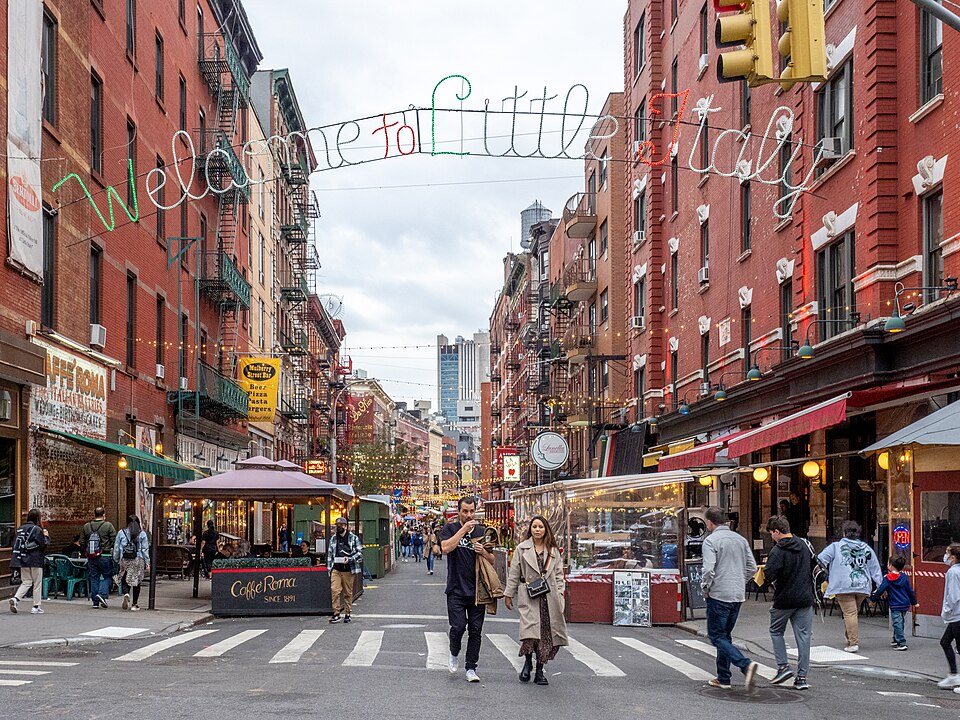
Consider using the See, Think, Wonder Visible Thinking Routine to help you organize your thoughts:
See | Think | Wonder |
What do you see in the picture? List vocabulary, phrases, nouns, and verbs. When describing the picture you will mostly likely use the simple present and present continuous tense (they are walking…) Which Anglophone country do you think the picture was taken in? What makes you say that? What details do you see? | What do you think is going on in the picture? How does it connect to the theme of Identites? Are there other themes it can connect with? What do you think about this image? Do you like it or not like it and why? Try to add a variety of verb tenses such as past, present, future, conditional, etc… | What do you wonder about this picture? How does it connect to the Anglophone world? How does it compare or contrast to your culture? Try to add a variety of verb tenses such as past, present, future, conditional, etc… |
Below are some questions to help you prepare for your individual oral:
- If people speak more than one language, is what they know different in each language?
- How many languages do you speak? How did you learn them?
- Do you think that some places are more linguistically diverse than others? Why?
- How linguistically diverse is your city?
- Would you like to visit New York City? Why or why not?
- How does the language that you speak connect to your identity?
- What language or languages would you like to learn and why?
- Have you ever visited New York City? If so what was memorable to you?
- Why do you think that endangered languages should be preserved?
- How does your government encourage preservation of your language or other languages?