Course Outlines
For new IB schools that are going through the authorization process, each teacher will need to create a course outline for the two years of the DP course. Every five years, established IB schools will go through the evaluation visit process. In an evaluation visit teachers can choose to complete a course outline or a unit plan. This page will go over how to write a comprehensive course outline.

Background Information:
Your course outline is really like a syllabus for the two years of your course. You will need to include details for a variety of components. The purpose is to guide you on how to develop your course and then also to support your librarian as they help to curate resources for teachers and students.
You can get a template for your course outline from your DP Coordinator or you can find a template on the PRC (Programme Resource Centre) on the main DP page under implementation. There you will find a link for “Course Outline Templates”. Click on the link and you fill find a template for Group 2 - Language Acquisition. If you are signed into the PRC then you can click on this link to download a template of a course outline.
Below you fill find guidance on how to complete each section of your course outline. Remember that your outline should fit your school context. Each IB school is different; therefore your outline should be unique to your context.
Please write any questions or comments below and we will respond as quickly as possible!

Literature is only required at Higher Level (HL). However, it is encouraged for Standard Level (SL). In this section. you only need to list which two works of literature that you intend to read with your students.
Remember that your works of literature can be:
- Novels
- Short Stories (7-10) and they do not need to be by the same author
- Poems (approximately 600 total lines)
- Graphic Novels
- Plays
- Prose non-fiction
Just make sure that your literary texts are written originally in English and that they are not easy-reader versions of a more challenging text. The Literature of this site contains more information.

This is the longest section of the course outline. Below you will find a detailed chart with a suggested example on how to complete this section.
Topic | Contents | Allocated Time | Assessment Instruments to be used | Resources |
| In this box, you can write the English B theme and topics you want to include. It can be a catchy title or simply the theme. You can have one theme or combine themes for each section. | Here you can begin with a guiding question for your unit to promote inquiry. Also, you can include the grammar or vocabulary you plan to teach. It is beneficial to include the text type for receptive, productive or interactive skills. | This section should include the number of hours or weeks you plan to teach this particular unit. | This section should include the formative and summative assessments that you plan to include. The summative assessments should connect to the Internal (Individual Oral) and/or the External exam components (Paper 1 and Paper 2) | This section should include specific titles and/or links of resources that your would like to include for your unit. This will help your librarian. |
Mass Tourism: Themes: Experiences, Social Organization, Sharing the Planet Topics: Holidays and Travel, Community, The Environment | How can I be an ethical tourist? Vocabulary: tourism, community, and environmental vocabulary. Grammar: a review of the past tense and a focus on the future tense Receptive text types for reading and listening: Travel Vlogs and blogs, itinerary, interview, letter to the editor Productive text types for Paper 1 writing: Letter to the editor | 20 hours | Formative Assessments: Debates on mass tourism Role play - interview Journal entries Dictogloss Research a city with mass tourism and present Self and Peer editing of Paper 1 Formative on writing a letter to the editor. Summative Assessment: Paper 1 - letter to the editor requesting the government to curb mass tourism Paper 2 reading - article Paper 2 listening - interview/pocast | InThinking Links (can be more specific): Bridging Cultural Differences playlist TedTalks Articles, Letters to the editor, podcasts on mass tourism (links can be provided) |
This section asks you to: "Briefly explain how and when you will work on them. Include the date when you will first introduce the internal and external assessment requirements, when they will be due and how students will be prepared to complete them."
Essentially, the course outline reader is looking to see how you will introduce the internal and external exam requirements. Also, when you will schedule mock exams.
See below for a suggested example:
At the beginning of the course the assessment types will be introduced, this will be an ongoing procedure during the course. At the start of academic year 2 there will be re-introduction to the assessment requirements.
External Assessments:
The first unit will lead to an assignment in October where the students will have reading and listening activities and writing a personal letter. Following this each unit will contain a varied range of assessments for the students as this will give differentiated ways to learn and reach their highest potential.
Students will peer and self assess using the rubrics. Throughout the course the teacher will clarify how the assignment relates to the final exams. The units will lead to an assignment however speaking, reading, writing will be continuously practised and developed in every unit.
Mock Exams: April of DP 1 and February of DP 2
Internal Assessments:
Students will be scaffolded with part one and then introduced to part two. Lastly, part three will be integrated into practice orals. Each unit will feature an oral assessment comprising parts of the individual oral, or the full individual oral assessment. In class, students will practice by think, pair, share and see, think, wonder visible thinking routines to prepare them.
The final oral will take place at the beginning of February of DP 2.
This section asks you to “to explore links between the topics of your subject and TOK. As an example of how you would do this, choose one topic from your course outline that would allow your students to make links with TOK.”
The course outline reader is looking for TOK terms that demonstrate your understanding of TOK within a unit or lesson. Page 8 of the Language B guide contains great knowledge questions about language to get you started. See below.
• Is it possible to think without language?
• What would be lost if the whole world shared one common language?
• If people speak more than one language, is what they know different in each language?
• Do you think maths, logic or music should be classified as languages?
• In what ways can language be used to influence, persuade or manipulate people?
• Does language describe our experience of the world, or does it actively shape our experience of the
world?
• How are metaphors used in the construction of knowledge?
• To what extent is our perspective determined by our membership of a particular culture?
• To what extent are we aware of the impact of culture on what we believe or know?
• Is there anything that is true for all cultures?
Twelve ToK Concepts | |||
| Evidence | Certainty | Truth | Interpretation |
| Power | Justification | Explanation | Objectivity |
| Perspective | Culture | Values | Responsibility |
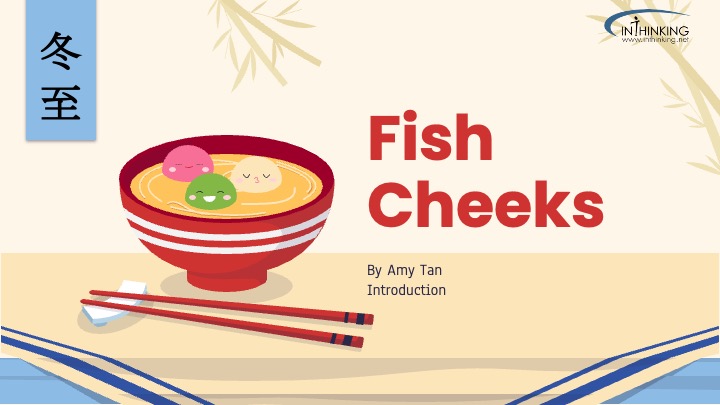
An example from our site on how these concepts are reinforced after reading the short story Fish Cheeks is shown below. This short story connects to the English B theme of Identities. More questions on this story can be viewed here.
| ToK Concept | Queston |
| Evidence | To what extent can personal memories, like those in "Fish Cheeks," serve as reliable evidence for cultural understanding? |
| Certainty | Can one ever be certain about the values of their own culture when seen through the lens of another culture, as illustrated by Amy Tan’s teenage perspective in the story? |
| Truth | How does Amy Tan’s shifting perception of her cultural identity in "Fish Cheeks" challenge the idea of a single, objective truth about one’s identity? |
This section asks you to: “choose one topic from your outline that would allow your students to specifically develop one or more of these skill categories (thinking, communication, social, self-management or research).”
You can also click on our ATL Skills section for more detailed information on each of the skills. Below is a sample for developing Communication and Social skills in a lesson.
| Topic | Contribution to the development of students’ approaches to learning skills (including one or more skill category) |
Experiences  | After reading an article from the BBC and a letter to the editor in the New York Times, students will participate in a structured Socratic Seminar. The topic of the seminar is whether tourism is benefical for local communities or if it is more damaging to the environment. Before the seminar, they will set communication goals for how to interact and engage with their peers like a scholar by using professional linguistic speaking stems. Also, they will develop their social skills by learning how to give positive feedback. After the seminar, students will reflect on their performance as a means to enhance their future participation in seminars. Also, they will collaborate with a small group to write a brochure to guide tourists on how to engage with the local community. |

This section asks you to: “choose one topic from your outline that would allow your students to analyse it from different cultural perspectives. Briefly explain the reason for your choice and what resources you will use to achieve this goal.”
Ultimately, the course outline reader is looking to see if you have developed multiple and diverse perspectives in your course outline. Also, did you make individual, local, national, and global connections within your course. This is more than the “nature of the course”. A specific lesson or unit needs to be highlighted demonstrating how you will develop international mindedness. Below is a suggested sample for a unit on Experiences with the topic of Customs and Traditions with Sharing the Planet and the topic of Migration.
| Topic | Contribution to the development of international mindedness (including resources you will use) |
| Experiences and Sharing the Planet | In this unit students will first explore a custom or tradition that is important to their culture. Then they will find one that is prevalent in their local and national community. Finally, students will research how globalization has impacted their own custom or tradition. Finally, they will research with a partner a custom or tradition in the Anglophone world to view the impact of globalization on this tradition. Students will present their findings to the class. After the presentation, the rest of the class will ask questions of the presenters. As a model, the teacher will present the origins of Halloween and then how it is practiced in different parts of the United States. Finally, Halloween will be compared with three other countries to connect the global impact of this tradition. |

This section asks you to “choose one topic from your course outline and explain how the contents and related skills would pursue the development of any attribute(s) of the IB learner profile that you will identify.”
It is best to explore specifically how you will integrate the learner profile attributes in your classroom through a particular unit or lesson. Below is a suggested sample.
| Topic | Contribution to the development of the attribute(s) of the IB learner profile |
| Identities - Short Story Fish Cheeks by Amy Tan | Before reading this short story students will develop their reflective trait to write a journal entry on how their language forms a part of their subculture and identity. After reading the story, students will inquire and research about the linguistic subcultures in the United States which is the setting of the story. Finally, students will become more knowledgeable about the different subcultures in terms of when, where and how they migrated to the United States. They will demonstrate their understanding by communicating their findings with the class in a collaborative circle. |

This section asks you to reflect: “Are instructional materials and other resources available in sufficient quality, quantity and variety to give effective support to the aims and methods of the courses? Briefly describe what plans are in place if changes are needed.”
This section can be optional if you have already listed your resources in section 2. However, you may want to include any technology you plan to use in your classroom such as digital tools or Smart or Promethean Boards. You can also include any school based equipment that is needed for conducting individual orals such as digital recorders or headphones for listening exams. Also, you can list any other subscriptions you plan to include such as InThinking for English B!
We wish you all the best on your course this year!!