Paper 2 Reading Question Types
One of the best ways to prepare for the Paper 2 reading is to be familiar with the question types. This page gives an overview of the 13 question types for Paper 2 readings. The question types are the same for HL, SL, and ab initio students. For more information on paper 2 reading, see the overview Paper 2 Reading and Assessment pages.
The first eight questions are “easy” because the answer is written beside the question. If time is running out, students can guess from one of the options provided.
Question Type | Description | Example |
Multiple Choice | Four options are provided. Students must select one option. The questions are more analytical in nature, similar to MYP questions: What is the author's tone, What is the purpose of the text, etc… | 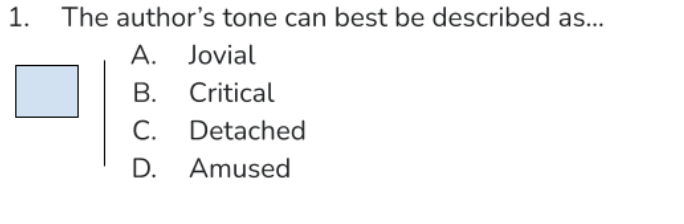 |
Identify True Statements | Typically, 8 options are provided. Students must select 4 out of the 8 that are true. Tips: look for qualifier words such as more, less, always, only, many, better, etc… | 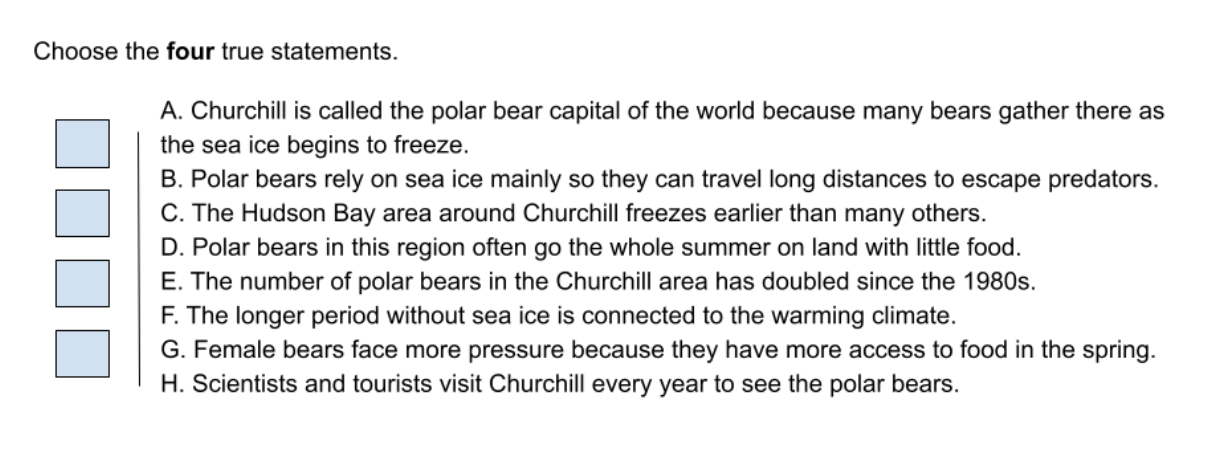 |
Matching questions with answers in the text | Typically seen in an interview, students need to find a question that would fit the paragraph in the text. This type is looking for an overall summary of the paragraph to which it refers. Usually there are six options and three correct answers. | 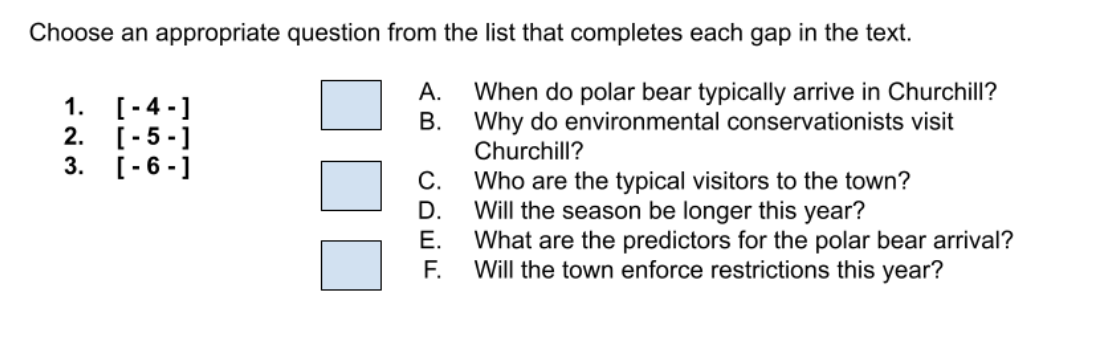 |
Matching headings with paragraphs in a text | This is similar to the matching questions type except that students need to match subheadings instead of questions. | 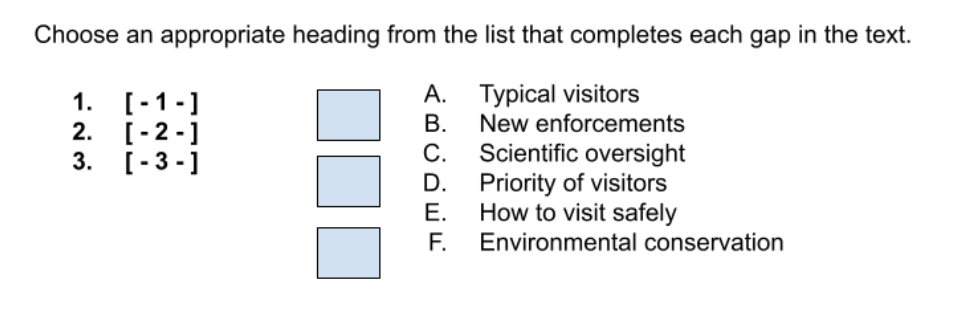 |
Matching vocabulary exercise | This question type relies on knowledge of synonyms. Students need to use context clues and answer with the same part of speech (adjectives, nouns, verbs, etc). Typically 6 options with 3 correct answers. | 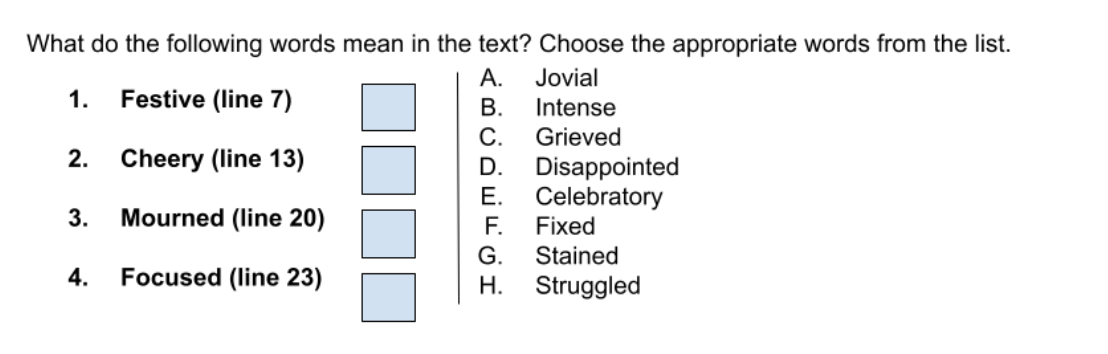 |
Matching statements with people | Students must identify the statement that applies to each person from the text. | 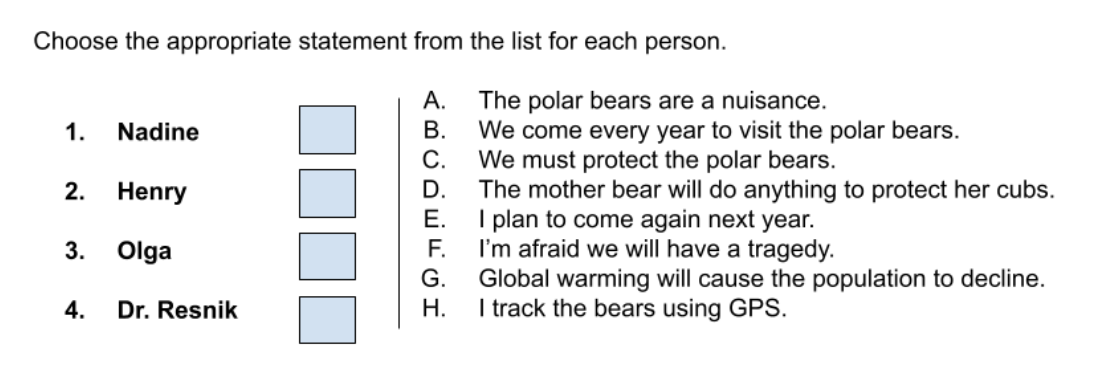 |
Matching two halves of a sentence | Students must identify an appropropiate ending for each sentence. The choice needs to fit gramatically with the first half of the sentence. | 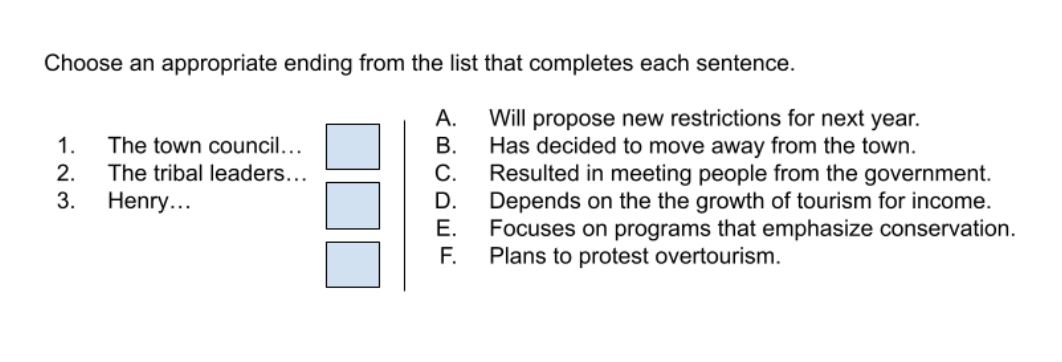 |
Gap filling exercise | This question type is deceptive. It looks simple, but relies on knowledge of abstract vocabulary words such as relative pronouns, prepositions, etc. Fill in the blank with an appropriate word. | 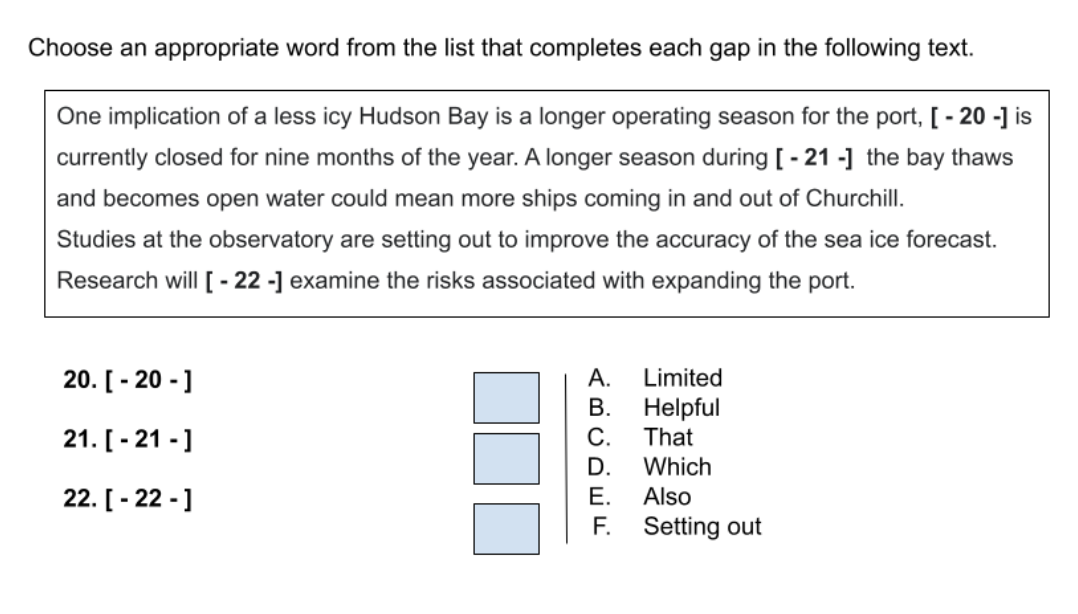 |

These question types are the most challenging for students according to the analysis in the subject reports. Students can't guess on these question types. For this reason, they need to spend a bit more time reviewing the text to write the correct answer. Minor spelling and grammar mistakes are acceptable as long as they don't change the meaning of the text.
Question Type | Description | Example |
Short answer questions | Students answer using words from the text. Only one answer should be provided unless the question asks for more than one answer. | 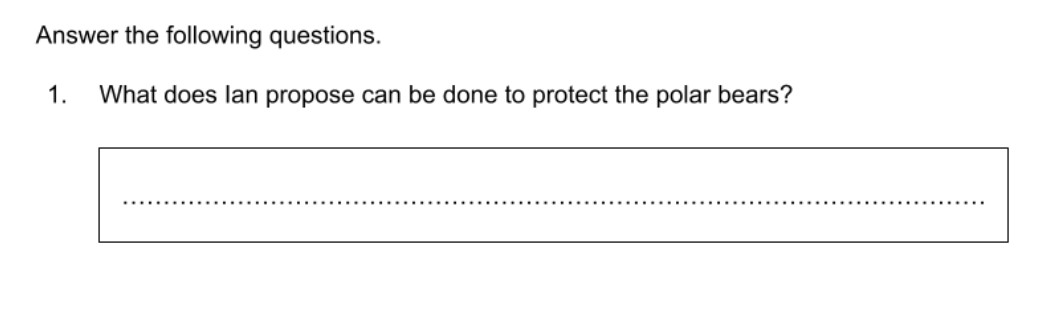 |
Finding words in the text | A line will be referenced to search for the answer that is typically a synonym of the question. Similar to the vocabulary matching question type. | 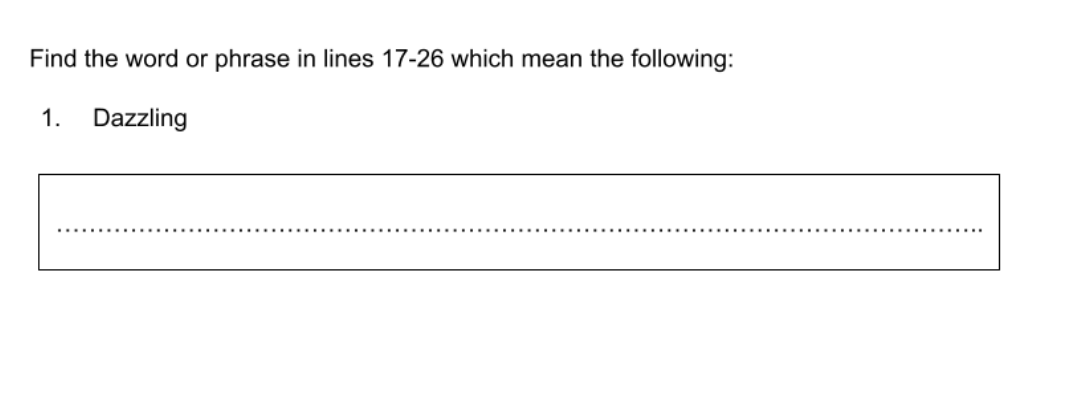 |
True False with justification questions | Students must choose true or false referring to paraphrased statement in the text. Then they“justify” their answer using direct words from the text. Both parts must be correct to earn the mark. | 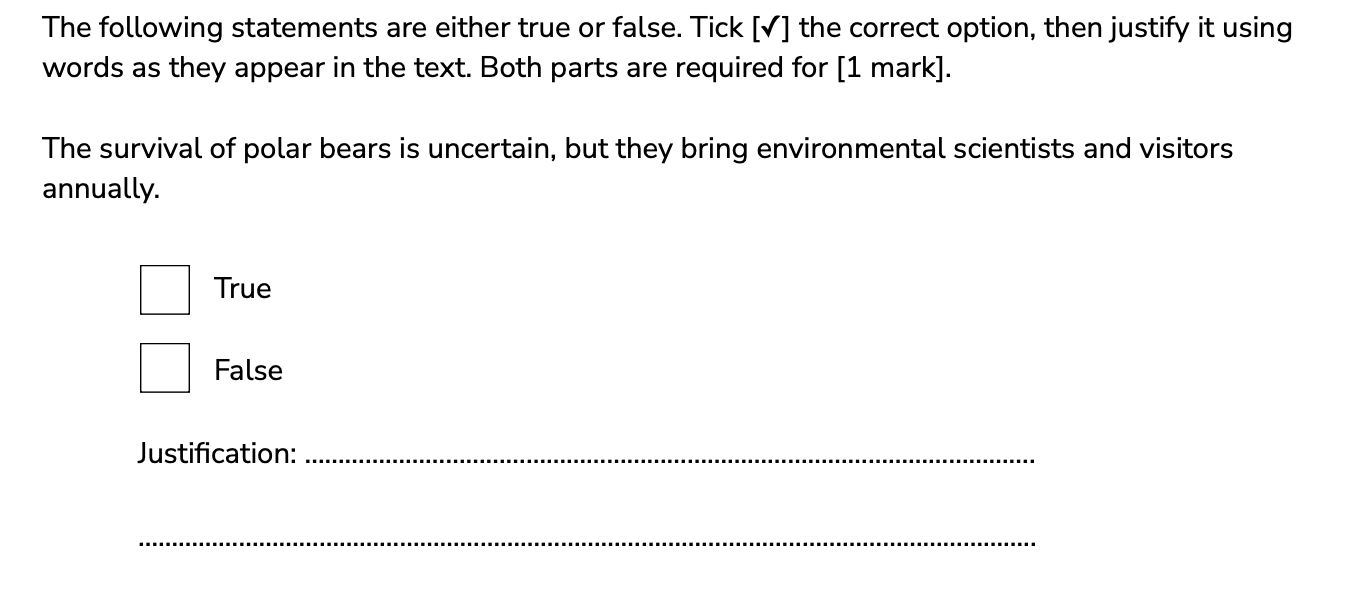 |
Complete sentences using words from the text | Students write the appropriate ending to the first half of a sentence. The sentence must be gramatically correct to create “meaning”. Hint - check the tenses and subject/verb agreement to see if it fits! | 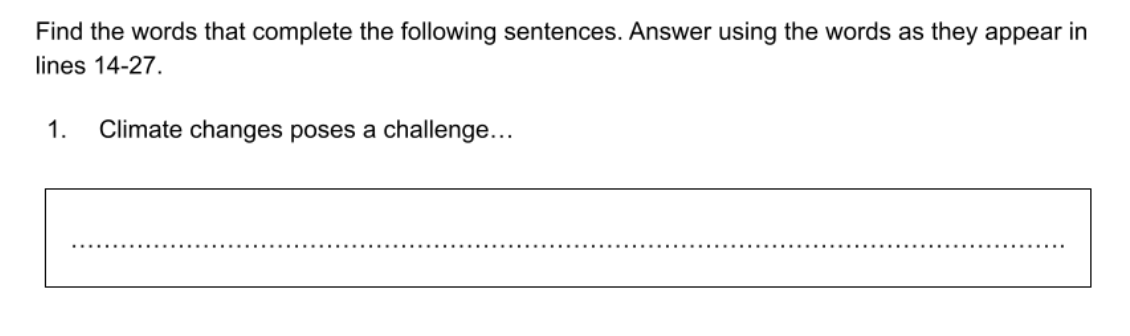 |
Identify to whom or what the words refer | Students have to identify to whom or what a word refers. Typically it is a pronoun where the answer is written prior to the stated word in the text, but it could also refer to something that comes later. | 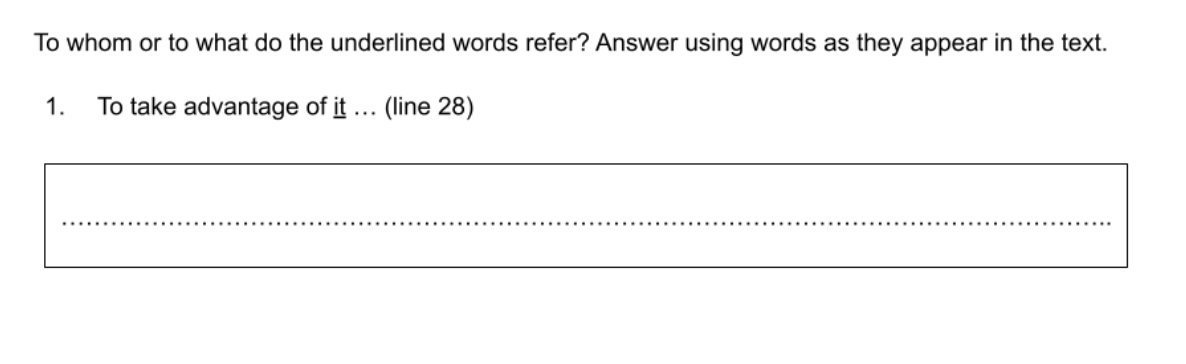 |