Indigenous Knowledge - What can we learn?

In this activity we explore what we can learn from the indigenous knowledge of the Diné Tsétsêhéstâhese people and other Indigenous Peoples of Turtle Island (North America). We are asked to explore what perspectives, values and worldviews are demonstrated in this TEDx talk by Lyla June and how this compares with our own values.
In the IPBES report[1] on diverse values and valuation of nature published in 2022 we have a helpful way of describing and thinking about knowledge and values.
Indigenous and local knowledge, which includes traditional knowledge, is highly diverse, grounded in territory and sociocultural identity and is based on different knowledge types (e.g., written, oral, visual, tacit, practical).
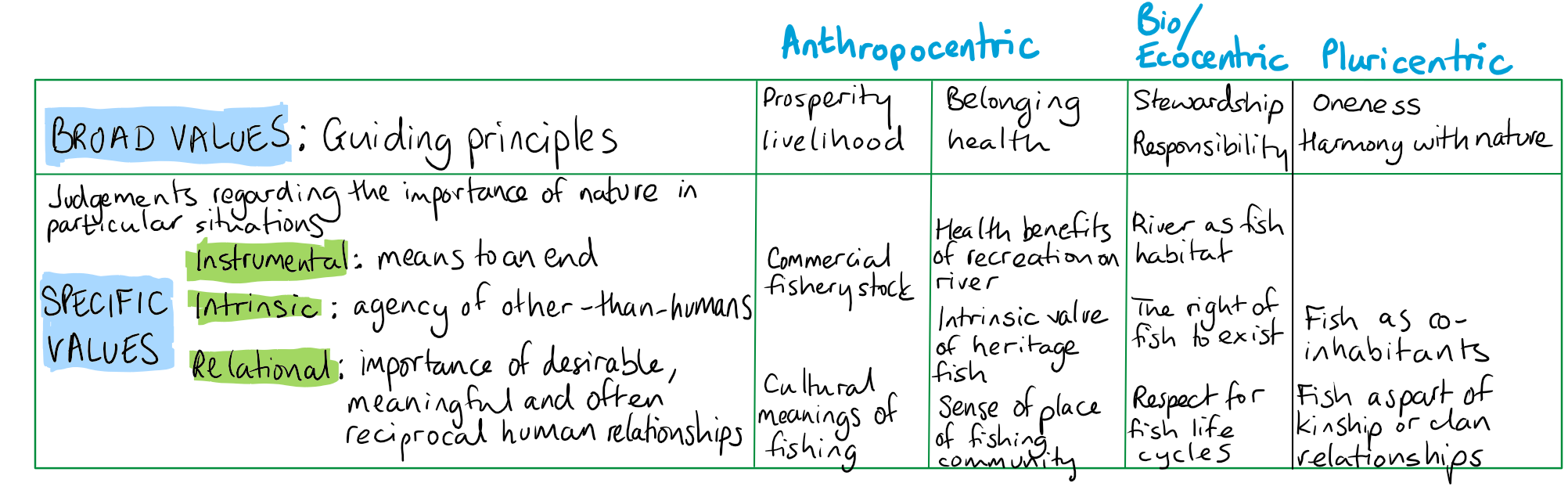
Broad Values are general moral guiding principles and life goals (e.g. freedom, justice, responsibility, harmony with nature, harmony with Mother Earth, health, prosperity) informed by people's worldviews and beliefs.
Specific Values are judgements regarding nature's importance in particular situations. They can be grouped into instrumental, intrinsic and relational values.
Instrumental values relate to things that are a means to a desired end and tend to be associated with nature (e.g. as asset, capital, resources) and its contributions to people.
Intrinsic values relate to the values of nature expressed of any refernece to people as valuers and include entities such as habitats or species that are worth protecting as ends in and of themselves.
Relational values refer to the meaningfulness of people-nature interactions, and interactions among people (including across generations) through nature (e.g., sense of place, spirituality, care, reciprocity).
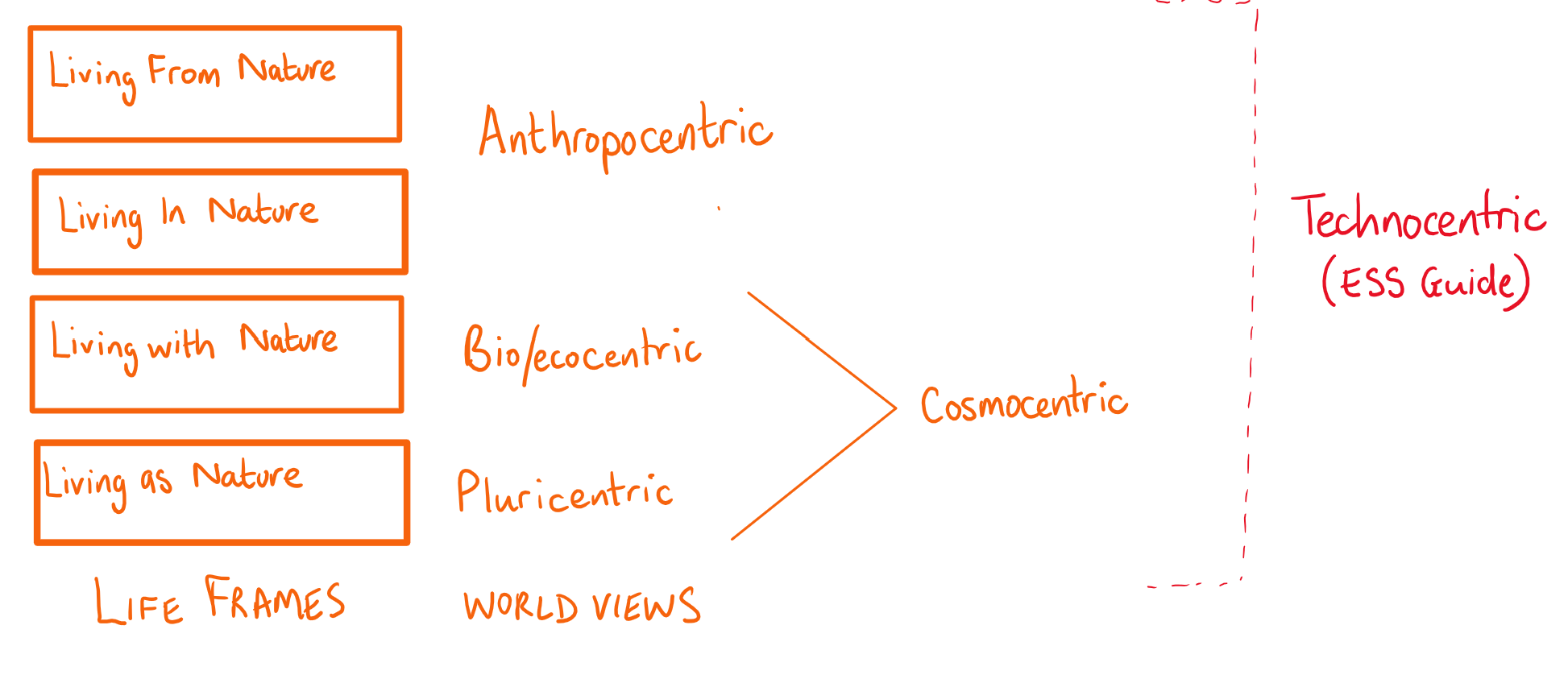
Life frames of nature's values allow the organisation and communication of the richness of the relationships between people and nature. A set of life frames (e.g., living from, with, in and as nature) can be used to organise and reflect distinct sets of values found in the typology.
In the table below we can see the application of this thinking to aquatic ecosystems. (You can click on the table to see a bigger version)
Watch this TEDx talk from Lyla June (c. 13.5 min)
1. Describe the four indigenous land management techniques that Lyla tells us about and explain how they function - what elements of natural systems enhance?
2. What broad values do you think Lyla June is demonstrating?
3. What type of specific values does she demonstrate?
4. Justify your placement of Lyla June's life frame and environmental value system (evs).
5. How does your life frame and evs compare to Lyla June's?
Intergenerational Learning
1. Design interview questions to ask your grand parents (or great grandparents) that will uncover how their life differed from yours in terms of the following possible topics:
- mobility / transportation / travel
- purchasing or repairing clothes
- diet
- purchasing of goods / stuff
2. Conduct your interview and share with your class.
3. What did you learn and how could you share this with a wider audience?
Footnotes
1. Intergovernmental Science-Policy Platform on Biodiversity and Ecosystem Services, I. (2022). Methodological assessment of the diverse values and valuation of nature of the Intergovernmental Science-Policy Platform on Biodiversity and Ecosystem Services. Zenodo. https://doi.org/10.5281/zenodo.7687931