The Joy of Teaching Music
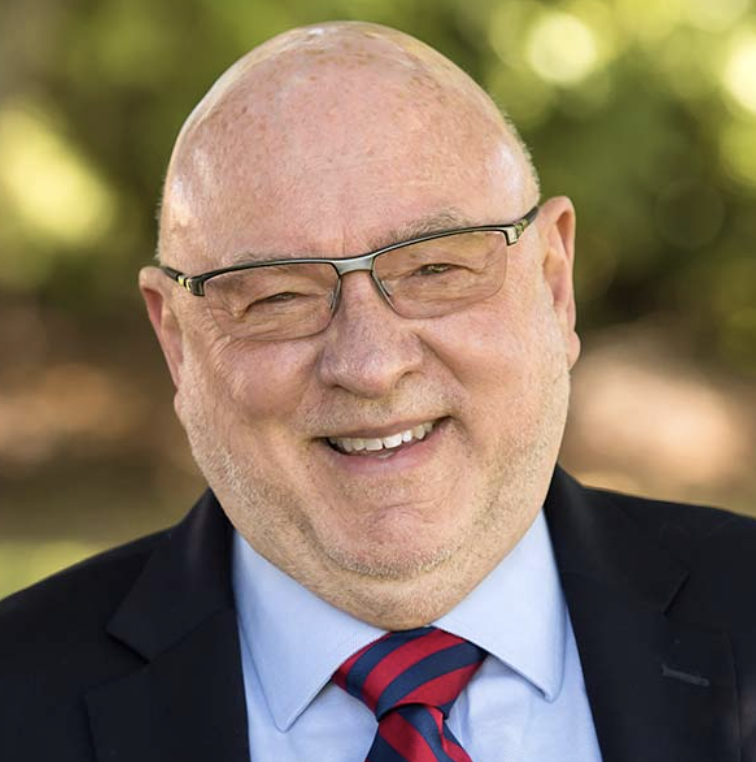
An Interview with Dr. Tim Lautzenheiser
Dr. Tim Lautzenheiser is a well-known name as a leader and advocate for music education. "Dr. Tim" developed highly acclaimed groups in all areas of the instrumental and vocal music field. He is the founder of Attitude Concepts for Today, an organization designed to manage the many requests for effective leadership training. Tim is the Director of Education for Conn-Selmer, and he serves as the national spokesperson for NAfME’s “Make A Difference with Music” program.
Listen to Dr. Lautzenheiser's thoughts and viewpoints about the joy of teaching music.
Recorded January 14, 2026
Background Recording: "Irish Tune from County Derry' Percy Granger. United States Marine Band (2018).
A written transcript of the podcast follows.
JIM: I feel honored and privileged to have the opportunity to introduce our next guest in the series of podcasts. Doctor Tim Lautzenheiser is a well-known name in the music education world as a teacher, a clinician, author, composer, consultant, and adjudicator. But above all, I know Doctor Tim as a trusted friend. I first met Tim in 1981. It was at that time he created Attitude Concepts for Today, which is an organization designed to manage the many requests for workshops, seminars, and convention speaking engagements focusing on the area of positive attitude and effective leadership training. Tim is the Senior Vice President of the Education of Con Selmer. He is the author of several best-selling books in the music profession. These include The Art of Successful Teaching and The Joy of Inspired Teaching. He is also a co-author of the Hal Leonard popular band Method Essential Elements. Tim is a graduate of Ball State University in Muncie, IN, and the University of Alabama. He serves on the board of Directors for the Midwest Clinic in Chicago, IL. Again, Tim, this is a long-overdue conversation, and I feel honored to have you here today. Maybe you could start off by telling us a little bit more about yourself and your background.
TIM: Well, thanks. Let me assure you, I'm the one who's honored to hang out with you. This is a gift to me. I'm looking forward to this. There's nothing flashy about it. I grew up in a small town, Bluffton, IN, you know where that is because you got Hoosier blood in you. Oh man, Jim, the band program was just not very good. Oh man, it was grim, but I didn't know that. We all thought we were recording specialists at that point. Went to Ball State and got my eyes open there for sure. And then I just became obsessed with the whole band world and what it meant and what it could do for people. I spent 10 years as a college band director. Loved it. Would do it again in a heartbeat. Yeah. So it's been a great run. Doesn't get any better. This is year 62 of teaching.
JIM: Tim, what words of wisdom would you offer for any student who wants to pursue a career in music?

TIM: I think it's the greatest job in the world. Now, I'm incredibly prejudiced, yes, and biased about it, but I mean, every day we get to work with kids, with music, you know, having travelled the world, we're so blessed to be able to have it. The integration (of music) blends in with everything else the student does in that educational journey. I think it's the greatest job. Plus, we get to be creative. I have so much respect for those academic teachers who teach the same curriculum 6 times a day or whatever. Oh my gosh. But we get to change our textbook every concert, right?
JIM: If you had the opportunity to change any aspect of high school music education, what would it be?
TIM: Oh boy, that's such an open-ended question. You know, people say things that are platitudes, like I'd have every child involved in music. Well, sure, me too. I think we're growing. I think it's organically growing.
But some of the things that you just said are opening up people's minds to the countless benefits that come from music learning and music making. I'm not just talking about having a great holiday concert or any of that. I'm talking about what it does for the total development of the child. And we're just now nicking the edge of that, aren't we? Just the very tip of the iceberg where we're finding out all of the things it does for the brain development, but also for the emotion of the child, for all of their soft skills, which sometimes I think are really the hard skills. And we make better people. We just plain make better people.
JIM: This next question is a question primarily geared for teachers who teach in the United States and in North America, but it has the IB, the international flavor, in mind. What is an ensemble director? Is that person a conductor, a mentor, a friend? Can ensemble directors do all this from the podium? When is he or she a teacher? Can one do all this from the podium, and how might that look?
TIM: Well, apparently they can. You did. I think we're all of those things. People say I'm just a conductor. I don't know. You helped unload the truck with the oranges. There were some other things in there. One of the things that I was doing (during the pandemic) was administrator leadership workshops for principals, the superintendents, and so forth. It was interesting to hear them talk about which class held the kids the best online. They were doing everything online, and it was always music. They would look at their surveys, Jim, and they would go like, what'd you get… music? I'm sitting in the corner, going, yeah, I knew that.
I said that band, orchestra, choir, whatever it is, is not a class. It's a culture. Because you think about that. They get the math teacher in middle school or high school maybe 2 times, maybe 3. They get that band director every year. Sometimes they get them four or five days a week every year. You don't go hang out in the mathroom, you hang out in the band room, right?
"Band, orchestra, choir, is not a class, it's a culture."
And your friends that becomes your family. I would say most music teachers are music teachers because of their relationship with their music teacher, their mentor. Whereas if you're going to be an architect, you choose a good architectural school. If you're going to be a music teacher, you ask your teacher where you should go to school because you want to be like the teacher. The teacher is a huge part of the curriculum itself.
JIM: That was certainly the case for me.
TIM: Just share that for a second because I can play off that so well. How did you get to be a band director?
JIM: Well, it was the band director that I had in high school (Al Castronovo). He was just like my father, and I could laugh with him, and I could shout at him, and I could disagree with him, and I could love him. It was love, hate relationship, but he made me who I was. Music gave me goosebumps, and I wanted to find out where they came from. He was the one who was able to facilitate the conditions to get goosebumps. I often said that if I could write a method book on how to get goosebumps, I would probably be a millionaire.
You can't define that, and it's all part of an association of who we meet and who we are, which pretty much epitomizes what music education is.
TIM: When I stand in front of an audience and say how many of you here because of a music teacher, the vast majority of the hands go up to 90%. Then the next question, which is telling, is how many of you might have done something else had your life not intersected with that particular person? Almost the same number of hands go up. It's like you said with Mr. Castronovo, it was him. It was that connection. And then he opened you up to the unlimited treasury of music, right? He built the bridge for you.
JIM: Speaker 1: I just had a conversation with the director general of the IB yesterday. He was giving a webinar, and he talked about the future of the IB and the future of teaching. He asks, what kinds of students are we looking for? He said, I want to turn our attention once to imagine yourself being in a jazz ensemble. He talked about a blueprint (the written music) in front of you, but the blueprint isn't exactly what you're doing. You have to interpret the blueprint, you have to be communicating with the person next to you, and you have to know how to respond. You still have to know the technique. You have to know how to use things. He says what they're doing in the jazz ensemble is true in every discipline. The level of critical thinking. It was just a fascinating discussion. I just wanted to stop him and say, did you play in a jazz ensemble when you were a kid?
JIM: The IB fosters something we call international mindedness. International Mindedness is the understanding and embracing of cultures foreign and unfamiliar to us, and realizing how we relate to others, not just with our own circle. How do other people with differences make us, and how do we associate with them? This idea of international mindedness, this idea of working together, can this be included in a high school performing ensemble? And if so, how might you see that happening?
“It's our likenesses that bring us together, but it's our differences that keep us together.”
TIM: Well, I think it has to. It's the great phrase that says it's our likenesses that bring us together, but it's our differences that keep us together. And so we'll go back to our jazz band again. It's not. I just don't have to learn my part. I have to blend with everybody around me. I can't play the Trumpet part, but I'm playing the saxophone part. But then I have to support them, or I don't get the benefits. We're all in this class together. In any other classes, I can go in, do my thing, shut the book, walk out, and never talk to anybody else. I'll get my A, right? You can't do that with music. Music for the sake of music. There's absolutely no question about that in my mind, because it's the only place you can get those goosebumps, unless you make the last foul shot or something. But those goosebumps can happen at any time within a rehearsal and a practice room. And I never got goosebumps in chemistry class.
That doesn't put down chemistry; it's just the chance that the person himself is involved. So it's important in music if you are my stand partner for you to be successful too. This isn't an I-ME thing, it's a WE-US thing.
JIM: Yeah, definitely. It's all about that collaboration, that communication, and that's all I have to understand not just what you say, but I have to understand who you are.
TIM: And how do you feel?
JIM: Let's turn it just a little bit. There is sometimes in music education circles, there's a lot of emphasis on music proficiency and doing it right, getting it precise, doing it absolutely correctly. Do you think that there might be a little bit too much emphasis on musical proficiency, and do you think it might inhibit creativity and critical thinking in the performing ensemble? Just kind of curious to know your thoughts on this. Do we strive for proficiency? Any ideas on that topic?
TIM: Have lots of thoughts about it. Most of school is black and white, right or wrong; we mark the right answers. You mark the wrong, and this sort of thing, we're changing every day. We're evolving all of the time. And so sure, I want to get it right. And you have to be more proficient to get it right. And that raises the standards. And you can use those same habits to adapt to everything else you do. But I'm still going to come back to it, I give to it, I give to the curriculum. 2 + 2 is always going to equal four, but the Holst Suite is going to be different every time. It's never the same. I could play the B flat scale or sing a hymn, and each day I do it, I can do it differently, and I'll still come out with my four or even a better 4 the next day 'cause it never ends. I mean, did you ever in all of your career have a perfect concert?
JIM: Gosh, no
“The contextual part for us is so important. We'll figure out a way to get the content.”
TIM: In fact, mistakes are almost encouraged in our profession. Go for it. You know, we can fix it then. And I think that's a lot of people have trouble with that. The contextual part for us is so important. We'll figure out a way to get the content. We'll figure that out. We're good at that. But the context, people don't quit the band because they don't like music or choir or orchestra or anything. It's always something outside of that. It's an off-the-podium thing. I mean, if it were music, then tell me why they walk out and put in earphones and hit play. They love music. So that's why the teacher is so important, right? All the surveys (we ask), Why did you quit the band after investing 3 years? Almost never does it have anything to do with music. (It's) the environment, the climate, or the culture.
JIM: Do you find that more challenging as we progress into the technical world?
TIM: Of course, it is. How many electives did you have when you were in school?
JIM: There was a band (or choir). That was it.
All of those wonderful habits that were part of being in your program were transferred to everything else they do.
TIM: We didn't think about it. I think it's wonderful to have that buffet, but if you stand back and look at it. Out of the people that you've had all the years that you had successful programs, what percentage became professional musicians? Yeah, so 5%? OK, how many ended up being music teachers who wanted to be like you? You're going to go up to 10% on that. What about everybody else? They're doctors and lawyers and businessmen. But all of those wonderful habits that were part of being in your program were transferred to everything else they do.
JIM: Yeah, that's for sure.
TIM: That's what's so cool about it.
JIM: You know, it's interesting that you say this. A few weeks ago, I went to a concert here in Amsterdam. I having a cup of coffee during the intermission, and a (former) student comes up (to me). I haven't seen him in years. He says, Mr. Yarnell, do you remember me? And I'm looking, and I say, Jacob, right? I said, I'm glad you came up because I wouldn't have recognized you. Well, I'm so happy to see you, Mr. Yarnell. He said that after high school, he went to a Technical University (in Holland). He was studying to become an engineer, but he said, so many things that I'm doing in engineering, I got out of your music class because it taught me how to deal with people. It taught me how to work together.
It taught me collaboration. It taught me to think openly, to think about problem-solving. (He said), "I'm so happy I took your class, even though I'm never going to be a music major, and I'm not going to play professionally or sing professionally. But that class is always a part of me."
I think that's pretty much what the IB is trying to do, is trying to make you a full person. You're saying the same thing in terms of what students do. What are we actually doing in music? Why should we teach music? Should we teach music to teach music?
TIM: You know, isn't it interesting? It was Mr. Yarnell, and we have trouble calling our music teachers by their first names, and we fumble over that, and how eager he was to let you know. You know, we all have those stories, but I mean that, that's pretty loud, Jim. I think every teacher has those sort of Mr. Holland moments, right? (Like you did with your own music teacher, Mr. Castronovo.) You had a trust level with him and a relationship with him that you didn't have with anybody else in that school. (Note: See Building Trust )
JIM: How might we embrace student ownership in our teaching? When I say teaching not only in the ensemble but just in general, whether it's in the studio or in the classroom, how important is student ownership of their work? How might we? How might we empower students?
TIM: Are you suggesting student leadership is important? I'm teasing. I think anytime we as music teachers find ourselves doing something that one of the students can do, we're wasting everybody's time. I love to put the stands back and get everything straight, but they can do that. It's their orchestra. It's not us, it's theirs. And we have what, as we say that the music teacher's one of the last podiums of dictatorship that you can get away with because we want to control everything. That's the way it should be. Instead of saying no, no, no, let's teach you to do that. This is your home. This is your sanctuary. How do you want it to look?
"Spending time stamping music is like having a doctor prescribe aspirin. A waste of time.
I was doing a clinic with the band director. A great guy and in a beautiful school. It was a “Taj Mahal” gym. He wanted me to talk to leaders, right? He went in, and the band room looked like a toxic waste dump. He sat down in his office. I said, what do you want me to emphasize? And he said, well, my kids have trouble with details. He said they can never really get the final part. It's always messy at the end. And I'm like, look at your band room. So when the kids came in, what do you want? Well, we want it to be better. All of the platitudes and everything were there. I said, look around and I said, do you think that has anything to do with intonation? They're like, no, no, wait a minute. It does.
You know, we become like our environment. So absolutely, they should own every bit of it that they can. And then we can study our scores. But if we're spending time stamping music, that's like having a doctor prescribe aspirin. A waste of time, right? I'm the biggest fan of student leadership in the world. Well, you know that.
JIM: Maybe we could get on the topic of trust just a little bit. How important is trust, and how do you go about building it?
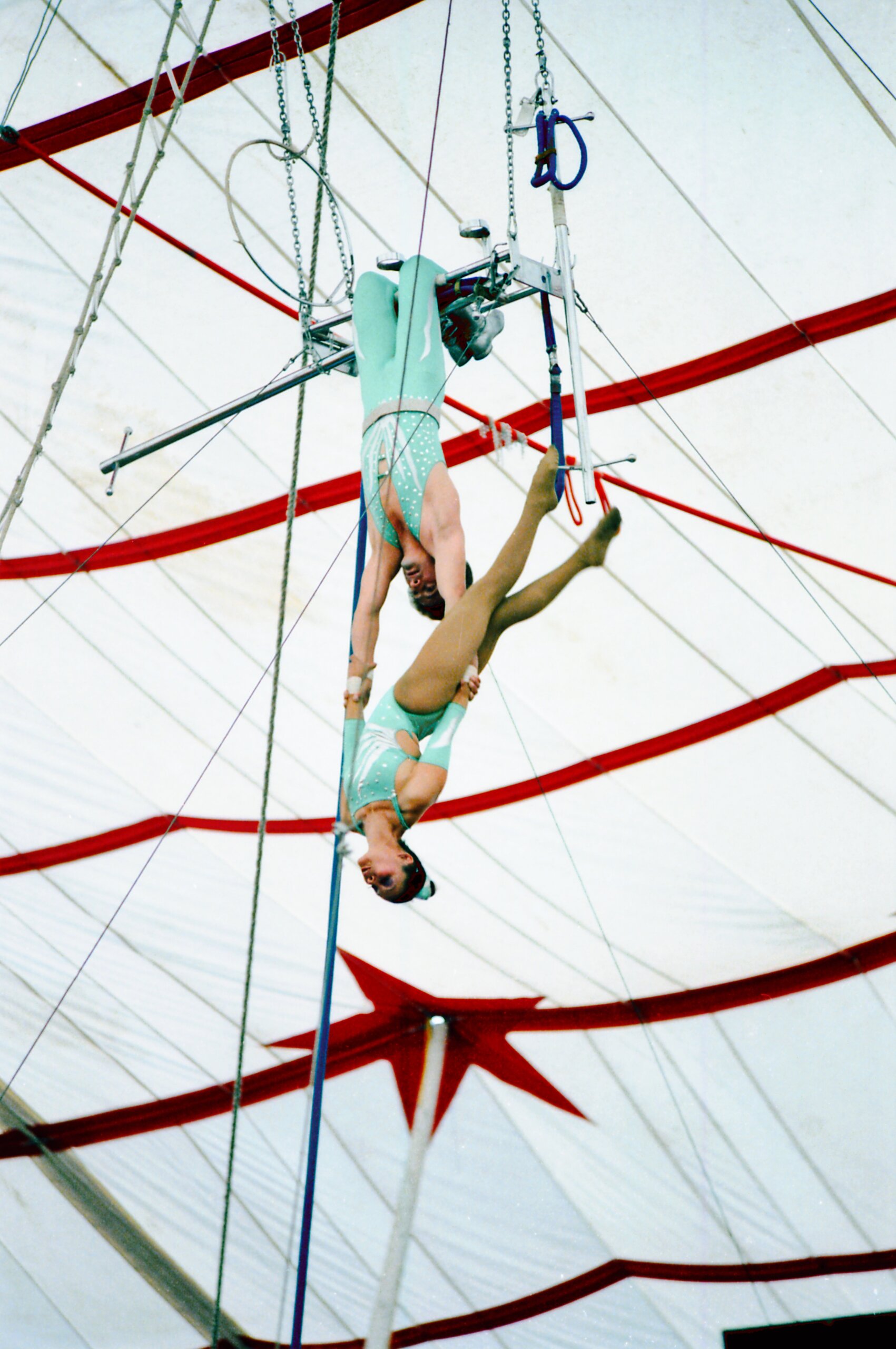
TIM: It's everything. It's the main drive. One of my good friends, Scott Sheehan, was just the president of NAfME (National Association for Music Education), and he was doing one of those lightning rounds with a bunch of college kids. What's the one word that describes a great music teacher, and you know, communication, passion, all these sorts of things. He said, trust and I went, Oh my, he's right. Without that, none of the rest of them make any difference if we think about that, right? If I don't trust you, why would I crescendo when you asked me to? That's trust. When you say, Tim, be vulnerable when you sing or play this part, well, you're threatening my very survival as an animal. But if I know you'll have that net under the trapeze for me. I'll try the triple flip, if you're not going to embarrass me if I don't make it right. I think it's everything. That's the reason you and I are talking. I mean, dear friend, I'd trust you. I'd go to the wall for you. And I know that's reciprocal. So I think it's everything in family and relationship, and a church, and everything we do.
JIM: It's what we have to do in our business. We're opening our souls to the students, and we're asking the students to open up their souls to us. That's a very fragile exposure for anyone, but especially a high school student. In order to reach and delve into that, they need to take a lot of risks. They need to be open to that risk-taking. (Without that) They're not going to get to that (next) level. You're absolutely correct. That's not going to happen without trust. There's no point in teaching anything in the curriculum, anything about Western theory or history or anything, until you know that they trust you. I'm in front of you. I'm going to make mistakes. I want you to know that I'm going to make lots of mistakes. If you asked me a question and you know the answer to it, but I don't know, you're teaching me. You're teaching me how this is done. And that's the biggest compliment that you could teach me. That doesn't happen without trust and ownership. Without that, there's no point in going into content.
TIM: That's the cart before the horse. I always said, you know, it's like a salt shaker. When you feel it, you take the lid off. You don't put the lid on because you can get more in faster. I've learned so much just by understanding kids. The number one fear of young people is to be embarrassed in front of their friends. You and I came from an ilk of directors where that was almost fashionable to undress a child verbally. And what does they say? We don't teach us. We're taught to teach. We teach us. We're taught. So we would mimic that, or at least I did, and I'd watch. I'm like, I don't want to hurt that kid. What am I doing? So it doesn't work, does it? Unless it doesn't work. Yeah. I'm with you, buddy.
JIM: Speaker 1: I often end many of the workshops and consultations by saying that at no other time in history has our work as global music educators been as essential as it is right now. Would you like to respond to that in any way?
“At no other time in history has our work as global music educators been as essential as it is right now.”
TIM: Yes, Amen. No, we're struggling in our world to work together, to blend, to have harmony. We're the only animal in the forest that kills each other just for the sake of killing, not for food. We just do it. I can't understand that if we're the smartest animal, would we not be using that potential to advance the cause for everybody instead of, well, you know, again, yes, music. Music truly is the universal language.
JIM: It would be wonderful if, before any of the next World leader conferences, they took the first hour of the conference and all of the world leaders got together and they sang a song together. You know that would solve so many problems.
TIM: Absolutely, Absolutely.
JIM: Maybe we'll get there someday.
TIM: I hope so. Where else in school does that happen? I love sports, by the way, but even in sports, if you're not doing your job, they'll put you on the bench. We don't bench anybody. No. We find a place for them. Everybody's got value. Didn't you have students, Jim, who needed the group more than the group needed them?
JIM: I think you've just described most of my students. They need to be together. You know, the first day they'd walk into a class and IB class, or into the band. They go, what am I doing here? You know what? Why? Why am I here? I said just listen, just give it a chance. Just get through that first program, and it'll be fine. But I can't do this. I can't play. No, I'm not doing this. I know. I said just give it time. You'll manage.
TIM: And their friends pull them along, too.
JIM: That's absolutely a huge part of it. You can't teach that in a book. There's no textbook for that. You (might say) I don't know how you guys are going to get through this, but you're going to have to work it out.
TIM: And they do.
JIM: There are so many times, I'm sure you've had this as well, where you're in a situation where you know the answer, you know what it is they have to do. And you're so tempted to tell them this, right? But then you just go, you zip your mouth shut and say, you know, I think I'm going to let you figure this out. What? How do you think about this phrase? Why are you playing this musical phrase this way? And how could you do it differently? It's not about me knowing it or showing you. It's about you being able to figure it out and do it yourself. And I'm there with you.
TIM: You got your thumb right on it. Most of school is coloring by numbers.
JIM: You figured we'd be over that hurdle by now.
TIM: We're not.
JIM: Definitely not. And that's true all over the world. Would you please tell me what to do and let me do it so I can get on with other things?
TIM: I'll get my A, and I'll be out of here. Yeah, I wouldn't have to think. I just want to do.
JIM: I'm looking at the clock. I know we have to move along here. So I'm just going to wrap it up and say any closing thoughts or words of wisdom that you'd like to share with the global music education community? Thoughts from Doctor Tim…
Stay the course. Give up giving up.
TIM: Giving up the persistence and the loan is omnipotent. It is so easy when we hit those speed bumps to just walk away. We're having trouble retaining people in our profession because we may be putting value on the wrong things. Well, I got a second in the division (contest). What else? You had three kids who were sick. You're lucky you got a second, not a third. If we give up, does that not give them permission to give up? Right. That leadership in our profession is by example, right. When I hear somebody go off on a tirade, I say, you just gave your kids permission to do that, because they want to be like you. Yeah. Stay the course. Give up giving up.
JIM: Tim, again, I can't say enough how nice it is to be able to talk with you and spend time. I know you're a very busy person. I want to say thank you very much. It's an honor and a privilege to know you and to have these kinds of conversations.
TIM: We all love agreement. I told Andrea (my wife), who adores you by the way. When we were at your place many years ago, you were so kind to her. She's the smart one in the family, that's for sure. I told her I was excited about talking to you. And she said, Tim, it will probably be like talking in a mirror. So, thank you. Thanks for inviting me to do it, Jim. You know I love you and the family and all that.
Consider some of these questions for personal reflection:
- How often do you take time to “Celebrate” music making?
- What personal life values have you gained from music that aren't necessarily musical?
- Why is the bond between music teacher and student life-changing?
- How does the study of music make us more responsible global citizens?
- How do you embrace cultural differences through music?
- When do you see evidence that students have taken ownership of their learning?
- Why is trust central and basic to teaching music?