The Need for Global Support

An interview with Dr. Anton Luiten
Dr. Luiten is no stranger to international music education. He is a noted and highly respected music educator, author, critic, consultant, curriculum developer, and more. In this podcast, he addresses with Jim Yarnell various thoughts on the IB, the IBDP Music course, music education with a global insight, and more.
Date of online interview: December 3rd, 2023
An Interview with Dr. Anton Luiten
We hope you enjoy the podcast and find it insightful.
An Interview with Dr. Anton D. Luiten - The Need for Global Support
(see below for a complete transcription of the interview)
Introduction
[introductory music]

Jim Yarnell (JY):
Hello everyone. This is a personal series of what I hope will be very helpful podcasts for the global,
educator, global music educator. Today's guest is Dr. Anton Luiten.
Dr. Luiten has more than 30 years of experience in international education.
He's based in Asia. He's a renowned author, music educator, music critic, consultant and advisor for among other organizations, the IB. He's been very active in the IBDP music development and the IBDP music website. And it's currently working on a unique specifically planned music DP work site.
So we're going to spend a little bit of time talking to Anton today, understanding a little bit about his background and understanding the connection and the need for a comprehensive global music education.
So here we go. Anton. Welcome. Nice to have you here today.
Maybe you could start out by telling us a little bit about your background.
Anton Luiten (AL):
I started back in 2007 which was my first exposure to the IB program when I was launched into a school where unfortunately a teacher had to leave unexpectedly halfway through the year. So I was thrown into IBDP music halfway through the year and students were a little bit lost. And I guess I was a little lost as well because I wasn't that familiar with the program. And so it was finding my way, I suppose, along with the students at that time.
Even back then in the former curriculum, each of the components of the IB were not separate. There were connections between them and I very much liked that because back in my own university days, the idea of performance and listening and composition and orchestration was seen, at least from, from my perspective as very isolated (units of work). And so I really liked the direction that the IB was taking at that time. For the current course things like writing program notes, well that involves research and involves getting a better understanding about the work, but also hopefully informs the student. And hopefully they can ultimately play better because they have that background knowledge about the cultural practices, and historical context. These sorts of aspects help with the performance so nothing is seen really in terms of a silo.
Photo by Jim Witkowski on Unsplash
Advantage to the DP Course
JY:
So that's sort of a segue into the next question that I have, and that would be what would you describe as the biggest advantages for any student taking the music DP course.
You seem to be focusing on this idea of the interconnectivity of the course of all the different components of music. Would that be correct? Or do you see other advantages to a student enrolled in this course?
AL:

Yeah, absolutely. I think that's probably the biggest advantage for the student is the interconnection between the various components, but I think as well that the IB states quite (p.11) clearly in the guide that no prior knowledge is required to enter into the music program.
And all those schools, I think my experience, schools globally, do have certain expectations for subjects they need to achieve a particular grade in order to go into perhaps a higher level subject in the sciences or mathematics (for example). They have to achieve certain requirements early on prior to going into the IB program in some schools. But I very much like the idea that for music, we can accommodate any type of learner, any type of background.
And so I see that very much as an advantage to the program.
Photo by Wojciech Pacześ on Unsplash
Flexibility in Design
JY:
What would you advise or tell any student interested in enrolling in a music DP course? What would your advice to them be if they have a mild interest for it or thinking about it, but not sure about taking the IB course?
AL:
I would tell them that the way that the course is shaped is that they can guide their own learning. And I would say that it's very student-centred. They can explore what they're interested in.
They can explore things that they have a partial familiarity with, and, and things that are completely unfamiliar as well.
And so I think with a lot of the other DP courses, they're quite prescriptive, but the one for music, and I think particularly for group six more broadly is that there is tremendous flexibility with the type of learning that can take place in the classroom.
For me personally, I like to expose students in that first year of the DP to as much music as possible. And then in the second year, they can either explore those exercises, the adaptations, the experiments that they've done in that first year further, or they can look at new pieces of music in that second year.
So what actually happens is that each student in that class is exploring what they want to explore, and they are really guiding their own learning and the teacher takes on that role of facilitator to guide that learning, asking the types of questions that will help them, but at the same time, give them the opportunity of asking their own questions and exploring that pathway themselves. And so I would say to any student who is perhaps a little bit reticent about taking the course, it is a course that can:
1) cater for any level in music, and
2) can really be adaptable to shaping the direction of their own learning.
They are, in a sense, creating the curriculum.
Photo by Tobias Nii Kwatei Quartey on Unsplash
Building a Culture of Inquiry
JY:
You sort of address the next question that I was going to pose to you and that was, can you describe the characteristics of a music DP student as they go through the course? How do you see them developing or evolving, not just as music students but as students in general?
AL:
For music, I see very much this idea of building a culture of inquiry. I think that the nature of the course really lends itself to cultural awareness. Obviously, the IB diploma more broadly with language B (students have to take a second language), and with that comes a cultural understanding and moves to this idea of international education.

For music more specifically this idea of every time we are looking at pieces of music, we are by extension looking at culture and we're looking at conventions within that culture, we are looking at cultural practices.
And music is very much a language in itself. And so what we are getting here is empathy, respect.
We are looking at practices that may be unfamiliar to students. And so what we're actually doing is we're getting multiple perspectives there. And so in the end, the students have learned about the ATL skills (the approaches to teaching and learning, CLICK HERE for MORE), learner profile attributes ( CLICK HERE) and hopefully there are attributes that are instilled in the students' personality and character.
And so at the end of their time with (DP) music that they're getting all of these different perspectives through that, and hopefully developing those meta-skills even further. So I think that to answer your question, more specifically about the characteristics, I like very much to have a lot of discussion, discussion-based lessons, and allowing students to hear multiple perspectives. And I think this is really building the idea of an international education and international perspectives within each student.
Photo by Aaron Greenwood on Unsplash
Greater Accountability
JY:
And I think around for quite some time and you have worked extensively with teachers and students, and you have seen the IB specifically the IBDP music program developing in so many different ways.
And you've been involved in this new curriculum, well the recent curriculum that came out just a couple of years ago. But if you had the opportunity to make any changes or adaptations in the current course, what would they be?
AL:
Well, that's a tricky one. I think I would start off by saying more recently, I conducted a survey with a number of very experienced DP music teachers globally, and the feedback that came back from that was more clarification on various components.

I think for the DP music teacher the way I see it is we have to juggle a lot of things. We've got to keep all of these balls in the air and what I think is that the direction of DP music and I think with some of the other new subjects that have started recently with the sciences in chemistry, physics and biology, they're moving towards that idea of global perspectives. The music guide is comprehensive. And I think that the teacher support material is equally comprehensive, but these are lengthy documents and I think that once we get something in print, it's static in a sense. And teachers, yes, they can go back to that. They can look at that information, but I think having something more interactive like a website that will get feedback from experts, from those in the know, from those who are experienced in more real-time (would be more beneficial).
Teachers are extremely busy individuals.
And of course, I was reflecting on this, you know, 20, 30 years ago when I first started out. And back then I think it was, it was really to do with teachers going into the classrooms and they they deal with the day-to-dayness of the courses but I think over the decades, teachers have to do a lot more there. There's greater accountability from their line managers for:
- paperwork,
- for documenting curriculum, and
- reflecting on curriculum.
All of those aspects have been added to a teacher's workload. So, things like the music guide and support materials. Yes, these are lengthy documents but it takes some time for teachers to really sift through them, digest them and then decide on the approach that's going to be best for their students, So I don't know if I dodged the question there but I would say that changes, not so much to the course but in terms of supporting teachers and their craft (would be greatly welcomed).
Photo by Marije Woudsma on Unsplash
InThinking Website - The Background
JY:
Well that is sort of seguing into my next question and that is, we know that you're very busy with the website with the music DP website for InThinking. Can you tell us a little bit about this? Maybe why you decided to create it in conjunction with myself. I'm looking at this from your perspective of course. Tell us about the website.
AL:
Sure, I have first of all, it's great working with you Jim and it's, it's so wonderful to have someone of your expertise of your calibre. And it's, it's so nice as well I think we work very well together because you have the US perspective on music education, and I've got more of an Australian, a British slant to the way that I experienced music in my youth and also the way I studied it so I think that we're a very good match for that because I think we're, we're trying to deal with the global market that has those two very different approaches to the way that music is studied and music is learned.
So about the website. I did a lot of workshops stemming back to 2010 that sort of period, and at the end of each workshop, I would have a collection of emails and post-workshop I would always encourage the participants to message me and they would do that and I decided to keep a bank of all of those emails back then and whenever I saw something online or I delivered a lesson that I thought this would be helpful for others I would send that out as a large group email. I think by the time I got to do my 15th workshop, that list was getting to 200-plus people, and I think there were limitations on those group emails at that stage if I remember correctly. So I decided to start a Facebook page where I thought I could upload materials and teachers could access things from there. And I think it just stemmed from that.
But my idea subsequently was to come up with a book. But again, as I mentioned, these things are snapshots in time and I think that they go out of date very quickly and I think in this modern-day age students are all about accessing
information and accessing information quickly. And if there are errors, it's very difficult to change those types of things in books you have to reprint and, you know, create new additions and things like that.
So I think that when I found out about InThinking (that had subscriptions) in my previous two schools and my current school, I thought that that was the way to go. I am very, very happy that we're close to launching.
And I think we've got some wonderful, wonderful materials, wonderful resources for teachers (and students) to access there so that's a little bit about the background and the history of, I guess, how we got to this point.
Photo by Hans-Jürgen Weinhardt on Unsplash
InThinking Music Website - The Direction
JY:
Can you highlight a little bit about what (in which direction) you think the website could go or what you hope to accomplish? What sort of directions the website might head to after the launch? And what's your vision for the site? What do you think could happen to it?
AL:
And I think what I said about students and the DP music course that every year, or every cohort rather, they really decide the direction of the course. It's to do with the students themselves and the way they wish to explore material and the way they guide the curriculum. And I think very much the same with the InThinking website. And of course, we encourage and hope and support comments, messages, (and) things that teachers want. And we will accommodate those requests as best as we are able to.
So, and I think to answer your question, how the website looks in the next year and how it looks in five years down the track will be based very much on the type of responses, the type of suggestions and feedback that we're getting from the DP music community.
It will, I mean, we will put information up there, we will support as far as we are able, we will put materials and resources up there. But I think that the direction of the website will be guided more really by the community.
So we will look at the information very carefully and accommodate those requests as quickly as we can.

And what we had to accomplish as well, just to address that question is that I think it's important for us to provide information that that teachers can access very quickly. Music is, of course, a course that doesn't have a textbook.
Most of the other courses do have textbooks or for the languages, obviously, novels that the teachers need to work from. But there's so much already online for the other subjects that they can access that information quickly.
So what we're going to do, Jim, is where we're looking for a place that teachers can go on there immediately and find something, but by the same token that students can also find information very, very quickly.
If they have a teacher who's a specialist in one area but actually they're interested in another, they can go on to the website and have a look at the information there, get the type of resources and ideas for their own learning that can possibly take place without specific information from a teacher.
So I see it on one level as something that students can self-access (and) on another level that teachers can explore and find information with relative ease.
Photo by Dessidre Fleming on Unsplash
Let's Hear the Walls Crumble
JY:
You have sort of highlighted a little bit about the future and the years to come, and we're now well into the utilization of the curriculum that was launched in (first assessment) 2022. Based on what you see in trends over the last couple years, a simple launch of this current curriculum, if you could describe the IBDP music classroom five years from now, what do you think you might see if we walk into a classroom or rehearsal hall? What types of things would you see or observe that might be a little bit different than what we're currently seeing?
AL:
Not usually very good at predicting things but what I what I hope to see is that students are asking questions that are well-informed, and that offer interdisciplinary approaches in the responses that they will get from other students, or (from) the teacher themselves. So, what I would like to see is these discussions that are that are rich, informed, and that consider multiple perspectives directed at other classmates as well as address a range of different perspectives.
And, students hopefully will feel very much at ease in sharing their ideas about things, and opening up discussions, even if it is in the middle of a rehearsal.
I mean how many teachers do you know Jim, once a music lesson is finished, that the teacher knows, oh they're going to maths (now) and they're learning this in maths and that connects to what I have just taught them, or what they've just discussed in the music class. So I would very much like to see is what they do I think very, very well in the PYP (Primary Years Program), and then to a lesser extent but it's still happening in the in the MYP (Middle Years Program) that there are these greater connections between subjects, and not teaching something like music in isolation, but we're also acutely aware of what's happening in their other classes.
One of the ideas that I have talked about on the website and I have talked about in professional development sessions
is this idea of the generative question. So when you start a unit of work, you pose a question to the students that is exactly that, very general, it's not music-specific. It's so open that it lends itself to connections to a whole lot of subjects. And so it's really important I think that schools are not just collaborating in departments but
between departments as well. How can a generic question for a music topic be linked to something in the sciences and can we do those kinds of inquiry-based broader units between subjects at the same time in our curriculum so that students are really clear that the type of inquiry that's happening is not just isolated to that subject but they can make those connections between subjects and, and when you bring things up in your own class then hopefully students are saying, "Oh yes we did this in in science last week as well. But there we learned this and the approach that I took was this". And so what what students are actually learning there is is about it's metacognition and they're really understanding those soft skills that they're learning and how they're their own learning and how they're approaching that in different subjects. So, to answer your question I think it's more to do with seeing the walls crumble a little bit from that notion in education about subjects existing in isolation.
Photo by Tneil Abt on Unsplash
Keeping the Arts Meaningful
JY:
You've offered some wonderful insights about music and certainly about global music education and the arts. We're about to wrap this up now. Before we go, are there any final words or any final comments you'd like to make to the community?
AL:
I'd actually like to ask you a question if that's alright Jim. I just wondered if what I just described is something that you've experienced in your educational career, or I mean do you see that shift in education could possibly happen? Moving away from the type of (specific) subjects to (even) leaving examinations (altogether)? What's your view about just or about classes more generally?
JY:
Well, alright, for me it's been quite a journey, and I grew up without going into too much detail about this but I grew up in an American system. I went through the American band system program and then from there eventually after a long journey went to go teach internationally. And what I'm seeing right now what I'm observing here on the, on the tail end of my career is I'm seeing sort of a dichotomy about the role of music and the role of music education in the schools. You have some frames of thinking and some frames of ideas as far as what is the cornerstone of education. I know that some parts of the world will focus on performing ensembles and performance-based music.
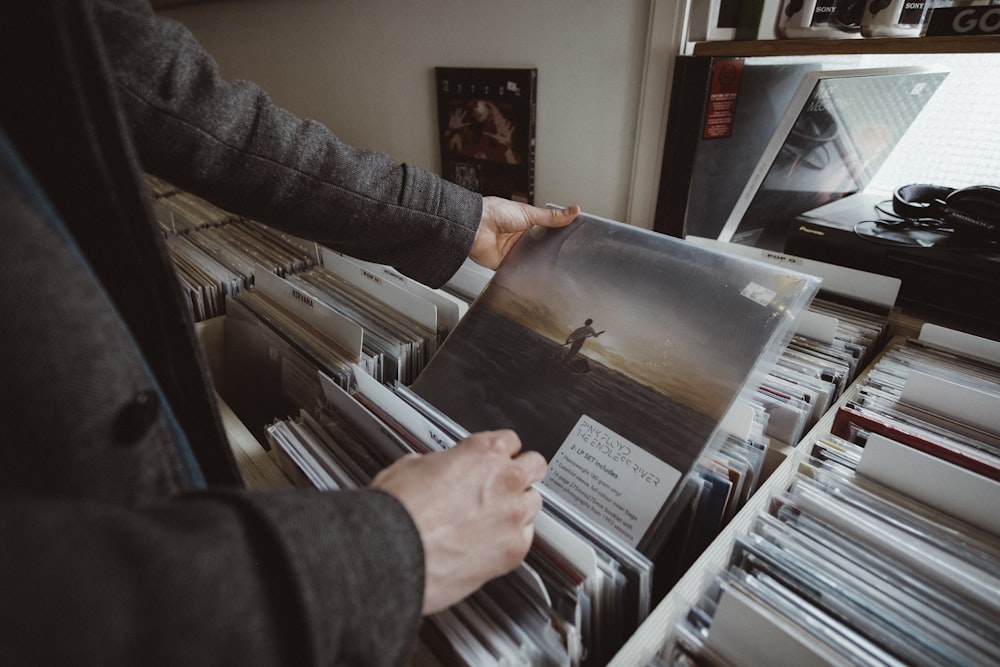
And then there's a little bit of emphasis made on skills and development of skills and there's a lot to be said for that. There's a there's a lot to be noted for that. However, I see a rising trend, not just internationally, well certainly here in Europe but not but about the connectivity of music and the need for that. I think that one of my criticisms of arts education, not just music, but it's been on purely skill development and in the process of doing that we have alienated the arts and have made it less accessible to students. And I think that what the arts are doing, and what they're going to have to do a lot of this is being facilitated by the development of music technology and, and the digital world.
Photo by Mitchel Lensink on Unsplash
And it's making the arts accessible and we're able to integrate the arts again not just music but we're able to integrate the thinking of the arts and the value of the arts and therefore able to combine the cultural and global comprehension of the arts. And the reason with that have students define that and reason with that. It used to be that in order to get a recording you asked to go to the back in my day. You had to go to the record store and buy the recording and then put the LP on and then listen to the recording. Now you can find pretty much anything in a click. I think it's important for us to be able to provide a framework for students to know how to deal with diversity and to able to process and use this and help to create a bigger world.

I'd like to think that that we're doing that. I know that the arts are still...that it is a program that's going to leave schools; it seems like it's the arts programs that are the first to go.
But I really think that if we're going to truly develop a global understanding of the world, it should be primary, and that should be top and the values that we learn about cultural norms and cultural societies and how the truth behind them is evident in the arts.
I could go on and on about this, but I would like to think that this, especially this program of study the current DP program really does address that. And I hope this is the beginning of many chapters of students coming to terms with real global awareness.
Those are my thoughts. Anyway, for now and I'm hoping that the website sort of will introduce this and model this and provide a springboard for future generations beyond us to say, okay, these are, these are ideas that we need to further develop and move forward with my thoughts for now.
Photo by RhondaK Native Florida Folk Artist on Unsplash
Closing Remarks
AL:
I would wonder as well what we're doing here with this website. I know you asked me before about what we hope to accomplish, but I think if we tracked the number of music students globally, I would very much like to see those numbers increase over the years. And if we have some input, some influence over that, because of this website and if it makes music teachers feel more confident. And when they're doing their push at their various schools for this to say, look, I feel really confident in running this music program because of this site and because now we have these sorts of resources.
And we see numbers start to creep up indirectly because of what we're doing. I think that would be a great accomplishment for us as well.
JY:
I agree. Anton, thank you very much. Any closing words?
AL:
Nothing from me. It's been great working with you and I am really looking forward to launching this site in the coming months.
JY:
Yeah, the feeling is mutual. So Anton, thank you very much. Thanks for your time.
Thanks for your insights. And we'll look forward to hearing more and seeing more. So again, Anton, thank you.
AL:
My pleasure. Thanks, Jim.
[CLOSING MUSIC]
Photo by Anne Nygård on Unsplash
The text was extracted from the mp3 from a website called "Converter App" (click here for details)
Listen on YouTube
The above Podcast is also available on YouTube: