Recommended Listening Sites
Where to Listen
The following is a list of various listening resources that you may find useful in your Music DP Practice. These are a collection of sites music teachers have used based on discussions from workshops and collaborations. They should not necessarily be seen as endorsements but as tools used by colleagues that they found helpful.
Photo by Howard Bouchevereau on Unsplash
Where do I Listen?
Here are some sites in which you can listen to a range of different types of music:
Western Art Music:
https://www.classicalarchives.com/newca/#!/
Naxos Music Library
This requires payment for subscription:
https://www.naxosmusiclibrary.com/login?rurl=/
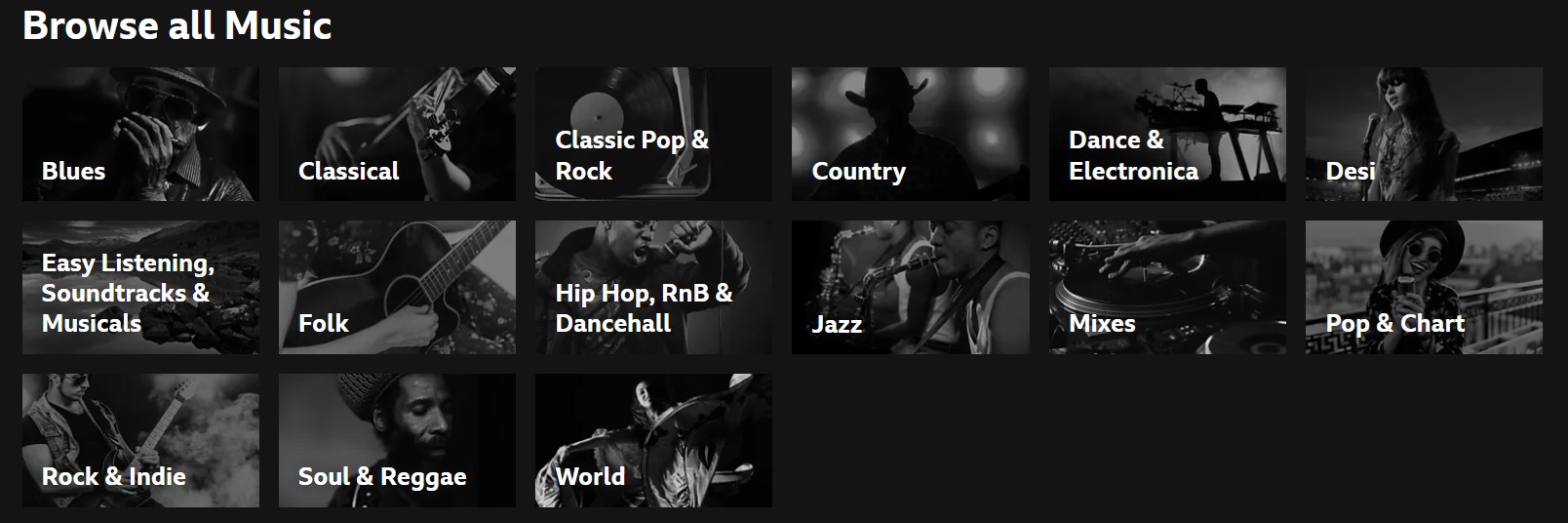
BBC Sounds
https://www.bbc.co.uk/sounds/music
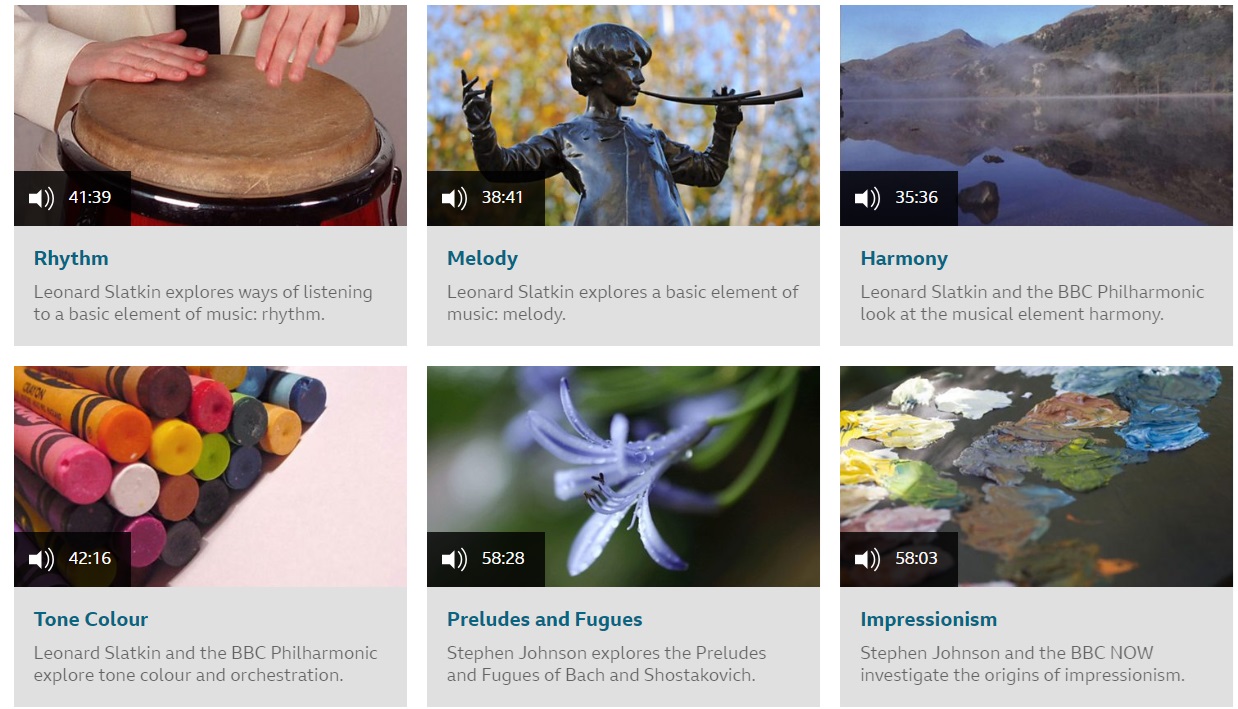
This also includes a series of informative materials, including Composer of the Week, music analysis, explanatory podcasts on the basic elements of music, and much more.
https://www.bbc.co.uk/programmes/b006tn54
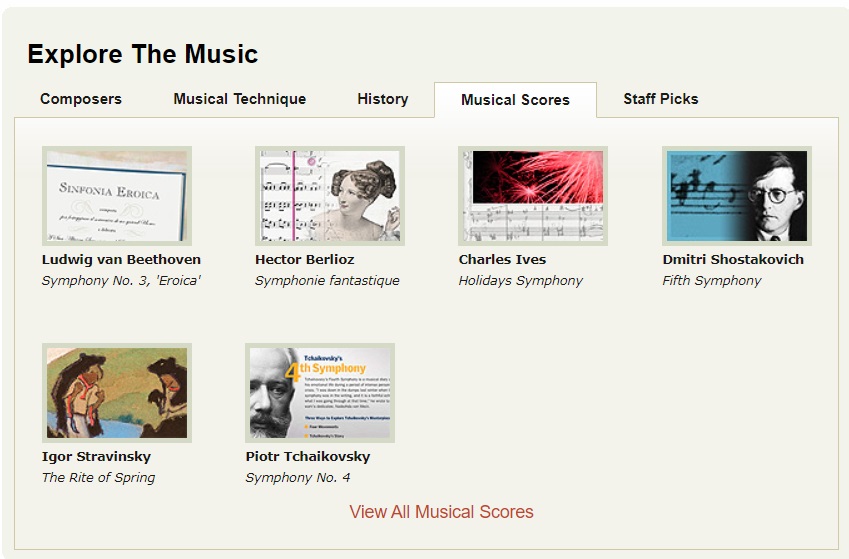
Keeping the Score - San Fransisco Symphony
https://keepingscore.org/#tabs-4
This site contains a range of resources that you may find beneficial. The site is free to use and contains information and lesson materials on composers, music techniques, historical context, and score analysis.
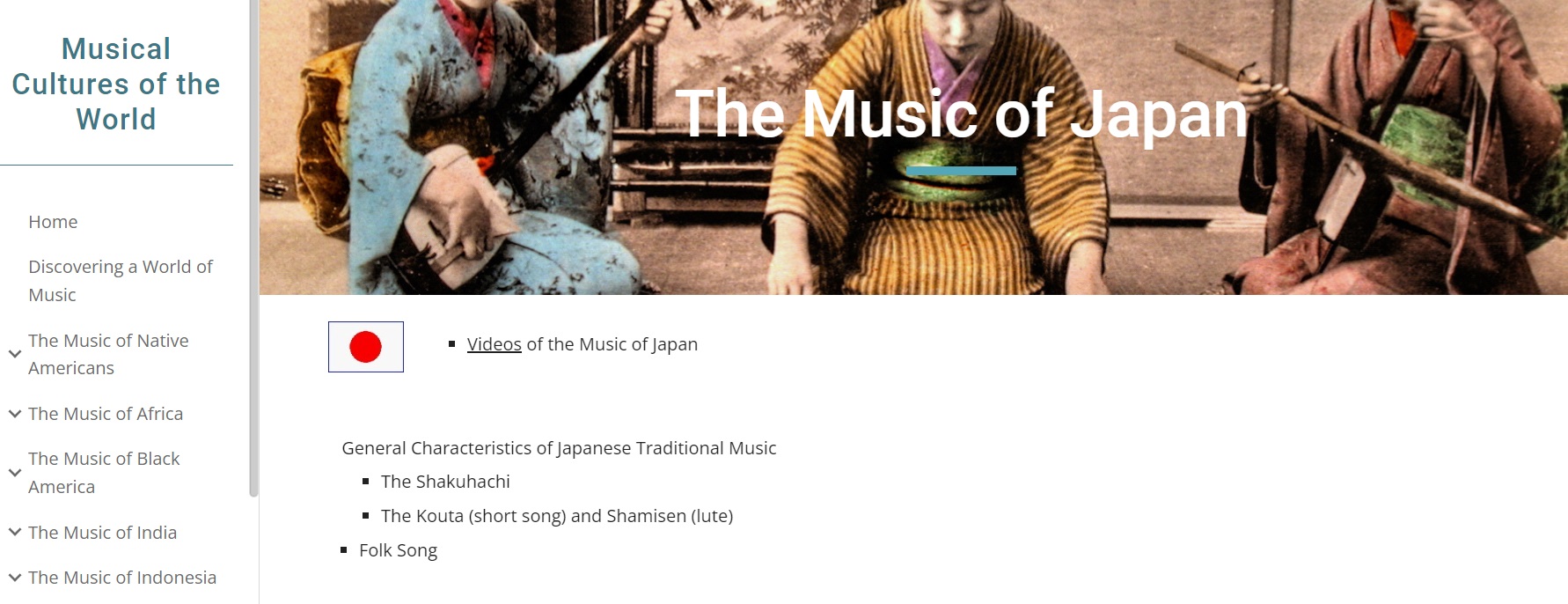
Music Cultures of the World
This is a site devoted to a range of different music cultures. Its content is largely in the form of YouTube videos, but there are some informative materials about historical context, instruments, and cultural practices as well.
https://sites.google.com/site/musicalcultures/
A Guide to World Music
An enormous range of musical styles and genres are featured here, primarily in the form of brief descriptions along with representative musical examples.
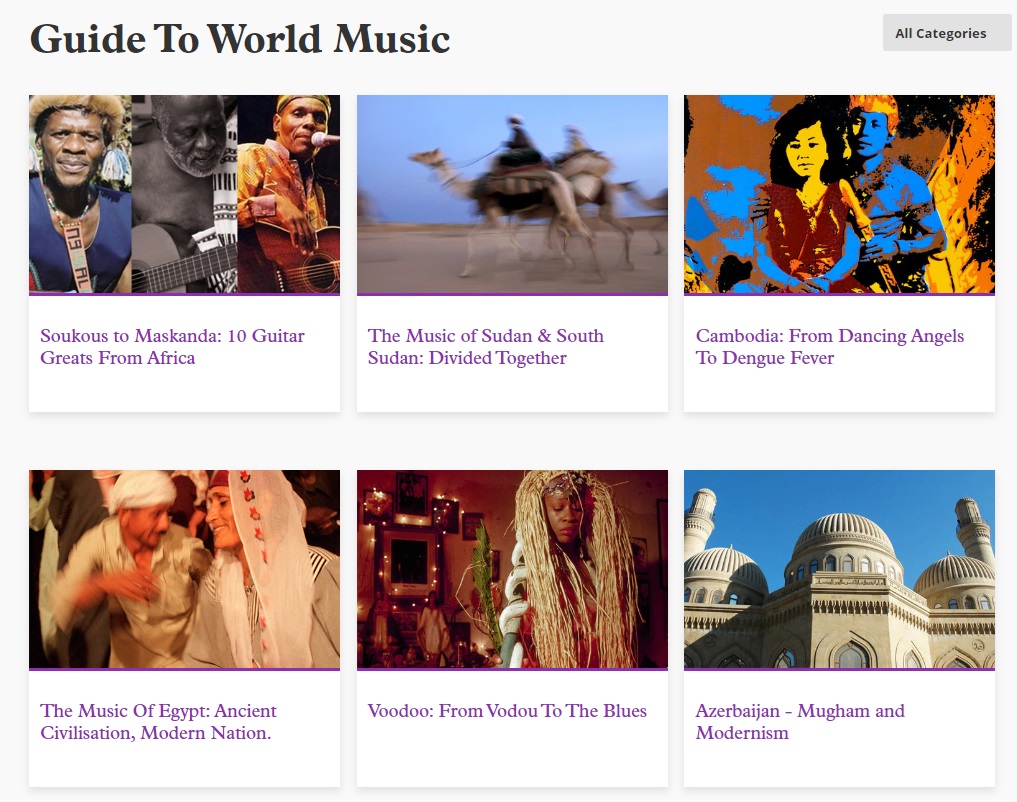
https://worldmusic.net/blogs/guide-to-world-music
Global Music Series
Here is a statement made about the book:
Developed in conjunction with Thinking Musically and the culture case studies in the Global Music Series, Teaching Music Globally provides teachers and students of music education with ideas and techniques for engaging their students in the study of the world's musical cultures.
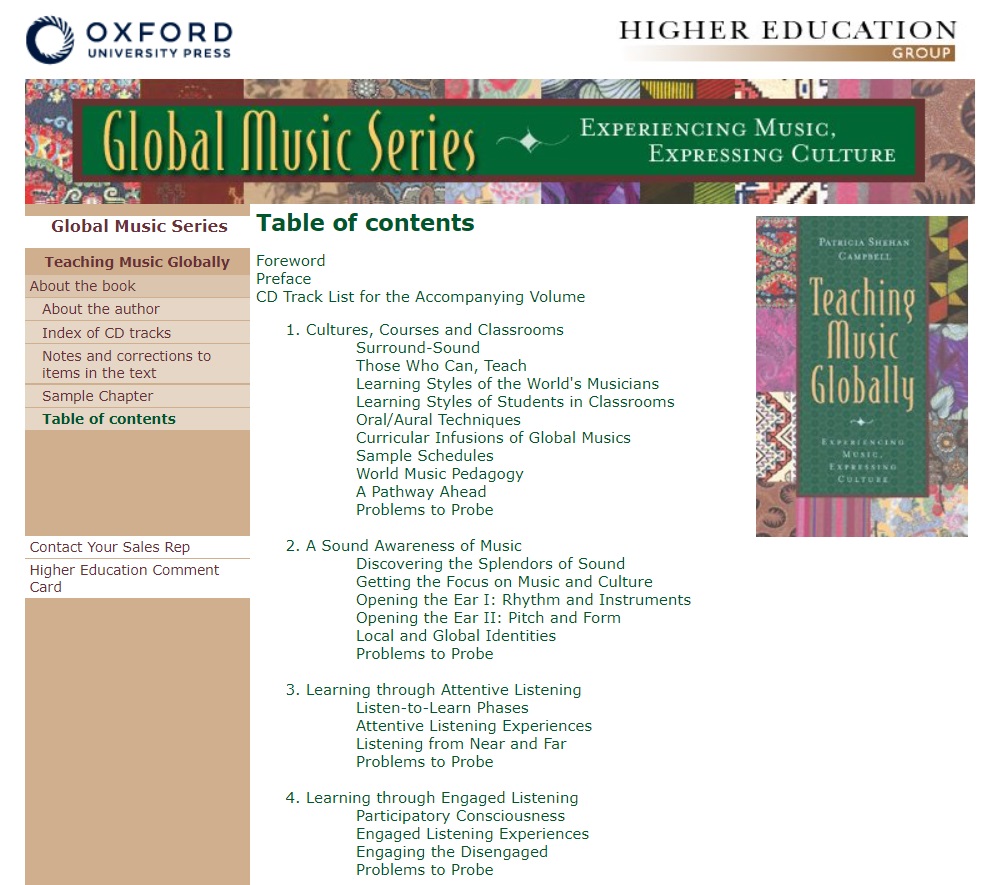
https://global.oup.com/us/companion.websites/0195171438/
Contemplator's Folk Music Site
Here is a statement about the site by the author:
A better name for this site would be "Traditional and Popular Songs of England, Scotland, Ireland, Wales and America." Most of the songs are folk music, that is, music with a long oral tradition that has no known author. However, there are many that [do]... and therefore do not fit the academic definition of folk music. All of the songs are from circa 1600 to 1922.
https://www.contemplator.com/intro.html
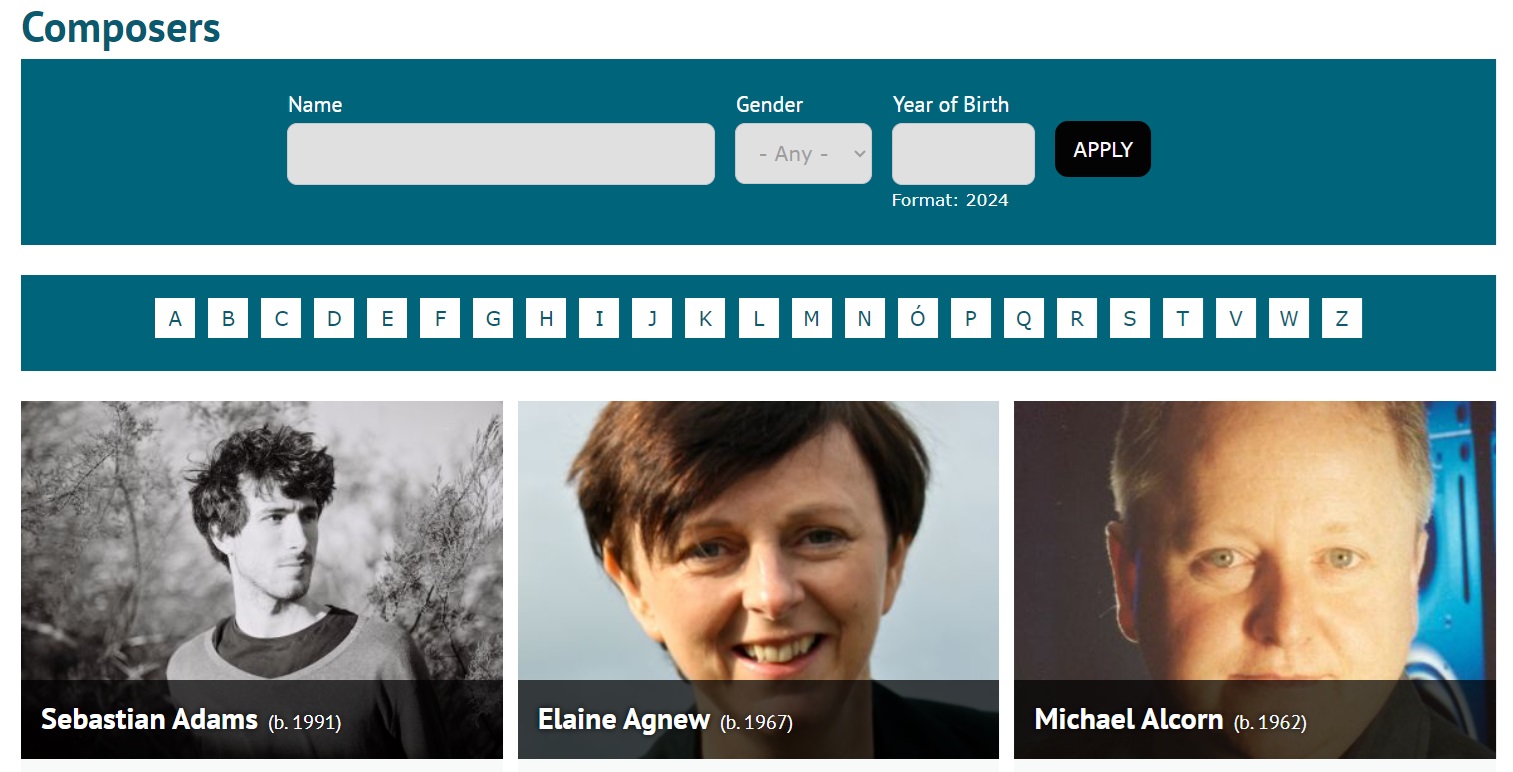
The Contemporary Music Centre Ireland
Here is a statement found on the website:
Our library contains a collection of over 9,000 works by over 220 Irish composers. This valuable resource is the only comprehensive collection of music by Irish composers in existence. Most of the works are unpublished and copies of scores and parts are available for reference, sale, hire or inspection.
The site contains CDs, books, printed scores, digital scores, and published scores, all available for purchase online. All orders (including orders for digital products) take between 5 and 10 business days to be processed.
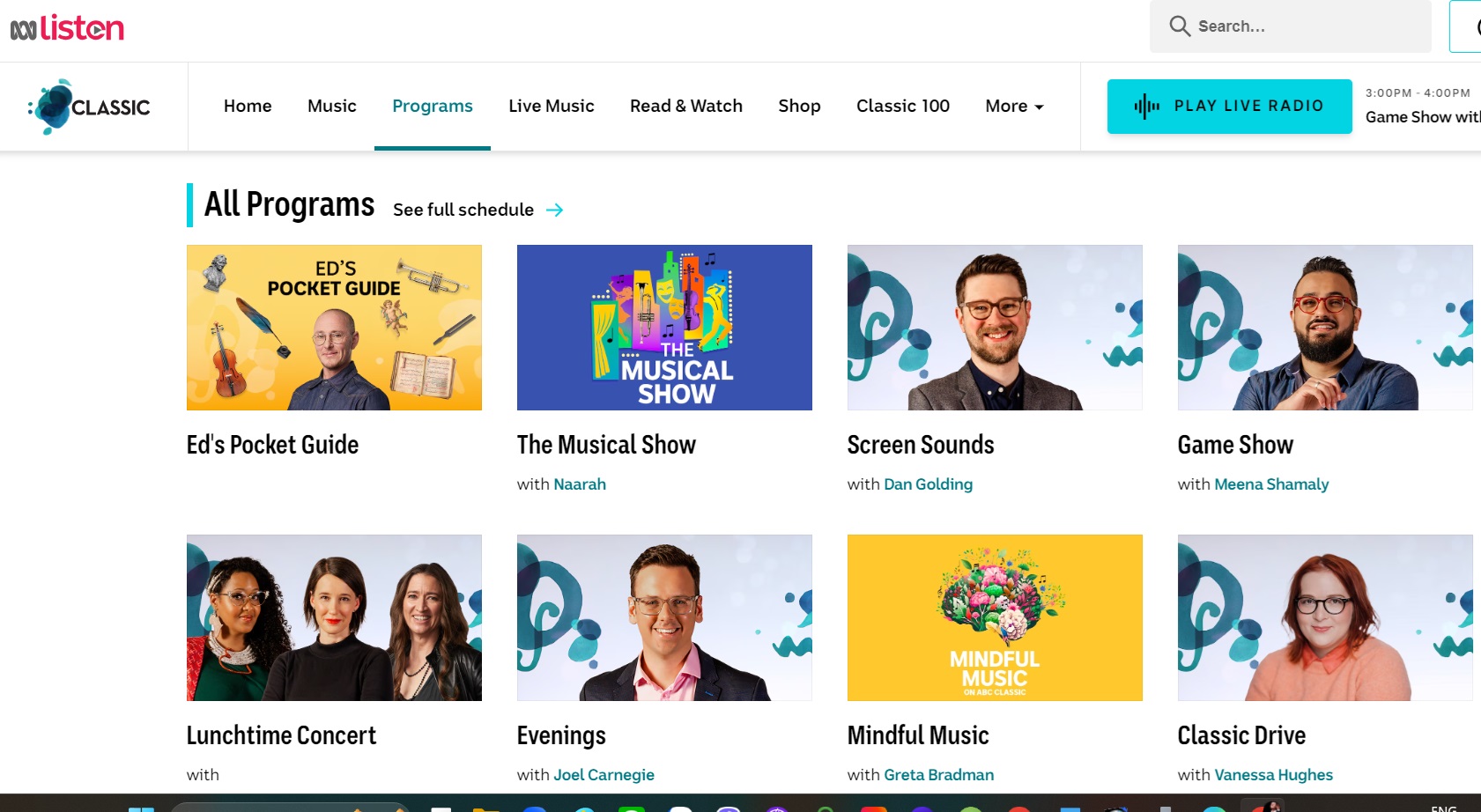
ABC Listen
https://www.abc.net.au/listen/classic
There is a range of different radio programmes here, including Western Art music, jazz, musicals, opera and a collection of contemporary Australian artists as well.
When choosing music for your portfolios, it is tempting to stick to what you already know or fall back on classroom favourites. However, official IB feedback consistently warns against this, as examiners repeatedly encounter a "limited range of musical selections".
One of the subject reports (Nov 2024) cautioned that relying on a narrow, overused repertoire directly undermines your ability to demonstrate diverse, authentic exploration across the Areas of Inquiry.
One listening site that can help you discover lesser-known works is Glenn McDonald’s Every Noise at Once. The site maps over 6,000 algorithmic microgenres across an interactive, two-dimensional scatter plot based on acoustic characteristics:
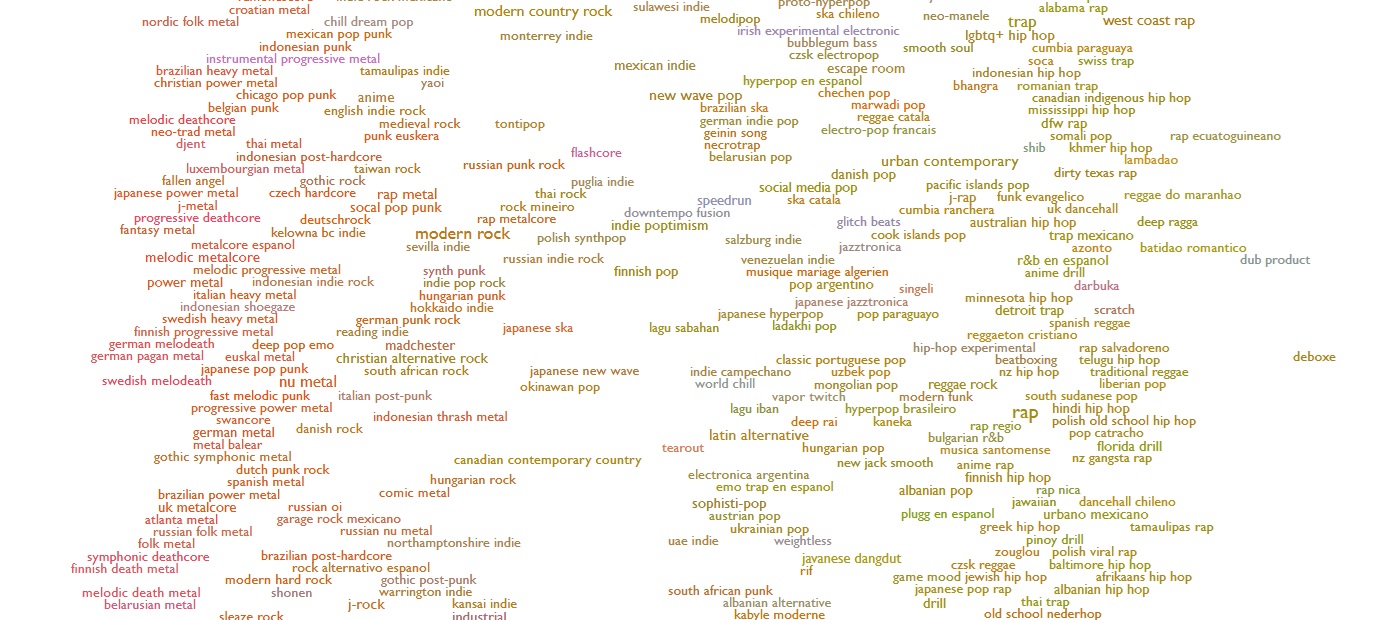
- Music toward the bottom tends to be slower, more organic, acoustic, and ambient, while genres near the top are faster, more electronic, and rhythmically intense.
- Music on the left is generally denser, heavier, and more atmospheric, while music on the right tends to be spikier, clearer, brighter, and more pop- or vocal-oriented.
- Closely related styles cluster together, and clicking any genre instantly plays a 30-second audio sample
The site can also be helpful in addressing another frequent pitfall: mistaking a one-off compositional quirk for a stylistic convention.
Remember that you must distinguish between the idiosyncratic features of a single piece and the established, recurring conventions of a genuine tradition.
By viewing neighbouring genres on the map and listening across related artists, you can identify authentic, shared rhythmic, textural, and harmonic conventions to drive your creating and performing exercises with more informed purpose.