Teaching from the Podium: A Global Perspective
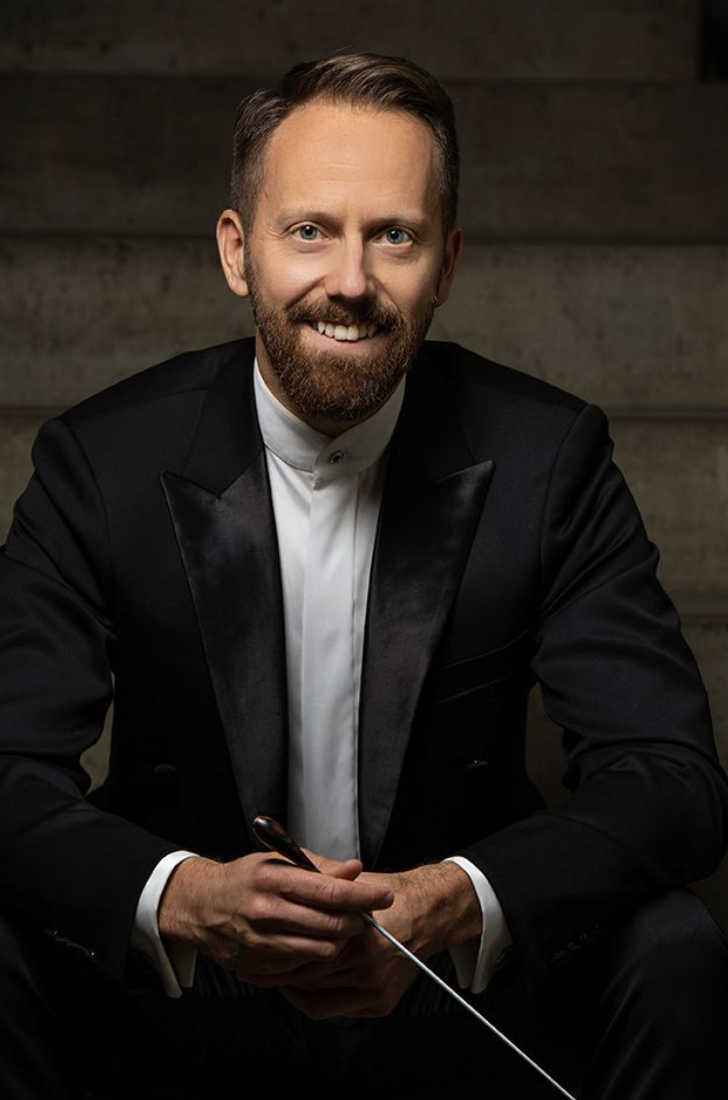
An Interview with Dr. Robert Taylor
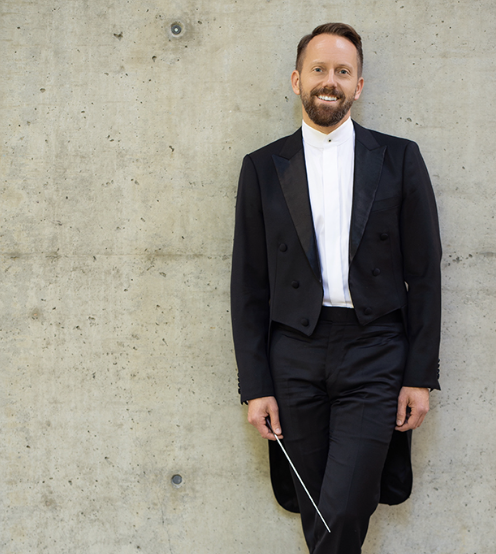
Robert Taylor is a Professor of Conducting and Director of Bands at Northwestern University in Chicago, Illinois. He has a distinguished career spanning more than thirty years. In this podcast you will hear Dr. Taylor's passion for music education in schools. He is in high demand as a guest conductor throughout the world. His interview shares a remarkable insight toward teaching music from the podium with a global perspective.
Image: Northwestern Bienen School of Music
Recorded 21, February 2025
Listen to Dr. Taylor's thoughts about teaching music from the podium.
https://Podcast Rob Taylor
Background recording: Lincolnshire Posy #2 Horkstow Grange
The President's Own - United States Marine Band. Conductor Col.Michael J. Colburn
A written transcript of the podcast follows.
JIM: Hello everyone, Welcome back to the series of podcasts with IB Music Today. I'm very happy to be speaking with Robert Taylor. Robert Taylor is the Professor of Conducting and the Director of Bands at Northwestern University in Chicago, IL Rob has a distinguished career in music education that spans more than 30 years. His ensembles have earned recognition in among other places and publications and Downbeat Magazine with the Selmer Corporation and was regarded as a Grammy Signature Schools. He's guest conducted all over the world. He's an advocate for music in schools, which you're going to hear about as we unpack this podcast.
He has numerous articles in leading music education journals and publications on a variety of topics that deal with music, music education, performing, dealing with high school students, the role of music in schools, and so on. I'm just very delighted in his busy schedule that he's taking the time off to talk with us today. So, Rob, it's great to have you here and I very much appreciate your time here. But maybe you could start out by telling us a little bit about yourself, your background, and your current music position.
ROB: Sure. Thanks so much for the invitation to to talk with you today, Jim, and I'm really excited to dive into the topics that you've sent ahead of time. I'm a dual citizen Canadian U.S. citizen, grew up on the West Coast in California. And my early music experiences run the gamut.
I lived across the street from a church where I would frequently go in and listen to the Hammond organ and sing along to the harmonies of the hymns, which has really, I think sort of formulated my love of, of harmony and, and my love of music from very early stages. I was a high school band kid, high school drum major. I went on to study music eventually, but actually began my college studies as a physics major. I can kind of harken back to this amazing moment at a honor band where the guest conductor, Robert Haltseth, took a little time to sit down with me at lunch. I was playing principal trumpet in the band. He just ask me a lot of questions about my future and what I might be interested in doing.
At the time, I was very focused on math and science and it was something that I felt very confident about and did not see a future making a career as a musician, but rather maybe thought that music would remain an avocation in my life. About halfway through my undergrad experience, I had this revelation that brought me back right to that moment where there was this kind of initial thought of, huh, maybe I could be a musician for a living. And in my third year of undergrad, I made that switch from physics to music. It was a kind of a scary leap and wondering what you know a path as a as a career musician might look like, but something that I was just really excited about. I made the leap and never looked back.
I was lucky enough right out of undergrad to get a job teaching at a local high school, Eureka High School in Northern California behind the Redwood curtain. Just a gorgeous place in the world to live. It was a school with a long rich history in bands. The school's 100 year anniversary was the year that I started. So I walked into this huge program fresh out of school with all kinds of challenges, but also opportunities to dive in and learn, in all areas.
That was just a really, exciting time for me to be teaching in that community and to have the opportunity to explore so many different things as a young music teacher. But like a lot of people, at a certain point, I felt like perhaps my my musicianship was limiting my potential for inspiring growth in my students and really looking at those boundaries and thinking how could I become a better artist that might make me a better teacher. That's where I ended up going to Graduate School to study conducting at Northwestern University.
My teacher was Mallory Thompson, who is now my predecessor as director of bands emeritus at Northwestern. Being in Chicago at that time just opened my ears to what's possible in music. It was just a huge time of growth. Since then, I've spent, this is my 21st year in post secondary education. I worked at the University of Puget Sound in Tacoma, WA, a liberal arts college, a really wonderful environment. And then at the University of British Columbia in Vancouver, BC, I would say that might be the place living in Vancouver where things changed the most for me because there was this opportunity to have this international focus.
Having left the US, There was, it was a great opportunity to explore, really play in the sandbox and and try new things without any expectation around the kinds of things that might traditionally happen in a more American focused band program. So that was a really incredible opportunity and also opened the door for me to have opportunities to work in international schools in Asia, in Australia and really see some other perspectives. I just recently made a change to move back to Chicago and to accept the role as director of bands at Northwestern, which is a huge honor and responsibility. I'm very excited to be back in a place that in many ways feels like home musically because it was such a time of growth for me when I was here last.
JIM: Most of the students involved with the IB Music are in the last two years of their high school career. They are students from a countless number of nationalities involved in this curriculum, There are dozens of different perspectives of music and approaches to music. We ask, “how we look at each other through music?” I know that you work a lot with secondary age school students, not just in the United States, but pretty much throughout the world, and that you're teaching teachers how to teach music. So maybe you could reflect a little bit. What words of wisdom would you offer any student who wants to pursue a music career or study music?

ROB: For sure. I've been thinking about my own path. I think it's really important to combine one, what you're passionate about and two, your areas of strength, and to really have a good knowledge of what those strengths are. And for me, it took quite a while for me to figure out how to wed both of those things because my early pursuit of physics was based solely on an area where I felt I had real academic strength and knowledge. It came relatively easy to me, but I found that I didn't have the kind of burning curiosity that I needed to really be the best.
What are you passions? What are your strengths?
So I think if there were any words of wisdom, it would be to really pay attention to the intuition on what your passions are and to get to know oneself well enough to know what strengths are brought to kind of any subject or situation and try to build a life around those two things in combination.
JIM: If you had the opportunity to change any aspect of high school music education, and not just in the United States, but anywhere, if you were given the opportunity, you had the genie lamp and you had your wish granted. If you could change any opportunity in high school music education, what would it be?
ROB: The first thing would be to improve access to music education, not just at the high school level, but at very early stages of education. I think there are so many roadblocks to students to become involved in music in many communities all around the world really.
There's this kind of uneven access to music education that starts at a really young age. So I think one thing that I would really love to be able to have some impact on over the course of my career is to improve access for young people to be exposed and involved in music education from their early years, from their earliest years, to set them up for more experiential music in high school.
Another thing that I would love to see is more of an emphasis on collaborations than competition. This varies from place to place I will say.
My eyes opened when I was a high school teacher, I read a Group, A book called “No Contest” by Alfie Cohn, which explored the idea of research based of collaboration compared to competition and looked at how teams operate, how communities operate, and how those principles in certain balances, either lift people up or have the opposite effect. That's been kind of a core and foundational value for me. To emphasize collaboration over competition and always look for ways to approach excellence with that lens. I would like to see more of that in high school programs. And I think the third thing, and it's something that I notice in my own students and also every time I do an honor band or a workshop, is that there, these are anxious times for a lot of people, especially young people.
Three wishes: Access, Collaboration, and Growth Mindset
I think music is such a great place to embrace failure and to learn how a growth mindset can lead to joy and satisfaction and accomplishment. I think really a focus on the importance of failure in a learning process would be just a wonderful core value to have all levels of music education. So I think access, collaboration and growth mindset, those would be my my three top.
JIM: It's kind of interesting that you say this because access, collaboration, and growth mindset are three of the hallmarks of the IB music program. It's actually embedded into the curriculum regardless of background, your nationality and so on. This is very interesting and very enlightening already outside of the IB realm. It's getting back to what I hope can be accomplished someday, that is to bring the world together through these ideals.
When we start thinking about the accessibility and the nature of collaboration, authentic, intrinsic collaboration, how we can use music to do that? I really hope that we can stay on this track
JIM: One of your primary functions now at Northwestern University is director of the bands. You spend a lot of time on the podium working with ensembles. Can I ask you this question then? When is a band director a conductor? When is he or she a teacher? Can you do both from the podium?
ROB: Always. Both. Always.
JIM: Can you elaborate on that just a bit.
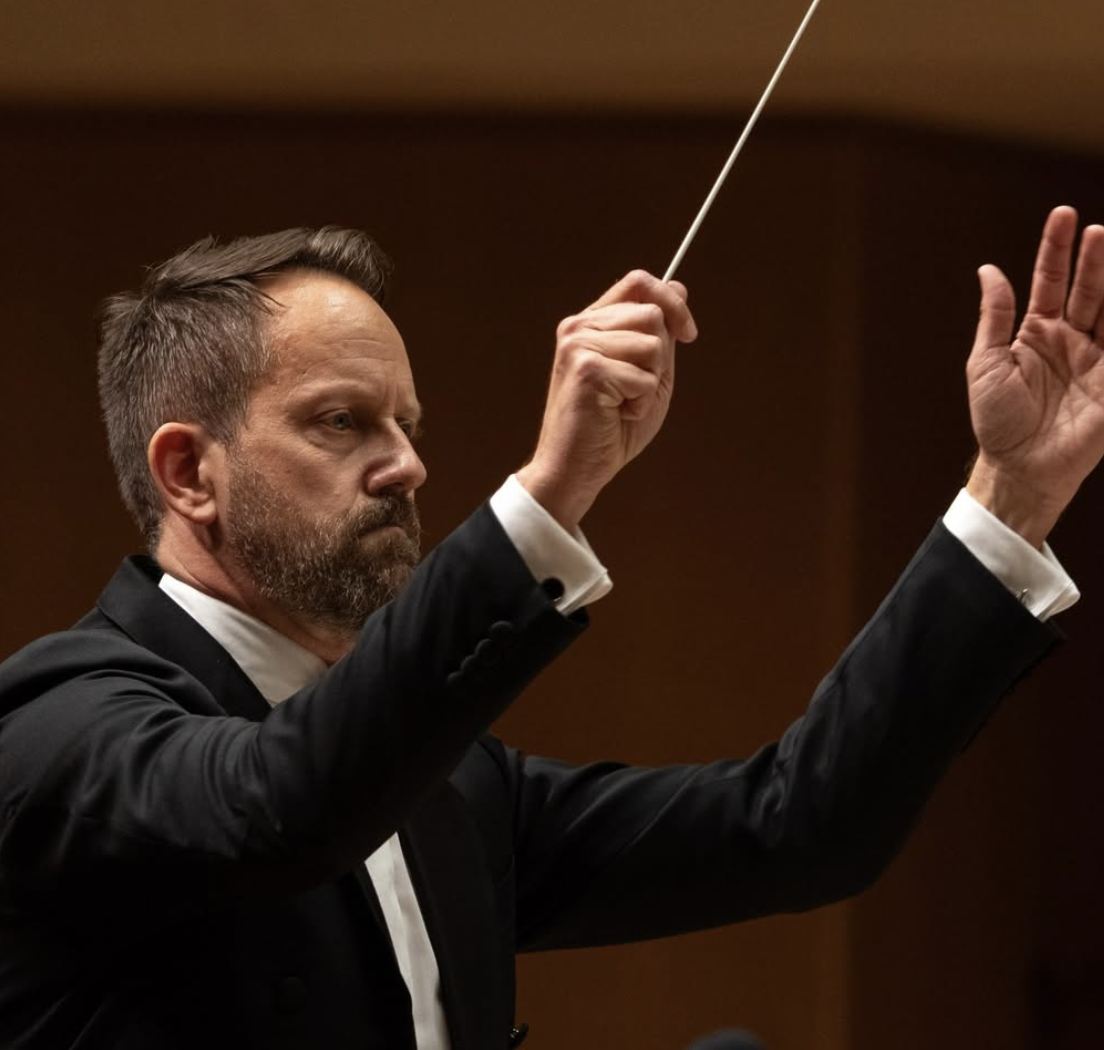
ROB: Yeah, in every situation that I'm in, whether I'm working with very young students or professional musicians in the Vancouver Brass Orchestra, for example, in all those environments, what I have found is everybody there wants an experience. Everybody there wants to make music together, Everybody there wants to grow and learn. So I feel that my job, though the way I approach it, might change in different settings, Mm job on the podium is to open up the space for that to happen, for us all to learn from each other, to have an experience together of total presence, creating something really beautiful and sending something beautiful into the world, which I think is also very important and necessary. I think of myself as an artist, a musician and a teacher all of the time in all settings and perhaps in different percentages in different times of the process.
"Everyone there wants to make music together"
You know, there comes a time when we go out and we perform together and then we're all performing as musicians, as artists and, and we're practicing that together. And you think about that. There's very few places where that happens. You know, in athletics, you have a coach, they certainly are not playing with the team on the field. It's a really interesting balance. But to me, they're always one feeding the other.
JIM : That’s sort of a nice segue into the next question. In the IB music curriculum, there's an emphasis on three roles that a student should play in the development of their education. Those 3 roles are the musician as a researcher, the musician as a creator, or say composer, improviser, and the musician as a performer.
Do you think that these three roles can be expressed by participating in a high school music ensemble? And if so, how could you elaborate that it's more than just being a performer in an ensemble? Or do you see a bigger picture evolving here or a direction that we could possibly go and working with ensembles?
ROB: I really do. I'm a strong believer that there's kind of no carbon neutral option when you're in the ensemble environment. So if you're in the room, you're either contributing to the energy or detracting from it. It's really hard to just be completely neutral in the space. I think it's very important for people to feel the agency in contributing to the ensemble for sure, and also to be able to do that in their own way and to bring their own knowledge background strengths to the process.
And so for me, the lines between research, creation, performing, all of those lines are blurred. I'm a teacher and a performer and I'm always thinking of ways to kind of open up avenues to explore all of those things. In the ensemble environment, if you can get this healthy crossover between them, then you're really instilling ideas of the importance of curiosity, of imagination, of context in what we do, a fearless artistry. So I really think about if the ensemble can be truly collaborative, meaning that we're using some of those principles that exist more readily.
They say in a chamber music environment where everyone feels important, everyone has a clear role, everyone has a sense of purpose, a sense of belonging, of mattering to the outcome. It is kind of a really important foundation. On top of that, I've been looking for ways because I've been talking about this for a long time. I've been looking for ways to show it more clearly in product because I'm always looking at this balance between process and product and kind of a healthy balance there. We need to look at ways of how can what's happening in the process more be more visible in the product itself. So I've have students in my ensembles much more involved in selecting repertoire, in curating the experience for the audience and in doing research or exploration around the repertoire that we're doing.

So planting some little seeds of like what we were performing. Lincolnshire Posey by Percy Grainger A couple of years ago, I was really thinking to myself, how can I amplify the voices of the individual people in my ensemble while we're working together on this obviously a group cohesive project. I sent all of the students away with kind of all of the background information on the piece, including Granger's words, his descriptions of the folk singers, the text from the song, some recordings of the wax cylinder recordings that Grainger took in the field when he was doing his ethnomusicology work, and also some more modern recordings. I had everyone just reflect on those contextual materials for one of the six movements.
Everyone in the ensemble, they could choose any movement, and it was a very open-ended assignment, which was create an artifact of any kind and submit it to me, which you feel either represents your own views on this movement or that reflects the folk singer or Granger's approach to the song, or really very, very open-ended it. All of the students came back with the most incredible contributions. Which I never could have possibly imagined all from their own perspective. And I learned a lot about the students that, you know, they have other interests like photography and visual art and poetry and other things that they could bring to our musical process that they had secondary instruments and skills and other genres that I had no idea that they had. And everyone became a creator in that moment.
"All of the students came back with the most incredible contributions which I never could have possibly imagined all from their own perspective."
So we're not only sort of curating the concert, but also creating something original related or inspired by this work that we were performing. I was so impressed with the selections which included, as I mentioned, some written words, some visual art, some photography, some musical arrangements. One student wrote a folk song about the misogyny in one of the songs. She expanded it and wrote a folk song about it. In a totally different genre, another student collected perfumes and she created a scent for each movement of the piece. We had this opportunity to smell and try to guess which movement they were related to. All these amazing talents that I had no idea were there came forward.
And what was so interesting is that at the performance, this was probably the most connected, engaged performance of the piece I've ever experienced as a listener. Because as you went around the ensemble, there were, you know, 15 people for each movement who had done a deep dive into it and made a really personal and relevant connection to it. And so this is an opportunity to for me to kind of reflect on as we're kind of balancing process and product and looking towards the performance, what are some doors that can open that support research, contextualization of the music that support creation, actually creating your own music or other art or really any artifact that's, you know, related to the performance and the kind of a personal connection that that that brings.
“This was probably the most connected, engaged performance of the piece I've ever experienced as a listener.”
And then also we had a really exceptional performance. And I would argue that the performance was way better than it would have been had we not been engaged in research and creation. So that's those are a few examples of how I feel that those lines are and be really blurred. And it's just a wonderful opportunity to explore music performance through these different lenses.
JIM: You’re offering some wonderful food for thought here with regard to students participating in an ensemble. One of the most powerful experiences I had is when one of the music teachers was conducted the piece and said, if you could rewrite this musical line, what would you do? Why are we playing this line this way? Could you rewrite it and we could do it your way? Why do we have to do it the way it's written?
It was so powerful. There was still the original line. The level of the performance was inspiring because the student had ownership and the students were involved in it. The students knew that there was more than one way of doing it. Your comments just highlight that.
JIM: This segues to my next question. You talked about process and product. This conversation comes up almost with every music festival and every lesson and every workshop. The need to have the proficiency and to be able to get ready for the concert or the game, or the open night or whatever there is to do.
I guess it's a two-part question, do you think that we're putting too much emphasis on the proficiency aspect of what we do as ensemble directors? Is there a way ensemble directors, not just band directors, but orchestra directors and choir directors could develop the proficiency within a different type of a process? Do you think there's too much emphasis on proficiency in the system?
ROB: Well, I think you're bringing up some amazing hot topics for sure.
I want to start by saying, and this connects to the last question and this one is I think in the pursuit of performance excellence, we can really engage the imagination in ways that moves us way beyond focused on the technical right. You mentioned, for example, looking at new ways of interpreting or creating music that already exists. My teacher used to say something which is really important for me to hear, which was play what's on the page and you'll be wrong.
“Play what's on the page and you'll be wrong.”
ROB: I really appreciated that and have taken it to heart and have tried to develop rehearsal strategies, particularly with young musicians that engage the imagination. So, you know, one example is just if a phrase is all one dynamic, what are the potential shapes that it could be?
We will try on any shape that anybody suggests for the phrase and, talk about relative merits, and decide, OK, this time we're going to do it this way. It starts engaging the thinking even though we're working towards a performance goal, it engages the thinking in a more individual way in terms of taking responsibility for interpretation and engaging in higher artistic pursuits while we're aiming for that really excellent performance. So, I think that's one way of balancing that I think is to engage every member of the ensemble from every seat in, in the process, in the interpretation and in how we get to that goal of getting over the gap between where we are and where we want to end up for the performance. That said, I also think it's just really important to balance process and product.
“Engage the thinking in a more individual way in terms of taking responsibility for interpretation.”
And I think you can go too far in either direction. When we're in a performing ensemble, obviously a great deal of satisfaction comes in having accomplished something together. As a conductor, or teacher, I can choose the metrics that we're using to decide whether or not the performance was a success. So, you know, how are we measuring whether or not it was excellent? Was the audience engaged.? Did you feel a sense of an emotional, visceral response to the music as we were making it? There are a lot of a lot of measurements that can be used that are performance or product oriented that are perhaps a little different than the more traditional lens, which would be well, was every chord in tune, you know?
“How are we measuring whether or not the performance was excellent?”
So my goal of course is for both of those things to happen also as part of the process every day. I want there to be an artistic experience in rehearsal. That kind of practice makes perfect phrase has some problems because if we separate practice from performance or rehearsal from performance, and we see them as two separate things. I feel that we're kind of creating this unnecessary dividing line where we want to experience art when we're rehearsing, when we're practicing and not just sort of save it for the last step, you know. So to me those things are deeply embedded.
Recently I had a music education colleague that pointed out that young people learn songs much quicker if they have an expressive goal to singing the song. So for example, if there's a a dynamic shape to the song, they'll learn the song a lot more quickly. For me, that has sort of flipped on its head how I'm approaching rehearsal, where I'll start with the artistical artistry interjected, you know, at every stage of the process right from the beginning and see if we can just get there without scaffolding it step by step, like technical to expressive. So now I'm starting with the expressive goal and hoping that that is the motivation for the ensemble to develop the technique to achieve it, as opposed to starting with the technique and teaching the technique for technique sake with the idea of building those things up a ladder to the expressive goal.
So I think that can also be a play here as it is if we're looking at the expressive or artistic goal, what are we trying to say or do with this music first? Then from the start it helps balance process and product better.
JIM: We’re talking about engagement and artistic merit and so on. Creating, do you see a more developing role of music technology with students in performing ensembles? Able to use technology in the ensemble to address these types of expressive merits and artistic merits that the ensemble that they're not regarded as two separate entities, but sort of the same entity.
ROB: Technology plays a pretty big role in all of my work. I use technology for both pedagogical and artistic reasons.
For example, we video record rehearsals, dress rehearsals, and we use software for students to watch their performance before we get to the concert and self reflect time stamped on the video, self reflect on the things that they notice and to engage not only with me around that, but with each other and to really have a dialogue about the kind of performance skills are being demonstrated well, where the gaps are. We use technology such as video quite often for pedagogical and self reflection purposes. And I think there's growing opportunities for that. We use pulsing metronomes for a piece that was performed in the dark recently so that everybody was connected through Bluetooth to a pulse.
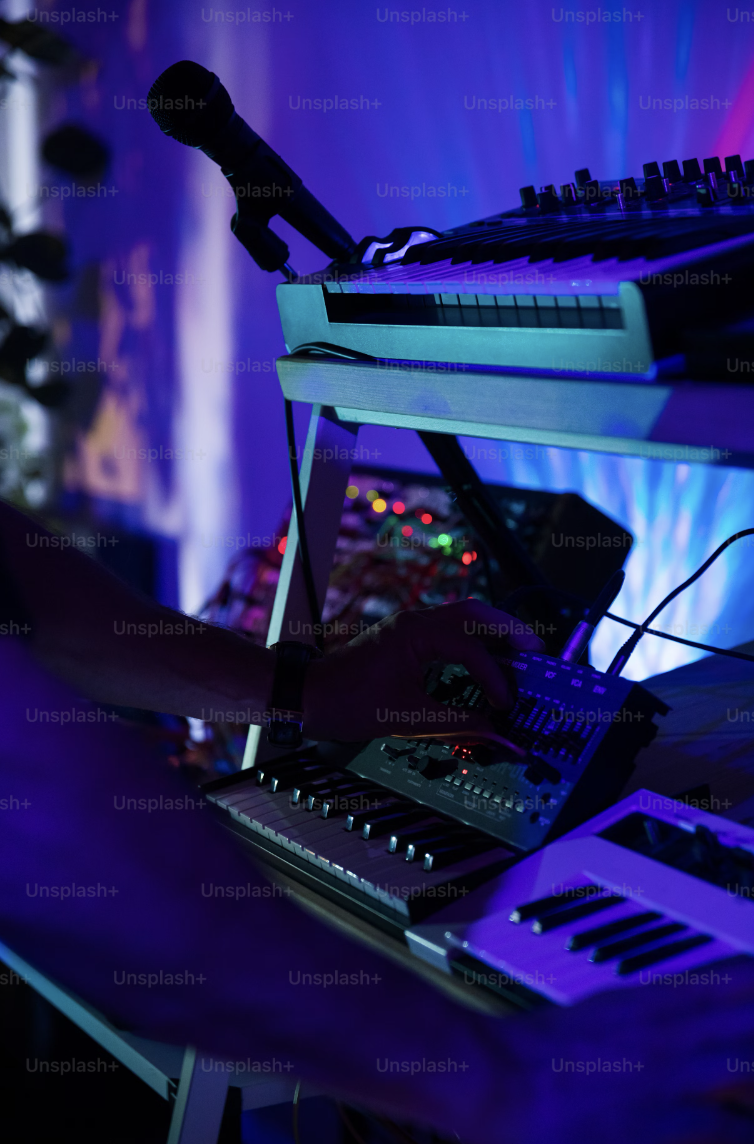
And you know, there was no need for a conductor or seeing the music even. I also think there's just so many creative potentials in creating a more immersive concert experience for audiences. Audiences more and more expect when they come to a music performance, especially when you compare what's happening in popular music compared to what's happening in classical music. There's all kinds of focus on visual and different ways of engaging with the audience using space, using lighting, using multimedia, which has also been a very big part of my work, I think since the beginning, but especially in the last 10 years.
You have artists such as Alex Shapiro, who I know you've spoken with on this podcast as well, who are just creating these wonderful Electro-acoustic soundscapes and giving us opportunities to explore that whole realm in new ways. I've had many collaborations with Alex and with Stephen Bryant and and others in that field. And to me, that's a really exciting newer area that the band has an opportunity to embrace and really engage with and grow. And last, I think technology also helps with visibility. So, you know, anyone can publish in a very public way their music and publish the work they're doing, whether that's a video on YouTube or PDF of a composition. And there's this whole world of new visibility that's possible as an individual participant in many different aspects of music.
So, I think they're just tons and tons of positive things and opportunities which are being currently explored and can continue to open up our world.
JIM: Again, it's a segue again to my next question. Many students involved in the IB program, of course are Western students, American students, European students and so on. But there's also a fair number of students who are non-Western and their exposure to a traditional western tonal system hasn't been as extensive as some of the students that have come out of a Western system. The combination of these Western and non-Western tonalities, these non-Western approaches to learning to read and write music is a very exciting endeavour for me. Do you see non-Western concepts becoming more involved, more engaged with performing ensembles in secondary schools?
It's not just a traditional 18th century harmonic total concepts. There's much more to it. You've sort of mentioned it. I think electro-acoustic music is certainly getting there. That's opening up a whole new world of the way we would listen to music. Any thoughts on that?
ROB: I think what you're touching on is sort of the importance of not only a global view, but relevance to one's even local community. A lot of times what can happen is, you know, in the confines of the music classroom, we might get attached to a curriculum that is supposed to do a certain thing. But there are all of these opportunities for connecting to the real world, even just right outside of those doors, which, you know, I think we need to do more of.
That starts with even just recognizing that students in these ensembles are listening to music from many different genres and really embracing and bringing in those genres into the music classroom just as a first step. It's just recognizing what students have already been exposed to and that they might already have a real connection to. Trying to kind of bridge that gap is a really great starting place. I think also connecting to one's local community is huge. I noticed recently I did a Allstate band in California, and a big part of the conference there were the visibility of mariachi ensembles that are beginning to occur in more of the schools and reflecting more the community right there around each school.
“Connecting to one's local community is huge”
Looking for opportunities to connect to whatever kind of music might be happening outside of the Western culture, just right in one's community, or even within Western culture, but even a slightly different lineage than the European classical tradition. These are really important things to do. I also feel that kind of engaging with music in new ways is a great doorway to that. For example, engaging with music that involves improvisation and soundscape opens a doorway to look at, say, Hindustani classical music. And how does improvisation work in a different tradition?
I'm always looking for ways to connect both to what my students are already listening to and connected to and interested in. That might include things like video game music, or we're doing a film, a film score concert coming up or involving artists who are bringing in elements of hip hop and other kinds of popular genres. And then beyond that, kind of opening up a wider lens to world music. I feel really lucky that early in my musical life, in college, I had a just an absolutely wonderful World music course, which opened my eyes to all kinds of cultural experiences in music that I was completely unaware of. I just assumed that sort of everyone had that experience in their undergrad. I've only learned recently that's absolutely not the case.
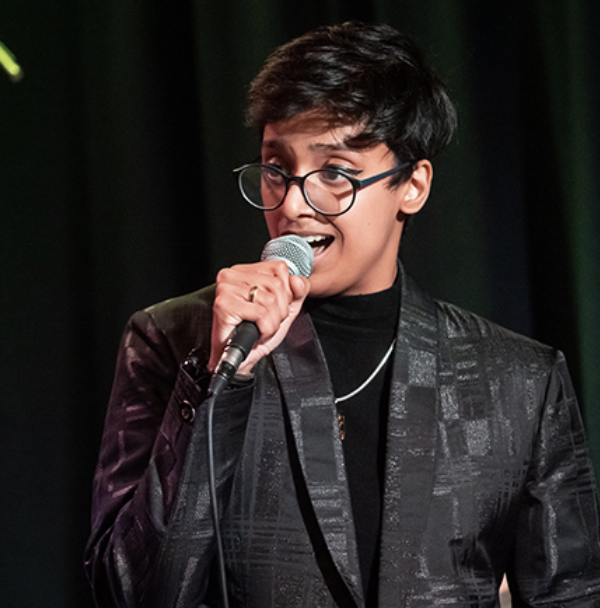
So, I've been looking for ways to connect to world music, if not directly through collaborations with artists and through finding repertoire that's maybe already in the band repertory. That would maybe open a doorway for us to explore music outside of that area. Something recently that I've done was to collaborate with this artist Shruti Ramani, who is was trained in Hindustani classical music but is now a jazz singer and blends those two worlds.
Here at Northwestern, we and previously at UBC, we performed this wonderful work, “Tarot” by Lindsay Bronikant, which looks at reflections on Hindustani music as a Western composer from a very Western perspective and uses raga and other kinds of little Easter eggs, if you will, from holster planets that are embedded into this piece and then applies it to the concept of tarot cards. It's kind of like the Lincolnshire Posey for tarot cards, which is amazing. But we have Shruti come in and work with us on the raga that was explored in the middle movement of that work and to do some improvisation. And we built a soundscape around it and then had Shruti join us for the concert and opened up a space for a large improvisation at the beginning of the movement. It's looking for those direct collaborations to blend these genres that I think can really help us move forward in in that area around embracing non western concepts more. I would also say I want one more thing to that.
I had the opportunity a few years ago to collaborate with the Indigenous composer Raven Chacon. We did a work that was kind of a symbol to sound work with a graphic score. We had the opportunity to work a bit directly through Zoom with the composer and really delve into the concepts behind the piece. One of the concepts was that decision making was completely decentralized for the work. Thinking about that from a perspective very different from our typical Western band lens where a lot of information is coming directly from the podium to the ensemble, but rather completely decentralizing the decision making.
"Decision making was completely decentralized for the work"
That was very eye-opening to me to see the creative directions that project took with without me pushing it in any particular direction. I felt I really learned a lot from that. I think those kinds of experiences in music from different cultures, including those in our local communities and expanding that to a global viewpoint, it's really important right now in order for us to continue for music to hold its relevance.
"It's really important right now in order for us to continue for music to hold its relevance."
JIM: This is a fascinating discussion and we could go in so many different directions right now, but I know you're busy and I'm looking at the clock. It's past the top of the hour and you’ve given so wonderfully your time. I really appreciate that. Do you have any closing thoughts or words of wisdom you'd like to share with the global music community?
ROB: I have a lot of gratitude for what I get to do every day. I recognize perhaps now more than ever, the extreme importance of making music with others. To have large and diverse groups of people working together cooperatively is perhaps more important than ever now and a wonderful model for how we might approach a lot of the challenges that we face all around the world. A way to be present together, a way to build community and build understanding and to be welcoming to all people, to create belonging and to really create a space.
What we need right now, especially that can't really be done in a lot of other ways. So I would say, as these challenges hit us, I think leaning back into the core purpose of the why of the what we're doing. My why is, is building community and having this opportunity to be completely present, making art with other people. I think it's really important to keep circling back to that, why are we doing what we do and to lean into it and be grateful for it. To yell it from the mountaintops how important it is.
"I recognize perhaps now more than ever, the extreme importance of making music with others."
JIM : I’ve just finished several workshops and I've echoed the words I say to my fellow global music colleagues.
I said, “never before, in my lifetime anyway, has our work as music educators, as global music educators. Never has it been so essential and important as it is right now. Just for the very words, just for the way you articulated it. So again, my hat's off to you. I think together we're going to pull through all of this in flying colours. We need each other. And there's no better way to do that than through music.
Rob, you're an inspiration. You're an inspiration to many, certainly to me, and I'm sure to the wider global community. I appreciate your time. Like I said, I know you're busy and I appreciate you taking your time to share your thoughts with us. We look forward to hearing some of this work. I'll make sure that I can tell the people who access the site where they can get a hold of some of the things you're doing and, and participate with it and, and see some of the fine work that you're doing.
So on behalf of all of us here, IB Music and beyond, I want to thank you and wish you well in your future endeavors and projects.
Rob: Thanks, Jim.