Situating the Artist Project
Where do we find art? How do place and time shape the way we experience, understand and interpret artworks? And how does art change the way we see the world around us? In this section, we break down key words and concepts to illuminate the Artist Project for teachers and HL students alike.
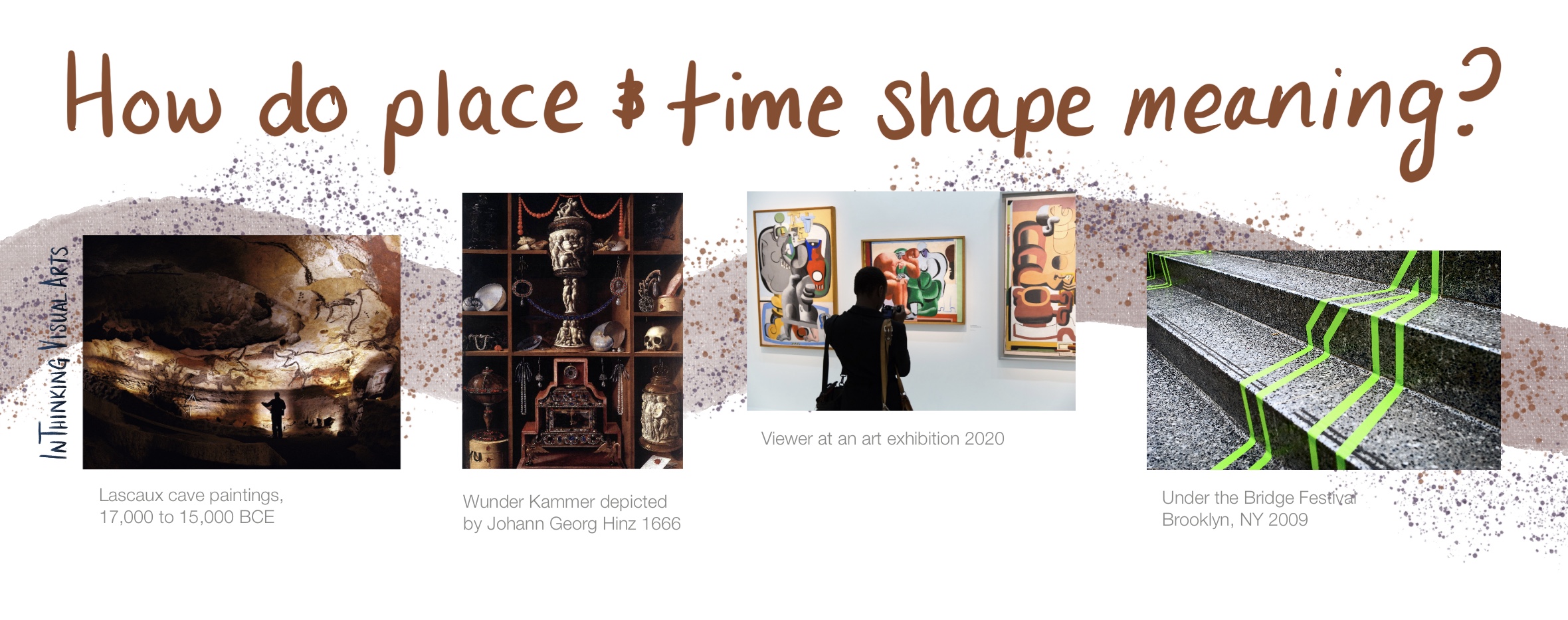
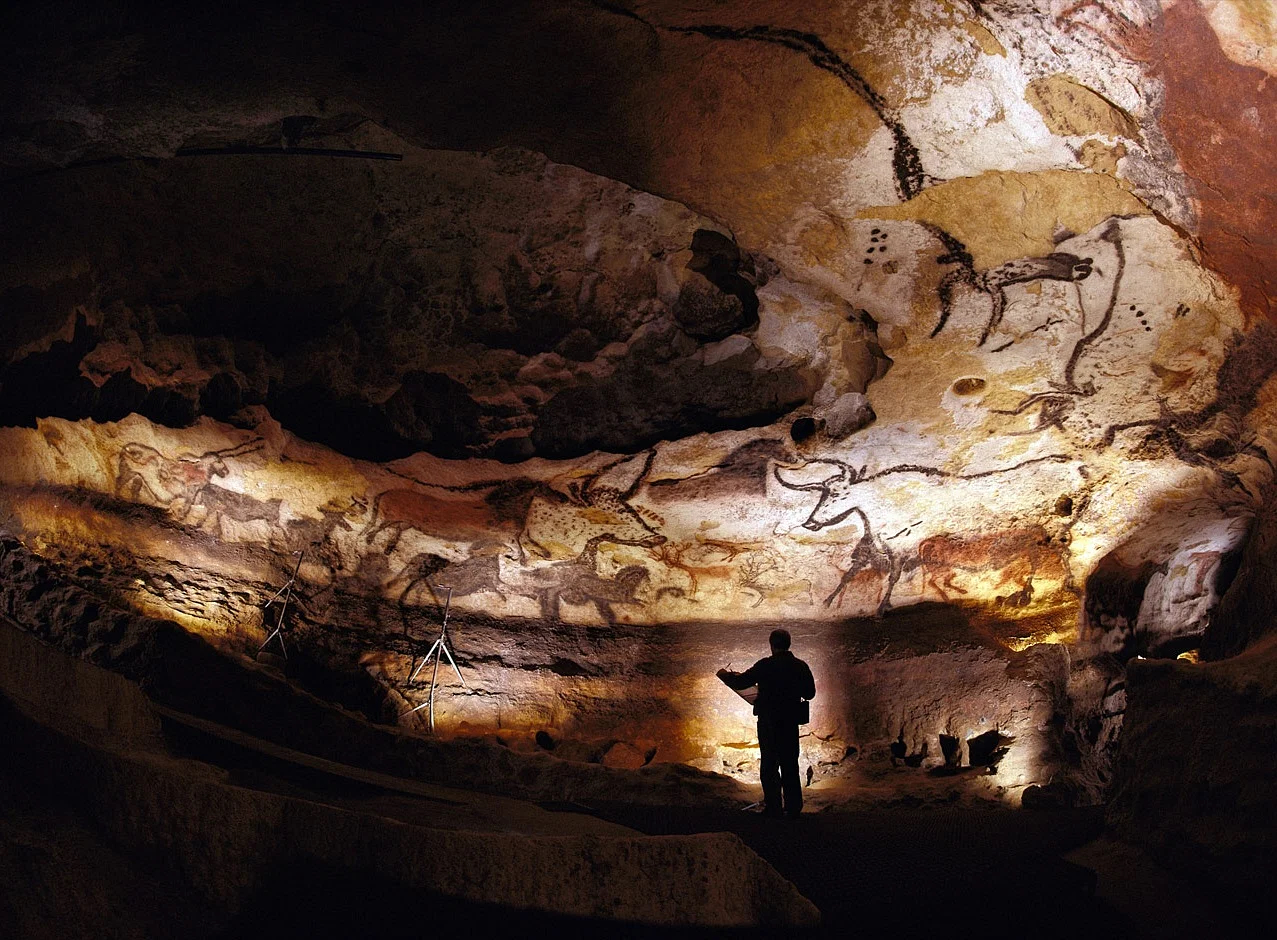
We have become accustomed to finding art in galleries, museums, public libraries, schools, restaurants, and doctors' offices. However, going back to the ancients, art displays existed outside of bustling architectural spaces (i.e. cave paintings and Egyptian tombs); at that time, artmaking intentions, practices and audiences were fundamentally different than they are today. Whether we find a historic artwork in an esteemed institution like the Louvre or a contemporary project in a subway station, the Artist Project asks us to take an active stance as artists when thinking about where we find art and how the time and place in which artworks are seen and experienced can influence the meaning of the work.
Situate
In the Artist Project, you are asked to situate your work in a context of your choosing. But what does it mean to situate an artwork?
As the IB defines it, “to situate is to consider an idea or form in relation to time and place” (Visual Arts Guide, p. 34). While complex definitions exist, situate, situating and situatedness can be broken down into student-friendly terms.
- To situate (verb) asks artists to intentionally connect their artmaking to the time in which they live and the place in which they envision their work.
- Situating (past participle) one's artistic practice is an active process that asks the artist to consider the world around them. It is the act of deciding how the external factors of time and place give meaning to, influence, and affect the work.
- Situatedness (noun) shows the understanding that art does not exist in a vacuum; the meaning of an artwork is flexible, and it changes according to the world around it.
While situating is an active process undertaken by the artist, the work is situated as a result of the connections between the artist (you), the work, the location, and the audience. Here are four key pillars to enhance your understanding:
Place / Where: the physical place affects meaning and can differ according to countries, regions or communities; the history, geographic qualities, and culture of a physical place will also affect the experience of viewing art.
Time / When: meaning is shaped by the time period, social norms, and current events occurring at the time when experiencing art; this can be expanded to include seasons, calendar events, religious holidays, cultural happenings, or community traditions.
Audience / For whom: the beliefs, traditions, language, norms and values of a culture affect how people experience, see, and interpret artwork; art-viewing experiences may be further influenced by education, social, political, psychological, racial and/or economic factors.
Artist / By whom: many cultural, personal, and/or social experiences and factors will shape each artist's perspective and voice. How one's unique perspective relates to the time and place in which they are making an artwork adds another layer to sharing artwork with audiences in a range of contexts.
The Fine Print: Situating in the AP
When you are situating your work in the Artist Project, you will do so in three key ways:
- seek to understand the context (time and place) in which your own artwork - before, during and after making the project;
- connect to at least two artworks by two different artists (across time and place), while seeking to understand other artists' contexts;
- consider your proposed artist project, as well as the two artworks studied, in relation to audiences and their diverse backgrounds
Word Salad #1: Context vs. Context
What's the difference between cultural and historical contexts, and then the contexts that you choose for your final artwork location? Hmmm, yes, it's a little bit confusing.
Let's make some clarifications:
Big Picture: Context (Time, Culture, Society):
- World Events: climate change, political movements, changes in social media and the internet, wars, pandemics - these can change the way people think and act. As events affect the world, our culture and are artworks follow.
- Local Surroundings: Your local context, like your specific town or city's history, geography and traditions, act as a filter for the big picture of the world-wide stage. While we see global news, our local surroundings, customs, and language are something we experience every day.
- The Art World: art movements, technological advances in art (like AI), and other cultural influences shape how we think about and make art.
On the Ground: Context (Physical location or Site, Audience):
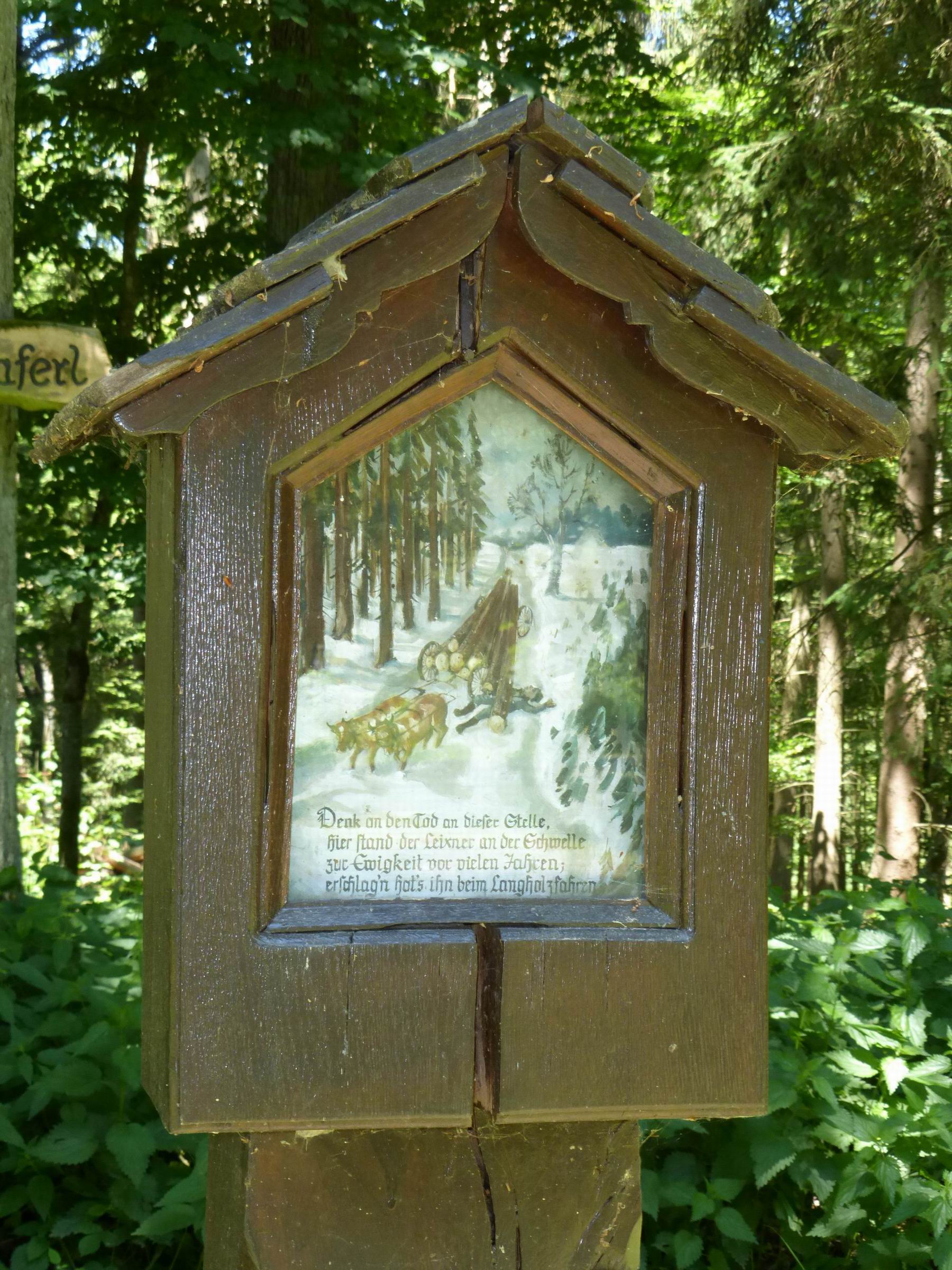
Word Salad #2: Site-specific vs. Installation Art
As the Artist Project is asking you to create an artwork for a chosen context, we can make a parallel between this task and site-specific artworks. Simply put, the artwork made for the Artist Project needs to be made with a specific place in mind. This is a part of situating their artwork.
The terms “site specific” and “installation art” have been often discussed as possibilities for the Artist Project, and you need to understand some key differences:
Site-Specific: a Conversation
The term site-specific refers to artworks that are made in response to and in dialogue with the place in which they are seen and experienced. The quote, “remove a site-specific artwork from its intended place, and the work loses some, or even all, of its meaning," (Art21, 2017) frames the interconnection between the artwork and its surrounding environment.
Key takeaway: for your Artist Project, you will propose and create an artwork designed for a specific location. Regardless if it hangs on a wall or sits on a park bench, you are intentionally planning and making and artwork with the understanding that physical location, time, and place affect the meaning of your artwork as elements of a larger context.
Installation Art: an Artistic Form
Installation artwork is defined by the Tate as “large-scale, mixed-media constructions, often designed for a specific place or for a temporary period of time." While many installations are also site- and time-specific, the Artist Project does not need to be an installation. Nor does it need to be ephemeral (changing over time), performative, interactive, sculptural, or made of a mixture of materials.
Key takeaway: your Artist Project does not need to fit into the scope of installation art. It could be an acrylic painting on a canvas planned for a business office or a free-standing sculpture that you design to go in the center of a park. It could also be made of multiple pieces of origami that you arrange and install within a specific space (i.e. an installation). Ultimately, the choice to make “installation art” is up to the individual student.
Situating YOUR Artist Project
Before you begin proposing your specific Artist Project, take some time to begin thinking through these questions:
1. How do you define your local context in terms of place?
- How have history, geography, and culture shaped your national, regional, or local surroundings? What roles do nature or climate play in your local environment? How might this shape or influence your artmaking?
2. How do you define your local context in terms of time?
- How does the time in which you live affect the place in which you make your art? What local social norms, traditions, values, or current events continue to shape the time in which you live? What recent changes in economics, politics, or social norms make the place you live in now different from the past?
3. What global factors are presently affecting your local context?
Zoom out and look at the big picture. How are world events, art movements, or other societal trends influencing your local situation?
4. Situate yourself as an artist.
- What is your background, location, identity and how do these elements play a role in the work you make?
5. Who are you interested in sharing your artwork with?
- What local or global entry points might they have for connecting to your ideas? Who do you imagine might be able to visit and see your work?
UNpacking Cultural Significance
Unpacking Cultural Significance
What is it that makes an artwork matter? How do we determine what makes an artwork significant? We look at five aspects of cultural significance, exemplified by Marc Chagall's famous ceiling painting...
Further Reading:
See how the Oxford dictionary defines “situatedness”
References
Hainz, Johann Georg. Cabinet of Curiosities (Kunstkammerregal). 1666. Wikimedia Commons, commons.wikimedia.org/wiki/File:Johann_Georg_Hainz_-Cabinet_of_Curiosities-_WGA11425.jpg.
HH58. Leixnertaferl 02 (Wayside Shrine). Wikimedia Commons, CC BY-SA 4.0, commons.wikimedia.org/wiki/File:Leixnertaferl_02.jpg.
HH58. Leixnertaferl 03 (Wayside Shrine). Wikimedia Commons, CC BY-SA 4.0, commons.wikimedia.org/wiki/File:Leixnertaferl_03.jpg
"Installation Art." Tate, www.tate.org.uk/art/art-terms/i/installation-art.
Lascaux II Cave Today (Photo of the interior of the Lascaux Cave). World History Encyclopedia, www.worldhistory.org/image/8664/lascaux-ii-cave-today/.
Lee, See-ming. Forms in Green (13th annual D.U.M.B.O. Art Under the Bridge Festival). 2009. Wikimedia Commons, commons.wikimedia.org/wiki/File:Forms_in_Green_Dumbo_Arts_Center_Art_Under_the_Bridge_Festival_2009_20090926.10D.54563.P1.L1.CC_SML_(3962771161).jpg.
"Site-Specific." Art21, 2017, art21.org/playlist/site-specific/.
"Situatedness." Oxford Reference, Oxford University Press, www.oxfordreference.com/display/10.1093/oi/authority.20110803100509181.
Untitled Photo of Art Exhibition. 2020. Pxhere, pxhere.com/en/photo/1610693.