🛠️Creative Strategies🛠️ Toolkit
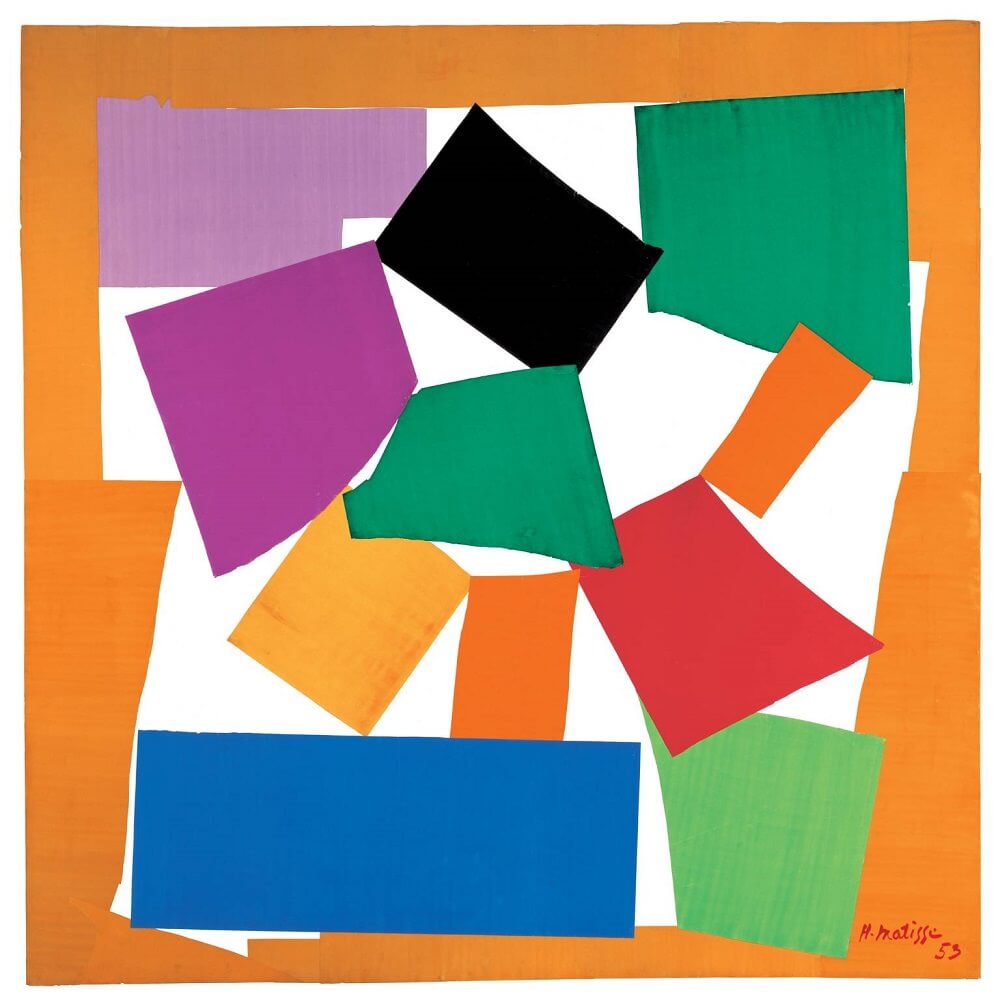
Are you stuck? Unable to move past your first idea? Interested and exciteds to reshape past ideas, but wishing to move forward more creatively ? Our 🛠️ Creative Strategies Toolkit 🛠️ offers tried and trusted strategies, as well as new creative approaches, for you to finesse ideas that have reached an impasse or to push your curiosities to the next level. In our Toolkit, you'll find a variety of creative strategies to help you unleash new possibilities or further your existing ideas.
DISCUSS WITH YOUR STUDENTS:
- Have you ever been “stuck” in the artmaking process before? What did you do to progress past the point of struggling with an idea, material, or technique?
- Have you ever felt like you wanted an idea to be more creative, but didn't know how to change or what to adapt, in order to move your ideas forward?
- What is there to gain by exploring multiple ideas versus the first idea that pops into your head? What is there to lose?
Ask anyone who has engaged in the creative process at length, and they'll be able to share as many stories of creative magic as they will about getting stuck (and unstuck) during their journey. In her chapter titled “Before you think out of the box, you have to start with a box,” choreographer Twyla Tharp references Beethoven's copious notebook practice, where he captured new thoughts and reworked old pieces (2003). She writes, “He never puts the ideas back exactly the same. He always moves them forward, and by doing so, he re-energizes them.”
In the 1940s, Henri Matisse, the famed painter, found himself bedridden, following a battle with stomach cancer in war-torn France. He took to scissors and painted paper, asking his nurses and assistants to pin up the cut pieces on the wall. After first being told he had three years to live, he moved into an era of art-making he later dubbed his “second life," as continued to draw with scissors, creating a legacy of cutout artworks that defied the standards of his time. In Matisse's case, the cut paper allowed him to think and create beyond both the “box” of the painterly canvas and his physical condition. In fact, the late years of Matisse's career demonstrate how constraints can sometimes liberate us.
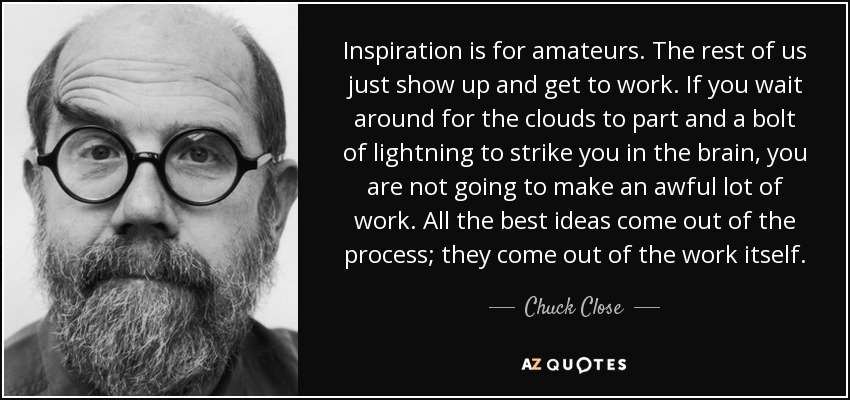
Strategies help us shake loose new ideas and creatively progress. The painter Chuck Close (2006) suggests that our best ideas “come out of the work itself.” In other words, once our hands are busy (mindmapping, drawing, collaging, sculpting, writing), the creative thinking will follow.
Below is a collection of various creative strategies that we've organised to help you generate new possibilities and to maximise your creativity through a variety of well-known and lesser-known tools, tricks, and tips. We'll be adding to this collection on an ongoing basis, so please check back to discover new 🛠️ Creative Strategies Toolkit 🛠️ or reuse familiar strategies to get your ideas flowing.
Creative Strategies Toolkit
🛠️ Toolkit 🛠️ Rearrange
To rearrange means to take something apart, move pieces around and recompose. It's very much like sorting the pieces of a puzzle. As a transformational strategy, rearranging can only begin once you have...
🛠️ Toolkit 🛠️ Juxtapose
To juxtapose means selecting intentionally contrasting imagery or ideas to accentuate differences and to generate unexpected connections. Artists manipulate contrasts through visual elements, but also...
Note: The thumbnail image at the top features Matisse's collage work The Snail (1953).
References:
“Chuck Close Quotes.” AZQuotes, www.azquotes.com/author/3003-Chuck_Close. Accessed 13 Nov. 2025.
Close, Chuck. Lucas I. 1986–87, oil and graphite on canvas. Official Hansen Art, 2 Feb. 2020, https://officialhansen.com/2020/02/02/chuck-close-lucas-i/. Accessed 13 Nov. 2025.
“‘Inspiration Is for Amateurs—The Rest of Us Just Show Up and Get to Work.’” Quote Investigator, 28 Aug. 2022, https://quoteinvestigator.com/2022/08/28/inspiration/#27bb5cd2-2842-4e41-b05c-64d75b875891. Accessed 13 Nov. 2025.
Fig, Joe. Inside the Painter’s Studio. Princeton Architectural Press, 2009, p. 42. Interview with Chuck Close, 25 Apr. 2006.
Smith, Lenore. “Charles Schulz (Interview).” Seventeen, Jan. 1962, pp. 77, 103. Triangle Publications, Philadelphia. ProQuest.
https://www.latimes.com/opinion/story/2025-01-09/henri-matisse-cutouts
The Snail 1953, Henri Matisse. https://www.tate.org.uk/art/artworks/matisse-the-snail-t00540