Sound in IB Art (New Course)
Sound is now permitted in IB Visual Arts!
In the new Visual Arts Course with first exams in 2027, sound is permitted as part of an artwork. This allows students the freedom to create their own original sound for video, installations, and time-based work when this is part of the artistic concept. Any soundtracks by others must be clearly referenced within the artwork text. Sound may be included in the Artist Project and the Resolved Artworks components.
Different ways of using sound in art
Sound installations: A space where sounds are manipulated to create a specific atmosphere.
Sonic sculptures: Sculptures or objects designed to produce sound when interacted with.
Field recordings: Recordings of natural sounds used artistically to capture a specific place or moment.
Performance art with sound: Live performances where sound (or speech) is the primary element.
Outsourced recordings from public domain that contribute to the artwork's conceptual impact.
Sound is Intentional
Sound in art is intentional, either deliberately chosen or crafted by the artist to contribute to the overall artistic message.
Examples of IB art students using sound in their artworks
(note: the examples are from past students and are still images with sound description only. We are interested in publishing examples from students using sound in the new course.)
Sonic Sculpture
For this artwork, the student (Louise) created a sonic sculpture with ceramic casting and an audio recording. The work is intended to communicate tinnitus and the ringing tone that persists in the ear of the person afflicted. When you come close to the sculpture, you perceive the high pitched sound. Without the sound element, the artwork does not have the same impact or intended message.
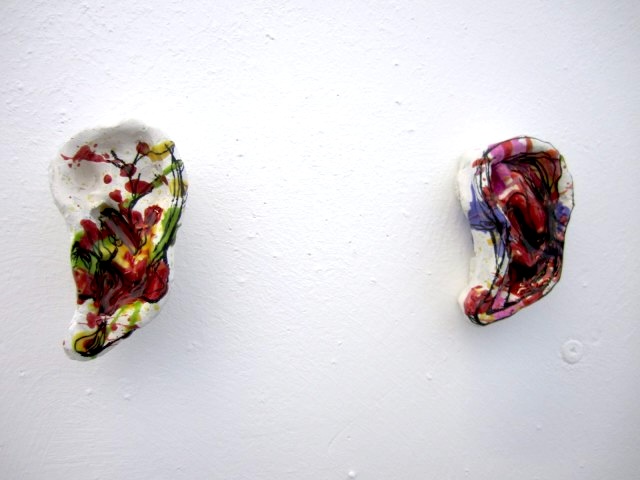
Title: Tinnitus,
Medium: Ceramic, Acrylic paint, i pod with recorded static sound
Size: 5x5 cm each
This series of small ceramic ears is made with a mold and splattered with paint to represent a visual equivilent of tinnitus. Behind one ear is hidden a tiny ipod with headphones that transmits a high constant ringing tone that can be uncomfortable to listen to. L.F
Outsourced Recording from public domain
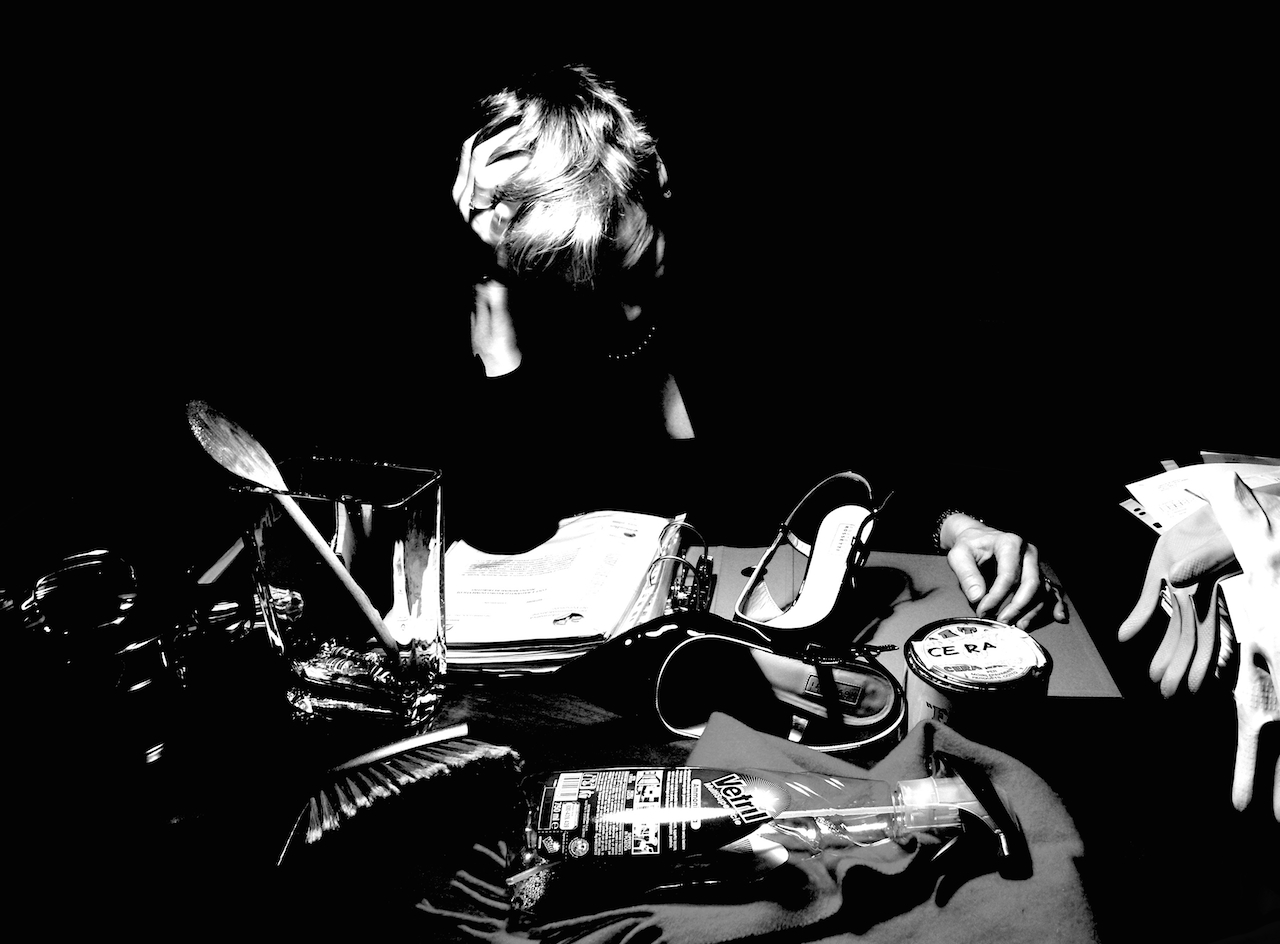
This IB student (Enrico) made a short film and added outsourced audio recordings that are essential to the concept of the piece.
This short film portrays the revenge of a homemaker on her husband. The film draws upon stylistic aspects of Rosler’s 1975 Semiotics of The Kitchen and GaGa’s music video Telephone. The presence of the husband is only suggested, and the woman is stripped of all that makes her unique. The sound is from 1950 public domain movie D.O.A. and a personal re-adaptation of 1953 instructional film Marriage is a Partnership.
Video Recording (or Live Performance Piece) with Audio
In this artwork Sophie filmed a performance of herself having her head shaved.
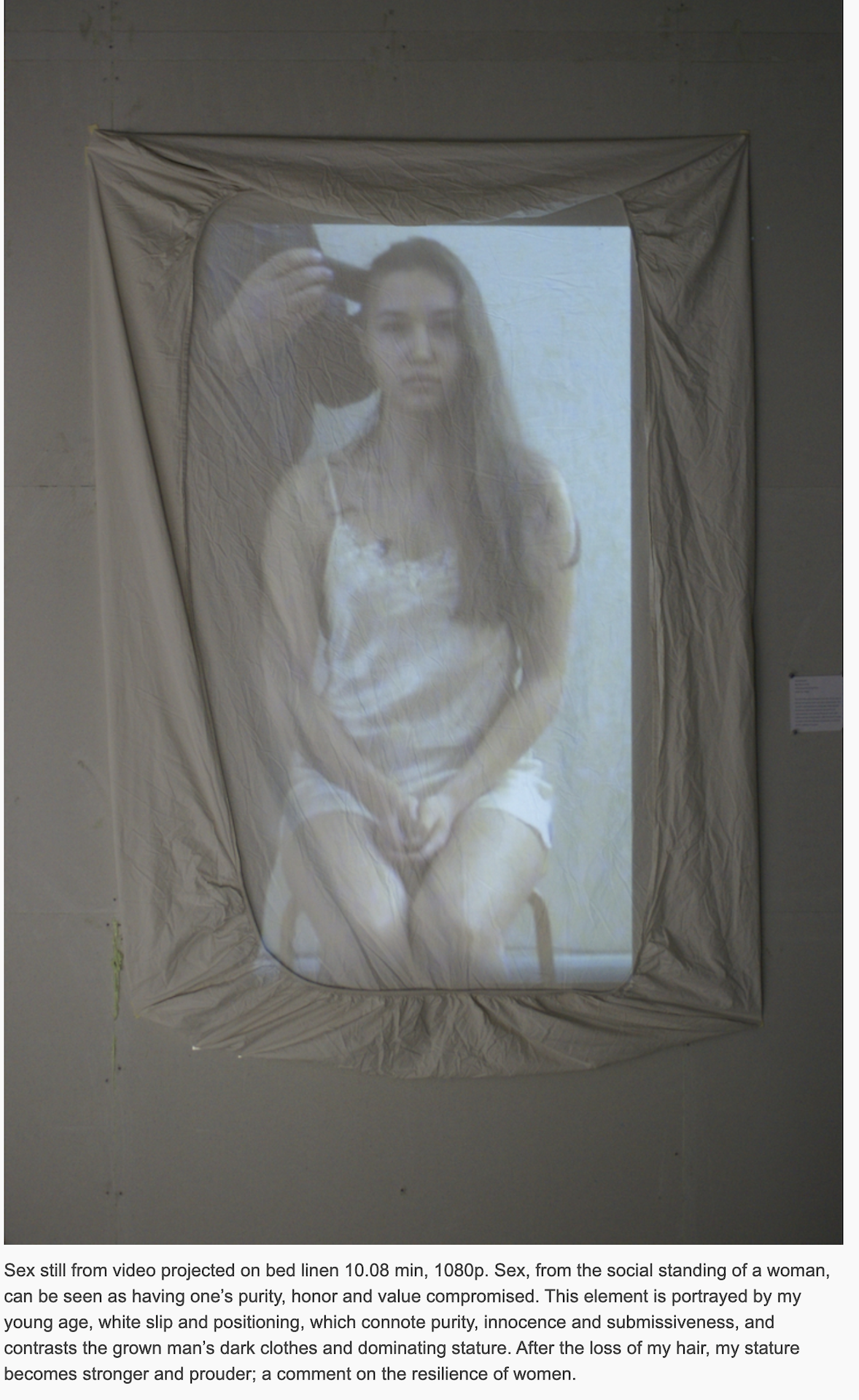
She projects the video on a bedsheet, suggesting virginity and loss of innocence. The sound is native to the piece, i.e. it is the naturally occurring sound of the electric shaver, which gives a slightly menacing air.
Advice to Students on including sound
When sound is intrinsic to the artwork, or contributes significantly to its meaning, then by all means, go for it! However, just because it is accepted doesn’t mean that you should necessarily use sound. If you are considering including audio, reflect on the impact of the sound and consider its role in the artwork’s concept. Ask these questions:
- Does including sound improve this artwork?
- Is sound essential to its existence, or is it superfluous?
Find out more about contemporary artists using sound
Sound in Contemporary Art
Sound Art is Art which uses sound both as its medium (what it is made out of) and as its subject (what it is about) -Tate art terms.If you are teaching sound in art, or your students are curious about...