Self Directed Art Making
The IB Art course rests on a delicate but highly effective collaboration between student and teacher. One of the biggest challenges is finding an optimum balance between teacher-guided instruction and independent student exploration.
When teachers have a solid but flexible framework for teaching skills, concepts, and strategies, then within that structure students can take charge of their own learning and self-direct. Teachers provide invaluable practical advice and technical instruction, offering models for reflecting and responding to art, but also recognizing the student’s ability to pose questions and work towards solving their own problems.
As well as teaching the key concepts and requirements of the course, we want to instill confidence in the students' ability to self-direct.
Guiding students towards independent work
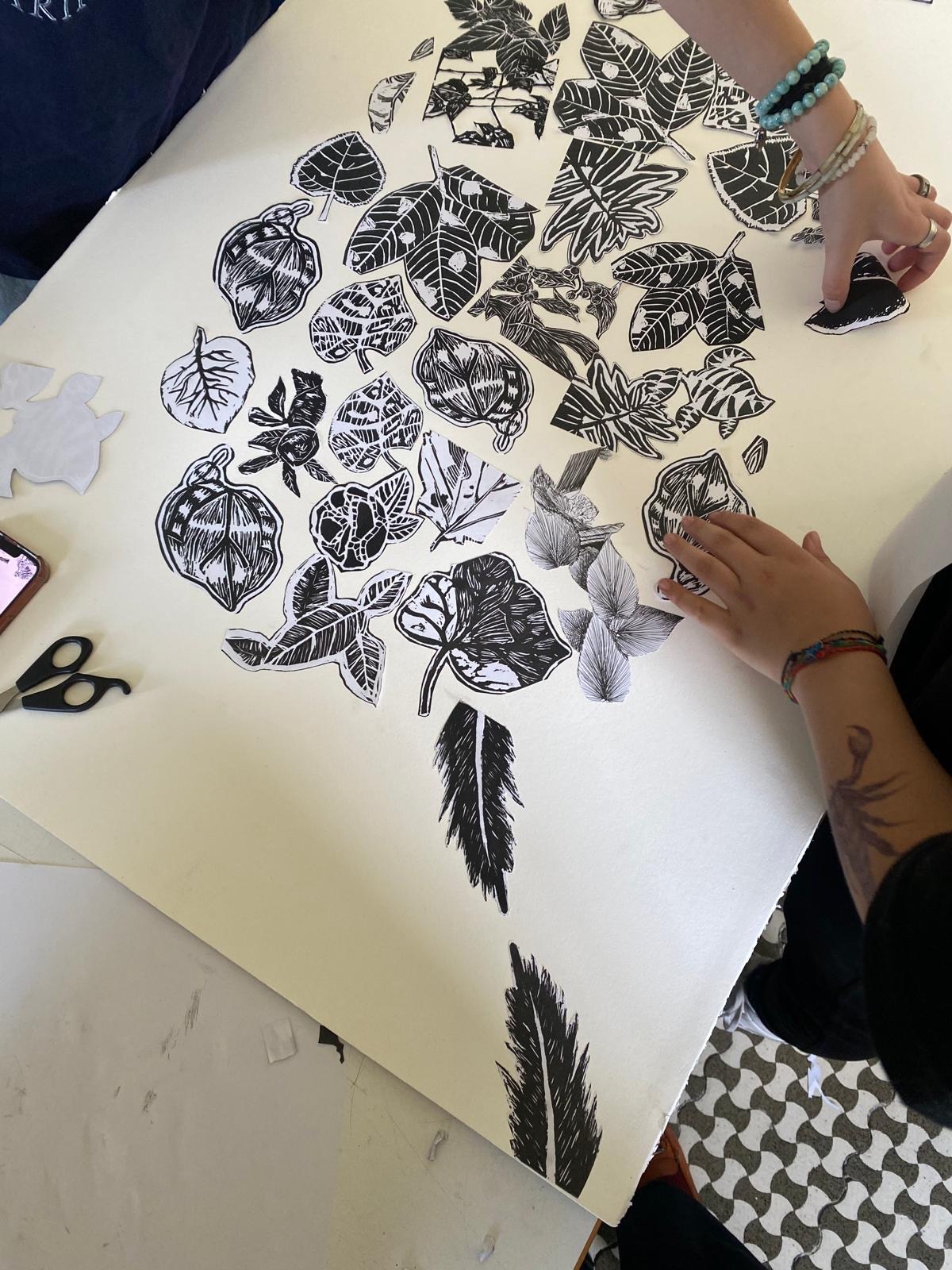
The new syllabus features self-directed artmaking as inquiry. Teachers provide foundational skills, with structures and scaffolding for students to learn during the first part of the course, and they continue to offer guidance throughout. Students are expected to be actively engaged in their learning.
Although we aim for students to be directing their inquiries and initiating their art-making towards the end of the first year, this is more likely to happen if students have been primed for autonomy through previous guided activities.
Year 1 Teacher Guidance
In the first year, teachers provide a framework with enough scaffolding that allows students to make creative decisions. As they become more confident and experienced, maybe several months into the course, students will no longer need to rely on this framework. By nurturing the experiences that teach students to think independently, they learn to make connections and ask the questions that will lead them to grow and eventually be able to self-direct. Introduce a variety of art-making activities and guided looking to encourage an understanding of the relationship between materials (form) and ideas (concept). This kind of teaching is focused on conceptual understanding but also includes practical demonstrations of techniques, introductions to artists and connections to art world, art vocabulary, research habits, journaling and curating digital content.
In the second year we expect students to develop their own paths of inquiry and exploration, especially leading to the Resolved Artworks. Teachers will continue to support and facilitate students as they develop their personal practice.
Teacher-guided vs student-directed activities
Degrees of autonomy: assignments that require the student to take creative responsibility and make major decisions themselves.
Example 1: Self Portrait
Teacher directed: Make a drawing of yourself based on a photo on x sized paper using x materials
Teacher initiated, student-directed: describe yourself with a collection of 23 small pieces, drawings or photos that tell a personal story. For this teaching idea go to Seed: 23 of Me
Example 2: Still life vs. Object Study
Teacher directed: painting a still life that the teacher has set up in the studio
Teacher initiated, student-directed: Choose an object that has an interesting shape and lends itself to multiple meanings. Draw your object from different viewpoints, place it in different contexts, use different material approaches. For more on this teaching idea go to Object Study
Starting Strategies
From the very beginning I believe it is important to create an atmosphere of trust among your students and establish the art room as a safe and playful place where they can take risks, make mistakes and generally mess around with ideas and materials. Starting Strategies section includes introductory activities and Playful Beginnings to facilitate an atmosphere of non-competitive creative engagement. You can dedicate the first day or even first week to establishing this atmosphere…then move into the first comprehensive unit.
Besides facilitating independent critical thinking, we still need to help students develop practical skills and expose them to a variety of techniques, materials, and processes. How you do this will depend on your style of teaching. Many of these strategies will be familiar to you from the previous curriculum; no need to reinvent the wheel! The learning objectives have shifted a little, but good teaching ideas can carry over. You may find you can repurpose your old tricks that teach practical skills with inquiry-led exploration to fit the new course..
We have designed some units and resources to support you in organizing a timeline for teaching the different components of the course, integrating The learning objectives and encouraging gradual independence.
Scaffolded Starting Unit
A comprehensive starting unit for the new course that ticks ALL the boxes, complete with supporting guided inquiry questions and material explorations.
Where am I? Unit Plan
Designed as an introduction to the course, Where am I? invites students to explore and situate themselves within their local contexts through a teacher-led unit of inquiry. Students will have the opportunities...
Guided Activities
A unit plan has built-in sequencing and scaffolding and is quite teacher-directed. The Student Activities and Resources library offers an opportunity for students to make their own choice of (guided) activity. By letting students choose their own challenges, they can begin to identify and develop personal preferences for media, style, type of Creative Strategies etc. More agency means more self-direction.
Art Seed Bank (provocations)
The Art Seed Bank has been updated and expanded for the New Visual Arts Course to explore Creative Strategies with thought-provoking Inquiry Questions for each activity.Choose from the ever-expanding...
✨Sparks✨ (from artists) series
Our ✨Sparks✨ (from artists) series shares artists’ work and practices in connection with creative strategies, visual language, practical investigation, and inquiry. We'll look at how artists transform...
🛠️Creative Strategies🛠️ Toolkit
Are you stuck? Unable to move past your first idea? Interested and exciteds to reshape past ideas, but wishing to move forward more creatively ? Our 🛠️ Creative Strategies Toolkit 🛠️ offers...
Creative Strategies
This image, Silver Eerie, by Maya Lin, is an example of an artist using de-contextualization as a creative strategy, in this case, removing recognizable geographical context to highlight pure form.