Internal Assessment HL
A Closer Look: Selected Resolved Artworks (HL)
In the Internal Assessment (IA), HL students will create artworks throughout the two-year course. As students gain autonomy, they will produce self-directed artworks many of which will be polished into resolved pieces. The IA requires HL students to develop a cohesive collection of artworks, with clear relationships supported by written intentions. As part of their IA submission, students will curate a digital selection of their strongest pieces, justifying and contextualising their choice of "selected" pieces from a larger body of work.
Task Overview - 40%
The HL Selected Resolved Artworks (first exams 2027) Internal Assessment asks students to produce eight pieces, of which they will select five resolved artworks to present as a cohesive body of work. The three artworks that are not included in the selection may or may not be resolved, however students will need to justify their choice of works and situate their selection within a broader context within a written Rationale. In addition, students will write a short text to accompany their five selected pieces.
While a culminating exhibition is not an explicit part of the syllabus, students are encouraged to explore opportunities for sharing and exhibiting their work during the two year period, to better understand curatorial concepts as well as to consider the role of audience and their own context when making their work.
Submission Requirements
Students will submit six required files, including one composite document:
- 5 image or video files* (video files limited to 3 minutes each)
- one PDF of up to 8 screens (with word counts, see below)
The PDF includes
- 3 screens for the rationale (max. 700 words); this includes 1 screen dedicated to a selection chart featuring images of the student's 5 "selected" artworks as well as the 3 "unselected" artworks, possibly to scale.
- 5 screens for artwork texts for the 5 selected images (Max 1,000 words which is approx. 200 words per text but may vary) with title, medium, size and a brief supporting text.
*Additional supporting photos: students have the option to submit up to 2 extra image or video files for each of the 5 artworks when one image/video is not sufficient. In the case of 3D artworks such as installations or sculptures, videos can be used to document a comprehensive view of an artwork.
If you would like a blank SRA form, download  template for selected resolved artworks HL
Assessment Objectives:
Resolve, Synthesize, Curate, Situate
These are the assessment objectives that determine the criteria for the Internal Assessment (HL). Let's take a closer look at what each of these objectives means:
★ Through the completion, polishing and refining pieces in the concluding stages of their work, students will visually RESOLVE their artworks. While students will experiment with artmaking practices in other components, it's important to remember that not all art experiences reach resolution.
★ To SYNTHESIZE is the highest order of thinking! As students combine their understanding of materials, techniques, research, composition, concepts, ideas, influences, and personal interests to create artworks, they are called upon to synthesize. Through synthesis of visual forms and concepts, students can effectively convey their intentions.
★ Students will CURATE their artworks through the evidence they assemble. In the case of the HL IA, students will review a larger body of work (8 pieces) to select 5 resolved artworks. In the Rationale, students will communicate the overall meaning of their selection and the connections that cohere them (style, techniques, and/or conceptual choices).
★ Students will SITUATE their own art-making practice in relation to their context, focusing their discussion on the five pieces they've selected. Students will critically analyse their own work, situating their pieces within a broader artistic context with a consideration for how their ideas might come across to an audience(s).
Criteria Breakdown
| A | Coherence of body of selected artworks* | 8 marks |
| B | Conceptual Realization | 12 marks |
| C | Technical Resolution | 12 marks |
| D | Understanding of artistic context | 8 marks |
| Total | 40 marks |
Let's look at these criteria in simplified language:
A. Coherence of body of selected* artworks
What unifying visuals elements create a strong relationship between the five pieces? What conceptual themes or ideas connect the artworks, and how are they communicated? How does the rationale justify their selection of works from a larger body of work? How do the chosen five artworks exemplify their intentions?
Top level keywords: meaningful, effective, select, justify, intentions, communicate, coherence
B. Conceptual Realization
How do the five resolved artworks utilize visual forms to unify with and realize the conceptual intentions? In what ways does each artwork meaningfully express the intended themes, topics or ideas? How do the artistic choices (composition, style) enhance the conceptual realization of the work?
Top level keywords: synthesis, concept, form, realize, meaningful, accomplished, creative, communicate, intentions
C. Technical Resolution
How do the chosen media and materials enhance the communication of artistic intentions? How do specific techniques or processes demonstrate confidence and agility within the media or materials used? How do formal qualities (e.g., composition, color, texture, balance) contribute to the resolution of each artwork?
Top level keywords: assured, insightful, manipulation, communicate, resolved, effective, fluent, formal qualities
D. Understanding of artistic context
How does this body of work reflect the student’s evolving artistic identity within their artistic practice at-large? How do artistic influences inform the student’s creative decisions? In what ways do the artworks engage with or respond to broader artistic movements, influences, or historical contexts? How does this work fit into their context for audience(s)?
Top level keywords: critical analysis, effectively, situate, context
*NOTE: While similar to the SL Criterion A in the IA, the language is modified because the task is different (i.e. HL students must select work from a larger body of artworks).
Assessment Rubric Selected Resolved Artworks (HL):
Here is the assessment rubric for the Selected Resolved Artworks (HL) for download. While similar to the SL assessment criteria, it is different and includes an additional criterion (D). It is two pages long and the criteria are valued differently, for a total of 40 possible marks.
Image References:
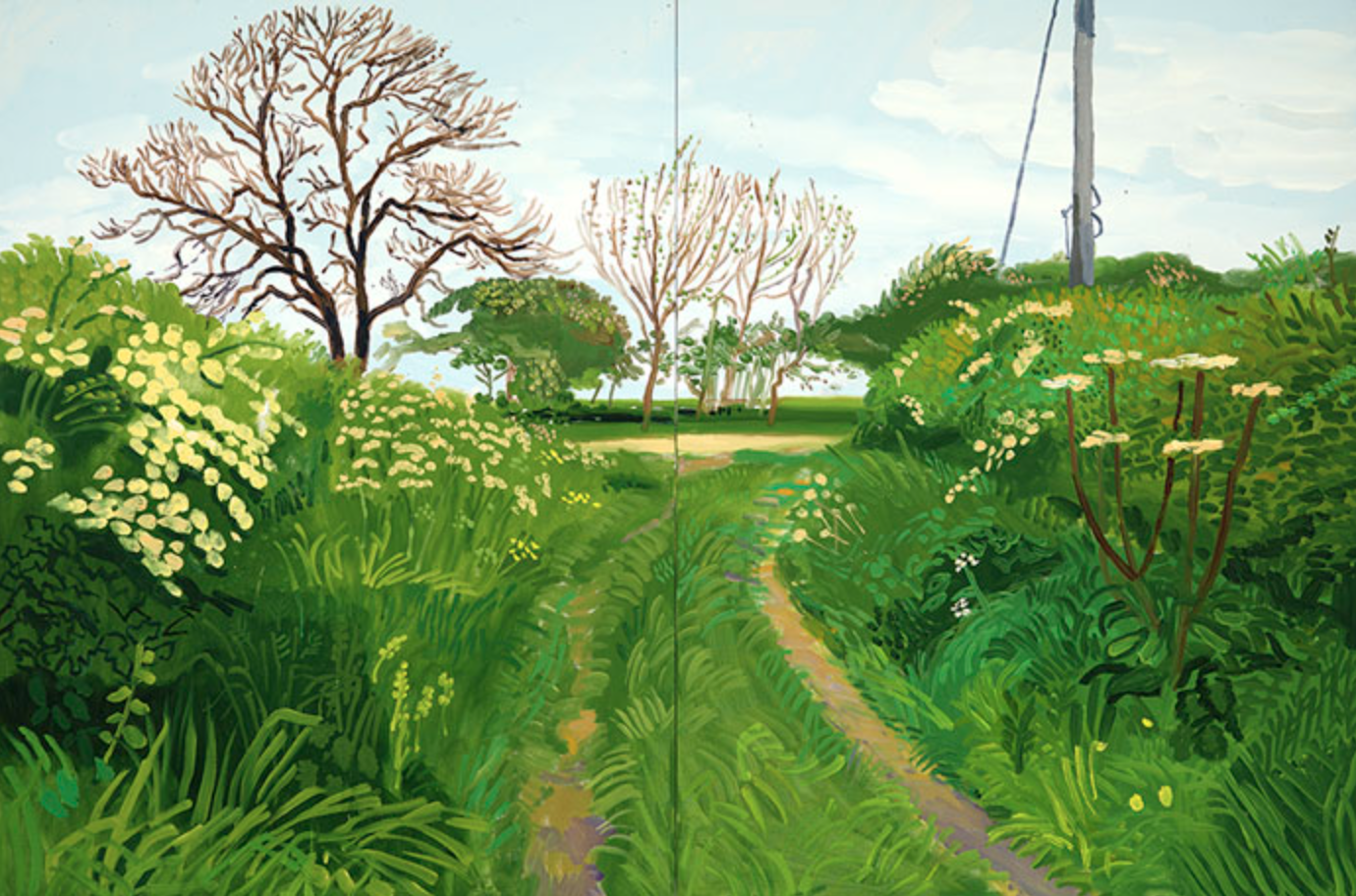
Woldgate Lane to Burton Agnes (2007). Oil on canvas by David Hockney. Retrieved from: https://www.hockney.com/works/paintings/00s
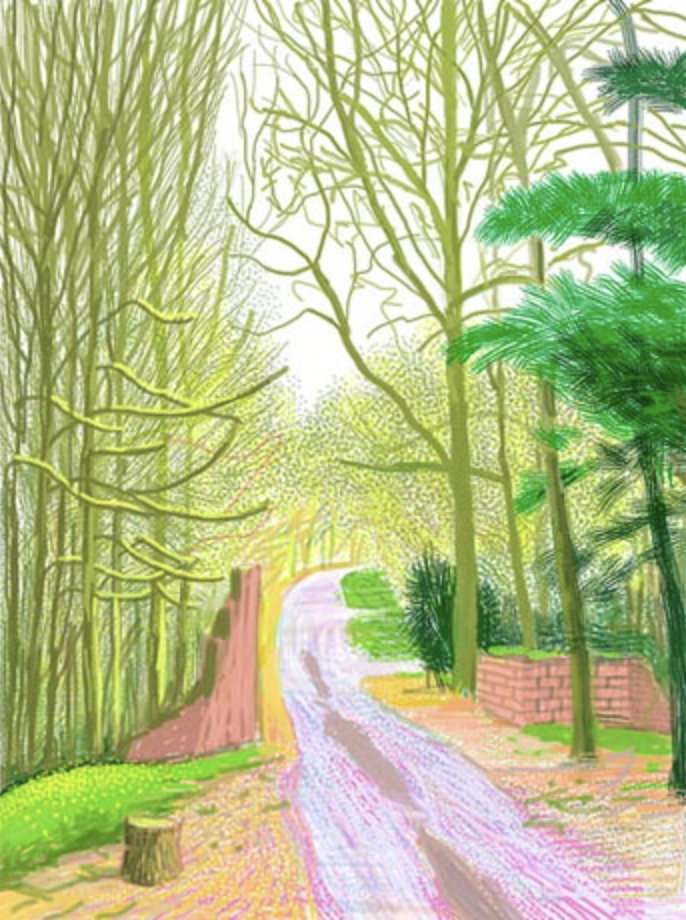
Arrival of Spring in Woldgate, series (30 March 2011). Digital art (iPad drawing) by David Hockney. Retrieved from: https://www.hockney.com/works/digital/arrival-of-spring-woldgate