A Artillery shells and tissue paper
In this activity, you will explore how the Geiger-Marsden alpha-particle scattering experiment provided surprising evidence of an atomic nucleus... and that the rest of the atom was mostly empty space!

Criterion A: Knowing and Understanding

Critical-thinking skills > Interpret data
MYP 4-5 inquiry questions: How do we represent the structure of atoms? How can we know what an atom is like?
This activity links to the student e-course page 5.5.2 What's in an atom?
You can use the PhET online simulation of the alpha-scattering experiment here or watch the recordings below.
The plum-pudding prediction
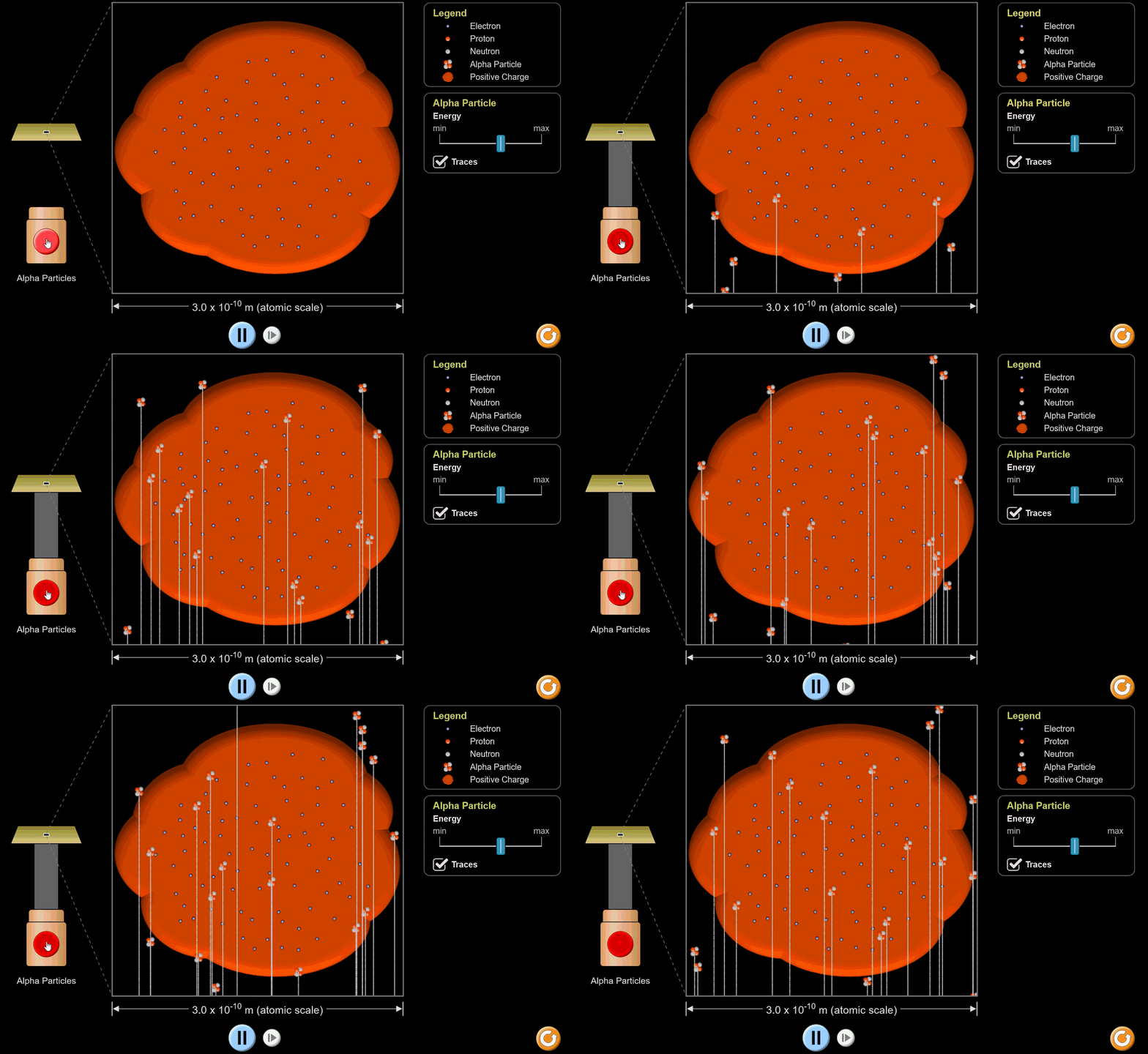
In the app, select ‘Plum Pudding Atom.’ This shows the atom as Thomson thought it to be, a mass with a dispersedpositive charge containing scattered negative charges.
Write down what prediction the ‘plum-pudding’ model made about the path of the alpha particles.
Explain why the plum-pudding model produced this prediction about the path of the alpha particles.
Hint:
Select ‘Show traces’
Press ‘play’
Press the big red button to fire alpha particles at the atom!
Click on the spy-eye to see the animation
2. The surprising nucleus
Now restart the app. This time, select ‘Rutherford atom.’
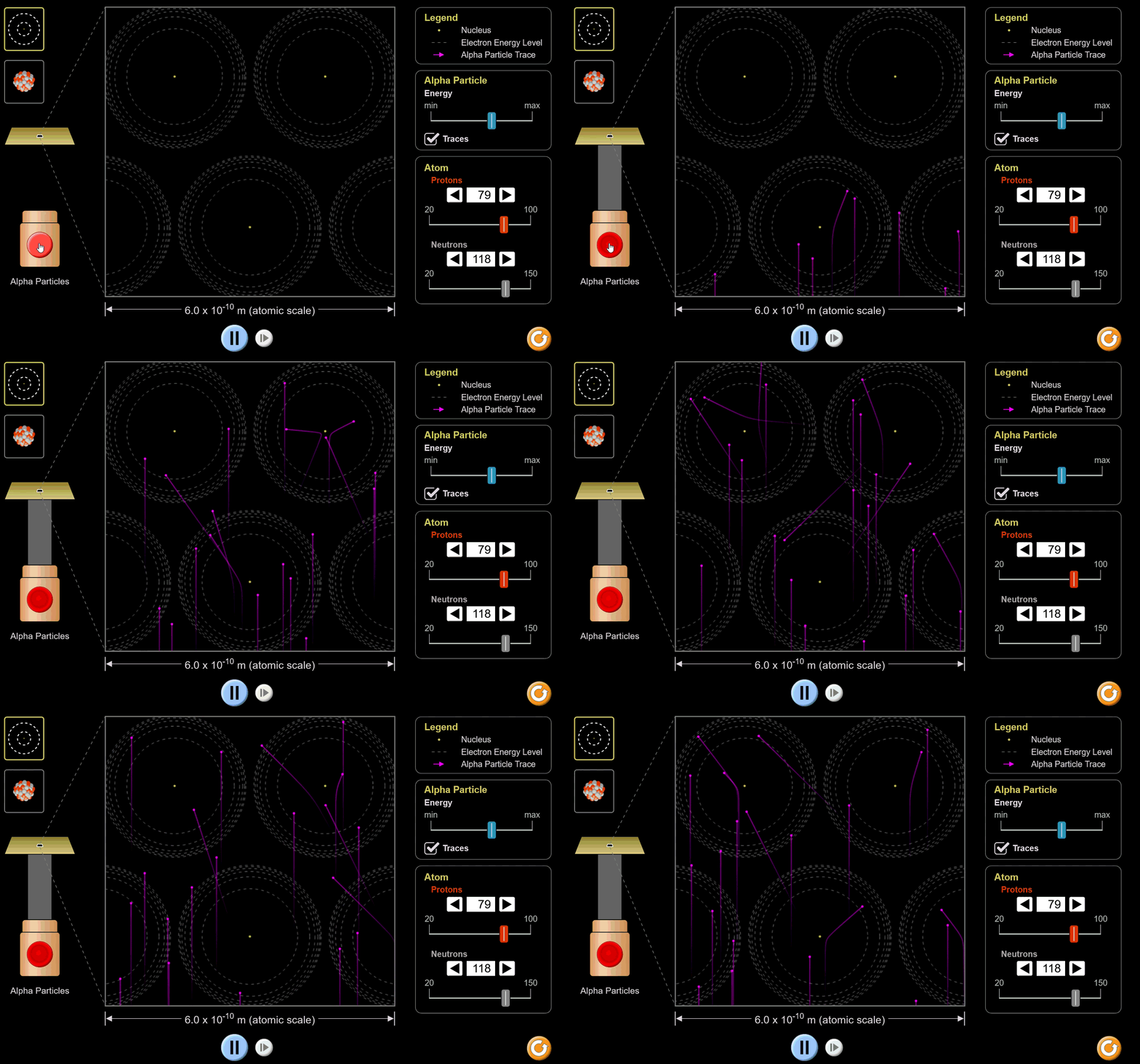
You can select either to see atoms with electrons in orbits, or to zoom in to the nuclear scale.
Select ‘Show traces’
Press ‘play’
Press the big red button again!
Click on the spy-eye to see the animation
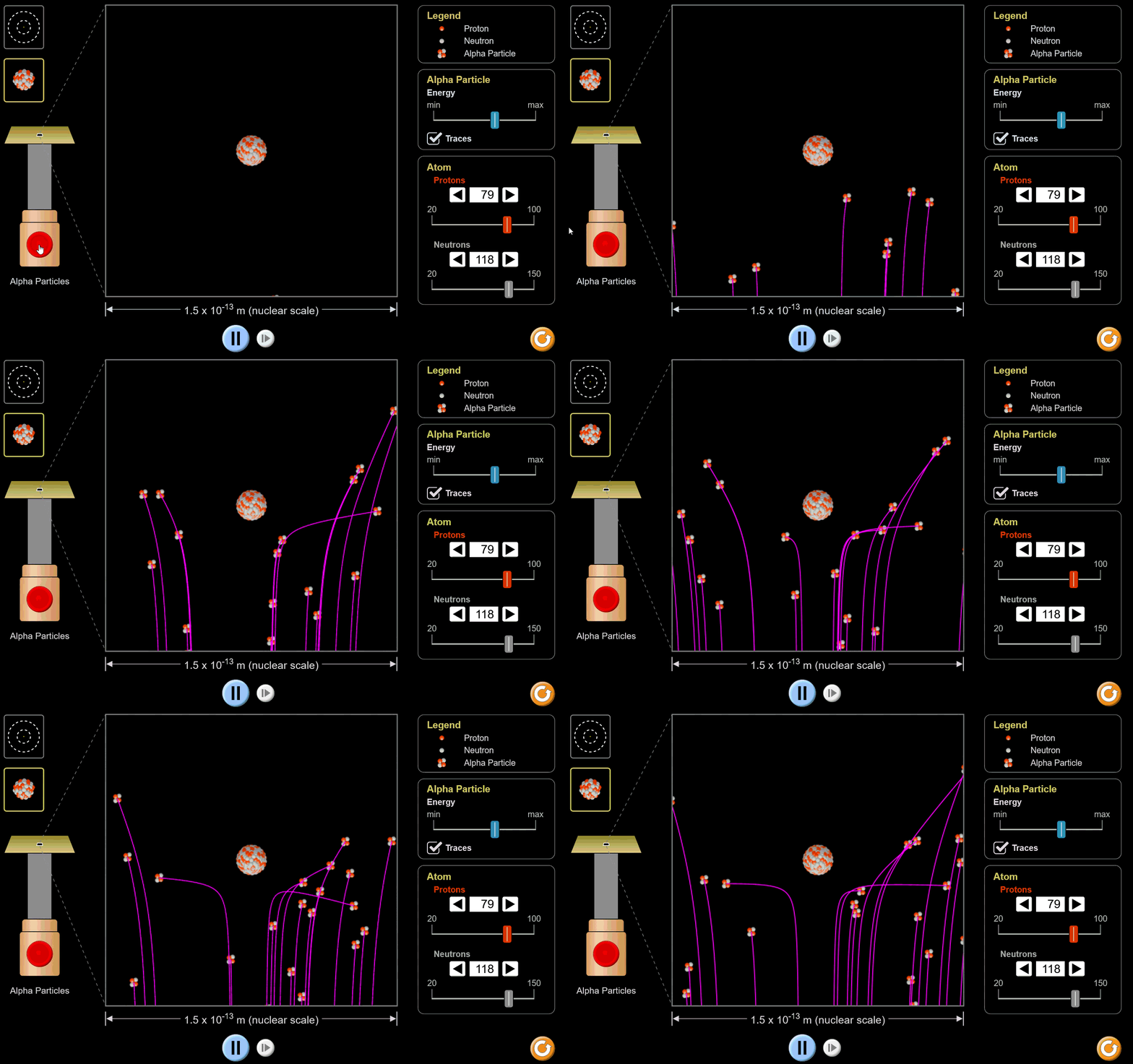
Nucleus view:
Describe the paths taken by most alpha particles.
Analyse the simulation to determine roughly the proportion of alpha-particles that are turned away from their path.
Explain how these observations are in agreement with a model of the atom that contains a very small, densely-packed and positively-charged nucleus, surrounded by space with electrons in it.
Hint:
Prompt for students to reflect on their work using the assessment objectives, e.g.
When you have finished, check your work against the assessment objectives (i-iii) for criterion A:
Criterion A: Knowing and Understanding
In your work, highlight an example of where you have done each of the objectives.