Criteria B and C: Investigations
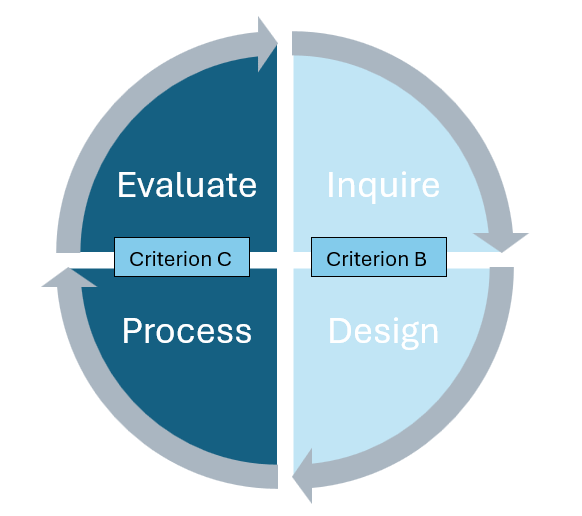
This section contains learning activities for criterion B: Inquiring and Designing, along with some activities that also address criterion C: Processing and Evaluating.
In this section of the site, criterion B tasks are collected along with some tasks that combine criteria B and C as full investigations.
Criterion B: Inquiring and Designing
For MYP 5, the assessment objectives for criterion B are
i. explain a problem or question to be tested by a scientific investigation
ii. formulate a testable hypothesis and explain it using scientific reasoning
iii. explain how to manipulate the variables, and explain how data will be collected
iv. design scientific investigations.
- MYP Sciences Guide (© IBO 2014)
 When learning through activities that are assessed with criterion B, students will observe closely in order to ask questions, identify the physics that might explain their observations, hypothesise about the underlying physics of the phenomenon. They will then design experiments which will enable them to test their hypothesis, identifying independent and dependent variables and the range and frequency of measurements to be made, and select apparatus to use with (safe) procedures.
 Typically, when learning through criterion B activities students will be acquiring and demonstrating approaches to learning of critical thinking and creative thinking. They will also need to draw on information literacy skills, may collaborate in their learning, organize their time and demonstrate resilience.
Criterion C: Processing and Evaluating
For MYP 5, the assessment objectives for criterion C are
i. present collected and transformed data
ii. interpret data and explain results using scientific reasoning
iii. evaluate the validity of a hypothesis based on the outcome of the scientific investigation
iv. evaluate the validity of the method
v. explain improvements or extensions to the method.
- MYP Sciences Guide (© IBO 2014)
When learning through activities that are assessed with criterion C, students will collect data and present it in a suitable form. They will present data with units of measurement to appropriate precision. They will then interpret data to identify patterns, relationships or tendencies, and they will then explain the patterns, relationships or tendencies through application of their scientific knowledge and understanding. They will consider whether their data supports a hypothesis and whether the method used was adequate and appropriate in gathering the required data. Through consideration of the validity of their data and their method they will suggest improvements or further research they could have made, explaining these with reference to their data.
Typically, when learning through criterion B activities students will be acquiring and demonstrating approaches to learning of critical thinking. They will refer to information literacy skills in presenting their findings, and they will reflect and eveluate the efficacy of their research.