Approaches to learning
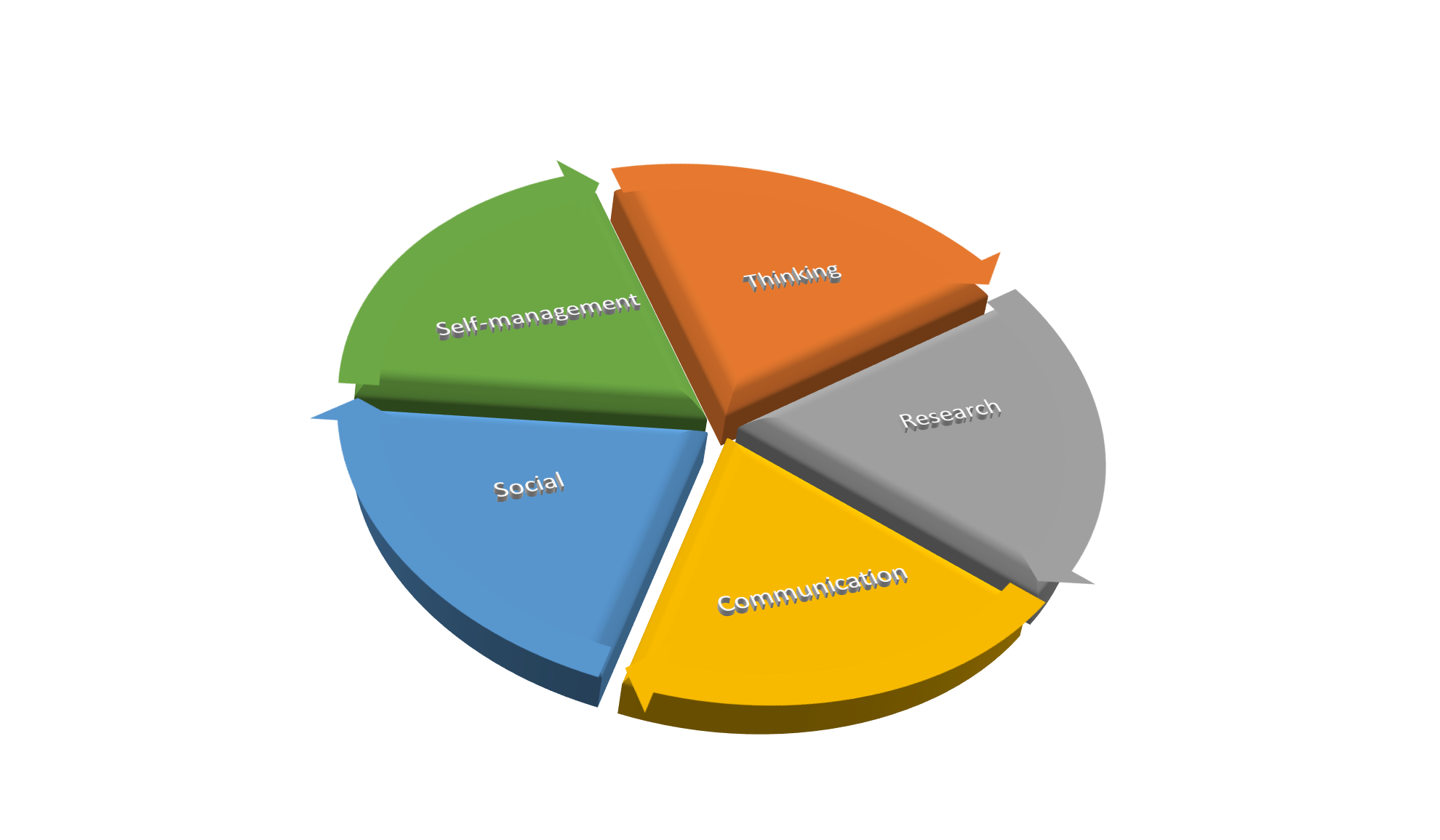
This page outlines the approach to approaches to teaching and learning in the course, and the following pages provide curriculum maps for AtL for this course, and an MYP Sciences AtL scope and sequence.
Approaches to approaches to learning (AATL!)
First, some fundamentals. At the risk of over-quoting, here are a couple of key excerpts from the current AtL 'Guide' for MYP (itself adapted from the DP ATTL website) which can be accessed by IB teachers through MyIB:
'Developing students’ approaches to learning skills is about more than simply developing their cognitive skills. It is also about developing affective and metacognitive skills, and about encouraging students to view learning as something that they “do for themselves in a proactive way, rather than as a covert event that happens to them in reaction to teaching” (Zimmerman, 2000, p. 65). By developing approaches to learning skills and the attributes of the learner profile, MYP students can become “self-regulated learners” (Kaplan, 2008).'
- Approaches to Learning and Approaches to Teaching in the Middle Years Programme (IBO, online, accessed 29.05.24)
This broad framing of AtL as holistic learning is - I would propose - as important in Sciences as it is in any other subject. One of the key differences between IB teaching and learning and that of other programmes is the recognition that teachers teach children before they teach a subject, and children do not leave their broad spectrum of learning needs at the door of the science laboratory. The guide unpacks this further:
'The term “skill” is therefore used in a broad sense in the MYP to encompass cognitive, metacognitive and affective skills. Cognitive skills include all the information-processing and thinking skills, often called “study skills” in a school environment. Affective skills are the skills of behaviour and emotional management underpinning attitudinal factors, such as resilience, perseverance and self-motivation, which often have a large role to play in educational achievement. Metacognitive skills are the skills that students can use to monitor the effectiveness of their learning skills and processes, to better understand and evaluate their learning.'
- Approaches to Learning... (IBO, ibid.)
IB AtL and 'Enhanced' AtL
Since an AtL framework was introduced as part of the 'Next Chapter' curriculum review it has generated a small industry of workshop providers, resource providers and published materials. A key mover in the field has been Lance King, with his organisation TAO Learning - although as Lance himself would no doubt acknowledge, teachers in classrooms around the world have driven the AtL agenda forward. Lance has developed and reworked the original IB AtL framework, reorganising some of the 'domains' or 'clusters,' enhancing the original 'strands' and adding new ones. I much like his 'enhanced' framework of 14 AtL categories and at the time of writing I expect that the 'Enhancing the MYP' curriculum review will take account of this. However, as this site is designed to support teachers working right now with the current framework, I have taken a conscious decision to stay within the framework as given in the IBO guides. That said, I have tried to integrate some of the developed thinking on this within my own framework for this MYP Sciences programme.
'Age-batch' and 'mastery' continuum
One point of dilemma encountered by schools is how to track students' development of AtL skills. This is an expectation of MYP programme authorization and evaluation, in the following MYP Standards and Practice:
'Leadership 5: MYP 1: The school allocates adequate resources for the provision of leadership for developing the curriculum in subject groups, planning approaches to learning, supporting student involvement in service as action, and implementing the personal or community project.
Lifelong learners 1.1: The school implements and reviews the development of the IB’s approaches to learning
Coherent curriculum 1:MYP 1: The school develops subject group overviews and an approaches to learning planning chart in accordance with programme documentation.'
- Taken from Self-study questionnaire for using during programme evaluation (IBO, online, accessed 29.05.24)
While it is surely right that schools plan and track students' acquisition of AtL skills, I feel that sometimes the purpose of doing so is lost. Too often I have seen AtL become no more than an endless curriculum audit, and this rather takes the energy and excitement from 'thinking about learning' as teachers develop MYP curriculum (unless, perhaps, they harbour a secret desire to be an accountant.)
The purpose of planning and tracking AtL skills is to better target teaching to students' personal learning needs. This presents a connundrum in many schools. As education thinkers such as Sir Ken Robinson noted, schools and their curricula - the MYP is no exception - are organised as though students learnt in 'batches' by age (an aside: when visiting schools in India, I was at first bemused that student groupings are often referred to as 'batches' - then I realised that in fact this probably was an accurate way to describe the reality of education in many settings!) But we all know that students develop at different rates and so too they learn at different rates.
A mastery continuum approach is another way to view and evaluate student learning. In this approach, descriptors are written for different levels of 'mastery' of a given skill and students' performance matched to those descriptors. There are many such continua, but the Approaches to Learning... guide offers this framework:
| Level 1 | Level 2 | Level 3 | Level 4 |
| Novice | Learner | Practitioner | Expert |
| Observation | Emulation | Demonstration | Self-regulation |
Observes others performing tasks and using the skill High levels of scaffolding from teacher needed | Copies others’ performance of the skill Medium level of scaffolding needed | Can demonstrate the skill on demand Minimal teacher scaffolding required | Can teach others the skill No teacher scaffolding required |
- Extracted and modified from Approaches to Learning... (IBO, ibid.)
As the MYP is organised around objectives for year groups MYP 1, MYP 3 ansd MYP 5 I have chosen to 'benchmark' AtL at these three age points with age-aligned descriptors. These descriptors can thus be taken as what 'mastery' or 'expert' looks like at each of the age benchmarks. Meanwhile, student reflection and self-evaluation tools are designed to reflect a continuum of competencies in the way described, in a similar way to the reflection tools I have designed for MYP assessment: Approaches to MYP Sciences Assessment. In this way teachers can operate a degree of flexibility in tracking students' progress towards the age-specific benchmarks.
AtL, technology and AI
At the time of writing the AI 'revolution' is underway (and likely to be for some time) and the impact of AI on education is still being thought through. Rather than seeing AI as damaging learning, AtL is the tool we need to guide students to use AI appropriately and effectively.
The Approaches to Learning... guide includes some links to interesting resources that help teachers to integrate technology purposefully and intentionally. At a broad stroke, the SAMR model gives us a way to assess where we are with new technology such as AI, and whether the impacts are largely quantitative or qualtitative:
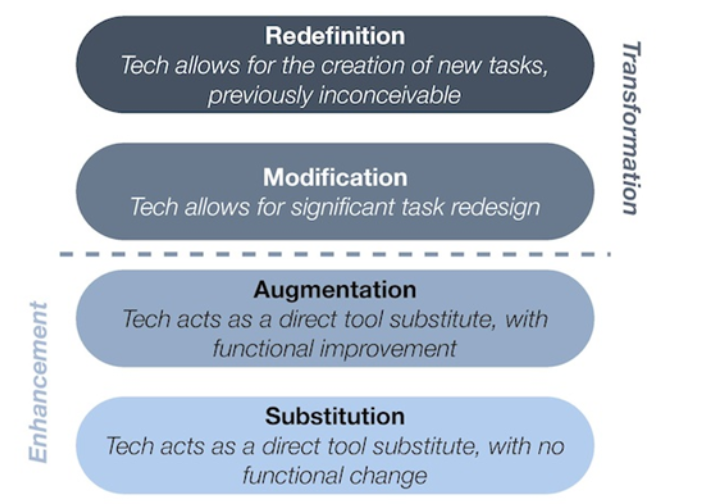
SAMR model for technological impact Image taken from Approaches to teaching... (IBO, ibid.)
The TPACK model helps thinking about the interaction of technological, pedagogical and content knowledge in given learning contexts:
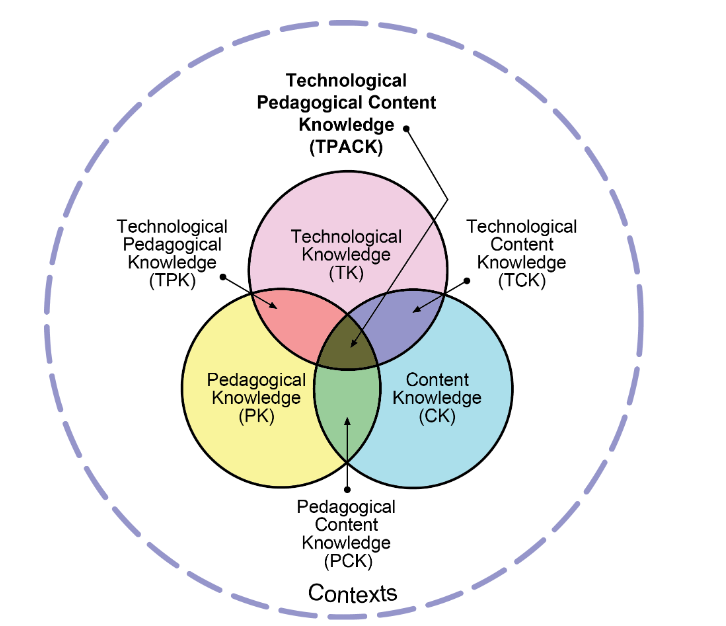
TPACK model: image courtesy tpack.org
The Technology Integration Matrix (TIM) is a framework for thinking through how technology might impact on different modes of learning and this is very transferable to the AtL framework:
I am still thinking through and experimenting with AI (LLMs) in my own teaching practice. In large part my experience is that AI is just another technological tool to achieve similar ends - in terms of the SAMR model, I feel I am at augmentation level, with some modification going on. Often AI just seems to bring another dimension to think about for the critical thinking, information literacy and affective / ethical skills we wish to inculcate. In the AtL continuum here I have integrated appropriate AI use, specifically in terms of information literacy, critical thinking and the ethical dimensions of its use. In this I have referred to Alison Yang's work on aligning AtL with UNESCO AI guidance.
Tags: Approaches to Learning, AtL