4.0.1 Why study Physics?
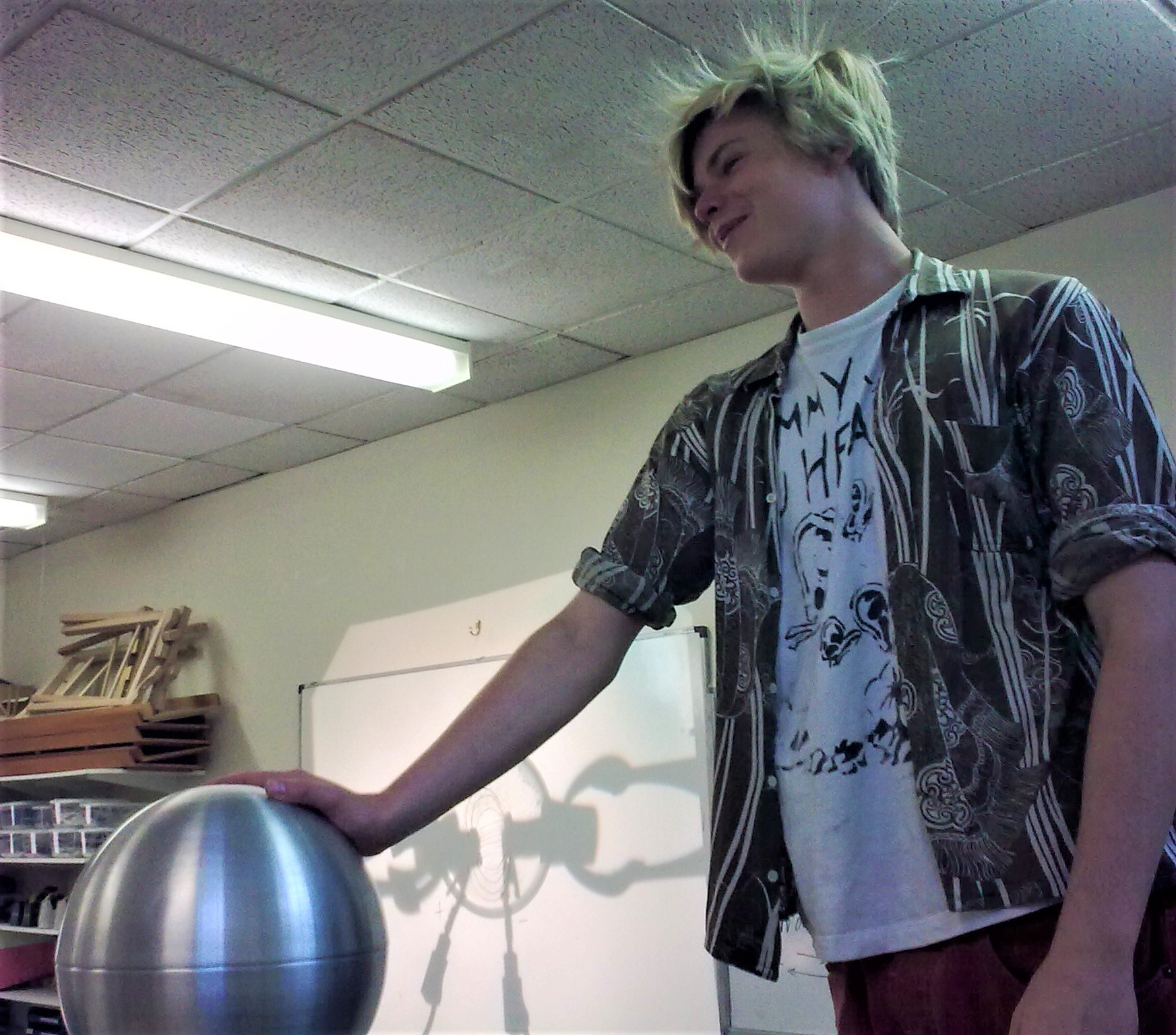
Why study physics? Where will it take you? What will you take from it, into later life? Physics is not just a fascinating subject in its own right, but also the key to seeing the universe (and life) in a different way. Explore some reasons here.
In many ways the answers to these questions depend on what we think education is for.
The trend – at least as far as governments and other state funding bodies are concerned (and I’m going to suggest globally) – is to take the instrumental view that education is a way to optimise wealth generation. There is nothing wrong with wealth generation of course, however I think this view expressed in policy has two effects:
- it tends to drive physics education towards the practical, applied and vocational fields of for example engineering in its various forms, and
- it biases towards discrete and sometimes niche courses that seem to ‘fit’ an identified economic need or skillset, for example in ‘Data Science’ or ‘Computational Modelling’ or 'Materials Physics' etc.
The danger with allowing economic imperative to drive educational policy is that the economy is changing rapidly, all the time and with increasing rate (driven as it is by technological innovation) – so what seems like a need now may not exist within even the 5-8 years it will take our school physics students to qualify.
Another perspective is that to study physics in its ‘pure’ form – as a discipline in its own right, regardless of practical application – is the best way to stay ahead of the game, because the underlying understanding and analytical skills that physics provides will be transferable to whatever new problems need solving.
And a third perspective is that physics – like all education – is worth studying just in and for itself, for curiosity and enlightenment and as a way to enrich us as human beings, just like poetry, music or literature.
The reality for we educators of course is that we have to be mindful of all of these reasons, so the following sections aim to encourage students to think about this and reflect on their own motivations. This student-facing section is also available in a downloadable activity pack.
Physics is like a picture frame for viewing the Universe. But the frame of physics can be any size we want it to be. It allows us to see inside atoms and out to distant galaxies. More than this, physics shows us secrets that we could not even imagine without it.
This video made by the BBC will take you on a tour from the everyday world we live in out to the furthest reaches of the known Universe (and maybe beyond….):
And what about the very, very small? Physics also offers weird and challenging ways for us to try and understand the smallest phenomena, too. In this video, physicist Michio Kaku discusses quantum mechanics and string theory, as well as the inspirations for his own journey as a physicist:
But we don’t need to travel through space or into atoms to find weird and puzzling physics. Here are a few strange physics demonstrations you can try yourself:
Physics is a 'natural science' - meaning that it concerns the study of the natural world. Like other natural sciences, it is not only a collection of facts, ideas or theories, but also a way to see the natural world. Physics has its own methods and tools which allows us to analyse natural phenomena (events), to take them apart to see how they work and then to put them back together again. Physics has a scientific method. So when you study Physics, you are not just remembering facts, equations and theories but also training your mind to think in a certain way.
The scientific method is so powerful that it can allow us to see and understand things that are not apparent to casual observers, and to make technologies that can do amazing things: as the thinker and science fiction author Arthur C. Clarke wrote: "Any sufficiently advanced technology is indistinguishable from magic."
You can find out more about how to think like a physicist at Thinking like a Physicist.
"So what's the point in learning Physics? What kind of job will that get you?"
Maybe you have started to think about what kind of future you would like. Perhaps you have thought about income and job security. Perhaps you have thought about what excites you or fulfills you as a person. Physics - and Thinking like a Physicist - can open up possibilities you may never even have thought about.
For more detail on the pathways you can follow with physics after school, check out ' Physics beyond school.'
Everybody has heard of Isaac Newton and Albert Einstein - creative, scientific geniuses who changed the world with their imaginations and Physics. They worked in theory, but Physics is also applied in practice to produce new technologies. For example, if we didn't understand the physics of atoms and electrons, we would have no semiconductor materials and so no electronic devices. If we didn't understand the behaviour of electromagnetic waves, we would have no telecommunications systems and we would not know what was causing global climate change. If you want to be a change-maker in the future, Physics can give you the essential tools to analyse and understand problems, and then to find the solutions. Find out more about Inspiring Physicists.
Find out more...
Physicists often collaborate through their 'professional associations,' most often within a particular country. These professional associations very often offer advice and information about studying and careers in Physics. Here are a few links for you to explore further:

American Physical Society (USA)

Institute of Physics (UK)