Learning
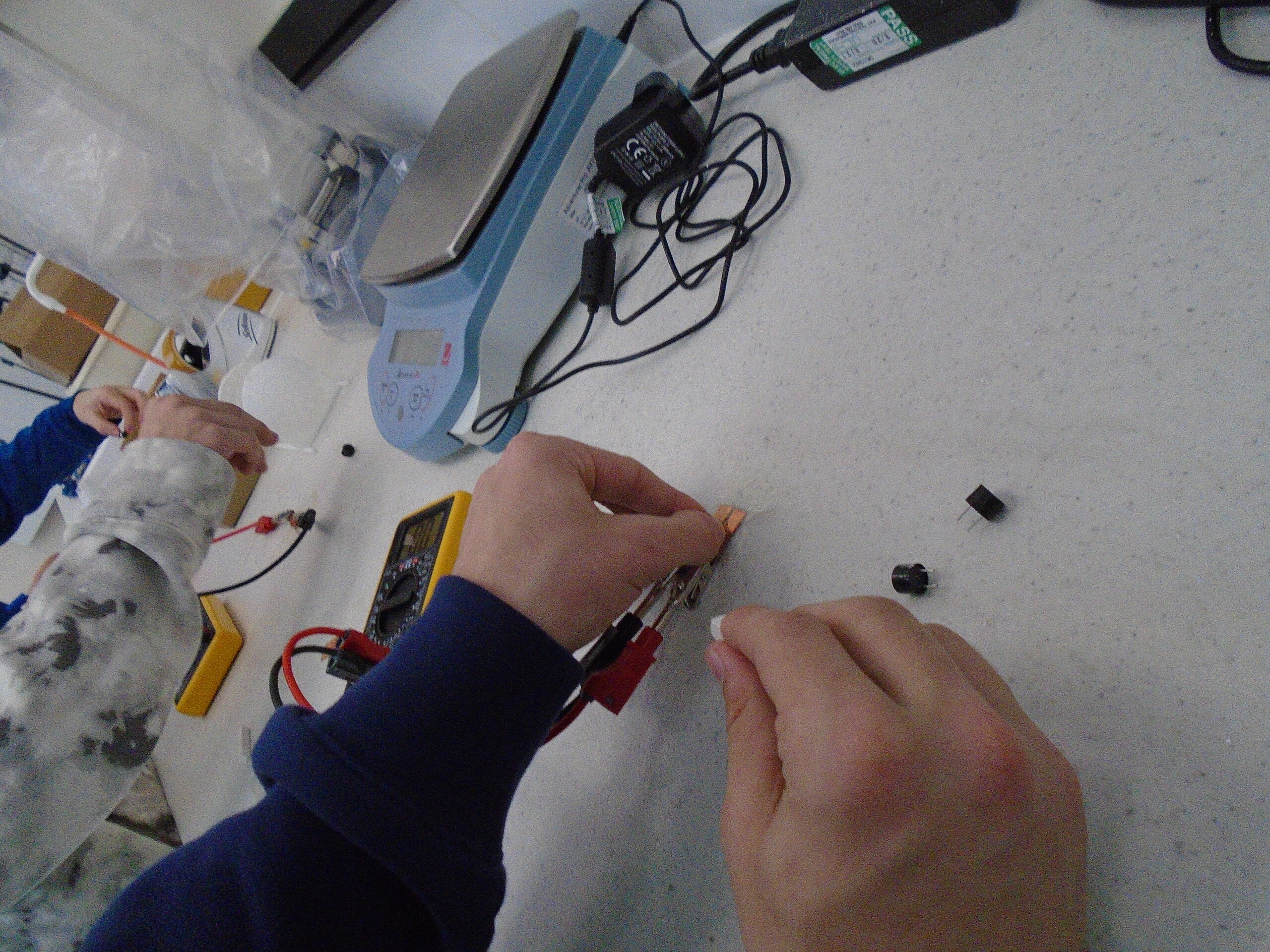
This section of the site curates activities from the units as 'drop in' resources for you to use and learn from.
The pages in this section are all set as 'filtered student access,' so that you can make them directly available to students - any teacher-only content (such as marking or guidance notes) will be hidden in teacher-only boxes. Most of these activities are backwards-designed so as to work as formative or summative assessment tasks, too - although some may not be designed for assessment at all, such as tasks designed to focus on AtL skills or Learner Profile attributes.
Organisation of the learning activities
The activities are organised according to the four MYP Sciences assessment criteria (A, B, C, D). Criteria B and C are grouped together, since they deal with scientific investigations (BC) and experiments (C alone). Where an activity addresses more than one assessment criterion (for example AD) then it is stored under the first of the relevant criterion. For example, the activity AD Solar power can be found under the menu for Criterion A: Knowing and Understanding .
The activities and tasks here all follow a particular format, which you can make available to students via student access, and use in class on-screen. And for those who love hard copy (or e-readers!) most of them also have pdf downloadables versions at the end.
ATTL links and teaching notes are given in a teacher-only box at the end of the page. If the task lends itself to assessment - whether formative or summative - you'll find the links to rubrics, reflection sheets and other resources there.
Guide to format of activities

Activities will begin with a stimulus such as an image, video, realia (mocked-up text) or something similar. There will also be a guiding question, taken from the unit with which the activity is associated. You may wish to use the stimulus as a starting discussion point to introduce the activity.
The action stage is where they actually do the activity or carry out the task. There will be instructions here, with varying degrees of detail, depending on the assessment associated with the activity. So an activity which is intended to lead to a criterion B summative assessment would have quite generic, general prompts to action which mirror those in the assessment objectives (criterion) - whereas a formative assessment in the same criterion would have more close guidance for students to follow.
Sometimes there will be a

in a hidden box with a particular bit of guidance to students who might need help.

Health and safety point which draws students' (and teachers'!) attention to these important considerations, including environmental impact.
After each activity / task, students are prompted to review and reflect on their work. Often this will take the form of identifying if and where they have met the objectives for the specific criterion, for example...
Criterion A: Knowing and Understanding
The 'hidden box' will contain the assessment objectives for you and the student to refer to when reflecting, like this:
Criterion A: Knowing and understanding
i. explain scientific knowledge
ii. apply scientific knowledge and understanding to solve problems set in familiar and unfamiliar
situations
iii. analyse and evaluate information to make scientifically supported judgments.
... followed by a prompt to the students to review, highlight or otherwise annotate their work and check they have done everything they were supposed to do!
The teacher-only box at the end of the activity contains
- reference to ATL skills that are particularly relevant in this activity, like this:
 Self-management > Organisation skills > Use appropriate strategies for organizing complex information
- general notes and points about the activity to help teachers
- links out to assessment materials that go with the activity, whether formative or summative.
At the end of the page there will usually be a pdf viewer, and a downloadable, which reproduces just the student-accessible content on the page:
Selected Pages
-
Learning
Grab bag: nuclei and radioactivity Free
This is a quick online activity to stimulate students in accessing prior learningabout nuclei and radioactivity and maybe
-
Learning
AtL activities Free
These pages show students how to do things: particularly skills for approaches to learning in physics. This page introduces
-

Learning
A Frictional forces Free
In this activity you will use an online simulation to explore force, acceleration and friction. Related concept Movement,
-
Learning
4.1A Measuring up activities Free
Look here for criterion A activities for the unit inquiry 4.1 Measuring up Where are we, in space and time? How far or how
-
Learning
MYP 5: Can do maths skills Free
As you move from MYP4 to MYP5, or when you are reviewing your learning for the whole of MYP 4 and 5, it is useful to check
-

Learning
MYP 5: Can do IT skills Free
As you move from MYP4 to MYP5, or when you are reviewing your learning for the whole of MYP 4 and 5, it is useful to check