4.0.4 Real-life journeys

We all need advice, and often the best advice comes from somebody who is a few steps ahead on the same path as you. On this page meet some alumni (graduates) from IB MYP and DP Physics programmes and find out about their exciting journeys.
 IBMYP class of 2016, IBDP class of 2018
University: University College London, BEng Electronic and Electrical engineering
Current post: Research analyst, Prologis
Nationality: Netherlands
Read about Kaj's journey:
1. Why did you want to study Sciences in the IB MYP and IB DP?
During my IB MYP, everyone in my class followed the same scientific study plan, which consisted of the core scientific subjects (Biology, Chemistry and Physics). Throughout this period I did not make a conscious effort to try harder in these subjects as I had not decided what I wanted to pursue an academic career in. I also had not taken my education too seriously yet up until this point. I do remember that I always enjoyed all three subjects, especially the more practical aspects of them such as performing experiments and writing lab reports.
I remember quite vividly that upon my graduation from the IB MYP I made a conscious decision to start taking my education more seriously and put a lot of thought into the subjects that I was going to take at IB DP. I was quite unsure of what I wanted to study for a considerable period of time because my interests have always been very broad. This ultimately led me to choosing a university degree which would keep as many doors open as possible. In my mind, this would be an engineering degree. I thus chose my IB DP science subjects based on the entry requirements of the courses that I was interested in. I remember that I saw my choices as a means to an end; they were not necessarily driven by a deep underlying passion for the subjects. However, I also remember that as I progressed through the IB DP, I started getting more confident in my abilities and this is also when I started becoming more passionate about the subjects.
A straight answer to the question would be: I chose my IB DP science subjects based on the access they would give me to higher education options.
2. What were the most important 'transferable skills' you took from your IB Sciences education, and how did they turn out to be useful in your further study and career?
The most important transferable skills I took from my IB Sciences education definitely stemmed from the Internal Assessment component of those subjects. During my time at university, especially during the first year, there was a notable discrepancy between students who had followed the IB DP as opposed to those who had followed an A-Level program. The IB DP students were significantly more proficient in the practical side of our degree. This is true for all the processes involved in undertaking an experiment, from outlining aims and hypotheses, to designing experimental set-ups, to proper referencing, to the actual write up of the laboratory report. For example, during the first term of my first year, students across all engineering departments had to take a (half) module in report writing and referencing. This is the only course at university where I achieved 100%, and I remember helping a number of students who came from an A-Level background.
I also want to mention that I think the IB DP Sciences, especially Physics (in my case), do not prepare students very well for the content which they will cover at university. Perhaps this would be slightly different for someone who pursued a more traditional, purely scientific degree such as Physics or Chemistry, but for those who pursue more specialized degrees in the engineering disciplines, such as electrical and electronic or mechanical engineering, the content covered in the IB is simply too shallow. There are an extensive number of topics which need to be covered (in IB Physics) and this leads to a lack of depth of understanding. The content that was covered for the subjects which most were relevant to my degree (Topic 4: Waves, Topic 5: Electricity and Magnetism, Topic 10: Fields, and perhaps a bit of Topic 8: Energy Production) was often covered in the first 5 minutes of the university equivalent of those courses, and it was assumed that you had a very deep understanding of the concepts. I think this is further exacerbated by the fact that Physics at university level is taught entirely differently from Physics at high school, simply because it is integrated with Mathematics, which it is not in school. I've always thought that it would be a good idea to introduce this earlier to students, perhaps through the optional topics. When I took IB Physics, the optional topics simply added more breadth, but perhaps this would be a good place to introduce more depth for those students who go on to pursue specialized degrees.
3. What advice would you give to a young person who was just starting out on a journey into a career in STEM?
The main advice I'd give to young people who want to pursue a career in STEM is to do your very best to not be intimidated by the other students. When I started my degree, I felt as though my entire cohort was smarter and more able than I was, and this made me really fall out of love with the subject I had decided to pursue. I reasoned to myself that there was no point in trying because there'd be an infinite number of people who would be better engineers than I would be. It was only in the latter two years once I started to really apply myself again that I realized most people were feeling the same was that I was. Once I adopted the mindset of doing the best I could whilst acknowledging that was I was doing something very difficult, I started to enjoy my subjects again. So my advice would be to recognize that you've decided to pursue a degree which deals with complex topics and ideas, and that it is going to be difficult, but not let this deter you from ultimately pursuing it, and that in almost all cases your fellow students are in the same boat as you.
 IBMYP class of 2013, IBDP class of 2015
University: MEng Chemical Engineering University of Birmingham (UK), MSc Chemical Engineering with Product Design Engineering, Delft University of Technology (Netherlands)
Current Post: Junior Industry X Consultant, Accenture
Nationality: India, UK
Read about Sapna's journey:
1. Why did you want to study Sciences in the IB MYP and IB DP?
Multiple reasons.. I was interested in pursuing an engineering discipline before starting my IB, given my interest in sciences. Of course, the sciences are a pre-requisite to study engineering at university. I remember wanting to be an Astrophysicist at the time. Another reason were my science and maths teachers during my MYP years. The way the subjects were taught inspired me to study them at higher levels in the IB.
2. What were the most important 'transferable skills' you took from your IB Sciences education, and how did they turn out to be useful in your further study and career?
Critical thinking, time management and report writing/ design of experiments are the main three transferable skills that helped me and continue to help me during my Masters degrees in Chemical Engineering and in my career today. These have allowed me to handle high pressure situations calmly and all the report writing during chemistry and physics enabled me to design and partake in experimental activity during my masters theses!
3. What advice would you give to a young person who was just starting out on a journey into a career in STEM?
Experience is key. Seek out every opportunity to get academic or industrial work experience in the form of summer placements, internships, shadowing work or a year in industry at university. Your future education provider or employer is more likely to pick a candidate who took initiative to work outside of their standard education. Besides, nothing like learning from the practical world!
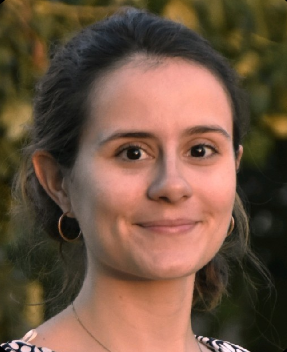 IBMYP class of 2010, IBDP class of 2012
University: EPFL (Ecole polytechnique fédérale de Lausanne) BSc Chemistry and Chemical Engineering, MSc Chemical Engineering and Biotechnology ; MIT (Massachusetts Institute of Technology) MSc Metabolic Engineering
Current post: Associate Director, Data Visualization, Merck
Nationality: France
Read about Léa's journey:
1. Why did you want to study Sciences in the IB MYP and IB DP?
- since I was a kid, I knew that I wanted a career in a science related field, so taking science classes was the way to broaden my understanding of the variety of sciences.
2. What were the most important 'transferable skills' you took from your IB Sciences education, and how did they turn out to be useful in your further study and career?
- learning to search for answers by myself and writing lab reports. When I started college, I could see that I was a lot more comfortable in doing this than my peers. Research and writing of the extended essay was also a good transferable skill!
3. What advice would you give to a young person who was just starting out on a journey into a career in STEM?
- get as much exposure to the diversity of the stem degrees through testing different subjects during your myp/ib, going to college taster courses, talking to people in the field, etc. Before starting the ib, I wanted to study astrophysics. After talking with a college professor/researcher for an hour, I understood that it was not what i wanted to do. Also I would encourage understanding the difference between a scientist and an engineer early on, before the start of ib dp (if you don't have maths HL, then it can be too late to change your mind). The last advice would be to keep in mind that what you are interested in today/decide to study, will influence your career but will not determine it. E.g. by going into an engineering degree, I learnt to think and solve problems, both transferable skills. I've probably used less than 5% of what I learnt in college classes in my career, and switched path using the transferable skills, as my interests changed as I discovered the variety of jobs available out there, and as I tried new things.
 IBMYP class of 2009, IBDP class of 2011
University: Loughborough University Foundation Art and Design (UK), Brunel University BA Industrial Design and Technology (UK)
Current post: Founder, designer, Carcara Collective
Nationality: Finland
Read about Aleksi's journey:
• Why did you want to study Sciences in the IB MYP and IB DP?
I feel that the decision to study Sciences in IB came from a curiosity to understand how the world works from the perspective of physics. It was interesting to understand on a deeper level what causes physical things and processes to happen, whether it is pressure building inside a system, sound being created by a vinyl player needle hitting a record, or global warming.
• What were the most important 'transferable skills' you took from your IB Sciences education, and how did they turn out to be useful in your further study and career?
IB sciences definitely teach a lot about problem solving, a very useful transferable skill. IB Physics also taught me how to apply mathematics in the real world, for example to simulate events. As a designer and material maker I am often referring back to concepts we learnt about mechanics, thermal physics, electromagnetism, optics and acoustics.
• What advice would you give to a young person who was just starting out on a journey into a career in STEM?
My advice for science students would be to be persistent. Some physics concepts and calculations will seem overwhelmingly complex at first, but once you put the work into understanding it, it is a very satisfying feeling once you finally get it.
Federico Arduini
IBMYP class of 2009, IBDP class of 2011
University: BSC Physics University of Kent, MSc Data Science King's College London
Current post: Analytics Engineering Manager, DAZN
Nationality: Italy
Read about Federico's journey:
1. Why did you want to study Sciences in the IB MYP and IB DP?
Two main reasons I guess. I always enjoyed solving problems, building stuff and I was OK at maths. I also really enjoyed following scientific news and reading science fiction. Both my strengths and interests drove me to studying sciences in the IB and in university after that.
2. What were the most important 'transferable skills' you took from your IB Sciences education, and how did they turn out to be useful in your further study and career?
Most sciences will have a very strong element of problem solving. I believe that this skill alone has benefited me more than any other. It improves naturally as long as you practise it, and it has helped me in countless ways during my studies, in my career and also in many other aspects of life.
3. What advice would you give to a young person who was just starting out on a journey into a career in STEM?
To really focus on the foundations. A lot of the difficulties I encountered while studying physics and maths were due to my superficial understanding of concepts I had encountered years before. You can pass exams without fully understanding a topic, but you'll probably be studying more down the line to catch up!
 IBMYP class of 2006, IBDP class of 2008
University: MBA, RMIT University
Current post: Technology Lead, Blueberry Markets
Nationality: Australia
Read about Joel's journey:
1. Why did you want to study Sciences in the IB MYP and IB DP?
At the time, doing Physics, Bio and Chem in the MYP was compulsory. Still, I remember wanting to continue with Physics in the IB (We had to choose one science - not sure how it works now), but Physics was the most interesting to me, and the one that I felt had the most real-world applications. Unfortunately, back then, there was no such thing as IT/tech/coding classes in school.
2. What were the most important 'transferable skills' you took from your IB Sciences education, and how did they turn out to be useful in your further study and career?
I think being able to break problems down into their individual components and solving those components one at a time. This is especially helpful in the world of software engineering and algorithm development.
3. What advice would you give to a young person who was just starting out on a journey into a career in STEM?
There are so many branches and so many pathways, don't be afraid to try different things and don't be worried if you don't or can't follow the "right" pathway - there is no such thing. STEM is an industry full of "career-changers" and self-taught people (especially in tech), so never get up!