Redefining Critical Thinking
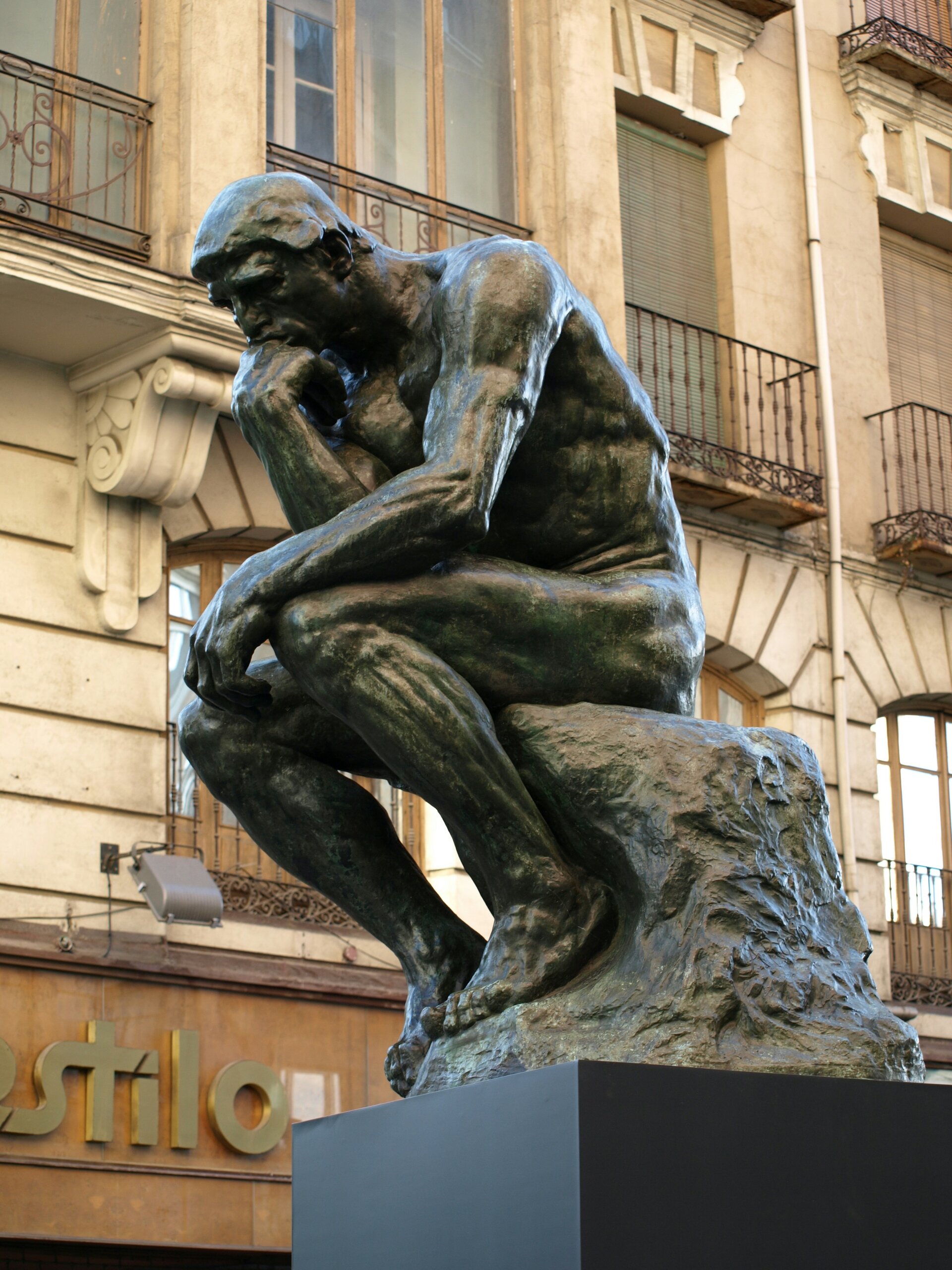
What is Critical Thinking in the AI World?
In a recent read of an article by Kee-Man Chuah titled "What AI Will Not Fix in Education", I was reflecting on what this means for the IBDP Music Teacher and our students. As generative AI becomes increasingly embedded in our educational landscapes, it forces us to confront a vital question: what constitutes genuine musical thought? This technological shift should not be seen as a threat, but a profound opportunity to elevate our pedagogical approach and deepen student engagement in the arts.
“Critical Thinking” Photo by Fernando Santander on Unsplash
 Chuah argues that AI has not destroyed critical thinking; rather, it has revealed how much of what we previously considered "higher-order thinking" was merely information handling, such as recalling, reorganising, and structuring facts. Because AI can excel at these tasks, genuine critical thinking must now become something more demanding: the capacity to make situated judgements, navigate uncertainty, and decide what matters most when faced with competing values. Students now need "evaluative literacy" to identify when an AI's highly fluent output is confidently wrong or misses the contextual point entirely.
“Destroying” Photo by Jade Koroliuk on Unsplash
Exploring Music in Context
For IBDP Music teachers, we need to re-assess our position. Recent examiner reports across all components consistently highlight that students struggle when they rely on surface-level information handling rather than genuine, situated judgement. For example, in Exploring Music in Context, examiners note that students frequently present superficial, descriptive observations or rely on secondary analytical sources without demonstrating personal understanding (see HERE for the May 2025 Report). While an AI can easily generate a list of stylistic traits or summarise biographical data, it can certainly not authentically connect those traits to a student’s own creative exercises or performed adaptations. The syllabus demands human insight to bridge research and practical application.
The Contemporary Music Maker
This shift is even more evident in the Contemporary Music Maker (CMM) component. Criterion B (Discussion of the Process) is the most heavily weighted area, and examiners explicitly differentiate between students who merely "describe" what they did (earning mid-band marks) and those who "justify" and "evaluate" their musical and collaborative choices (earning top marks). AI cannot replace the lived experience of a student navigating the messy, uncertain process of rehearsals, collaborative friction, and real-time artistic decision-making. It takes a human to evaluate why a specific musical choice failed and how that failure informed their next creative step.
Experimenting with Music
Similarly, in Experimenting with Music, students are expected to provide "evaluative reflection" after each excerpt. The goal is not just to recreate a style (a task generative AI is increasingly capable of assisting with) but to purposefully transform an unfamiliar stimulus through a series of logical, interconnected experiments. The "evaluative literacy" Chuah mentions is exactly what students need when they listen back to an experiment, critique its effectiveness, and determine their "intentional next steps."
 Ultimately, AI can strip away the busywork of basic information sorting, leaving us to focus on the deeply human aspects of music-making: artistic intent, emotional expression, and critical evaluation.
“Being Human” Photo by Enrico Da Prato on Unsplash
Bibliography
Chuah, K.-M. (2026, June 4). What AI will not fix in education. Medium. https://blog.chuahkeeman.com/what-ai-will-not-fix-in-education-7f562f59d50c
Here is some ideas for activities that you can inject into your units:
Have students use audio tools to deconstruct the layers of contrasting works, such as comparing the polyphonic textures of a Bach fugue with an electronic track (HERE is one such audio tool that offers this). Ask them to move beyond simply identifying features to evaluating why the compositional logic works and how it impacts the listener.
Present students with a piece of music and ask, "What counts as a 'good' artistic decision?". Have them debate how different stakeholders, such as the composer, the performer, and the audience, might have different criteria for calling a piece “successful” (See HERE for some ideas on Building Trust from a range of different stakeholders).
Instead of just practicing a piece, have students record their work-in-progress and pinpoint specific technical or creative challenges. Ask them to formulate and implement new strategies to solve these problems, and then critically evaluate the success of their solutions in their music journals (HERE is information about starting the music journal).