A.I. Can Revolutionise Learning
Enhancing Our Experiences
Music journalism has evolved from static reviews into interactive, AI-driven experiences. Features like The Washington Post's deconstruction of "Take On Me" allow readers to isolate tracks and explore production layers firsthand, often accompanied by an audio-narrated version of the text for multitasking listeners. This shift offers a powerful model for education, enabling students to actively analyse texture and style across genres, thereby preparing them for a deeper, more critical engagement with music.
“Take On Me” Photo by Wiki Sinaloa on Unsplash
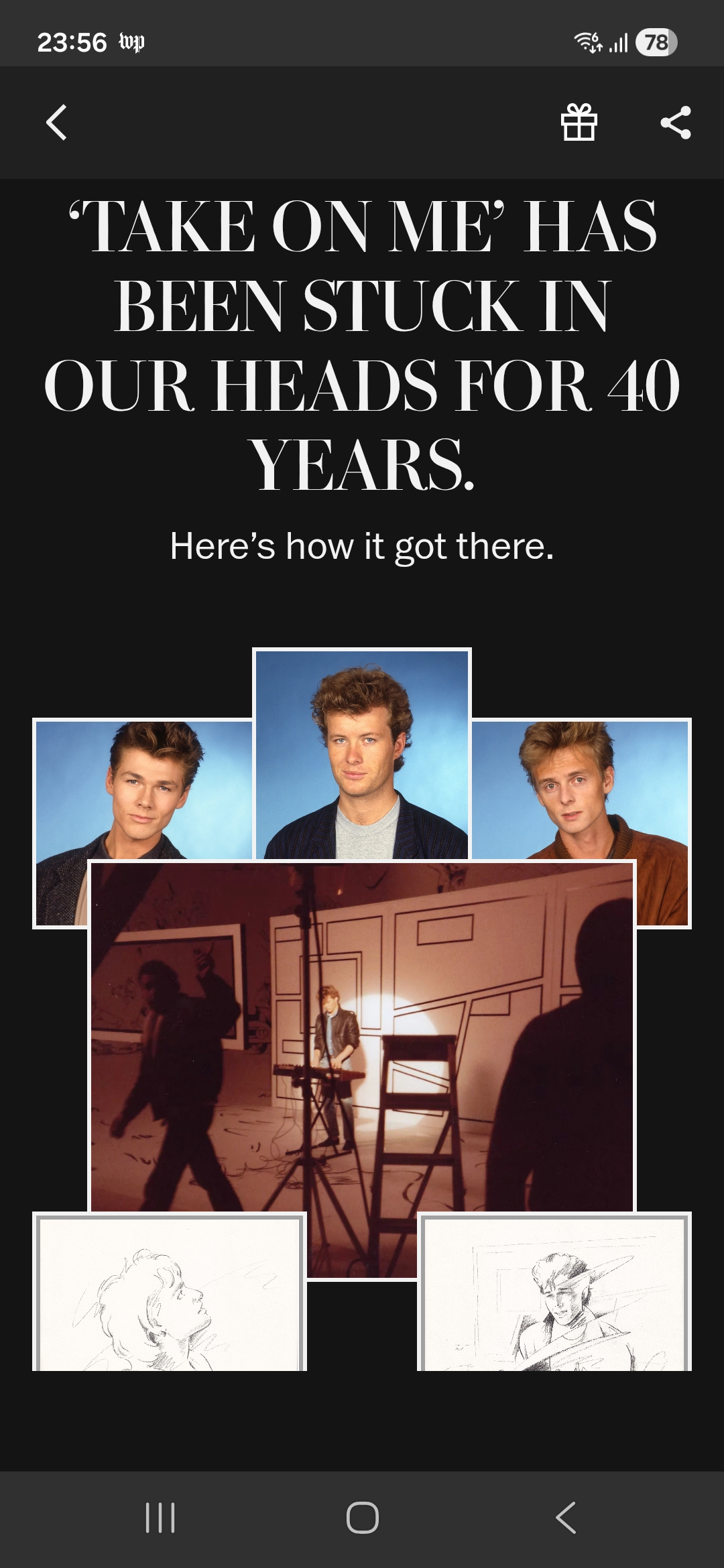 The landscape of music journalism has undergone a profound transformation, evolving from static, text-based critiques into dynamic, interactive experiences that engage audiences on a deeper analytical level. This shift, exemplified by leading publications like The Washington Post and its AI-driven deconstruction of A-ha's "Take On Me," is not merely a novelty in media but something we as educators should consider adopting in music education. By utilising artificial intelligence to isolate distinct instrumental and vocal tracks, such platforms provide an detailed and insightful view of musical production. This technologically sophisticated auditory dissection, once the exclusive domain of professional studios, now offers a powerful pedagogical toolkit. For educators, ignoring this shift means failing to equip students with the literacy required to engage with music in its most contemporary and revealing forms.
This evolution in journalism directly mirrors and responds to a more knowledgeable and discerning public, a change equally evident in our classrooms. Modern students, shaped by the interest in production tools and online educational content, expect, and indeed thrive on, active participation and control over their learning. Interactive articles transform passive consumption into an exploratory process where users navigate layered audio at their own pace, focus on specific elements, and utilise integrated visuals. This participatory model, which acknowledges the learner’s agency in constructing meaning, is precisely the engagement strategy needed for deep musical comprehension.
Edgers, G. (2025, November 8). 'Take On Me' Has Been Stuck in Our Heads for 40 Years [Interactive feature]. The Washington Post. Retrieved from https://www.washingtonpost.com/entertainment/interactive/2025/take-on-me-song-aha-40-years/
Furthermore, the design of these resources, which often includes audio-narration options, thoughtfully accommodates diverse learning preferences. For students whose auditory senses are the preferred learning approach for processing information, the ability to hear an analysis while manipulating the music itself creates a profoundly effective and inclusive learning environment, solidifying understanding through mulitple means of reinforcement.
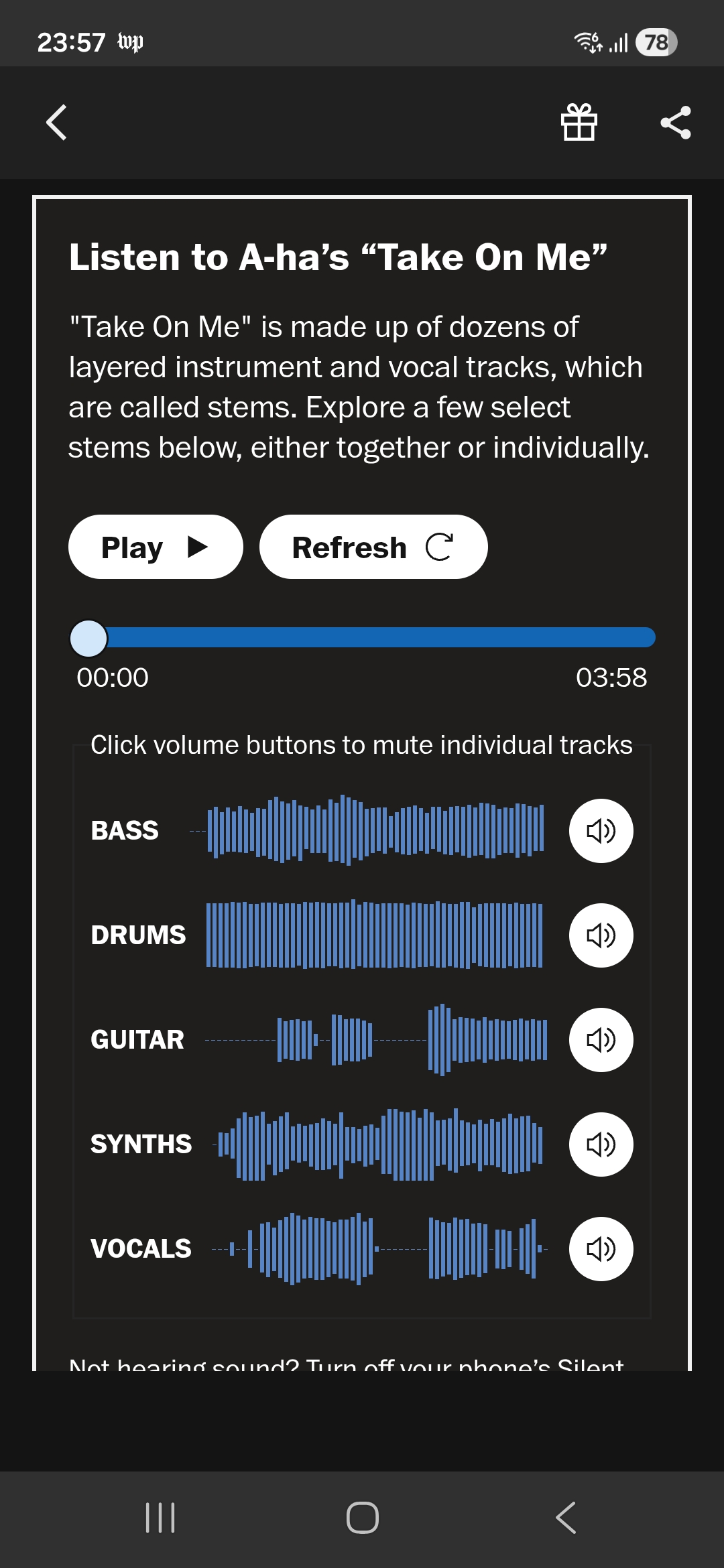 The integration of these AI-supported, interactive tools into music pedagogy, therefore, should no longer be an optional but an essential strategy that we should adopt in our classroom. For IBDP Music students, whose curriculum demands both deep analytical writing and creative execution, these platforms offer important practical experience. Moving beyond theoretical description, students can better deconstruct a symphony’s orchestration, a pop song’s production layers, or a jazz standard’s harmonic progression (For a range of software types that will assist in this process of extraction, you may consider Moises or Lalal; click on each title to be directed to more information). This hands-on engagement fosters a personal approach and understanding of texture, form, and style that pure text or a lecture-style delivery of content cannot provide. It bridges the critical gap between theoretical concepts and audible reality, enabling students to not only describe musical features but to understand their impact and compositional logic, thereby directly enhancing their preparation for written work and analytical depth.
The pedagogical benefits extend powerfully into the domain of comparative and contextual study, a cornerstone of the IBDP syllabus. By systematically exploring a diverse range of genres and styles through interactive deconstruction, students can conduct their own cross-cultural and historical analyses. They can directly compare the polyphonic textures of a Bach fugue with the layered synths of an electronic track, or the rhythmic complexities of a West African drum ensemble with those in a progressive rock piece.
Extracted from Edgers, G. (2025, November 8). 'Take On Me' Has Been Stuck in Our Heads for 40 Years [Interactive feature]. The Washington Post. Retrieved from https://www.washingtonpost.com/entertainment/interactive/2025/take-on-me-song-aha-40-years/
This interactive method trains students to become discerning listeners who can articulate stylistic distinctions with greater authority, a skill that enriches their academic work and fosters a more global musical perspective.
As AI and interactive media continue to redefine public engagement with music, educating students to use these tools critically and creatively is paramount. It empowers them to become informed participants in an ongoing cultural dialogue, capable of both deconstructing existing works and making intentional, innovative choices in their own compositions and performances. This aligns perfectly with the IB learner profile, cultivating inquirers, thinkers, and risk-takers who are technologically literate and musically insightful (Again for more on this, you may wish to visit HERE).

In conclusion, the listener-driven model pioneered by modern music journalism presents a vital blueprint for the contemporary music classroom. By adopting and adapting these interactive, AI-enhanced platforms, educators can transform their teaching from monologue into dialogue, and student learning from reception into exploration. This commitment ensures that our pedagogy remains relevant and rigorous, fostering a generation of musicians and scholars who are as adept at critical listening, as they are at theoretical understanding. Our role in music education lies in harmonising these elements, creating a more dynamic, inclusive, and engaging discipline for all.